DATE OF THIS ** ORIGINAL ** ITEM: 1949 Raymond Edward "Ray" Johnson (October 16, 1927 – January 13, 1995) was an American artist. Known primarily as a collagist and correspondence artist, he was a seminal figure in the history of Neo-Dada and early Pop art and was described as [1][2] "New York's most famous unknown artist".[1][3] Johnson also staged and participated in early performance art events as the founder of a far-ranging mail art network – the New York Correspondence School –[1][2][4] which picked up momentum in the 1960s and is still active today. He is occasionally associated with members of the Fluxus movement but was never a member. He lived in New York City from 1949 to 1968, when he moved to a small town in Long Island and remained there until his suicide.[4][5] Born in Detroit, Michigan, on October 16, 1927,[1][4] Ray Johnson grew up in a working-class neighborhood and attended Cass Technical High School where he was enrolled in the advertising art program. He took weekly classes at the Detroit Art Institute and spent a summer drawing at Ox-Bow School in Saugatuck, Michigan, affiliated with the Art Institute of Chicago. Johnson left Detroit after high school in the summer of 1945 to attend the progressive Black Mountain College (BMC) in North Carolina,[4][6] where he stayed for the next three years (spending the spring 1946 semester at the Art Students League in New York but returning the following summer). Josef Albers, before and after his notable sabbatical in Mexico, was in residence at Black Mountain College for six of the ten semesters that Johnson studied there. Anni Albers, Walter Gropius, Lyonel Feininger, Robert Motherwell, Ossip Zadkine, Paul Rand, Alvin Lustig, Ilya Bolotowski, Jacob Lawrence, Beaumont Newhall, M. C. Richards, and Jean Varda also taught at BMC during Johnson's time there. Johnson decided on Albers' advice to stay at BMC for a final term in summer 1948, when the visiting faculty included John Cage, Merce Cunningham, Willem de Kooning, Buckminster Fuller, and Richard Lippold.[1] Johnson took part in "The Ruse of Medusa" – the culmination of Cunningham's Satie Festival - with Cage, Cunningham, Fuller, Willem and Elaine de Kooning, Lippold, Ruth Asawa, Arthur Penn, and others among the cast and crew. "Because of those who participated, the event has taken on the reputation of a watershed event in 'mixed media'?" wrote Martin Duberman in his history of BMC.[7] In the documentary How to Draw a Bunny, Richard Lippold delicately but candidly confesses to carrying on a love affair with Johnson for many years which began at Black Mountain College. Johnson moved with Richard Lippold to New York City by early 1949,[1] rejoining Cage and Cunningham and befriending, within the next couple of years, Robert Rauschenberg, Jasper Johns, Cy Twombly, Ad Reinhardt, Stan Vanderbeek, Norman Solomon, Lucy Lippard, Sonia Sekula, Carolyn Brown and Earle Brown, Judith Malina, Diane di Prima, Julian Beck, Remy Charlip, James Waring, and innumerable others. With the American Abstract Artists group, Johnson painted geometric abstractions that, in part, reflected the influence of Albers.[1] But by 1953 he turned to collage and left the American Abstract Artists, rejecting his early paintings, which it is rumored that he later burned in Cy Twombly's fireplace. Johnson began to create small, irregularly shaped works incorporating fragments from popular culture, most notably the Lucky Strikes logo and images from fan magazines of such movie stars as Elvis Presley, James Dean, Marilyn Monroe, and Shirley Temple.[2][4] In the summer of 1955, he coined a term for these small collages: "moticos".[1][4] He carried boxes of moticos around New York, showing them on sidewalks, at cafes, in Grand Central Station and other public places; he asked passersby what they thought of them, and recorded some of their responses. He began mailing collages to friends and strangers, along with a series of manifestos, mimeographed for distribution, including "What is a Moticos?", excerpts of which were published in an article by John Wilcock in the inaugural issue of The Village Voice.[9] A friend of Johnson's, art critic Suzi Gablik, brought photographer Elisabeth Novick to document an installation of dozens of Johnson's moticos in autumn of 1955. (Most of these were destroyed or recycled by the artist.) "The random arrangement ,,, on a dilapidated cellar door in Lower Manhattan may even have been the first informal Happening," she recalled later.[10] According to Henry Geldzahler, "[Ray's] collages Elvis Presley No. 1 and James Dean stand as the Plymouth Rock of the Pop movement."[11] Johnson's friend Lucy Lippard would later write that "The Elvis ... and Marilyn Monroe [collages] ,,, heralded Warholian Pop."[12] Johnson was quickly recognized as part of the nascent Pop generation. A note about the cover image in January 1958's Art News pointed out that "[Jasper] Johns' first one-man show ... places him with such better-known colleagues as Rauschenberg, Twombly, Kaprow and Ray Johnson".[13] Johnson worked part-time at the Orientalia Bookstore in the Lower East Side as he began to deepen his understanding of Zen philosophy and to employ "chance" in his work. Both of these interests increasingly informed his collages, performances, and mail art. Johnson also found occasional work as a graphic designer. He had met Andy Warhol by 1956; both designed several book covers for New Directions and other publishers. Johnson had a series of whimsical flyers advertising his design services printed via offset lithography, and began mailing these out. These were joined in 1956-7 by two small promotional artists' books, BOO/K/OF/THE/MO/NTH and P/EEK/A/BOO/K/OFTHE/WEE/K, self-published in editions of 500. Johnson participated in about a dozen performance art events between 1957 and 1963 – in his own short pieces (Funeral Music for Elvis Presley and Lecture on Modern Music), in those of others (by James Waring and Susan Kaufman), and via his own compositions performed by his colleagues at The Living Theatre and during the Fluxus Yam Festival of 1963. From 1961 on, Johnson periodically staged events he called "Nothings", described to his friend William Wilson as "an attitude as opposed to a happening", which would parallel the "Happenings" of Allan Kaprow and later Fluxus events. The first of these, "Nothing by Ray Johnson", was part of a weekly series of events in July 1961 at the AG Gallery, a venue in New York operated by George Maciunas and Almus Salcius; Yoko Ono's first solo show was on view in the gallery at the time. Ed Plunkett later recalled entering an empty room. "Visitors began to enter the premises. Most of them looked quite dismayed that nothing was going on ... Well, finally Ray arrived ... and he brought with him a large corrugated cardboard box of wooden spools. Soon after arriving Ray emptied this box of spools down the staircase ... with these ... one had to step cautiously to avoid slipping ... I was delighted with this gesture."[14][better source needed] Johnson's Second Nothing took place at Maidman Playhouse, New York, in 1962. It was part of a variety show that was organized by Nicholas Cernovich and Alan Marlow of New York Poet's Theatre, had lighting design by Billy Name (aka Billy Linich), and featured artists such as Fred Herko, George Brecht, Simone Morris, La Monte Young, Stan Vanderbeek, and others.[15] In 1964/65, Ray Johnson circulated publicity for an imaginary gallery called the Robin Gallery, which was a pun on the Rueben Gallery where some of the earliest happenings took place and was said by one critic to “put the happenings out on the street in a series of irresponsible exploits and escapades."[16] Johnson's first known piece of mail directing a recipient to "please send to..." someone else dates from 1958; the phrases "please add to and return", "please add and send to", and even "please do not send to" followed. Johnson's mail art activities became more systematic with the help of several friends, particularly Bill Wilson and his mother, assemblage artist May Wilson, along with Marie Tavroges Stilkind and later Toby Spiselman. In 1962, Ed Plunkett named Johnson's endeavors 'the New York Correspondence School' (NYCS). In early 1962, Joseph Byrd responded to several mailings with a red rubber stamp, "THIS IS NOT ART," which Johnson then used in his mailings for several months. On April 1, 1968, the first of the meeting of the NYCS was held at the Society of Friends Meeting House on Rutherford Place in New York City. Two more meetings were called by Johnson in the following weeks, including the Seating-Meeting at New York's Finch College, about which John Gruen reported: "It was ... attended by many artists and 'members' ... all of whom sat around wondering when the meeting would start. It never did ... people wrote things on bits of paper, on a blackboard, or simply talked. It was all strangely meaningless – and strangely meaningful."[17] Johnson staged such events regularly, often following them up with witty typed reports, photocopied for wide distribution via the post. Such gatherings continued to be held in various guises into the mid-1980s. Johnson produced the 12 known unbound pages of his enigmatic Book About Death in 1963 to 1965. Consisting of cryptic texts and drawings (mostly) by Johnson, they were mailed a few at a time, randomly, and offered for sale via a classified ad in The Village Voice.,[18] thus very few people ever received all the pages. Something Else Press published Johnson's The Paper Snake for a wider audience in 1965. Remarking about himself and the book, Johnson said: Long out of print, The Paper Snake was re-printed by Siglio Press in 2014.[20] On June 3, 1968 – the same day that Andy Warhol was shot by Valerie Solanas with a gun she'd stored under May Wilson's bed – Johnson was mugged at knifepoint.[21] Two days later, Robert Kennedy was assassinated. Severely shaken, Johnson moved to Glen Cove, Long Island, and the next year bought a house in nearby Locust Valley, where Richard Lippold and his family resided. He began to live in a state of increasing reclusion in what he called a "small white farmhouse with a Joseph Cornell attic." Johnson appeared twice in the Art in Process series, described by blogger Greg Allen as "a series of topical, process-oriented, teaching exhibitions organized by Finch College Museum director Elayne Varian. They included sketches, models and studies to show how the artist did what he was doing."[22] William Garrett Price (November 21, 1896 – April 8, 1979) was an American artist, cartoonist and illustrator. He is remembered for cartoons and cover illustrations in The New Yorker and for children's book illustrations. Born in Bucyrus, Kansas, Price was reared on a farm in Saratoga, Wyoming, the son of a horse-and-buggy doctor. He began sketching animals and people as a boy, and attended the University of Wyoming. The University library holds a collection of his work. He went on to study art at the Art Institute of Chicago where he became friends with fellow New Yorker cartoonists Perry Barlow, Alice Harvey and Helen E. Hokinson. Price married Florence Semler (died 1973) of Latrobe, Pennsylvania. They lived in Westport, Connecticut and had a summer home on Mason's Island at the mouth of the Mystic River, in Stonington, Connecticut where their friend, the artist Herbert Stoops, also summered. Price's first job was as a reporter-cartoonist for The Kansas City Star, he went on to draw illustrations and a full-page comic strip for the Chicago Tribune. He served in World War I as a contributing artist for Navy publications. Price worked for over half a century for The New Yorker, drawing hundreds of cartoons and 100 covers, including two in 1925, the monthly magazine's first year ("Heat Wave", August 1, and "Paris Café", August 29). Thomas Powers describes the Price covers in later decades as sometimes possessing "a stunning, wistful beauty", flagging, in particular, "a 1956 cover of circus queens riding elephants into the ring, a 1949 cover of a boy all alone on a spring ball field sliding into home plate, and a 1951 cover of autumn leaves falling over a summer house being closed for the winter—a husband sits waiting in the car as his wife gathers a last armful of flowers." His last cover appeared in the summer of 1973, the year his wife died. Drawing Room Only (1946) is a collection of Price's work, principally featuring New Yorker cartoons. The New Yorker (stylized in all caps) is an American magazine featuring journalism, commentary, criticism, essays, fiction, satire, cartoons, and poetry. Founded as a weekly in 1925, the magazine is published 47 times annually, with five of these issues covering two-week spans. Although its reviews and events listings often focus on the cultural life of New York City, The New Yorker also produces long-form journalism and shorter articles and commentary on a variety of topics, has a wide audience outside New York, and is read internationally. It is well known for its illustrated and often topical covers, its commentaries on popular culture and eccentric American culture, its attention to modern fiction by the inclusion of short stories and literary reviews, its rigorous fact checking and copy editing, its journalism on politics and social issues, and its single-panel cartoons sprinkled throughout each issue. The New Yorker was founded by Harold Ross (1892–1951) and his wife Jane Grant (1892–1972), a New York Times reporter, and debuted on February 21, 1925. Ross wanted to create a sophisticated humor magazine that would be different from perceivably "corny" humor publications such as Judge, where he had worked, or the old Life. Ross partnered with entrepreneur Raoul H. Fleischmann (who founded the General Baking Company) to establish the F-R Publishing Company. The magazine's first offices were at 25 West 45th Street in Manhattan. Ross edited the magazine until his death in 1951. During the early, occasionally precarious years of its existence, the magazine prided itself on its cosmopolitan sophistication. Ross declared in a 1925 prospectus for the magazine: "It has announced that it is not edited for the old lady in Dubuque." Although the magazine never lost its touches of humor, it soon established itself as a preeminent forum for serious fiction, essays and journalism. Shortly after the end of World War II, John Hersey's essay Hiroshima filled an entire issue. The magazine has published short stories by many of the most respected writers of the 20th and 21st centuries, including Ann Beattie, Sally Benson, Maeve Brennan, Truman Capote, Rachel Carson, John Cheever, Roald Dahl, Mavis Gallant, Geoffrey Hellman, Ernest Hemingway, Stephen King, Ruth McKenney, John McNulty, Joseph Mitchell, Alice Munro, Haruki Murakami, Vladimir Nabokov, John O'Hara, Dorothy Parker, S.J. Perelman, Philip Roth, George Saunders, J. D. Salinger, Irwin Shaw, James Thurber, John Updike, Eudora Welty, and E. B. White. Publication of Shirley Jackson's "The Lottery" drew more mail than any other story in the magazine's history. In its early decades, the magazine sometimes published two or even three short stories in an issue, but in later years the pace has remained steady at one story per issue. The nonfiction feature articles (usually the bulk of an issue) cover an eclectic array of topics. Subjects have included eccentric evangelist Creflo Dollar, the different ways in which humans perceive the passage of time, and Münchausen syndrome by proxy. The magazine is known for its editorial traditions. Under the rubric Profiles, it has published articles about prominent people such as Ernest Hemingway, Henry R. Luce and Marlon Brando, Hollywood restaurateur Michael Romanoff, magician Ricky Jay, and mathematicians David and Gregory Chudnovsky. Other enduring features have been "Goings on About Town", a listing of cultural and entertainment events in New York, and "The Talk of the Town", a feuilleton or miscellany of brief pieces—frequently humorous, whimsical, or eccentric vignettes of life in New York—in a breezily light style, although latterly the section often begins with a serious commentary. For many years, newspaper snippets containing amusing errors, unintended meanings or badly mixed metaphors ("Block That Metaphor") have been used as filler items, accompanied by a witty retort. There is no masthead listing the editors and staff. Despite some changes, the magazine has kept much of its traditional appearance over the decades in typography, layout, covers and artwork. The magazine was acquired by Advance Publications, the media company owned by Samuel Irving Newhouse Jr, in 1985, for $200 million when it was earning less than $6 million a year. Ross was succeeded as editor by William Shawn (1951–87), followed by Robert Gottlieb (1987–92) and Tina Brown (1992–98). The current editor of The New Yorker is David Remnick, who succeeded Brown in July 1998. Among the important nonfiction authors who began writing for the magazine during Shawn's editorship were Dwight Macdonald, Kenneth Tynan, and Hannah Arendt, whose Eichmann in Jerusalem reportage appeared in the magazine, before it was published as a book. Brown's tenure attracted more controversy than Gottlieb's or even Shawn's, thanks to her high profile (Shawn, by contrast, had been an extremely shy, introverted figure), and to the changes she made to a magazine with a similar look for the previous half-century. She introduced color to the editorial pages (several years before The New York Times) and included photography, with less type on each page and a generally more modern layout. More substantively, she increased the coverage of current events and topics such as celebrities and business tycoons, and placed short pieces throughout "Goings on About Town", including a racy column about nightlife in Manhattan. A letters-to-the-editor page was introduced, and authors' bylines were added to their "Talk of the Town" pieces. Since the late 1990s, The New Yorker has used the Internet to publish current and archived material, and maintains a website with some content from the current issue (plus exclusive web-only content). Subscribers have access to the full current issue online and a complete archive of back issues viewable as they were originally printed. In addition, The New Yorker's cartoons are available for purchase online. A digital archive of back issues from 1925 to April 2008 (representing more than 4,000 issues and half a million pages) was also issued on DVD-ROMs and on a small portable hard drive. More recently, an iPad version of the current issue has been released. In 2014, The New Yorker opened up access online to all of its archives, expanded its plans to run an ambitious Website, and launched a paywalled subscription model. “What we’re trying to do,” said Nicholas Thompson, the editor of the Website, “is to make a website that is to the Internet what the magazine is to all other magazines.” The magazine's editorial staff unionized in 2018 and The New Yorker Union signed its first collective bargaining agreement in 2021. The New Yorker influenced a number of similar magazines, including The Brooklynite (1926 to 1930), The Chicagoan (1926 to 1935), and Paris's The Boulevardier (1927 to 1932). The New Yorker has featured cartoons (usually gag cartoons) since it began publication in 1925. For years, its cartoon editor was Lee Lorenz, who first began cartooning in 1956 and became a New Yorker contract contributor in 1958. After serving as the magazine's art editor from 1973 to 1993 (when he was replaced by Françoise Mouly), he continued in the position of cartoon editor until 1998. His book The Art of the New Yorker: 1925–1995 (Knopf, 1995) was the first comprehensive survey of all aspects of the magazine's graphics. In 1998, Robert Mankoff took over as cartoon editor and edited at least 14 collections of New Yorker cartoons. Mankoff also usually contributed a short article to each book, describing some aspect of the cartooning process or the methods used to select cartoons for the magazine. He left the magazine in 2017. The New Yorker's stable of cartoonists has included many important talents in American humor, including Charles Addams, Peter Arno, Charles Barsotti, George Booth, Roz Chast, Tom Cheney, Sam Cobean, Leo Cullum, Richard Decker, Pia Guerra, J. B. Handelsman, Helen E. Hokinson, Pete Holmes, Ed Koren, Reginald Marsh, Mary Petty, George Price, Charles Saxon, Burr Shafer, Otto Soglow, William Steig, Saul Steinberg, James Stevenson, James Thurber, and Gahan Wilson. Many early New Yorker cartoonists did not caption their cartoons. In his book The Years with Ross, Thurber describes the newspaper's weekly art meeting, where cartoons submitted over the previous week were brought up from the mail room to be looked over by Ross, the editorial department, and a number of staff writers. Cartoons were often rejected or sent back to artists with requested amendments, while others were accepted and captions were written for them. Some artists hired their own writers; Helen Hokinson hired James Reid Parker in 1931. Brendan Gill relates in his book Here at The New Yorker that at one point in the early 1940s, the quality of the artwork submitted to the magazine seemed to improve. It later was found out that the office boy (a teenaged Truman Capote) had been acting as a volunteer art editor, dropping pieces he did not like down the far end of his desk. Several of the magazine's cartoons have reached a higher plateau of fame. One 1928 cartoon drawn by Carl Rose and captioned by E. B. White shows a mother telling her daughter, "It's broccoli, dear." The daughter responds, "I say it's spinach and I say the hell with it." The phrase "I say it's spinach" entered the vernacular, and three years later, the Broadway musical Face the Music included Irving Berlin's song "I Say It's Spinach (And the Hell with It)". The catchphrase "back to the drawing board" originated with the 1941 Peter Arno cartoon showing an engineer walking away from a crashed plane, saying, "Well, back to the old drawing board." The most reprinted is Peter Steiner's 1993 drawing of two dogs at a computer, with one saying, "On the Internet, nobody knows you're a dog". According to Mankoff, Steiner and the magazine have split more than $100,000 in fees paid for the licensing and reprinting of this single cartoon, with more than half going to Steiner. Over seven decades, many hardcover compilations of New Yorker cartoons have been published, and in 2004, Mankoff edited The Complete Cartoons of The New Yorker, a 656-page collection with 2,004 of the magazine's best cartoons published during 80 years, plus a double CD set with all 68,647 cartoons ever published in the magazine. This features a search function allowing readers to search for cartoons by cartoonist's name or year of publication. The newer group of cartoonists in recent years includes Pat Byrnes, J. C. Duffy, Liana Finck, Emily Flake, Robert Leighton, Michael Maslin, Julia Suits, and P. C. Vey. Will McPhail cited his beginnings as "just ripping off Calvin and Hobbes, Bill Watterson, and doing little dot eyes." The notion that some New Yorker cartoons have punchlines so oblique as to be impenetrable became a subplot in the Seinfeld episode "The Cartoon", as well as a playful jab in The Simpsons episode "The Sweetest Apu".
**For multiple purchases please ASK FOR + wait for our combined invoice. Shipping discount are ONLY available with this method. Thank You.
PLEASE NOTE - THIS IS A TWO-PAGE ITEM : NEW YORKER COVER BY GARRETT PRICE - SHOWING A GROUP OF PEOPLE GOING ON A WINTER HAYRIDE IN A WAGON PULLED BY HORSES. COUNRTY FARM AREA.
SECOND PAGE IS AN ADVERTISEMENT FOR HAYWOODS BLENDED CANADIAN WHISKEY DUNCAN HARWOOD OF VANCOUVER BRITISH COLUMBIA - SHOWING A PAINTING BY RAY JOHNSON OF THE CANADIAN ROYAL MOUNTED POLICE DURING THE GOLD RUSH IN 1808
ILLUSTRATOR/ARTIST:
SPECIAL CHARACTERISTICS/DESCRIPTIVE WORDS:
Cartoons - COMIC ART
ADVERT SIZE: SEE RULER SIDES IN PHOTO FOR DIMENSIONS ( ALL DIMENSIONS IN INCHES)
Our AD's and COVER'S are ORIGINAL and 100% guaranteed --- (we code all our items to insure authenticity) ---- we stand behind this.
As graphic collectors ourselves, we take great pride in doing the best job we can to preserve and extend the wonderful historic graphics of the past.
PLEASE LOOK AT OUR PHOTO CLOSELY AS IT IS (ALBEIT LOWER RESOLUTION) THE PRODUCT BEING SOLD.....NOT STOCK IMAGES
**NOTE** : PAGES MAY SHOW AGE WEAR AND IMPERFECTIONS TO MARGINS, WITH CLOSED NICKS AND CUTS, WHICH DO NOT AFFECT AD IMAGE OR TEXT WHEN MATTED AND FRAMED. SOMETIMES THE PAGES HAVE BEEN TRIMMED.. PLEASE NOTE THE ACTUAL SIZE OF SELLING AD IN THE ATTACHED PHOTO IMAGE... WHAT YOU SEE IS WHAT YOU GET...
We ship via United States Postal Service. We have a 3 day handling time not including weekends or holidays but normally we have all orders processed, packed and shipped within 48 hrs.
A Note to our international buyers (Including Canada). Please read before placing a bid or buying an item:
**Import taxes, duties and charges are not included in the item price or shipping charges. These charges are the buyer's responsibility. Please check with your country's customs office to determine what these additional costs will be prior to bidding/buying on items. These charges are normally collected by the shipping company or when you pick the item up, this is not an additional shipping charge. We are not responsible for shipping times to international buyer's. Your country's customs may hold the package for a month or more.
**We pride ourselves on quality products, great service, accurate gradations and fast shipping.**
BRANCHWATER BOOKS

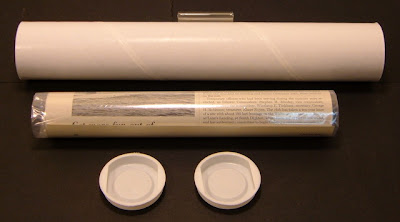
YOUR AD WILL BE SHIPPED ROLLED IN A PROTECTIVE PLASTIC BAG IN AN 80mm (TWICE USPS RECOMMENDED) THICK, 2 INCHES IN DIAMETER (SO AS NOT TO STRESS THE PAPER) SHIPPING TUBE WITH PRESS TIGHT PLASTIC END CAPS.
FC2027


Powered by SixBit's eCommerce Solution