DATE OF THIS ** ORIGINAL ** ILLUSTRATED COVER: 1955 The Massachusetts Mutual Life Insurance Company, also known as MassMutual, is a Springfield, Massachusetts-based life insurance company. MassMutual provides financial products such as life insurance, disability income insurance, long term care insurance, retirement/401(k) plan services, and annuities. Major affiliates include Barings LLC, and Haven Life Insurance Agency. MassMutual ranks at 100 in the 2022 Fortune 500 list of the largest United States corporations by total revenue. The company has revenues of $10.7 billion and assets under management of $312 billion (as of 2022). The company employs more than 7,000 in the United States, and a total of 10,614 internationally. Massachusetts Mutual Life Insurance Company (MassMutual) began operation on May 15, 1851 in Springfield, Massachusetts. It was founded by George W. Rice, who subscribed for a guarantee capital of $100,000. As an insurance agent who sold policies for Connecticut Mutual Life Insurance Company in Hartford, Connecticut, Rice wanted to open a company of his own in neighboring Massachusetts. Similar to Connecticut Mutual, this new enterprise grew into a mutual company. The popularity of mutual companies in the insurance industry had grown significantly between 1843 and MassMutual's creation. Approximately a dozen competing mutual companies, including Mutual Life Insurance Company of New York (1842), Mutual Life Insurance Company of New Jersey (1845), and Connecticut Mutual Life Insurance (1846), experienced promising success, because minimal amounts of working capital were required for operation. However, MassMutual's path followed a different course when an 1851, Massachusetts state law required all insurance companies to take an initial stock subscription of $100,000. Rice met that requirement by recruiting 31 investors to purchase stock in his company to meet the mandatory subscription. After the company began operations and built sufficient reserves to meet regulatory requirements, the 31 stockholders were paid back in 1867, the stock was retired, and MassMutual functioned as a mutual company. MassMutual's first president was Caleb Rice, appointed in 1851. A cousin of founder George W. Rice, Caleb Rice served as president of MassMutual for 22 years, making him the longest-serving president in the company's history. As a former lawyer and Sheriff of Hampden County, Massachusetts, Rice served on the Massachusetts House of Representatives for five years and was later elected as the first mayor of Springfield, Massachusetts from 1852 to 1853. MassMutual began to sell policies to homeowners and workers throughout New England. As westward expansion grew, fueled by excitement from the California Gold Rush (1848–1855) and railroad development, MassMutual agents began to sell high-premium insurance policies to railway and steamship workers, gold-rush adventurers, and people relocating south of the Mason–Dixon line. For the next several decades, MassMutual's expansion continued to mirror that of the United States. By the time MassMutual was established, 9,000 miles (14,000 km) of functioning railroad lines had been built, giving MassMutual the opportunity to establish agencies in New York City, Cleveland, Chicago, and Detroit by 1855. MassMutual reached the West Coast in 1868 and established an office in San Francisco before the Transcontinental Railroad was completed in 1869. Across the industry, sales of life insurance policies began to substantially increase by the late 1850s. Sales reached $200 million by 1862, then tripled to just under $600 million by the end of the Civil War. Westward expansion and increased marketing efforts of the insurance industry were largely responsible for this growth. Another effort that contributed to the increased selling of life insurance policies was the passing of a non-forfeiture law by the Massachusetts legislature in 1861. The law forbade companies from canceling policies, even if premium payments were not received from policyholders, and stated that policies would be converted to term-life policies and companies were to pay any death claims that occurred during this term period. As the industry continued to grow, so did MassMutual, and by 1873 – just over 20 years since their first $1,000 policy was issued on August 2, 1851– the company held $4,501,909 in assets. Caleb Rice's presidency of MassMutual came to an end in 1873 when he was succeeded by E.W. Bond, who held the position for 13 years. Bond was replaced in 1886 by Colonel Martin Van Buren Edgerly, who started his career with MassMutual in 1859. He was the first major example of MassMutual's tendency to look from within to promote and enforce inward leadership.
Edgerly oversaw MassMutual's growth for nearly a decade. John Hall replaced Mr. Edgerly in March 1895 and helped MassMutual's assets exceed $50,000,000. In 1901, MassMutual began to offer policies whose proceeds would be paid over a fixed period or for life, compared to policies that were only payable in lump sums at death or maturity. Before Mr. Hall's death on September 3, 1908, he guided MassMutual through the late 19th century – particularly through numerous business scandals of the early 20th century. The 1906 Armstrong Committee investigation in 1905 uncovered the questionable financial practices of several New York life insurance companies. While MassMutual was not a specific target, the investigation required insurance companies to distribute dividends annually, to restrict the size of agents' commissions, and to regulate the nature of their investments. Policies were also required to state the provision upon creation. As the Armstrong Investigation settled, all MassMutual policies issued after October 1, 1907 earned value according to the American Experience Table of Mortality and 3% interest. MassMutual also began to offer new services and policies to attract customers. In 1914, the company instituted a premium waiver in the event of disability, and designed policies with clauses that provided income in the event of disability in 1918. Despite the adverse effects of the influenza epidemic in 1918, MassMutual maintained steady growth. The company employed 400 home office employees as the amount of insurance in force passed $1 billion in 1924. However, MassMutual began to feel the direct effects of the stock market crash in 1929. As the economy plunged 22% in a matter of days and 30% of the country's workforce was faced with unemployment, death claims and policy lapses drastically increased due to an unusual number of suicides and general economic hardship. MassMutual became a last resort for people needing financial help as The Great Depression took over the United States – and the world – from 1929–1932. While the Great Depression was an economic downfall for the country, MassMutual was able to develop new products and services. MassMutual introduced its first family-income policy in 1930. Eight years later, the firm issued its first pension trust policy in 1938. As the Great Depression faded from the United States in 1939, the start of World War II spurred the country's industrial and economic progression, workforce and insurance demands. Former actuary Alexander MacLean began his MassMutual presidency in 1945. Once the United States became heavily involved with World War II and unemployment significantly decreased, MacLean oversaw the development of insurance products and services for workers. The war placed high production demands on the country's industrial workforce. As jobs were quickly created and unions strengthened, MassMutual entered the group marketplace in 1946, offering policies and managing pensions. The first group product was a pension and insurance policy for Brown-Forman Distillers – the Kentucky-based company that produced Jack Daniel's whiskey. MassMutual maintained internal development as the postwar economy boomed by decentralizing operations through field agents. The company's home office staff, consisting of 1,350 employees, served a client base of more than 700,000 customers. MassMutual's general and district agencies contributed towards the company's growth – assets totaled $1.4 billion, with $3 billion of insurance in force by 1951. In addition, MassMutual instituted a training program for field agents and encouraged its workers to complete the American College Chartered Life Underwriter designation. Total life insurance in force doubled from $2.7 billion to $5.4 billion between 1948 and 1957. Norman Percevel Rockwell (February 3, 1894 – November 8, 1978) was an American painter and illustrator. His works have a broad popular appeal in the United States for their reflection of the country's culture. Rockwell is most famous for the cover illustrations of everyday life he created for The Saturday Evening Post magazine over nearly five decades. Among the best-known of Rockwell's works are the Willie Gillis series, Rosie the Riveter, The Problem We All Live With, Saying Grace, and the Four Freedoms series. He is also noted for his 64-year relationship with the Boy Scouts of America (BSA), during which he produced covers for their publication Boys' Life, calendars, and other illustrations. These works include popular images that reflect the Scout Oath and Scout Law such as The Scoutmaster, A Scout Is Reverent and A Guiding Hand,[3] among many others. Rockwell was a prolific artist, producing more than 4,000 original works in his lifetime. Most of his surviving works are in public collections. Rockwell was also commissioned to illustrate more than 40 books, including Tom Sawyer and Huckleberry Finn as well as painting the portraits for Presidents Eisenhower, Kennedy, Johnson, and Nixon, as well as those of foreign figures, including Gamal Abdel Nasser and Jawaharlal Nehru. His portrait subjects included Judy Garland. One of his last portraits was of Colonel Sanders in 1973. His annual contributions for the Boy Scouts calendars between 1925 and 1976 (Rockwell was a 1939 recipient of the Silver Buffalo Award, the highest adult award given by the Boy Scouts of America), were only slightly overshadowed by his most popular of calendar works: the "Four Seasons" illustrations for Brown & Bigelow that were published for 17 years beginning in 1947 and reproduced in various styles and sizes since 1964. He created artwork for advertisements for Coca-Cola, Jell-O, General Motors, Scott Tissue, and other companies. Illustrations for booklets, catalogs, posters (particularly movie promotions), sheet music, stamps, playing cards, and murals (including "Yankee Doodle Dandy" and "God Bless the Hills", which was completed in 1936 for the Nassau Inn in Princeton, New Jersey) rounded out Rockwell's oeuvre as an illustrator. Rockwell's work was dismissed by serious art critics in his lifetime. Many of his works appear overly sweet in the opinion of modern critics, especially the Saturday Evening Post covers, which tend toward idealistic or sentimentalized portrayals of American life. This has led to the often deprecatory adjective "Rockwellesque". Consequently, Rockwell is not considered a "serious painter" by some contemporary artists, who regard his work as bourgeois and kitsch. Writer Vladimir Nabokov stated that Rockwell's brilliant technique was put to "banal" use, and wrote in his novel Pnin: "That Dalí is really Norman Rockwell's twin brother kidnaped by gypsies in babyhood." He is called an "illustrator" instead of an artist by some critics, a designation he did not mind, as that was what he called himself. In his later years, however, Rockwell began receiving more attention as a painter when he chose more serious subjects such as the series on racism for Look magazine. One example of this more serious work is The Problem We All Live With, which dealt with the issue of school racial integration. The painting depicts Ruby Bridges, flanked by white federal marshals, walking to school past a wall defaced by racist graffiti.[12] This 1964 painting was displayed in the White House when Bridges met with President Barack Obama in 2011. Norman Rockwell was born on February 3, 1894, in New York City, to Jarvis Waring Rockwell and Anne Mary "Nancy" Rockwell, born Hill. His father was a Presbyterian and his mother was an Episcopalian; two years after their engagement, he converted to the Episcopal faith. His earliest American ancestor was John Rockwell (1588–1662), from Somerset, England, who immigrated to colonial North America, probably in 1635, aboard the ship Hopewell and became one of the first settlers of Windsor, Connecticut. He had one brother, Jarvis Waring Rockwell Jr., older by a year and a half. Jarvis Waring Sr. was the manager of the New York office of a Philadelphia textile firm, George Wood, Sons & Company, where he spent his entire career. Rockwell transferred from high school to the Chase Art School at the age of 14. He then went on to the National Academy of Design and finally to the Art Students League. There, he was taught by Thomas Fogarty, George Bridgman, and Frank Vincent DuMond; his early works were produced for St. Nicholas Magazine, the Boy Scouts of America (BSA) magazine Boys' Life, and other youth publications. As a student, Rockwell had some small jobs, including one as a supernumerary at the Metropolitan Opera. His first major artistic job came at age 18, illustrating Carl H. Claudy's book Tell Me Why: Stories about Mother Nature. After that, Rockwell was hired as a staff artist for Boys' Life. In this role, he received 50 dollars' compensation each month for one completed cover and a set of story illustrations. It is said to have been his first paying job as an artist. At 19, he became the art editor for Boys' Life, published by the Boy Scouts of America. He held the job for three years, during which he painted several covers, beginning with his first published magazine cover, Scout at Ship's Wheel, which appeared on the Boys' Life September 1913 edition. Rockwell's family moved to New Rochelle, New York, when Norman was 21 years old. They shared a studio with the cartoonist Clyde Forsythe, who worked for The Saturday Evening Post. With Forsythe's help, Rockwell submitted his first successful cover painting to the Post in 1916, Mother's Day Off (published on May 20). He followed that success with Circus Barker and Strongman (published on June 3), Gramps at the Plate (August 5), Redhead Loves Hatty Perkins (September 16), People in a Theatre Balcony (October 14), and Man Playing Santa (December 9). Rockwell was published eight times on the Post cover within the first year. Ultimately, Rockwell published 323 original covers for The Saturday Evening Post over 47 years. His Sharp Harmony appeared on the cover of the issue dated September 26, 1936; it depicts a barber and three clients, enjoying an a cappella song. The image was adopted by SPEBSQSA in its promotion of the art. Rockwell's success on the cover of the Post led to covers for other magazines of the day, most notably the Literary Digest, the Country Gentleman, Leslie's Weekly, Judge, Peoples Popular Monthly and Life magazine. When Rockwell's tenure began with The Saturday Evening Post in 1916, he left his salaried position at Boys' Life, but continued to include scouts in Post cover images and the monthly magazine of the American Red Cross. He resumed work with the Boy Scouts of America in 1926 with production of his first of fifty-one original illustrations for the official Boy Scouts of America annual calendar, which still may be seen in the Norman Rockwell Art Gallery at the National Scouting Museum in Cimarron, New Mexico. During World War I, he tried to enlist into the U.S. Navy but was refused entry because, at 140 pounds (64 kg), he was eight pounds underweight for someone 6 feet (1.8 m) tall. To compensate, he spent one night gorging himself on bananas, liquids and doughnuts, and weighed enough to enlist the next day. He was given the role of a military artist, however, and did not see any action during his tour of duty. In 1943, during World War II, Rockwell painted the Four Freedoms series, which was completed in seven months and resulted in him losing fifteen pounds. The series was inspired by a speech by Franklin D. Roosevelt, wherein Roosevelt described and articulated Four Freedoms for universal rights. Rockwell then painted Freedom from Want, Freedom of Speech, Freedom of Worship and Freedom from Fear. The paintings were published in 1943 by The Saturday Evening Post. Rockwell used the Pennell shipbuilding family from Brunswick, Maine as models for two of the paintings, Freedom from Want and A Thankful Mother, and would combine models from photographs and his own vision to create his idealistic paintings. The United States Department of the Treasury later promoted war bonds by exhibiting the originals in sixteen cities. Rockwell considered Freedom of Speech to be the best of the four. That same year, a fire in his studio destroyed numerous original paintings, costumes, and props. Because the period costumes and props were irreplaceable, the fire split his career into two phases, the second phase depicting modern characters and situations. Rockwell was contacted by writer Elliott Caplin, brother of cartoonist Al Capp, with the suggestion that the three of them should make a daily comic strip together, with Caplin and his brother writing and Rockwell drawing. King Features Syndicate is reported to have promised a $1,000 per week deal, knowing that a Capp–Rockwell collaboration would gain strong public interest. The project was ultimately aborted, however, as it turned out that Rockwell, known for his perfectionism as an artist, could not deliver material so quickly as would be required of him for a daily comic strip. During the late 1940s, Norman Rockwell spent the winter months as artist-in-residence at Otis College of Art and Design. Occasionally, students were models for his Saturday Evening Post covers. In 1949, Rockwell donated an original Post cover, April Fool, to be raffled off in a library fund raiser. In 1959, after his wife Mary died suddenly from a heart attack, Rockwell took time off from his work to grieve. It was during that break that he and his son Thomas produced Rockwell's autobiography, My Adventures as an Illustrator, which was published in 1960. The Post printed excerpts from this book in eight consecutive issues, the first containing Rockwell's famous Triple Self-Portrait. Rockwell's last painting for the Post was published in 1963, marking the end of a publishing relationship that had included 321 cover paintings. He spent the next 10 years painting for Look magazine, where his work depicted his interests in civil rights, poverty, and space exploration. In 1966, Rockwell was invited to Hollywood to paint portraits of the stars of the film Stagecoach, and also found himself appearing as an extra in the film, playing a "mangy old gambler". In 1968, Rockwell was commissioned to do an album cover portrait of Mike Bloomfield and Al Kooper for their record, The Live Adventures of Mike Bloomfield and Al Kooper. In 1969, as a tribute on the 75th anniversary of Rockwell's birth, officials of Brown & Bigelow and the Boy Scouts of America asked Rockwell to pose in Beyond the Easel, the calendar illustration that year. In 1969 the U. S. Bureau of Reclamation commissioned Rockwell to paint the Glen Canyon Dam. His last commission for the Boy Scouts of America was a calendar illustration entitled The Spirit of 1976, which was completed when Rockwell was 82, concluding a partnership which generated 471 images for periodicals, guidebooks, calendars, and promotional materials. His connection to the BSA spanned 64 years, marking the longest professional association of his career. His legacy and style for the BSA has been carried on by Joseph Csatari. For "vivid and affectionate portraits of our country", Rockwell was award the Presidential Medal of Freedom, the United States of America's highest civilian honor, in 1977 by President Gerald Ford. Rockwell's son, Jarvis, accepted the award.
**For multiple purchases please wait for our combined invoice. Shipping discount are ONLY available with this method. Thank You.
SPECIAL CHARACTERISTICS/DESCRIPTIVE WORDS:
History
Origins
Regulated growth: The late 1800s to early 1900s
Postwar years
ILLUSTRATOR/ARTIST: NORMAN ROCKWELL
Life
Early years
Association with The Saturday Evening Post
World War II
Later career
Our AD's and COVER'S are ORIGINAL and 100% guaranteed --- (we code all our items to insure authenticity) ---- we stand behind this.
IF YOU WISH TO PURCHASE A RE-MASTERED COPY PLEASE SEE "MODERN POSTERS" IN OUR STORE.
As graphic collectors ourselves, we take great pride in doing the best job we can to preserve and extend the wonderful historic graphics of the past.
PLEASE LOOK AT OUR PHOTO CLOSELY AS IT IS (ALBEIT LOWER RESOLUTION) THE PRODUCT BEING SOLD.....NOT STOCK IMAGES
**NOTE** : PAGES MAY SHOW AGE WEAR AND IMPERFECTIONS TO MARGINS, WITH CLOSED NICKS AND CUTS, WHICH DO NOT AFFECT AD IMAGE OR TEXT WHEN MATTED AND FRAMED. SOMETIMES THE PAGES HAVE BEEN TRIMMED.. PLEASE NOTE THE ACTUAL SIZE OF SELLING AD IN THE ATTACHED PHOTO IMAGE... WHAT YOU SEE IS WHAT YOU GET...
We ship via United States Postal Service. We have a 4 day handling time not including weekends or holidays but normally we have all orders processed, packed and shipped within 48 hrs.
A Note to our international buyers (Including Canada). Please read before placing a bid or buying an item:
**Import taxes, duties and charges are not included in the item price or shipping charges. These charges are the buyer's responsibility. Please check with your country's customs office to determine what these additional costs will be prior to bidding/buying on items. These charges are normally collected by the shipping company or when you pick the item up, this is not an additional shipping charge. We are not responsible for shipping times to international buyer's. Your country's customs may hold the package for a month or more.
**We pride ourselves on quality products, great service, accurate gradations and fast shipping.**
BRANCHWATER BOOKS

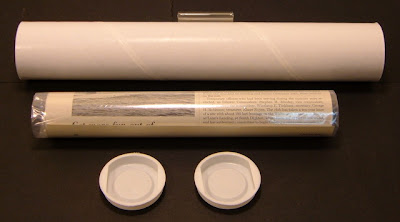
YOUR AD WILL BE SHIPPED ROLLED IN A PROTECTIVE PLASTIC BAG IN AN 80mm (TWICE USPS RECOMMENDED) THICK, 2 INCHES IN DIAMETER (SO AS NOT TO STRESS THE PAPER) SHIPPING TUBE WITH PRESS TIGHT PLASTIC END CAPS.
29118


Powered by SixBit's eCommerce Solution