DATE OF THIS ** ORIGINAL ** ILLUSTRATED COVER: 1955 George R. Crook (September 8, 1828 – March 21, 1890) was a career United States Army officer, most noted for his distinguished service during the American Civil War and the Indian Wars. During the 1880s, the Apache nicknamed Crook Nantan Lupan, which means "Grey Wolf." Crook was born to Thomas and Elizabeth Matthews Crook on a farm near Taylorsville, Ohio. Nominated to the United States Military Academy by Congressman Robert Schenck, he graduated in 1852, ranking near the bottom of his class. He was assigned to the 4th U.S. infantry as brevet second lieutenant, serving in California, 1852–61. He served in Oregon and northern California, alternately protecting or fighting against several Native American tribes. He commanded the Pitt River Expedition of 1857 and, in one of several engagements, was severely wounded by an Indian arrow. He established a fort in Northeast California that was later named in his honor; and later, Fort Ter-Waw in what is now Klamath Glen, California. During his years of service in California and Oregon, Crook extended his prowess in hunting and wilderness skills, often accompanying and learning from Indians whose languages he learned. These wilderness skills led one of his aides to liken him to Daniel Boone, and more importantly, provided a strong foundation for his abilities to understand, navigate and use Civil War landscapes to Union advantage. Crook was promoted to first lieutenant in 1856, and to captain in 1860. He was ordered east and in 1861, with the beginning of the American Civil War, was made colonel of the 36th Ohio Volunteer Infantry. He married Mary Tapscott Dailey, from Virginia. When the Civil War broke out, Crook accepted a commission as Colonel of thth Ohio Infantry and led it on duty in western Virginia. He was in command of the 3rd Brigade in the District of the Kanawha where he was wounded in a small fight at Lewisburg.[7] Crook returned to command his regiment during the Northern Virginia Campaign. He and his regiment were part of John Pope's headquarters escort at the Second Battle of Bull Run. After the Union Army's defeat at Second Bull Run, Crook and his regiment were attached to the Kanawha Division at the start of the Maryland Campaign. On September 12 Crook's brigade commander, Augustus Moor, was captured and Crook assumed command of the 2nd Brigade, Kanawha Division which had been attached to the IX Corps. Crook led his brigade at the Battle of South Mountain and near Burnside's Bridge at the Battle of Antietam. He was promoted to the rank of brigadier general on September 7, 1862. During these early battles he developed a lifelong friendship with one of his subordinates, Col. Rutherford B. Hayes of the 23rd Ohio Infantry. Following Antietam, General Crook assumed command of the Kanawha Division. His division was detached from the IX Corps for duty in the Department of the Ohio. Before long Crook was assigned to command an infantry brigade in the Army of the Cumberland. This brigade became the 3rd Brigade, 4th Division, XIV Corps, which he led at the Battle of Hoover's Gap. In July he assumed command of the 2nd Division, Cavalry Corps in the Army of the Cumberland. He fought at the battle of Chickamauga and was in pursuit of Joseph Wheeler during the Chattanooga Campaign. In February 1864, Crook returned to command the Kanawha Division, which was now officially designated the 3rd Division of the Department of West Virginia. To open the spring campaign of 1864, Lieutenant General Ulysses S. Grant ordered a Union advance on all fronts, minor as well as major. Grant sent for Brigadier General Crook, in winter quarters at Charleston, West Virginia, and ordered him to attack the Virginia and Tennessee Railroad, Richmond's primary link to Knoxville and the southwest, and to destroy the Confederate salt works at Saltville, Virginia. The 35-year-old Crook reported to army headquarters where the commanding general explained the mission in person. Grant instructed Crook to march his force, the Kanawha Division, against the railroad at Dublin, Virginia, 140 miles (230 km) south of Charleston. At Dublin he would put the railroad out of business and destroy Confederate military property. He was then to destroy the railroad bridge over New River, a few miles to the east. When these actions were accomplished, along with the destruction of the salt works, Crook was to march east and join forces with Major General Franz Sigel, who meanwhile was to be driving south up the Shenandoah Valley. After long dreary months of garrison duty, the men were ready for action. Crook did not reveal the nature or objective of their mission, but everyone sensed that something important was brewing. "All things point to early action", the commander of the second brigade, Colonel Rutherford B. Hayes, noted in his diary. On April 29, 1864, the Kanawha Division marched out of Charleston and headed south. Crook sent a force under Brigadier General William W. Averell westward towards Saltville, then pushed on towards Dublin with nine infantry regiments, seven cavalry regiments, and 15 artillery pieces, a force of about 6,500 men organized into three brigades. The West Virginia countryside was beautiful that spring, but the mountainous terrain made the march a difficult undertaking. The way was narrow and steep, and spring rains slowed the march as tramping feet churned the roads into mud. In places, Crook's engineers had to build bridges across wash-outs before the army could advance. The column reached Fayette on May 2, and then passed through Raleigh Court House and Princeton. On the night of May 8, the division camped at Shannon's Bridge, Virginia, 10 miles (16 km) north of Dublin. The Confederates at Dublin soon learned the enemy was approaching. Their commander, Colonel John McCausland, prepared to evacuate his 1100 men, but before transportation could arrive, a courier from Brigadier General Albert G. Jenkins informed McCausland that the two of them were ordered by General John C. Breckinridge to stop Crook's advance. The combined forces of Jenkins and McCausland amounted to 2,400 men. Jenkins, the senior officer, took command. Breaking camp on the morning of May 9, Crook moved his men south to the top of a spur of Cloyd's Mountain. Before the Union troops lay a precipitous, densely wooded slope with a meadow about 400 yards wide at the bottom. On the other side of the meadow, the land rose in another spur of the mountain, and there Jenkins' rebels waited behind hastily erected fortifications. Crook dispatched the third brigade under Colonel Carr B. White to work its way through the woods and deliver a flank attack on the rebel right. At 11 am, he sent Hayes' first brigade and Colonel Horatio G. Sickel's second brigade down the slope to the edge of the meadow, where they were to launch a frontal assault on the Confederates as soon as they heard the sound of White's guns. The slope before them was so steep that the officers had to dismount and descend on foot. Crook stationed himself with Hayes' brigade, which was to lead the assault. After a long, anxious wait, Hayes at last heard cannon fire off to his left and led his men at a slow double time out onto the meadow and into the rebels' musketry and artillery fire, which Crook called "galling". Their pace quickened as they neared the other side, but just before the up-slope they came to a waist-deep creek. The barrier caused little delay and the Yankee infantry stormed up the hill and engaged the rebel defenders at close range. The only man to have trouble with the creek was General Crook. Dismounted, he still wore his high riding boots, and as he stepped into the stream, the boots filled with water and bogged him down. Nearby soldiers grabbed their commander's arms and hauled him to the other side. Vicious hand-to-hand fighting erupted as the Yankees reached the crude rebel defenses. The Southerners gave way, tried to re-form, then broke and retreated up and over the hill towards Dublin. The Yankees rounded up rebel prisoners by the hundreds and seized General Jenkins, who had fallen wounded. At this point the discipline of the Union men wavered, and there was no organized pursuit of the fleeing enemy. General Crook was unable to provide leadership as the excitement and exertion had sent him into a faint. Colonel Hayes kept his head and organized a force of about 500 men from the soldiers milling about the site of their victory. With his improvised command, he set off, closely pressing the rebels. While the fight at Cloyd's Mountain was going on, a train pulled into the Dublin station and disgorged 500 fresh troops of General John Hunt Morgan's cavalry, which had just diverted Averell away from Saltville. The fresh troops hastened towards the battlefield, where they soon met their compatriots retreating from Cloyd's Mountain. The reinforcements halted the rout, but Colonel Hayes, although ignorant of the strength of the force now before him, immediately ordered his men to "yell like devils" and rush the enemy. Within a few minutes General Crook arrived with the rest of the division, and the defenders broke and ran. Cloyd's Mountain cost the Union army 688 casualties, while the rebels suffered 538 killed, wounded, and captured. Unopposed, Crook moved his command into Dublin, where he laid waste to the railroad and the military stores. He then sent a party eastward to tear up the tracks and burn the ties. The next morning the main body set out for their next objective, the New River bridge, a key point on the railroad, a few miles to the east. The Confederates, now commanded by Colonel McCausland, waited on the east side of the New River to defend the bridge. Crook pulled up on the west bank, and a long, ineffective artillery duel ensued. Seeing that there was little danger from the rebel cannon, Crook ordered the bridge destroyed, and both sides watched in awe as the structure collapsed magnificently into the river. McCausland, without the resources to oppose the Yankees any further, withdrew his battered command to the east. General Crook, supplies running low in a country not suited for major foraging, now entertained second thoughts about his orders to push on east and join Sigel in the Shenandoah Valley. At Dublin he had intercepted an unconfirmed report that General Robert E. Lee had beaten Grant badly in the Wilderness, which led him to consider whether the Confederate commander might not soon move against Crook with a vastly superior force. Having accomplished the major part of his mission, destruction of the Virginia and Tennessee Railroad, Crook turned his men north and after another hard march, reached the Union base at Meadow Bluff, West Virginia. That July Crook assumed command of a small force called the Army of the Kanawha. Crook was defeated at the Second Battle of Kernstown. Nevertheless, he was appointed as a replacement for David Hunter in command of the Department of West Virginia the following day. However Crook did not assume command until August 9 Along with the title of his department Crook added "Army of West Virginia." Crook's army was soon absorbed into Philip H. Sheridan's Army of the Shenandoah and for all practical purposes functioned as a corps in that unit. Although Crook's force kept its official designation as the Army of West Virginia, it was often referred to as the VIII Corps. The official VIII Corps of the Union Army was led by Lew Wallace during this time and its troops were on duty in Maryland and Northern Virginia. Crook led his corps in the Valley Campaigns of 1864 at the battles of Opequon (Third Winchester), Fisher's Hill, and Cedar Creek. On October 21, 1864, he was promoted to major general of volunteers. In February 1865 General Crook was captured by Confederate raiders at Cumberland, Maryland, and held as a prisoner of war in Richmond until exchanged a month later. He very briefly returned to command the Department of West Virginia until he took command of a cavalry division in the Army of the Potomac during the Appomattox Campaign. Crook first went into action with his division at the battle of Dinwiddie Court House. He later took a prominent role in the battles of Five Forks, Amelia Springs, Sayler's Creek and Appomattox Court House. On February 1, 1935, President Franklin D. Roosevelt signed legislation that allowed the U.S. Department of the Treasury to sell a new type of security, called the savings bond, to encourage saving during the Great Depression. The first Series A savings bond was issued a month later, with a face value of $25. They were marketed as a safe investment that was accessible to everyone. Series B, C, and D bonds followed over the next few years. Series E bonds, referred to as Defense Bonds, were a major source of financing in the period just before U.S. entry into World War II. On April 30, 1941, Roosevelt purchased the first Series E bond from Treasury Secretary Henry Morgenthau Jr.; the next day, they were made available to the public. After the attack on Pearl Harbor, Defense Bonds became known as War Bonds. Stamps featuring a Minuteman statue design in denominations of 10¢, 25¢, 50¢, $1, and $5 were also sold to be collected in booklets which, when filled, could be exchanged to purchase interest-bearing Series E bonds. All the revenue received from the bonds went directly to support the war effort. After the war ended, savings bonds became popular with families, with purchasers waiting to redeem them so the bonds would grow in value. To help sustain post-war sales, they were advertised on television, films, and commercials. When John F. Kennedy was president, he encouraged Americans to purchase them, which stimulated a large enrollment in savings bonds. By 1976, President Ford helped celebrate the 35th anniversary of the U.S. savings bond program. In 1990, Congress created the Education Savings Bond program which helped Americans finance a college education. A bond purchased on or after January 1, 1990, is tax-free (subject to income limitations) if used to pay tuition and fees at an eligible institution. In 2002, the Treasury Department started changing the savings bond program by lowering interest rates and closing its marketing offices. As of January 1, 2012, financial institutions no longer sell paper savings bonds. That year, the Department of the Treasury's Bureau of the Public Debt made savings bonds available for purchasing and redeeming online. U.S. savings bonds are now only sold in electronic form at a Department of the Treasury website, TreasuryDirect, with the exception that paper Series I savings bonds can be purchased with a portion of a federal income tax refund using Form 8888.
**For multiple purchases please wait for our combined invoice. Shipping discount are ONLY available with this method. Thank You.
SPECIAL CHARACTERISTICS/DESCRIPTIVE WORDS:
Early life and military career
Civil War
Early service
Southwest Virginia
Shenandoah Valley
ILLUSTRATOR/ARTIST:
ADVERT SIZE: SEE RULER SIDES IN PHOTO FOR DIMENSIONS ( ALL DIMENSIONS IN INCHES)
Our AD's and COVER'S are ORIGINAL and 100% guaranteed --- (we code all our items to insure authenticity) ---- we stand behind this.
IF YOU WISH TO PURCHASE A RE-MASTERED COPY PLEASE SEE "MODERN POSTERS" IN OUR STORE.
As graphic collectors ourselves, we take great pride in doing the best job we can to preserve and extend the wonderful historic graphics of the past.
PLEASE LOOK AT OUR PHOTO CLOSELY AS IT IS (ALBEIT LOWER RESOLUTION) THE PRODUCT BEING SOLD.....NOT STOCK IMAGES
**NOTE** : PAGES MAY SHOW AGE WEAR AND IMPERFECTIONS TO MARGINS, WITH CLOSED NICKS AND CUTS, WHICH DO NOT AFFECT AD IMAGE OR TEXT WHEN MATTED AND FRAMED. SOMETIMES THE PAGES HAVE BEEN TRIMMED.. PLEASE NOTE THE ACTUAL SIZE OF SELLING AD IN THE ATTACHED PHOTO IMAGE... WHAT YOU SEE IS WHAT YOU GET...
We ship via United States Postal Service. We have a 4 day handling time not including weekends or holidays but normally we have all orders processed, packed and shipped within 48 hrs.
A Note to our international buyers (Including Canada). Please read before placing a bid or buying an item:
**Import taxes, duties and charges are not included in the item price or shipping charges. These charges are the buyer's responsibility. Please check with your country's customs office to determine what these additional costs will be prior to bidding/buying on items. These charges are normally collected by the shipping company or when you pick the item up, this is not an additional shipping charge. We are not responsible for shipping times to international buyer's. Your country's customs may hold the package for a month or more.
**We pride ourselves on quality products, great service, accurate gradations and fast shipping.**
BRANCHWATER BOOKS

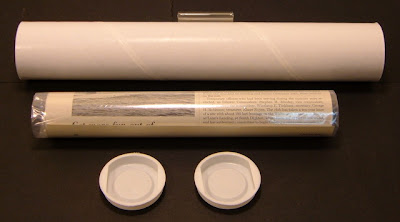
YOUR AD WILL BE SHIPPED ROLLED IN A PROTECTIVE PLASTIC BAG IN AN 80mm (TWICE USPS RECOMMENDED) THICK, 2 INCHES IN DIAMETER (SO AS NOT TO STRESS THE PAPER) SHIPPING TUBE WITH PRESS TIGHT PLASTIC END CAPS.
29161


Powered by SixBit's eCommerce Solution