DATE OF THIS ** ORIGINAL ** ILLUSTRATED COVER: 1934 Horse racing is the second largest spectator sport in Great Britain, and one of the longest established, with a history dating back many centuries. According to a report by the British Horseracing Authority it generates £3.39 billion total direct and indirect expenditure in the British economy, of which £1.05 Billion is from core racing industry expenditure and the major horse racing events such as Royal Ascot and Cheltenham Festival are important dates in the British and international sporting and society calendar. The sport has taken place in the country since Roman times and many of the sport's traditions and rules originated there. The Jockey Club, established in 1750, codified the Rules of Racing and one of its members, Admiral Rous laid the foundations of the handicapping system for horse racing, including the weight-for-age scale. Britain is also home to racecourses including Newmarket, Ascot and Cheltenham and races including The Derby at Epsom, The Grand National and Cheltenham Gold Cup. The UK has also produced some of the greatest jockeys, including Fred Archer, Sir Gordon Richards and Lester Piggott. Britain has also historically been a hugely important centre for thoroughbred racehorse breeding. In fact all racehorses are called English Thoroughbred, the breed having been created in England. All modern thoroughbred racehorses can trace a line back to three foundation sires which were imported to Britain in the late 17th/early 18th centuries and the General Stud Book first published by James Weatherby still records details of every horse in the breed. Gambling on horseraces has been one of the cornerstones of the British betting industry and the relationship between the two has historically been one of mutual dependence. The betting industry is an important funder of horse racing in Great Britain, through the betting levy administered by the Horserace Betting Levy Board and through media rights negotiated by racecourses and betting shops. There are two main forms of horse racing in Great Britain. Collectively, the above racing is often referred to as racing "under rules", since there is another form of racing which is run on an altogether more informal and ad hoc basis, known as point-to-point racing. Point-to-point is a form of steeplechasing for amateur riders. All the above forms of the sport are run under the auspices of the governing and regulatory body for horse racing in Great Britain, the British Horseracing Authority. with the exception of point-to-pointing which is administered by the Point-to-Point Authority with the BHA taking on regulatory functions.[There is also a limited amount of harness racing which takes place under the auspices of the British Harness Racing Society and Arabian racing which takes place under the auspices of the Arabian Racing Organisation. In the early days of British horse racing, owners tended to ride their own horses in races. This practice died out as racing became more organised and the owners, most of them aristocrats, had grooms ride the horses instead. Jockeys at this time were often scruffy and unkempt and not well-regarded. The 19th century racing chronicler, Nimrod, referred to the "costume" of the jockeys of the previous century as "deformity personified". Nevertheless, several Yorkshire-based jockeys became acclaimed in the mid-to-late 18th century. These included John Mangle, Bill Pierse, John Shepherd, three different individuals named John Singleton, Ben Smith and Bill Clift. Between them they won many of the early runnings of the oldest classic, the St. Leger. Their counterparts in the south became similarly celebrated, and exercised a similar dominance over the Newmarket classics. Amongst their number were Sam Chifney, Jem Robinson, the Arnull family – John, Sam and Bill – and "the first man to bring respectability to the profession" – Frank Buckle. The 19th century was dominated by three jockeys – Nat Flatman, George Fordham and Fred Archer – who between them won forty flat jockeys' championships. With the expansion of print media and the growth of interest in horse racing among ordinary people, these jockeys became nationally recognised figures, with a profile enjoyed by the footballers and TV celebrities of today. When Archer died at his own hand, it is said: The high profile of jockeys at this time is illustrated (literally) by the number of caricatures of jockeys that feature in Victorian society magazine, Vanity Fair, alongside Members of Parliament (MPs), aristocrats and other national figures. Three figures dominate the flat racing scene of the 20th century too – Steve Donoghue, Gordon Richards and Lester Piggott. Richards is often regarded as the greatest jockey ever and set many records which still stand, including most flat race victories and most flat jockey championships. Piggott is descended from the great racing families of the 19th century, the Days and the Cannons. In the modern day, Frankie Dettori is the jockey with the widest public profile beyond racing, appearing on Celebrity Big Brother and launching his own food range. He has also gained public attention for his feats on the racetrack, including his 'Magnificent Seven' wins at Ascot in 1997 and three jockeys' championships. Kieren Fallon was a regular champion around the turn of the century, and younger jockeys to have won multiple championships include Ryan Moore and current champion Oisin Murphy. Hayley Turner came to prominence as the first British woman to win a Group 1 race outright and as Champion Apprentice in 2005, and more recently Hollie Doyle has broken several of Turner's records and been nominated for BBC Sports Personality of the Year. Historically, jumps jockeys have not had the same profile as their flat counterparts, but this changed to some extent in the 20th century. The large television audience enjoyed by the Grand National has helped in this regard. Previously unknown jockeys like 2013 winner Ryan Mania have received their first nationwide coverage as a result of the race. The most-celebrated jumps jockey of all-time is the Northern Irishman Tony McCoy, winner of every Jumps Jockeys' Championship from 1995/96 until 2014/15 and the only horse racing figure to ever win the BBC Sports Personality of the Year. He broke Gordon Richards' record for most winners in a season in 2001/02 and his total number of career wins by the time he retired was 4,358, well eclipsing the numbers set by Peter Scudamore and Richard Dunwoody who between them were the leading jumps jockeys of the 1980s and early 1990s. Richard Johnson, who has been second to McCoy in nearly all of his championships has the second most wins jockey of all time, and gained tabloid fame in the late 1990s for his relationship with Zara Philips. Former champion jump jockeys Dick Francis and John Francome have become known to a wider public after enjoying second careers as writers of racing-based fiction, while Francome (until the end of 2012) and Mick Fitzgerald are known as horse racing TV pundits. As of November 2017, there are around 450 professional jockeys licensed in the United Kingdom, along with around 300 amateur riders.
**For multiple purchases please wait for our combined invoice. Shipping discount are ONLY available with this method. Thank You.
SPECIAL CHARACTERISTICS/DESCRIPTIVE WORDS: THE SPORTSMAN MAGAZINE WAS PUBLISHED IN THE 1930'S AS AN OUTDOOR LIFESTYLE MAGAZINE WITH A FOCUS ON HUNTING FISHING OUTDOOR RECREATION CAMPING - WITH BEAUTIFUL COLOR ILLUSTRATED COVERS BY FAMOUS ILLUSTRATORS OF THE TIME PERIOD. THESE COVERS HAVE SOME VISIBLE WEAR, SO EXAMINE CLOSELY.
Types of racing
Jockeys
ILLUSTRATOR/ARTIST: Guy Arnoux was a French artist who was born in 1886. Guy Arnoux's work has been offered at auction multiple times, with realized prices ranging from 33 USD to 5,000 USD, depending on the size and medium of the artwork. Since 2002 the record price for this artist at auction is 5,000 USD for AIR FRANCE / AMÉRIQUE DU NORD, sold at Swann Auction Galleries in 2013. In MutualArt’s artist press archive, Guy Arnoux is featured in Artcurial to Offer the Collection Isabelle & Hervé Poulain, a piece from ArtDaily in March 2022. The artist died in 1951.
ADVERT SIZE: SEE RULER SIDES IN PHOTO FOR DIMENSIONS ( ALL DIMENSIONS IN INCHES)
Our AD's and COVER'S are ORIGINAL and 100% guaranteed --- (we code all our items to insure authenticity) ---- we stand behind this.
IF YOU WISH TO PURCHASE A RE-MASTERED COPY PLEASE SEE "MODERN POSTERS" IN OUR STORE.
As graphic collectors ourselves, we take great pride in doing the best job we can to preserve and extend the wonderful historic graphics of the past.
PLEASE LOOK AT OUR PHOTO CLOSELY AS IT IS (ALBEIT LOWER RESOLUTION) THE PRODUCT BEING SOLD.....NOT STOCK IMAGES
**NOTE** : PAGES MAY SHOW AGE WEAR AND IMPERFECTIONS TO MARGINS, WITH CLOSED NICKS AND CUTS, WHICH DO NOT AFFECT AD IMAGE OR TEXT WHEN MATTED AND FRAMED. SOMETIMES THE PAGES HAVE BEEN TRIMMED.. PLEASE NOTE THE ACTUAL SIZE OF SELLING AD IN THE ATTACHED PHOTO IMAGE... WHAT YOU SEE IS WHAT YOU GET...
We ship via United States Postal Service. We have a 4 day handling time not including weekends or holidays but normally we have all orders processed, packed and shipped within 48 hrs.
A Note to our international buyers (Including Canada). Please read before placing a bid or buying an item:
**Import taxes, duties and charges are not included in the item price or shipping charges. These charges are the buyer's responsibility. Please check with your country's customs office to determine what these additional costs will be prior to bidding/buying on items. These charges are normally collected by the shipping company or when you pick the item up, this is not an additional shipping charge. We are not responsible for shipping times to international buyer's. Your country's customs may hold the package for a month or more.
**We pride ourselves on quality products, great service, accurate gradations and fast shipping.**
BRANCHWATER BOOKS

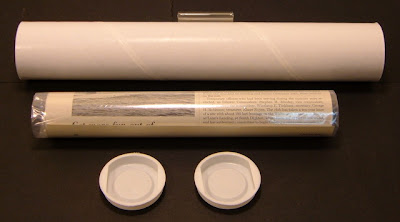
YOUR AD WILL BE SHIPPED ROLLED IN A PROTECTIVE PLASTIC BAG IN AN 80mm (TWICE USPS RECOMMENDED) THICK, 2 INCHES IN DIAMETER (SO AS NOT TO STRESS THE PAPER) SHIPPING TUBE WITH PRESS TIGHT PLASTIC END CAPS.
29809


Powered by SixBit's eCommerce Solution