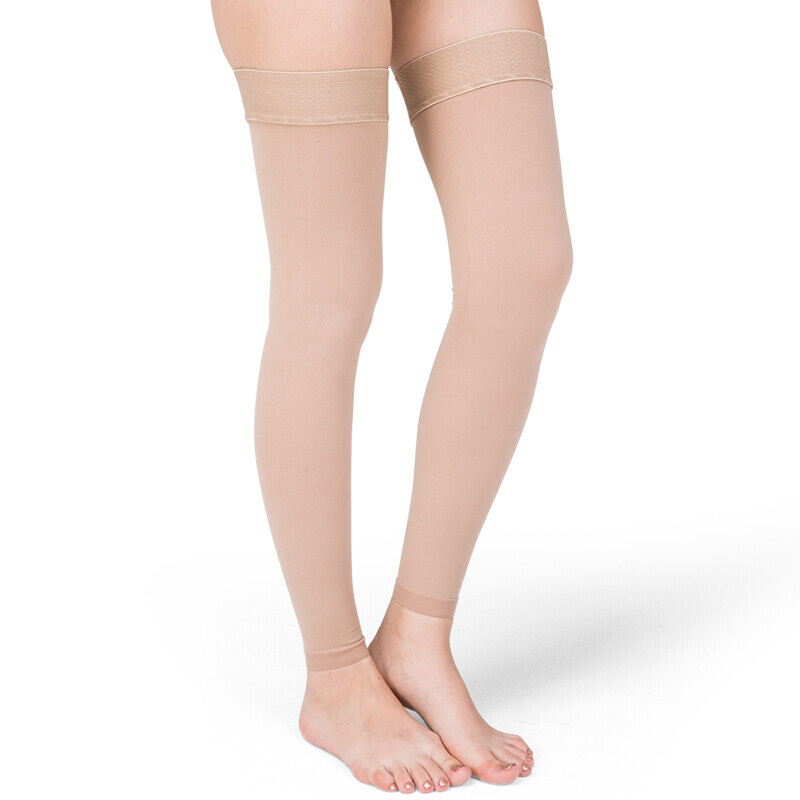
Description:
Item Condition: 100% Brand New and High Quality
Compression Level: 20-30 mmHg
Item Color: Black & Beige
Gender: Unisex | Women | Men
Material: Nylon 70%, Spandex 30%
Size: S, M, L, XL, XXL
Item Quantity: 1 Pair

How to Choose and Use Compression Stockings?
People wear compression stockings for comfort, to do better in sports, and to help prevent serious medical conditions.
Basically, they improve your blood flow. They can lessen pain and swelling in your legs. They can also lower your chances of getting deep vein thrombosis (DVT), a kind of blood clot, and other circulation problems.
Who Uses Them?
▸ People with or at risk for circulation problems, like DVT, varicose veins, or diabetes
▸ People who've just gotten surgery
▸ Those who can't leave their bed or have a hard time moving their legs
▸ People who stand all day at work
▸ Athletes
▸ Pregnant women
▸ People who spend long stretches of time on airplanes, like pilots
What Do They Do?
The pressure these stockings put on your legs helps your blood vessels work better. The arteries that take oxygen-rich blood to your muscles can relax, so blood flows freely. The veins get a boost pushing blood back to your heart.
Compression stockings can keep your legs from getting tired and achy. They can also ease swelling in your feet and ankles as well as help prevent and treat spider and varicose veins. They may even stop you from feeling light-headed or dizzy when you stand up.
Because the blood keeps moving, it's harder for it to pool in your veins and make a clot. If one forms and breaks free, it can travel with your blood and get stuck somewhere dangerous, like your lungs. Clots also make it harder for blood to flow around them, and that can cause swelling, discolored skin, and other problems.
How to Wear Them?
Smooth out the stockings so they lie flat against your skin. Avoid bunching.
Make sure they aren't too long. Don't fold or roll the tops down, because that can make them too tight. It could cause blood flow problems or cut off your circulation like a tourniquet.
If your doctor told you to wear them, you'll probably want to keep them on most of the time. But you can take them off to shower or bathe. You can wear socks, slippers, and shoes over compression stockings. Check with your doctor about how often and how long you need to use them.