
SAFE & SECURE SHOPPING
100% SATISFACTION GUARANTEED
FAST SHIPPING

Product Description

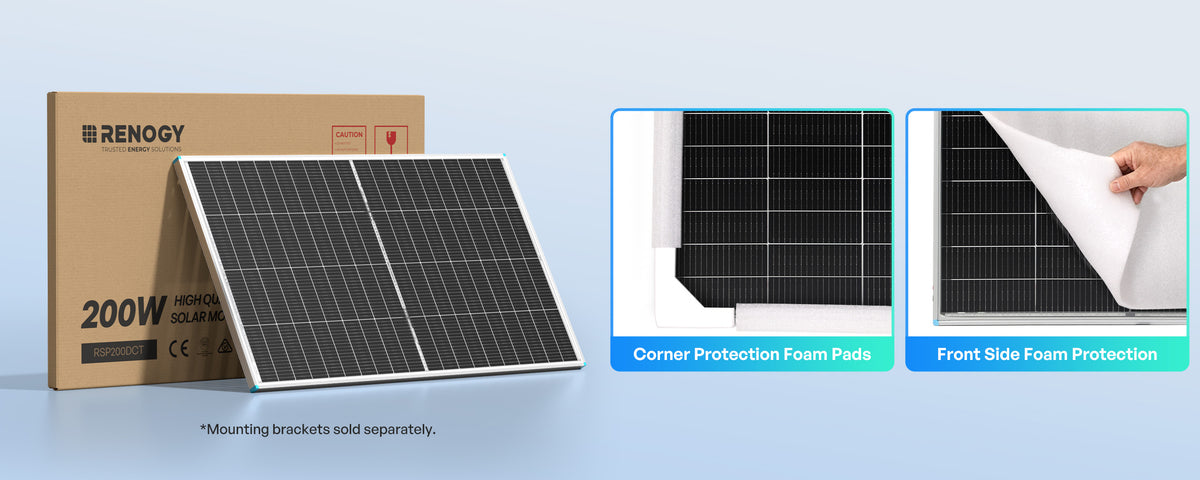
200W Bifacial Solar Panel N-Type 16BB Mono 12V IP68 PV Home RV Off Grid


Same Sunlight, More Energy
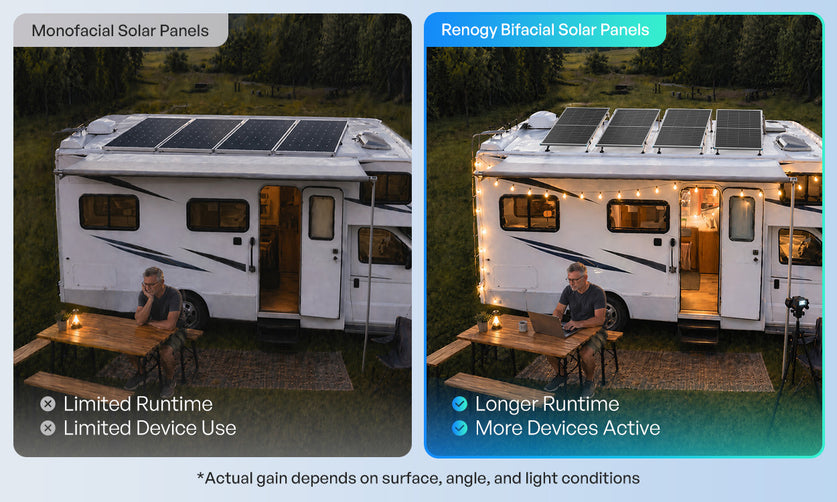
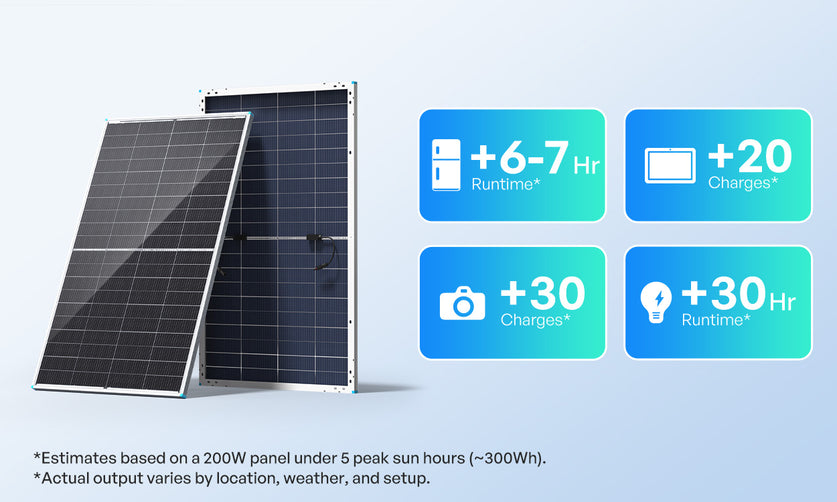
Extra solar harvest helps keep your battery ready after sunset, giving you more time for lights, devices, cooling, and everyday off-grid comfort.


What 30% More Energy Really Means
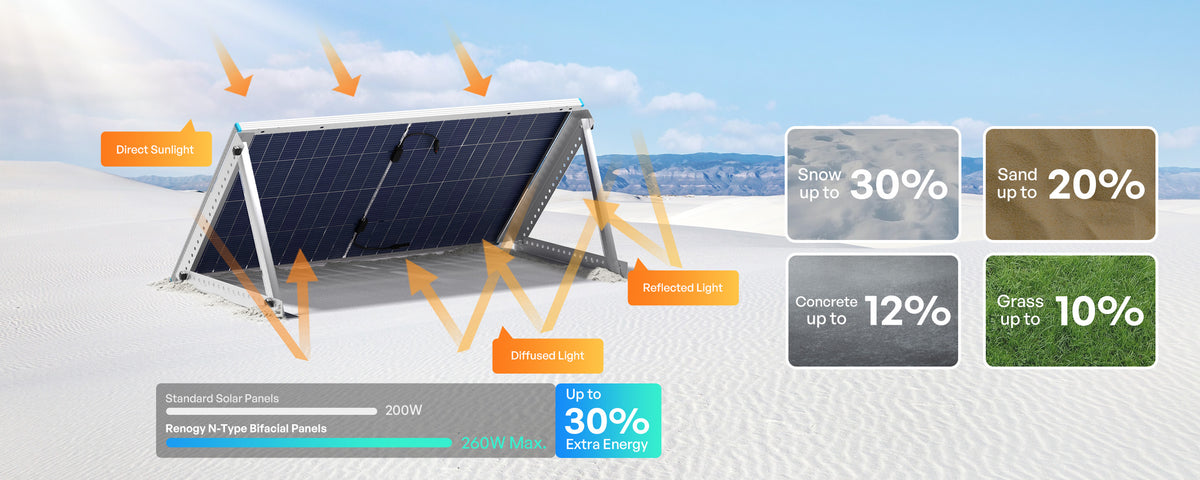
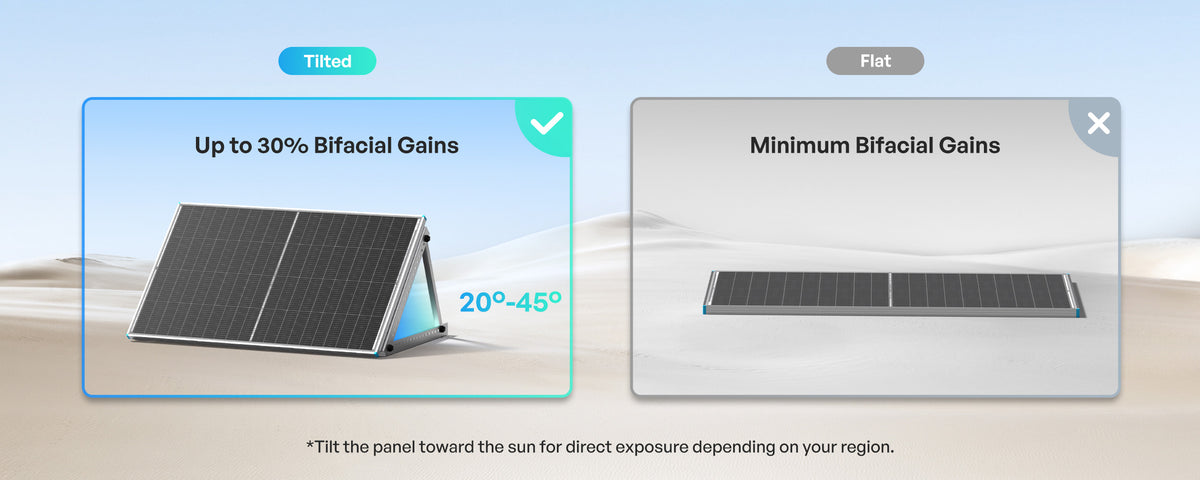
Up to 30% more energy does not mean the panel's rated wattage changes. It means the panel can collect extra energy from rear-side reflected light,
helping send more usable charge into your system when setup conditions are right.


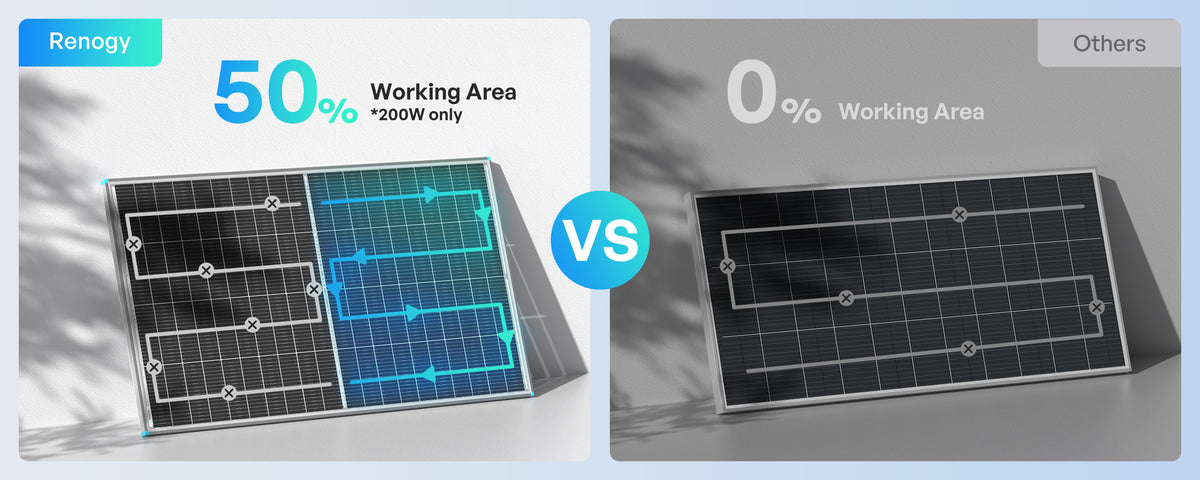
Keeps Producing Through Partial Shade
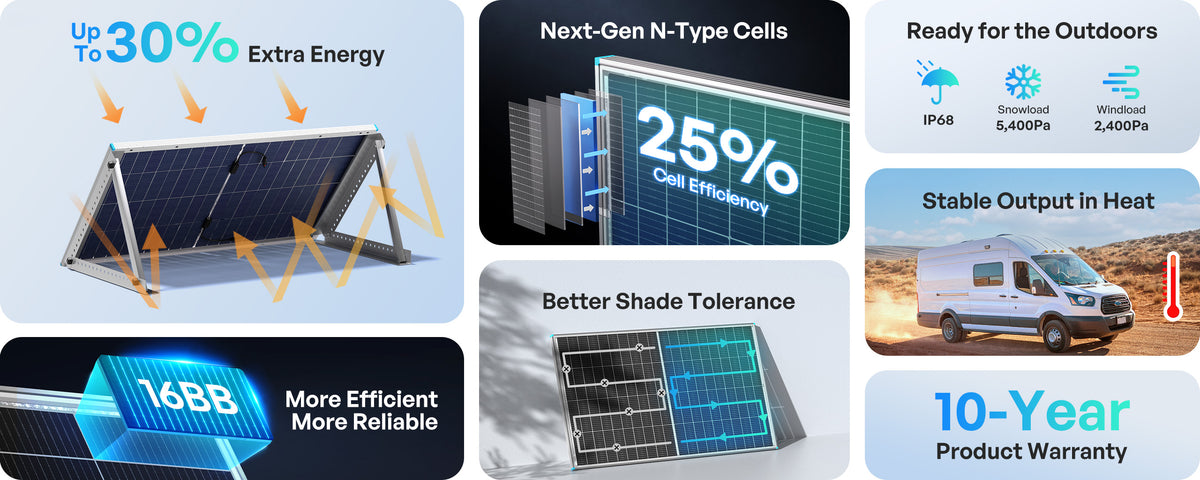
The panels are divided into two independent power zones through a parallel design, so if one side is shaded by a vent, a tree, or a rooftop obstacle, the other continues generating at full capacity.


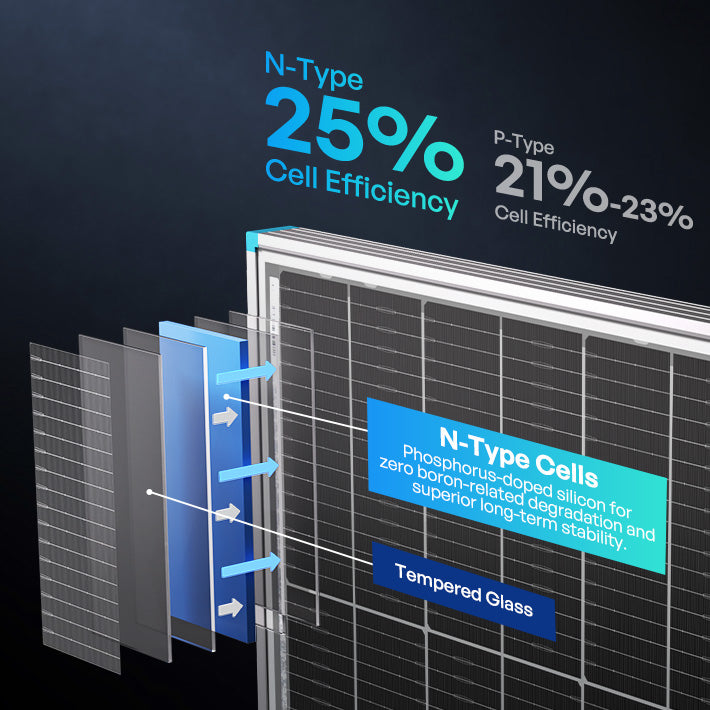
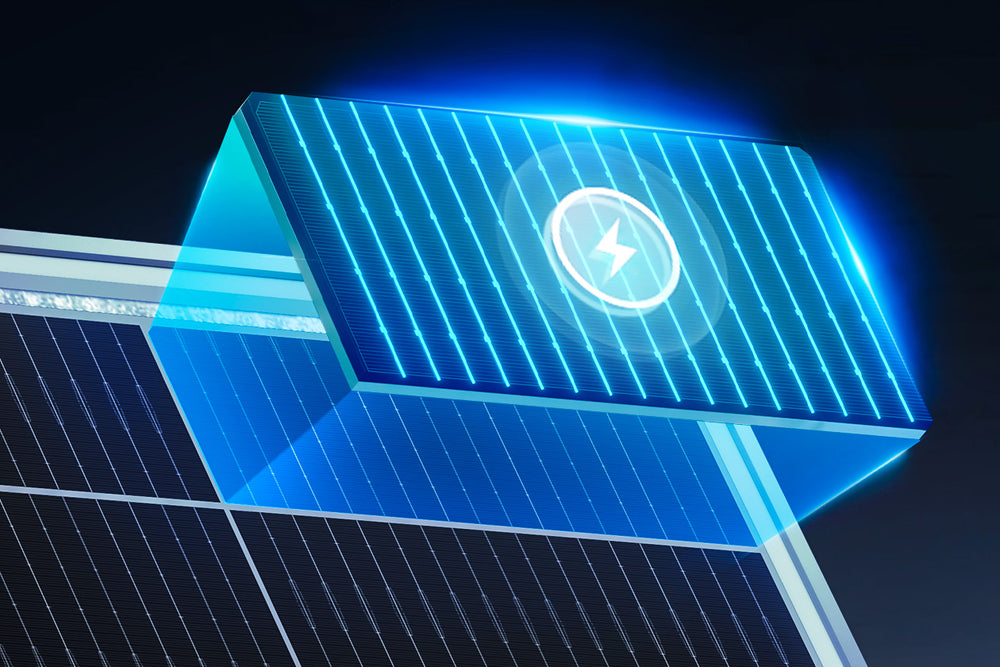
- Ultra-High Cell Efficiency: Renogy's new high-efficiency series of modules utilize new A+ grade cells. The N-Type cell technology improves the cell conversion efficiency by increasing the open circuit voltage and short circuit current of the cells, thereby increasing the cell conversion efficiency by up to 25%.

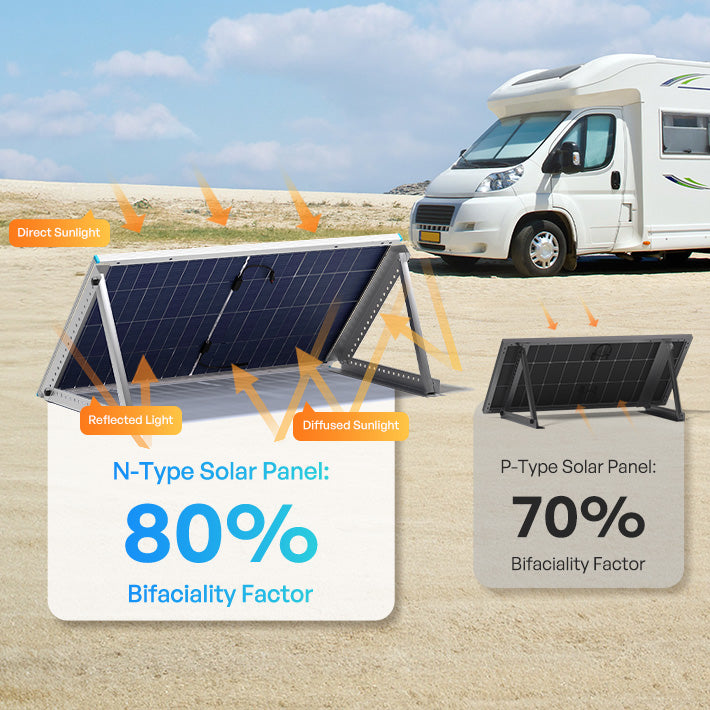
- Bifacial Solar Panel: Transparent backsheet material and double-sided cells are used to realize double-sided power generation of solar panels. The solar panel back can provide an additional 5-30% of nominal power generation, bringing you more power generation benefits!

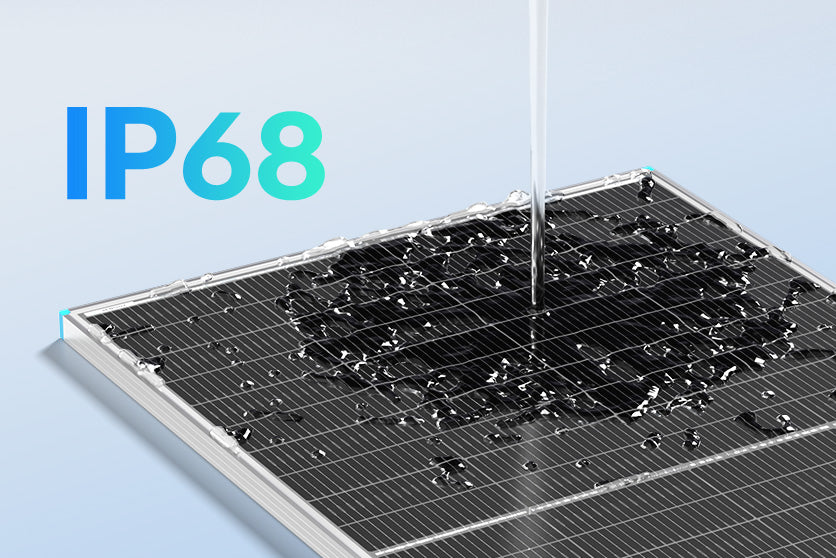
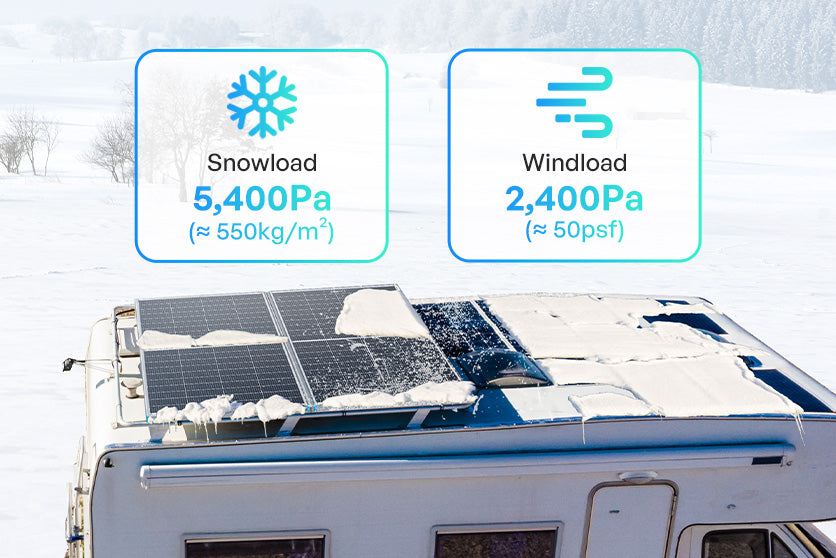
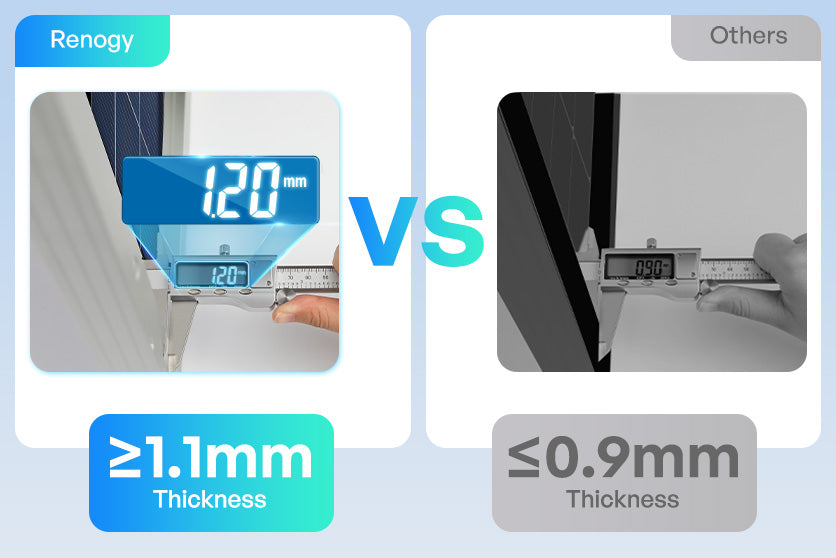
- Built to Last: Corrosion-resistant aluminum frame provides extended outdoor use that ensures the panel can last for decades. Sturdy construction, designed to withstand wind loads of 2400Pa, and snow loads of 5400Pa. The IP68 rated junction box is versatile due to its ability to withstand dirt, dust, debris, and low-pressure water jets.

- Fast and Easy Installation: Re-drilled holes on the back of the panel allow for fast mounting and securing, ideal for off-grid applications including RVs, rooftops, cabins, yachts, sunrooms and more. To get the most out of your solar panels, they are recommended for use with Tilt Mount Brackets. Of course they can also be used with Renogy's other mounts such as: corner mounts.

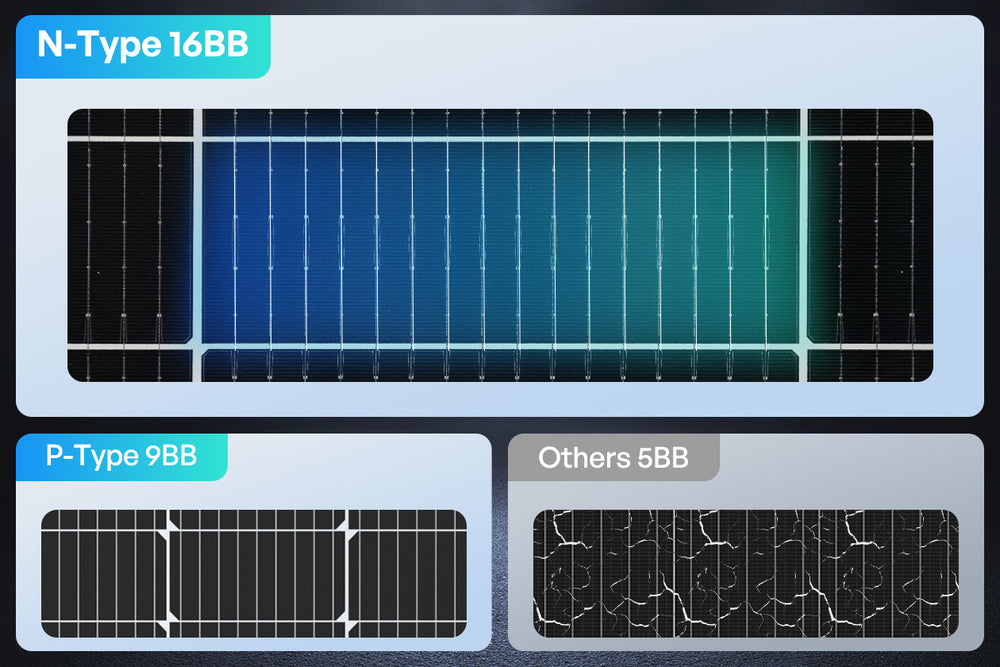
- 16BB for Higher Conversion Efficiency & Longer Lifespan: Renogy's new high-efficiency module series utilizes advanced 16BB cell technology, which effectively improves the module's photoelectric conversion efficiency; at the same time, it reduces the impact of hot spots and hidden cracks, resulting in a longer service life and more efficient module performance.

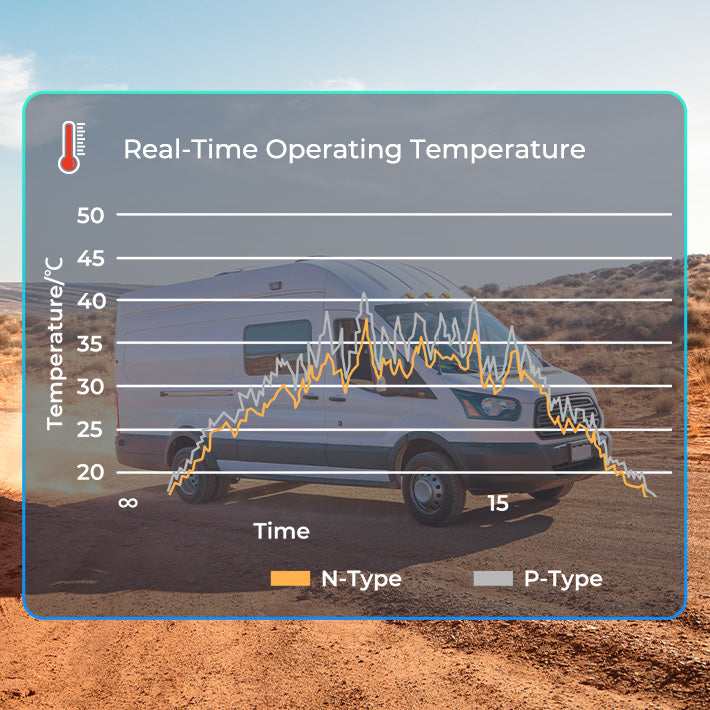
- Enhanced Performance in High Temperatures: The solar panels are characterized by a low temperature coefficient, which means that Renogy's new high-efficiency modules have a much lower power loss than ordinary modules in high-temperature environments, giving them a much better product performance. This enables customers to generate more power even in the summer months or in extremely hot areas.

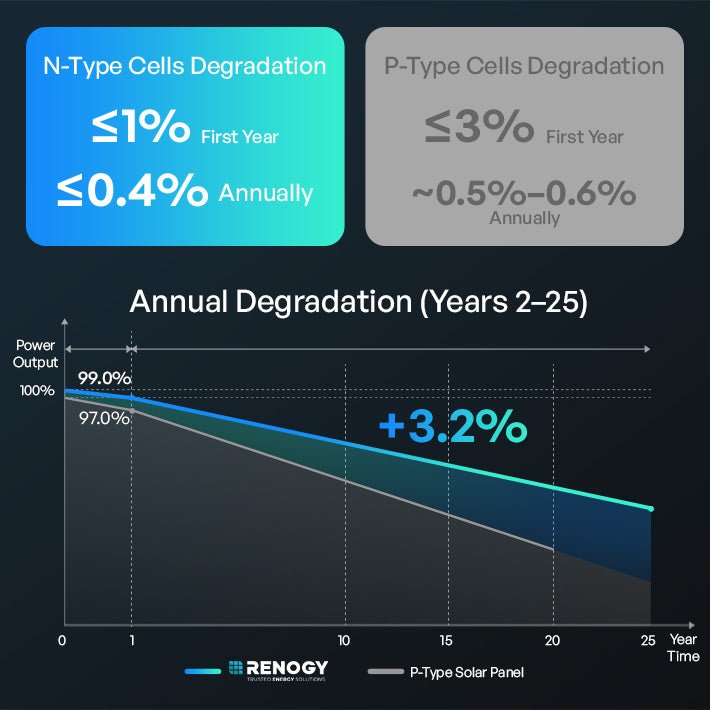
- 10-Year Warranty: This solar panel comes with an excellent 10-year materials and workmanship warranty and a 25-year 80% output warranty.

100W Bifacial N-Type Solar Panel

Max Power at STC: 100WOpen Circuit Voltage: 28.5V
Short Circuit Current: 4.45AOptimum Operating Voltage: 23.6V
Optimum Operating Current: 4.24AMaximum System Voltage: 600VDC
Maximum Series Fuse Rating: 25AModule Efficiency: 20%
Operating Temperature: -40°F~185°F / -40℃~85℃Dimensions: 34.1 x 22.8 x 1.2in / 865 x 578 x 30mm
Weight: 11.97 lbs / 5.43kgCertifications: CE, RCM, TSCA, CA65

200W Bifacial N-Type Solar Panel

Max Power at STC: 200WOpen Circuit Voltage: 29.6V
Short Circuit Current: 8.7AOptimum Operating Voltage: 25.0V
Optimum Operating Current: 8.0AMaximum System Voltage: 600VDC
Maximum Series Fuse Rating: 25AModule Efficiency: 20%
Operating Temperature: -40°F~185°F / -40℃~85℃Dimensions: 51.7 x 30.1 x 1.2in / 1312 x 765 x 30mm
Weight: 22.71 lbs / 10.3kgCertifications: CE, RCM, TSCA, CA65

320W Bifacial N-Type Solar Panel

Max Power at STC: 320WOpen Circuit Voltage: 35.04V
Short Circuit Current: 10.94AOptimum Operating Voltage: 30.29V
Optimum Operating Current: 10.57AMaximum System Voltage: 1500VDC
Maximum Series Fuse Rating: 25AModule Efficiency: 20.5%
Operating Temperature: -40°F~185°F / -40℃~85℃Dimensions: 69.9 x 34.7 x 1.4in / 1775 x 880 x 35mm
Weight: 36.82 lbs / 16.7kgCertifications: CE, RCM, TSCA, CA65

400W Bifacial N-Type Solar Panel

Max Power at STC: 400WOpen Circuit Voltage: 39.42V
Short Circuit Current: 13.06AOptimum Operating Voltage: 34.0V
Optimum Operating Current: 11.76AMaximum System Voltage: 1500VDC
Maximum Series Fuse Rating: 25AModule Efficiency: 20.5%
Operating Temperature: -40°F~185°F / -40℃~85℃Dimensions: 67.8 x 44.7 x 1.4in / 1722 x 1134 x 35mm
Weight: 45.42 lbs / 20.6kgCertifications: CE, RCM, TSCA, CA65

1. How ShadowFlux outperforms under real-world shadows?

Traditional solar panels can lose all power from just one shaded cell. ShadowFlux is built to handle real-world shadows, keeping you generating when others can’t. It delivers much higher output with far less power loss under the same shading.


2. Is ShadowFlux designed for a 12V or 24V system?
ShadowFlux features a high open-circuit voltage of 36.5V and is compatible with both 12V and 24V battery systems. However, in partially shaded conditions(from trees, debris, or boat masts), a 12V system provides much better stability and reliability.


3. What kinds of shading is ShadowFlux designed for?
ShadowFlux’s advanced cell tech cuts power loss in all common shading cases: small spots (Bird droppings,leaves,mud), lines (wires,rigging), patches (vents,branches), and moving shadows. For best results, keep over half the panel in direct sunlight.


4. What kind of charge controller do I need for ShadowFlux?
Use an MPPT charge controller for best performance. MPPTs are more efficient and use full panel voltage even in low light. Some PWM controllers may fail, so MPPT is safer.
Recommended specs: Max Input Voltage: ≥ 50V, Charging Current: > 10A


5. What do I need to complete my off-grid solar power system?
To set up an off-grid solar system, you’ll need a solar panel connected to a charge controller to regulate the current, and a battery to store the power. You’ll also need adapter kit cables to connect the solar panels and charge controller, plus tray cables to link the controller to a deep-cycle battery.


6. What does off-grid and on-grid mean?
On-grid simply means solar power equipment (array or solar panel) is connected to the electrical grid, while off-grid refers to systems that are not connected to the grid and therefore store the generated power for later use. Off-grid systems are not affected by grid blackouts.


7. Why is my solar panel under producing?
Several factors can cause solar panels to underperform, most commonly environmental conditions like indirect sunlight, high temperatures, cloudy skies, or dirt and debris on the glass surface, all of which reduce output.


8. How should I connect solar panels in my electrical circuit (series vs parallel) ?
Solar panels can be connected in series or in parallel to meet your electrical circuit size and power demand. Connecting solar panels in series will have the effect of adding up their operating voltage output, while system current output will be the same as that for one panel. While, connecting solar panels in parallel will have a different effect; individual panels operating current output will add up to be the system output current, while system output voltage will be the same as the output voltage of one solar panel. To meet the optimum power output and system rating for your power system, you can use both parallel and series connections.


9. How many solar panels do I need?
The best way to gauge how many solar panels you need, is to understand and define the power load needed from this system. Power is measured in Watts, and capacity is commonly measured in Watt-hours (multiplying power output in watts by the required number of hours of operation multiplied by a safety factor of 1.5-2). Therefore, it is wise to size your battery bank first based on the minimum required capacity, and accordingly decide how many panels or how much power input is needed.


10. What does the 12V/24V in the product title of the solar panel mean? Why is it different from the value on the label/specification sheet of the solar panel?
"The 12V/24V in product titles (ex. 150W 12V CIGS Solar panel) does not refer to the actual voltage (Voc or Vmp) of the solar panels, but rather to the voltage of the solar system or energy storage system to which the panel is best suited. The voltage of the solar panel must be higher than the solar system voltage. "
5-year output & material and workmanship warrantyPerformance Warranty: 25-year 80% output warranty


Datacaciques