RC Truck LED Light Sound Display System for 1/14 Tamiya SCANIA 770S VOLVO Car
Features:
100% brand new and durable
Make your model more realistic
Suit for 1/14 RC Tamiya tractor series
Core parameters
Power supply requirements: A separate power supply is required, the interface type is JST, and the voltage compatibility range is 5V to 13V.
Function channel: Equipped with 6-channel PWM, which can realize functions including steering, gearbox shifting, forward and reverse, light switch, starting sound and flashing overtaking lights, double flashes and horn.
Sound selection: including for Scania V8 open tube, for Scania 143, for Volvo, for MAN, for Mercedes-Benz, for Unimog, for King Kenworth.
Standard configuration
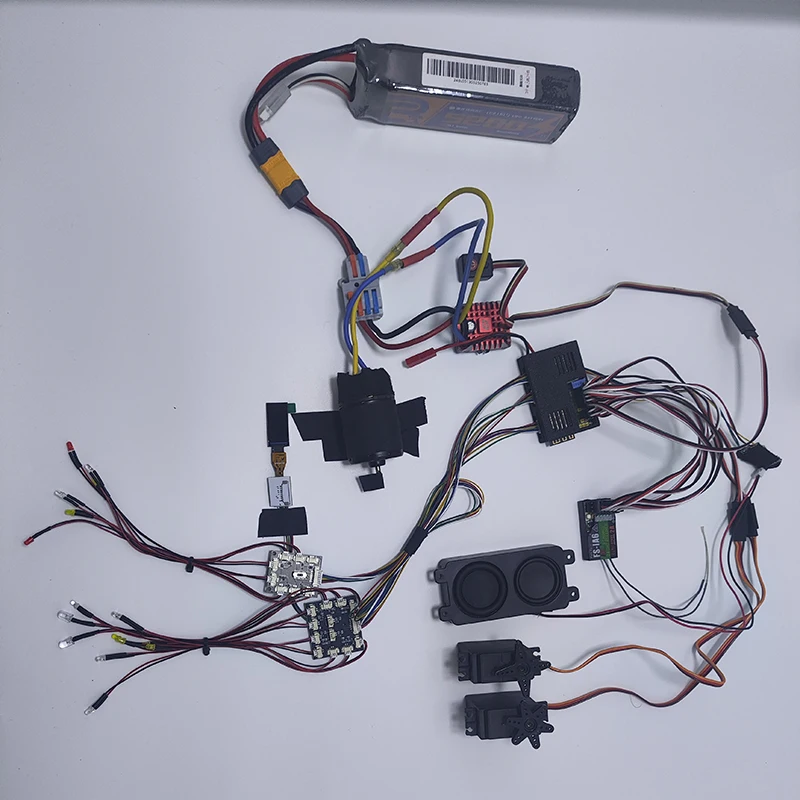
Connecting wires
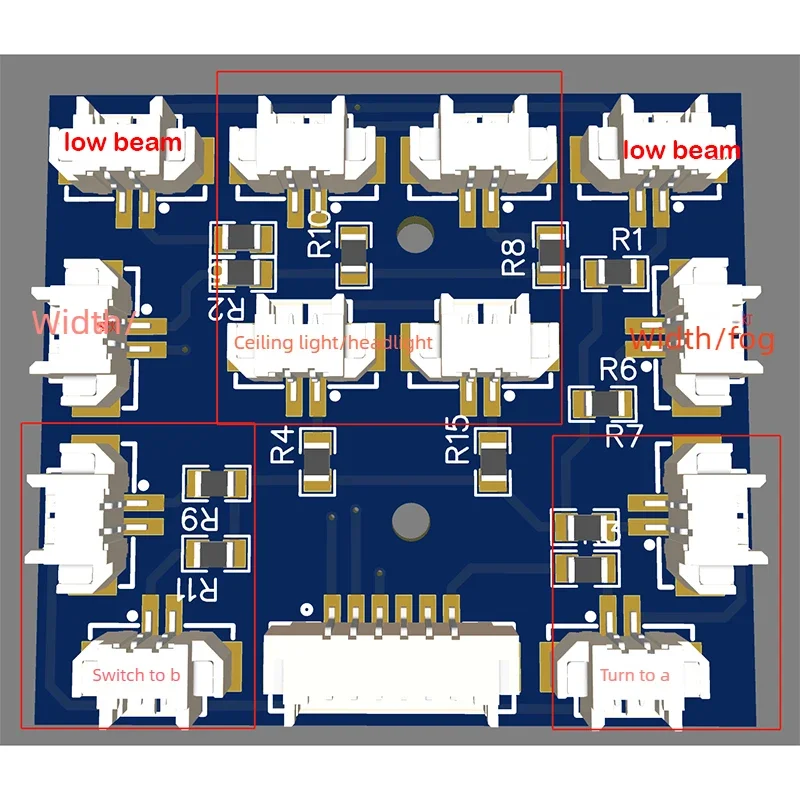
Headlight panel connection cable: 20 cm
Rear light panel connection cable: 50 cm
Dashboard cable: 30cm
Expansion connectors: 10 (optional)
Lamp bead wire: uniform length 15 cm
Lamp configuration
Headlights (10 in total): 4 turn signals, 2 fog lights, 2 low beams, 2 high beams
Rear lights (6 in total): 2 turn signals, 2 reversing lights, 2 brake lights
Dimensions: Only the high beam is 5mm LED, all other lamp beads are 3mm LED
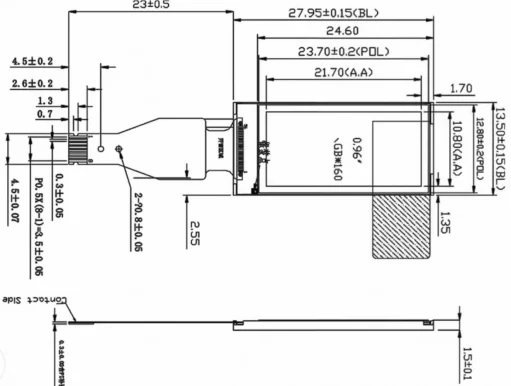
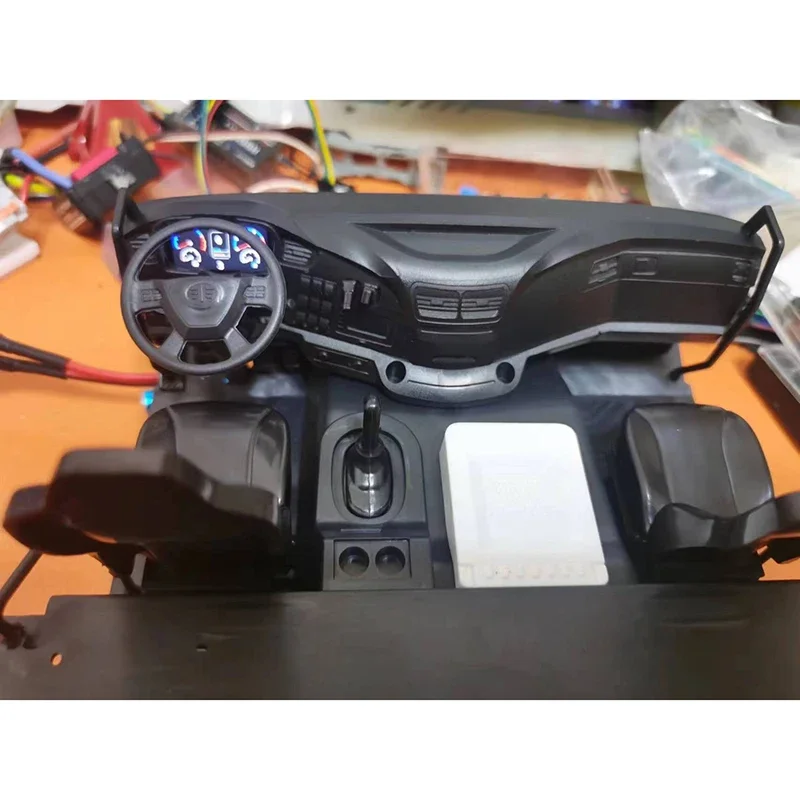
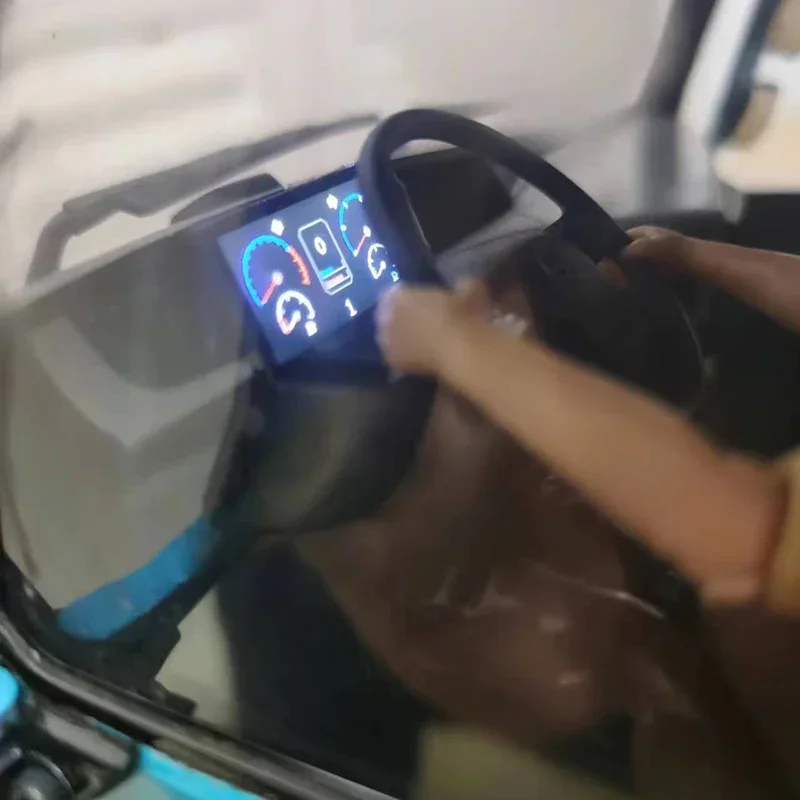
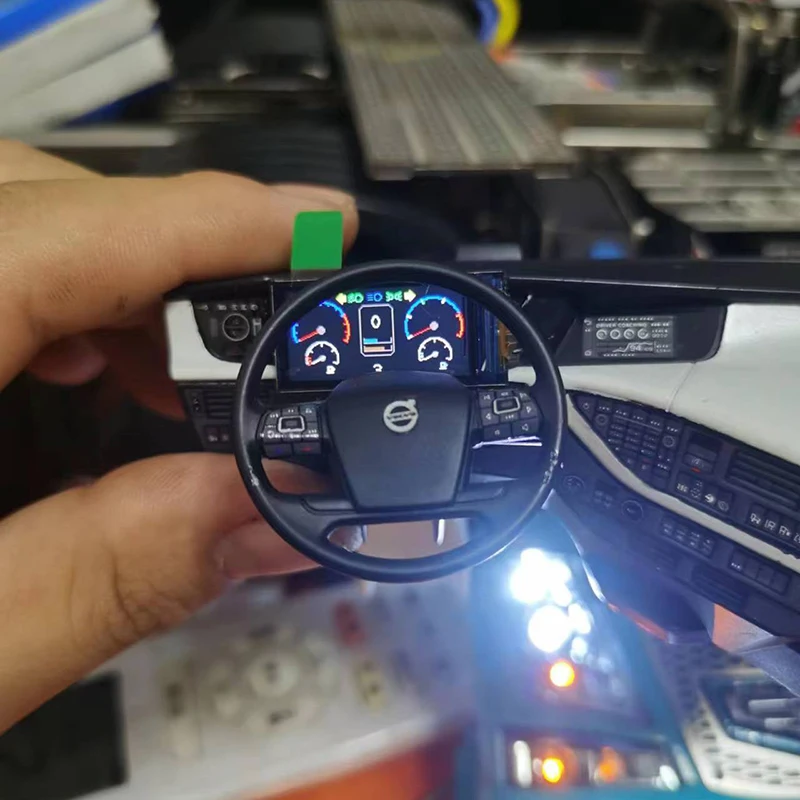
Instrument panel: size is 0.96 inches
Things to note
1: The maximum battery voltage of the module shall not exceed 3S/12.6V lithium battery
2: Pay attention to distinguish the positive and negative poles of the battery voltage (standard JST power interface)
3: The remote control channels must be greater than 6 channels (currently only board control is supported)
Wiring method
1: CH1/left and right steering (the male port is connected to the receiver, the female port is connected to the servo servo)
2: CH2/forward and backward (the male port is connected to the receiver, the female port is connected to the ESC)
3: CH3/gearbox shifting (the male port is connected to the receiver, the female port is connected to the servo servo)
4: CH4/double flash and speaker (remote control requires a three-break switch to control)
5: CH5/light switch (needs to be connected to the remote control lever or automatic return to center switch)
6: CH6/overtaking light/engine start and shut down (requires remote control lever or automatic return to center switch)
Note: 1: CH1/2/3 must be connected to the receiver to work properly.
2: CH4/5/6 need to be connected normally according to the remarks to avoid normal function control.
3: The ESC mode of the ESC must be set to direct forward and reverse rotation, otherwise there will be no response to the car.
Product instruction manual
1. Safety instructions
1. Voltage specification: This product supports a voltage range of 5-13V. It is strictly prohibited to use it beyond 13V, otherwise it will easily cause the device to burn;
2. Power management: Please unplug the power interface in time when not in use to prevent battery over-discharge damage;
3. Circuit protection: It is strictly prohibited to short-circuit or touch iron to avoid damage to electronic components.
2. Wiring instructions: Separate power supply is required
Channel number Functional purpose Wiring requirements Switch type
CH1 controls steering. The male connector is connected to the receiver and the female connector is connected to the steering servo. A centering switch is required.
CH2 controls gear shifting. The male connector is connected to the receiver, and the female connector is connected to the shift servo. Match the corresponding off switch according to the gearbox gear.
CH3 Throttle (controls forward/reverse) - needs to return to center switch
CH4 starting sound/flash overtaking lights - need to return to center switch
CH5 connects ESC (ESC/BEC) -
CH6 double flash + speaker - 3-break switch, need to be turned back to the neutral position when starting up
3. Operation instructions
1. Neutral point calibration: The module has its own automatic identification function of the neutral point. Before powering on, all switches need to be moved back to the neutral point (standard measurement range 1500μs);
2. Throttle operation rules: When the vehicle starts and has speed, pressing the accelerator backwards is to brake; when the vehicle is stopped and has no speed, pressing the accelerator backwards is to reverse.