
We are professional industrial&electronic Categorie manufacturers in China. We have been working in this field for almost 10 years!
Our products include all kits&welded products for Andruino, Raspberry Pi, or mini flights.
If you have any needs, pls contcact us for free, we will help you get all things you need.
Thank you !
Product View



Product Details
Overview
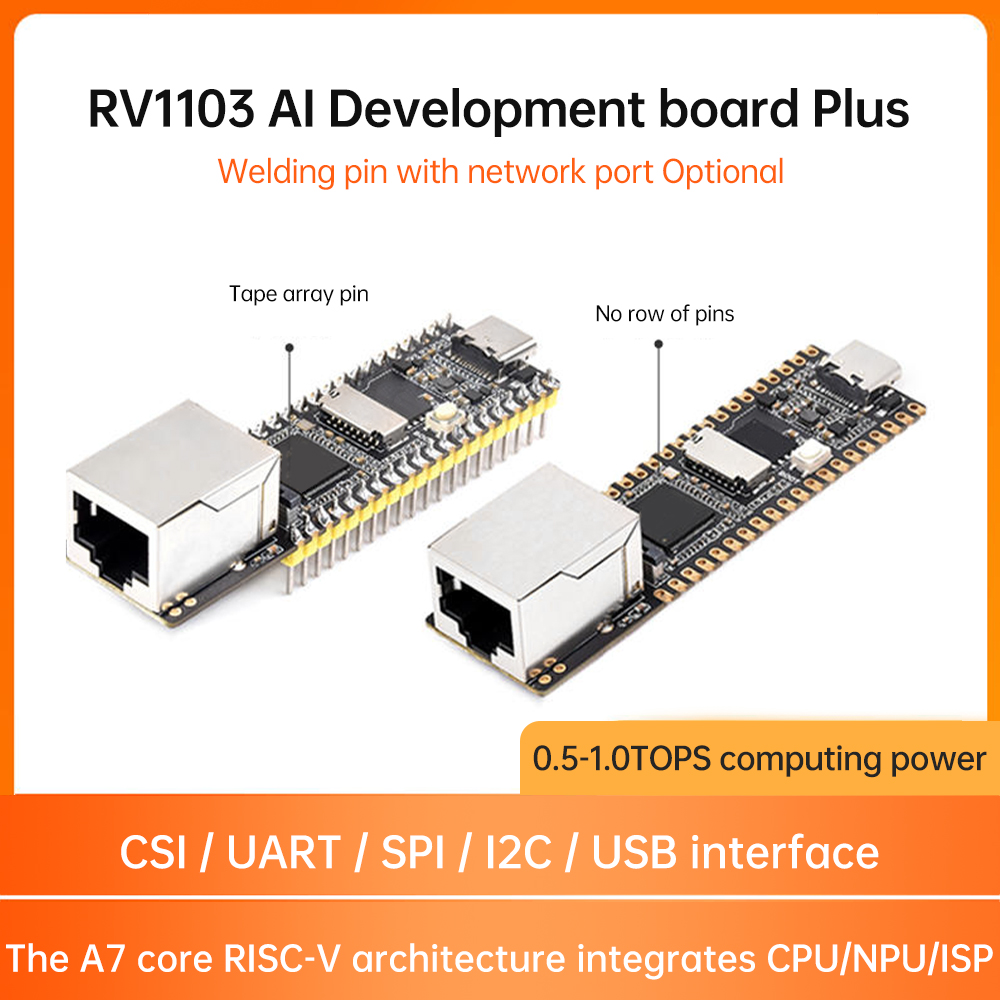
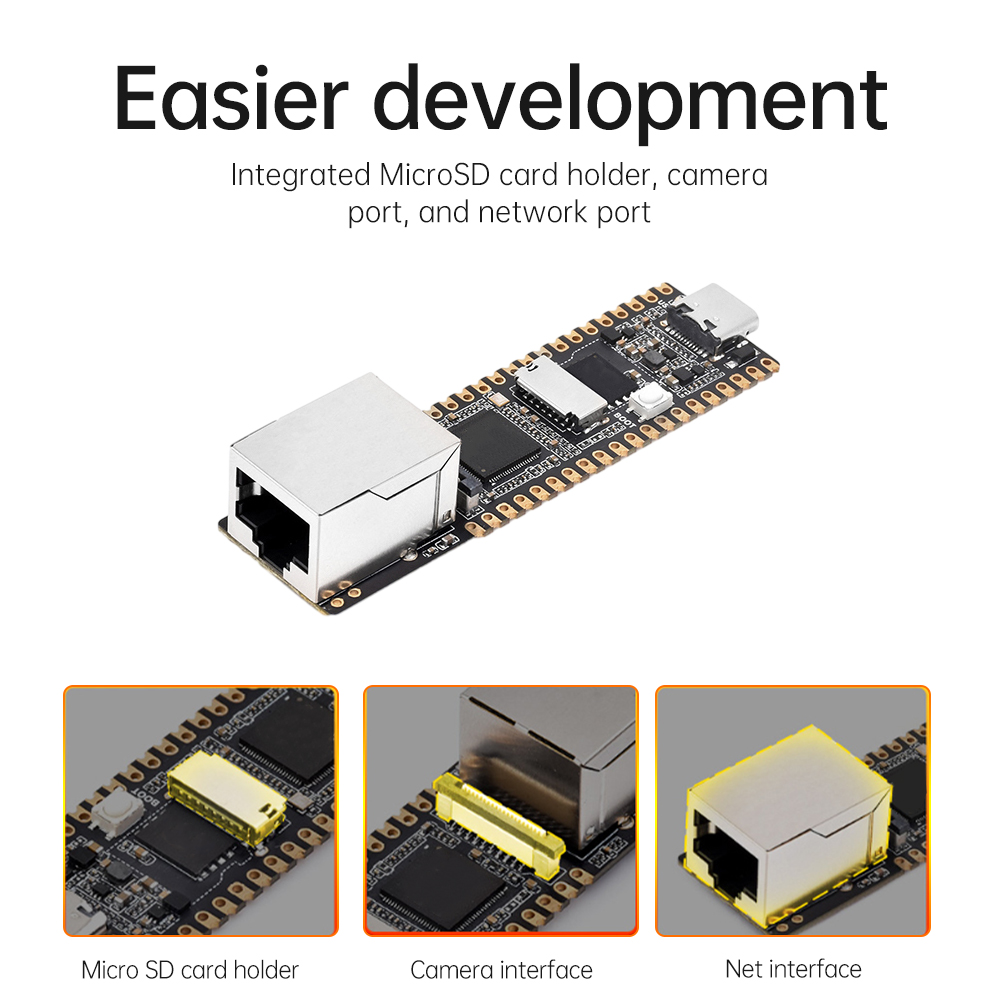
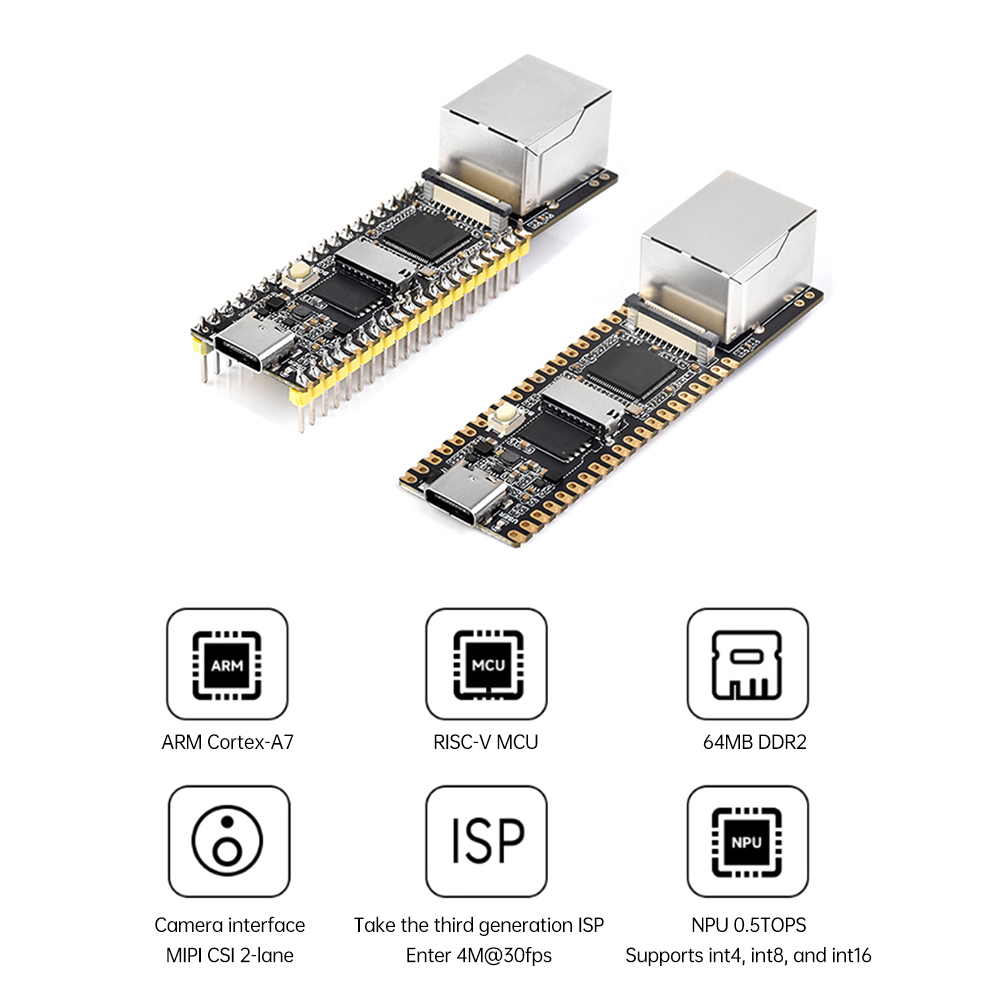
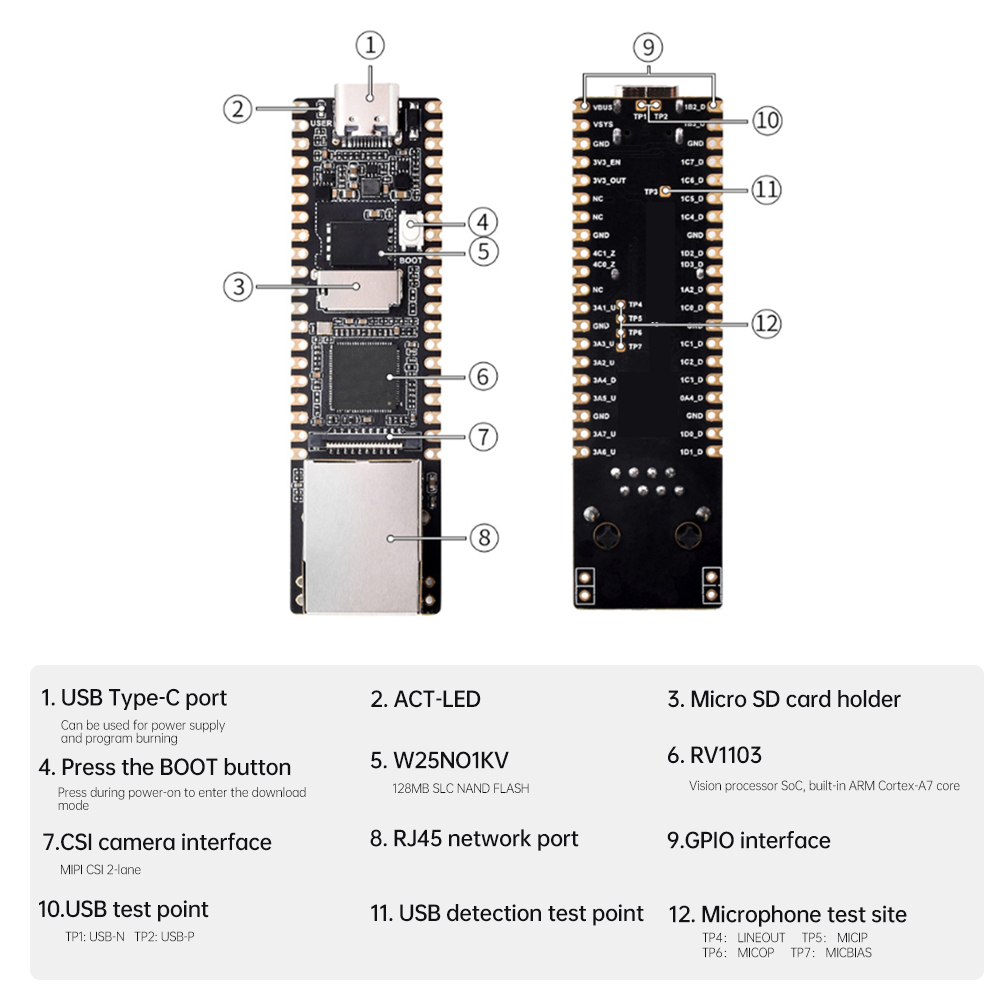
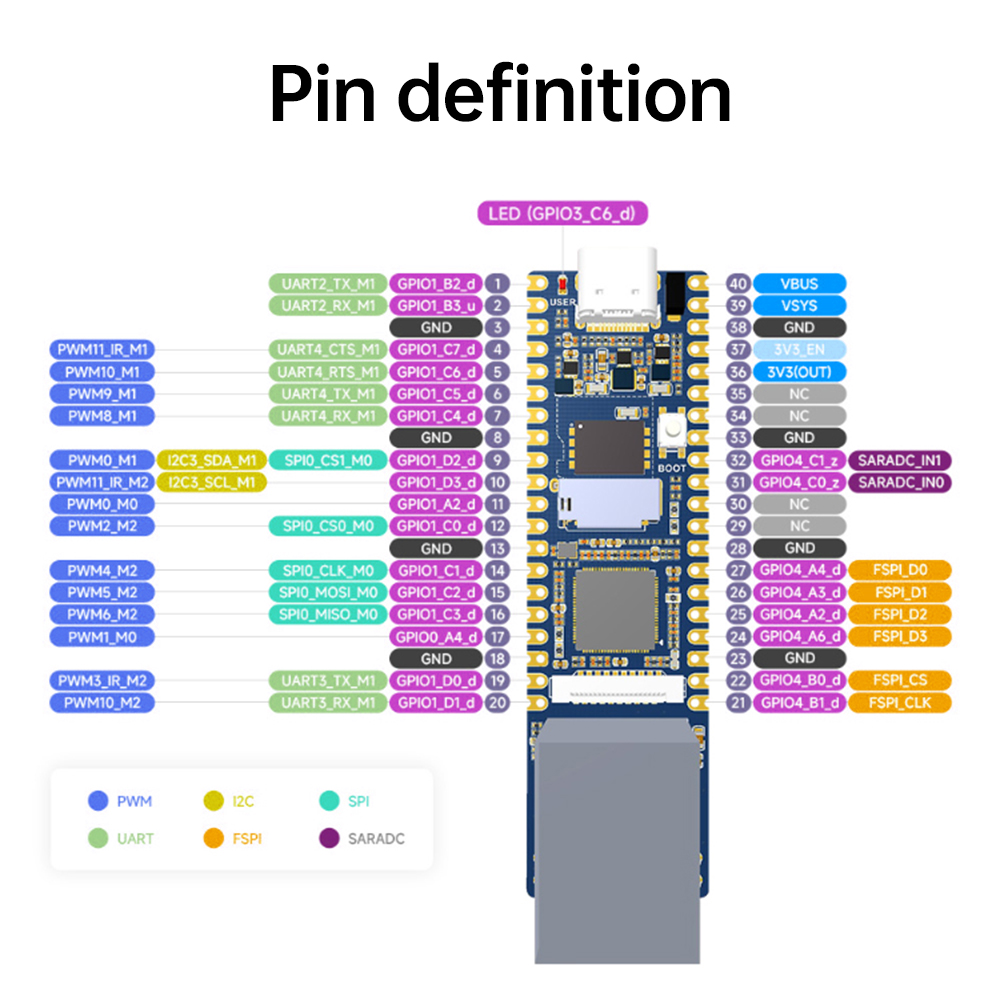
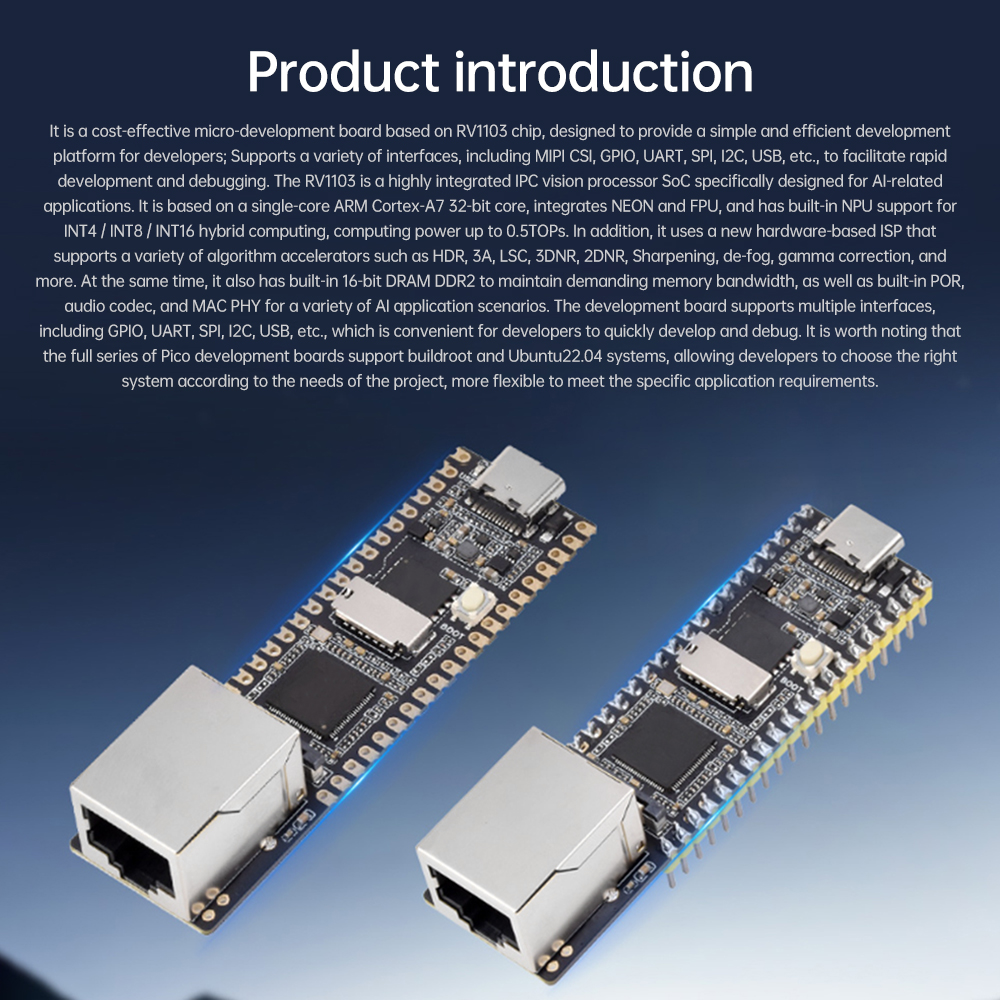
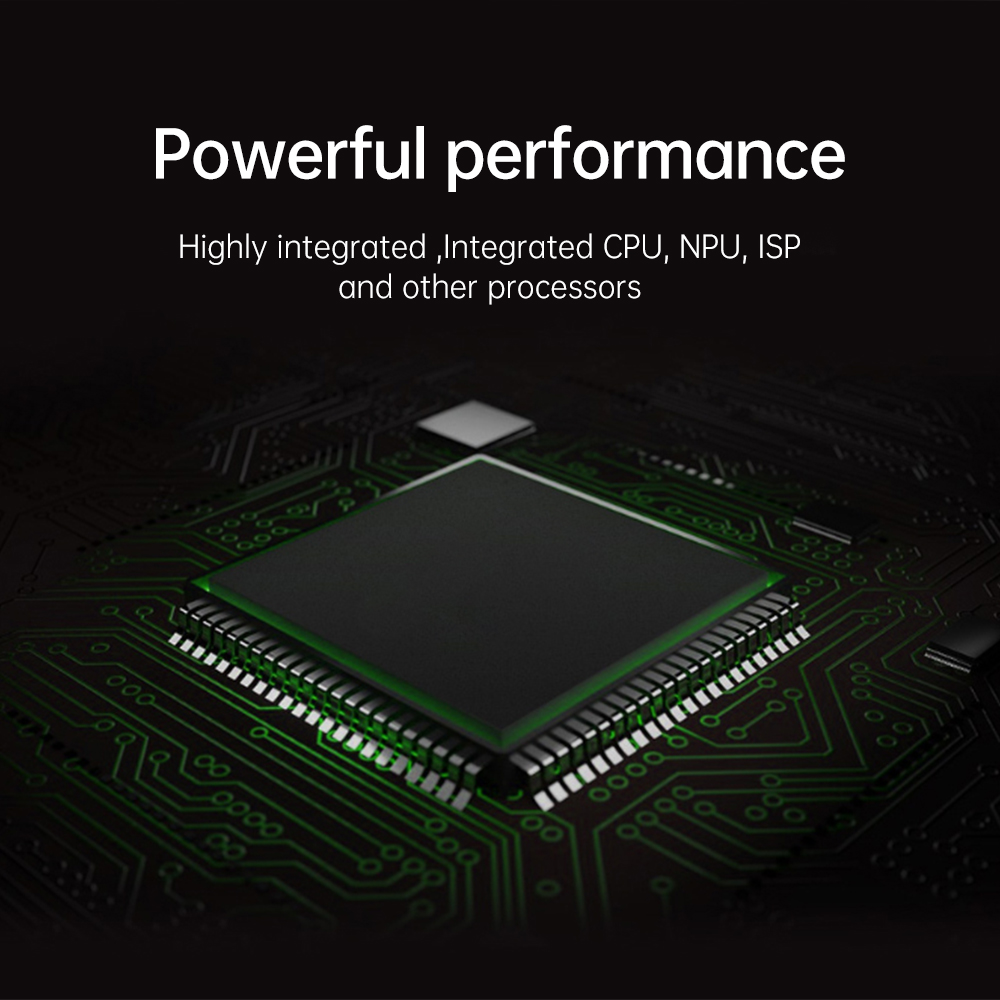
LuckFox Pico is a cost-effective miniature Linux development board based on the Rexchip RV1103 chip, designed to provide developers with a simple and efficient development platform; supports a variety of interfaces, including MIPI CSI, GPIO, UART, SPI, I2C, USB, etc., which facilitates rapid development and debugging. RV1103 is a highly integrated IPC vision processor SoC for AI-related applications.
It is based on a single-core ARM Cortex-A7 32-bit core, integrates NEON and FPU, and has a built-in NPU that supports INT4/INT8/INT16 hybrid operations with a computational power of up to 0.5 TOPs. In addition, it adopts a brand new hardware-based ISP, and supports a variety of algorithmic gas pedals, such as HDR, 3A, LSC, 3DNR, 2DNR, Sharpen, Dehaze, Gamma Correction, etc. RV1103 is a highly integrated IPC vision processor SoC specifically designed for artificial intelligence-related applications. , De-fogging, Gamma Correction, etc. It also features built-in 16-bit DRAM DDR2 to sustain demanding memory bandwidth, as well as built-in POR, audio codec and MAC PHY for various AI application scenarios. The development board supports multiple interfaces, including GPIO, UART, SPI, I2C, USB, etc., which facilitates rapid development and debugging for developers. It is worth noting that Luckfox Pico's full range of development boards support buildroot and Ubuntu22.04 systems, allowing developers to choose the right system according to project needs and meet specific application requirements more flexibly.
It is based on a single-core ARM Cortex-A7 32-bit core, integrates NEON and FPU, and has a built-in NPU that supports INT4/INT8/INT16 hybrid operations with a computational power of up to 0.5 TOPs. In addition, it adopts a brand new hardware-based ISP, and supports a variety of algorithmic gas pedals, such as HDR, 3A, LSC, 3DNR, 2DNR, Sharpen, Dehaze, Gamma Correction, etc. RV1103 is a highly integrated IPC vision processor SoC specifically designed for artificial intelligence-related applications. , De-fogging, Gamma Correction, etc. It also features built-in 16-bit DRAM DDR2 to sustain demanding memory bandwidth, as well as built-in POR, audio codec and MAC PHY for various AI application scenarios. The development board supports multiple interfaces, including GPIO, UART, SPI, I2C, USB, etc., which facilitates rapid development and debugging for developers. It is worth noting that Luckfox Pico's full range of development boards support buildroot and Ubuntu22.04 systems, allowing developers to choose the right system according to project needs and meet specific application requirements more flexibly.
Features
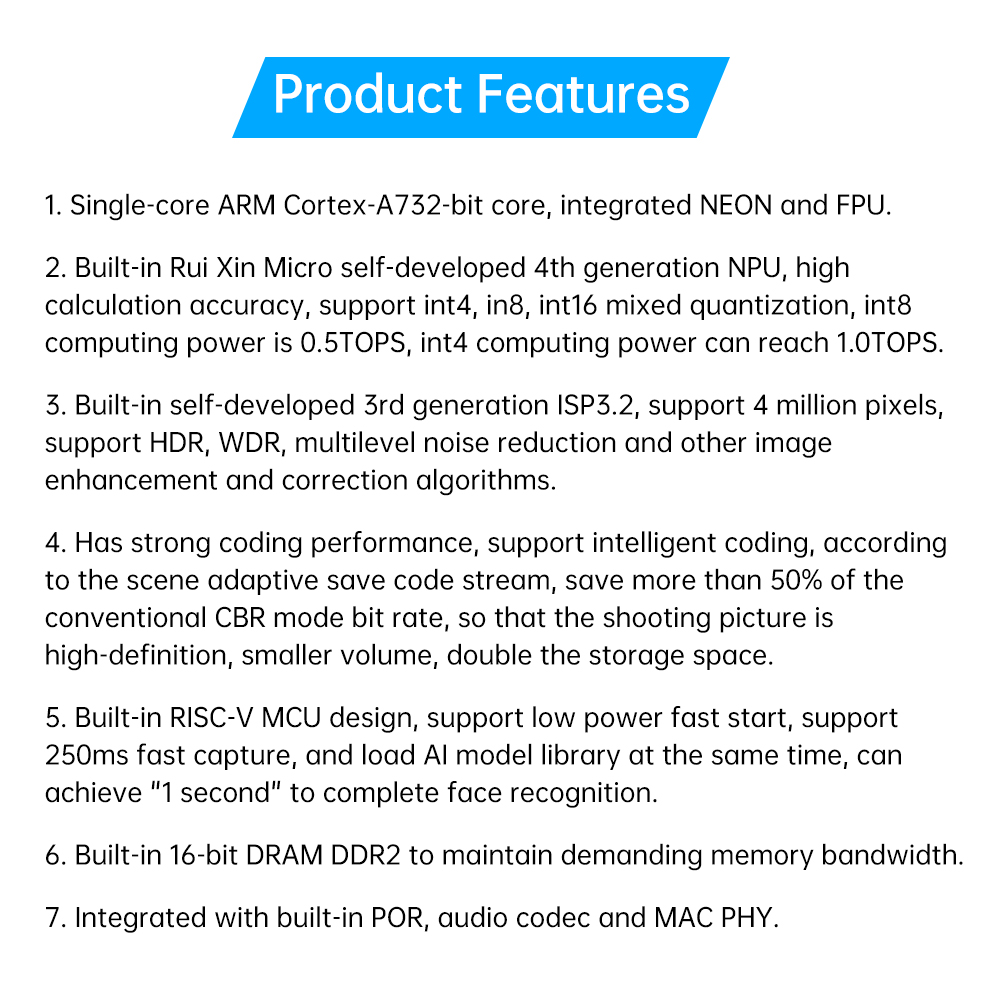
1. Single-core ARM Cortex-A732-bit core with integrated NEON and FPU.
2. Built-in Rayson Microelectronics self-developed 4th generation NPU, high computing precision, support int4, in8, int16 mixed quantization, of which int8 arithmetic is 0.5TOPS, int4 arithmetic up to 1.0TOPS.
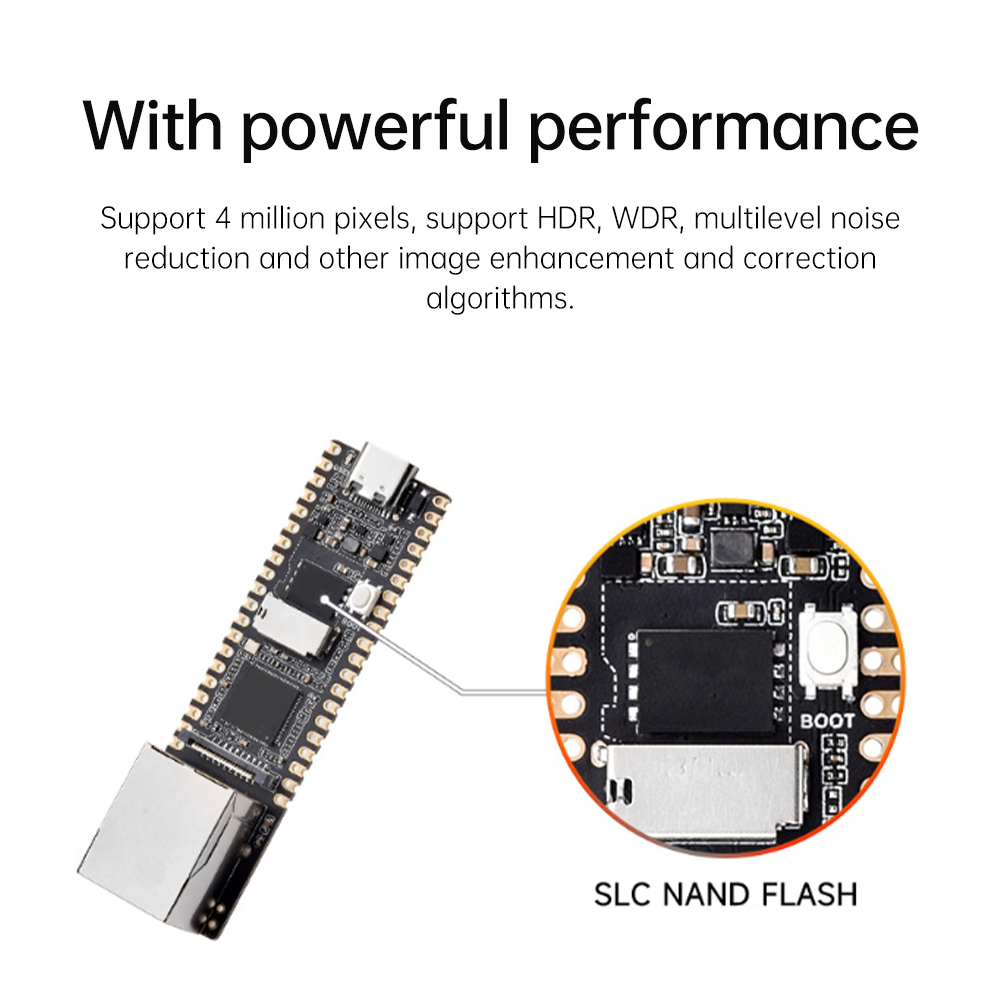
3. Built-in self-developed 3rd generation ISP3.2, supports 4 megapixels, supports HDR, WDR, multi-level noise reduction and other image enhancement and correction algorithms.
4. powerful encoding performance, support for intelligent encoding, according to the scene adaptive code stream saving, than the conventional CBR mode code rate savings of more than 50%, so that the shooting picture is both high-definition, smaller, and double the storage space.
5. Built-in RISC-V MCU design, support for low-power fast startup, support for 250ms fast capture, and at the same time load the AI model library, can realize “within 1 second” to complete the face recognition. 6.
6. Built-in 16-bit DRAM DDR2, which can maintain the demanding memory bandwidth. 7.
7. Integration of built-in POR, audio codec and MAC PHY.
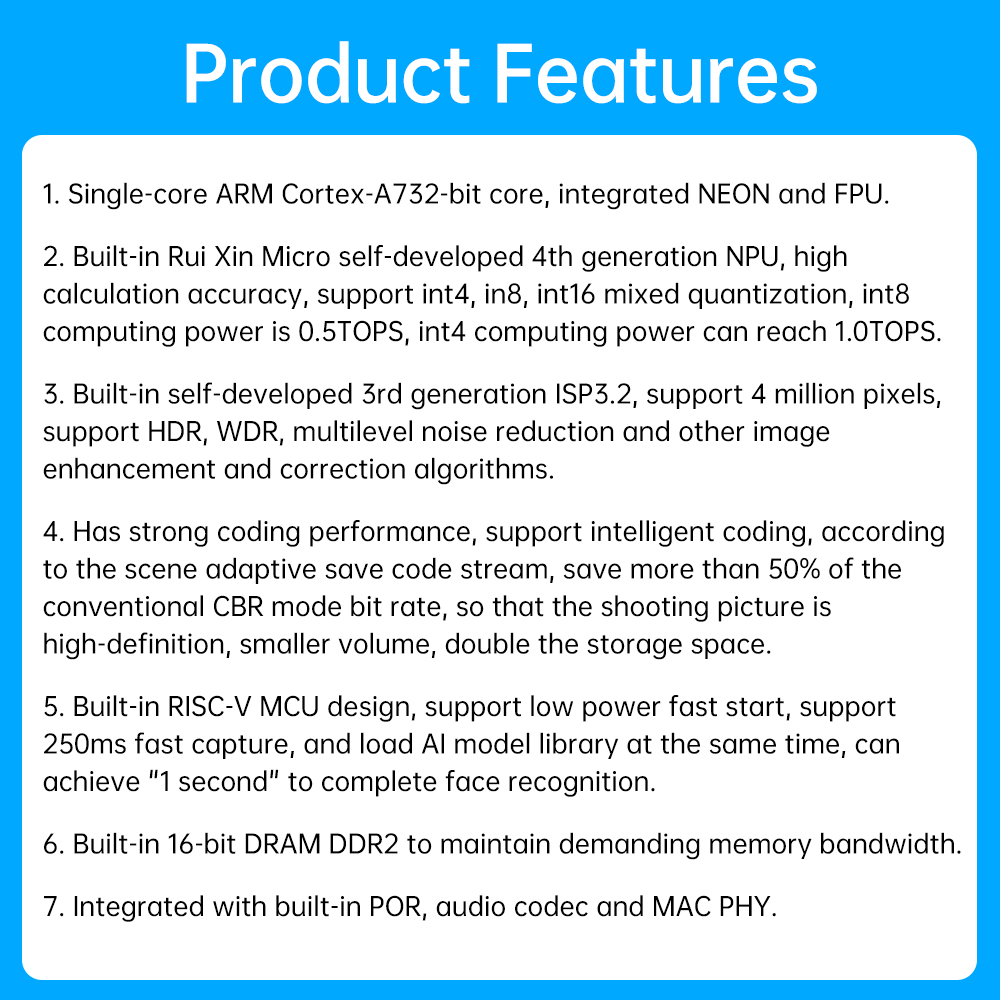
1. Single-core ARM Cortex-A732-bit core with integrated NEON and FPU.
2. Built-in Rayson Microelectronics self-developed 4th generation NPU, high computing precision, support int4, in8, int16 mixed quantization, of which int8 arithmetic is 0.5TOPS, int4 arithmetic up to 1.0TOPS.
3. Built-in self-developed 3rd generation ISP3.2, supports 4 megapixels, supports HDR, WDR, multi-level noise reduction and other image enhancement and correction algorithms.
4. powerful encoding performance, support for intelligent encoding, according to the scene adaptive code stream saving, than the conventional CBR mode code rate savings of more than 50%, so that the shooting picture is both high-definition, smaller, and double the storage space.
5. Built-in RISC-V MCU design, support for low-power fast startup, support for 250ms fast capture, and at the same time load the AI model library, can realize “within 1 second” to complete the face recognition. 6.
6. Built-in 16-bit DRAM DDR2, which can maintain the demanding memory bandwidth. 7.
7. Integration of built-in POR, audio codec and MAC PHY.
Specification
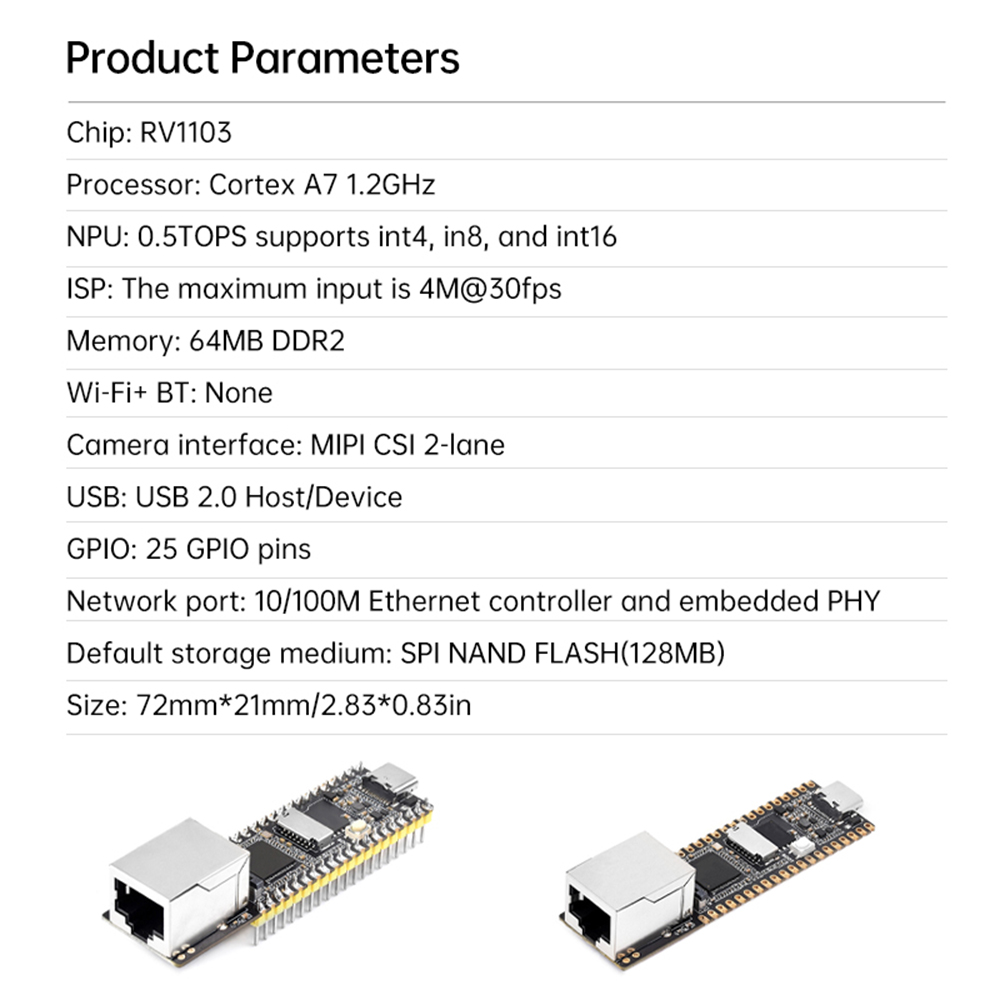
Chip: RV1103
Processor: Cortex A7 1.2GHz
NPU: 0.5TOPS, support int4, in8, int16
ISP: Maximum input 4M @30fps
Memory: 64MB DDR2
Wi-Fi+Bluetooth: None
Camera Interface: MIPI CSI 2-lane
USB: USB 2.0 Host/Device
GPIO: 25 GPIO pins
Network Port: 10/100M Ethernet controller and embedded PHY
Default Storage Media: SPI NAND FLASH(128MB)
Dimension: 72mm*21mm
Chip: RV1103
Processor: Cortex A7 1.2GHz
NPU: 0.5TOPS, support int4, in8, int16
ISP: Maximum input 4M @30fps
Memory: 64MB DDR2
Wi-Fi+Bluetooth: None
Camera Interface: MIPI CSI 2-lane
USB: USB 2.0 Host/Device
GPIO: 25 GPIO pins
Network Port: 10/100M Ethernet controller and embedded PHY
Default Storage Media: SPI NAND FLASH(128MB)
Dimension: 72mm*21mm
Interface : Type-C
List
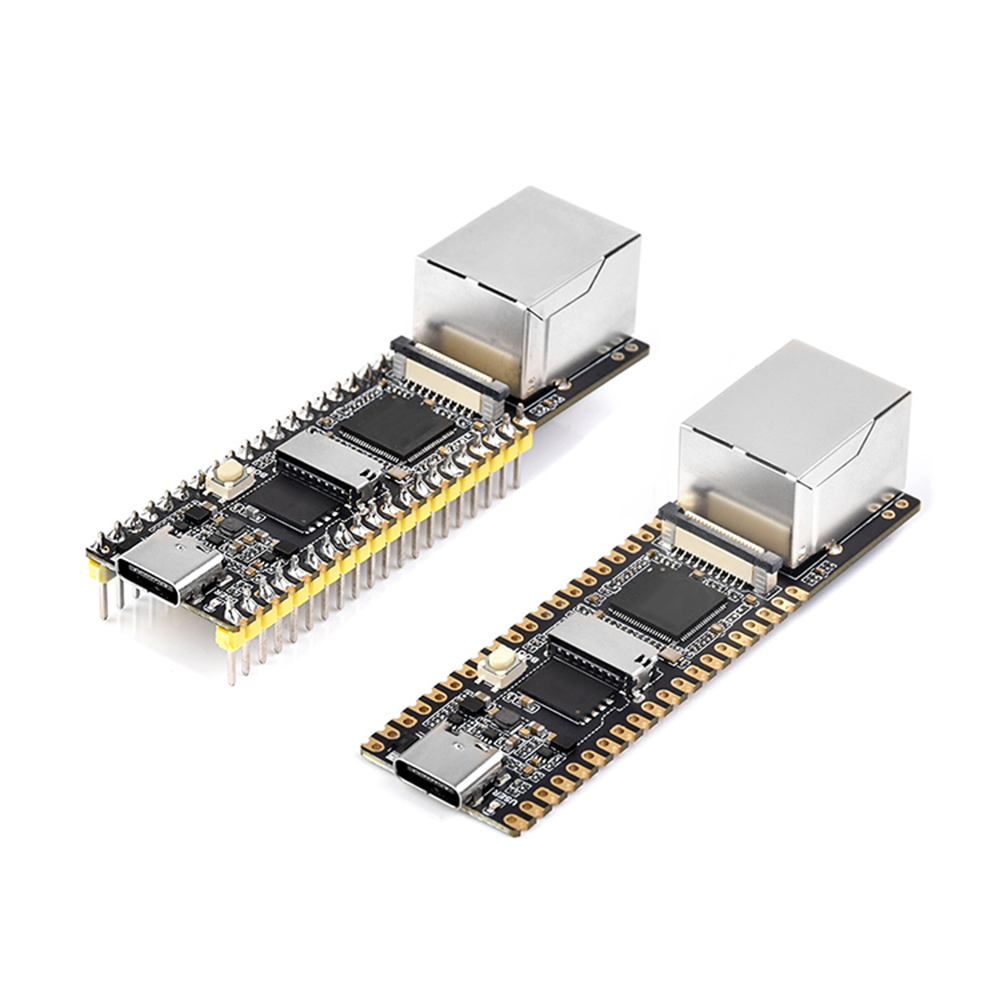
1 x Development Board (with or without pin)
1 x Development Board (with or without pin)
- We accept PayPal only. But we only Accept your Ebay Address,Please Make sure it's 100% right.
- Payment must be received in 5 business days of auction closing.
- Please leave note for your special request (e.g. Colors or Size) in PayPal when you pay the order.
- Any special request cannot be accepted after 24 hours of payment, because most of orders will be processed instantly and same day dispatched.
- All package need to wait 30 days(US only need 7-10 days),Please take care it.Less than 30 days,we can't take a refund.
- If the item is defect when you receive it or you are not satisfied with it, please return it within 14 days for a replacement or money back. But the items must be back in factory condition. Please contact us and double check the return address before you return it.
- If is item is defective in 12 months, you can return it to us. We will send you a new replacement after receiving the defective item.