
Batting Cage Net
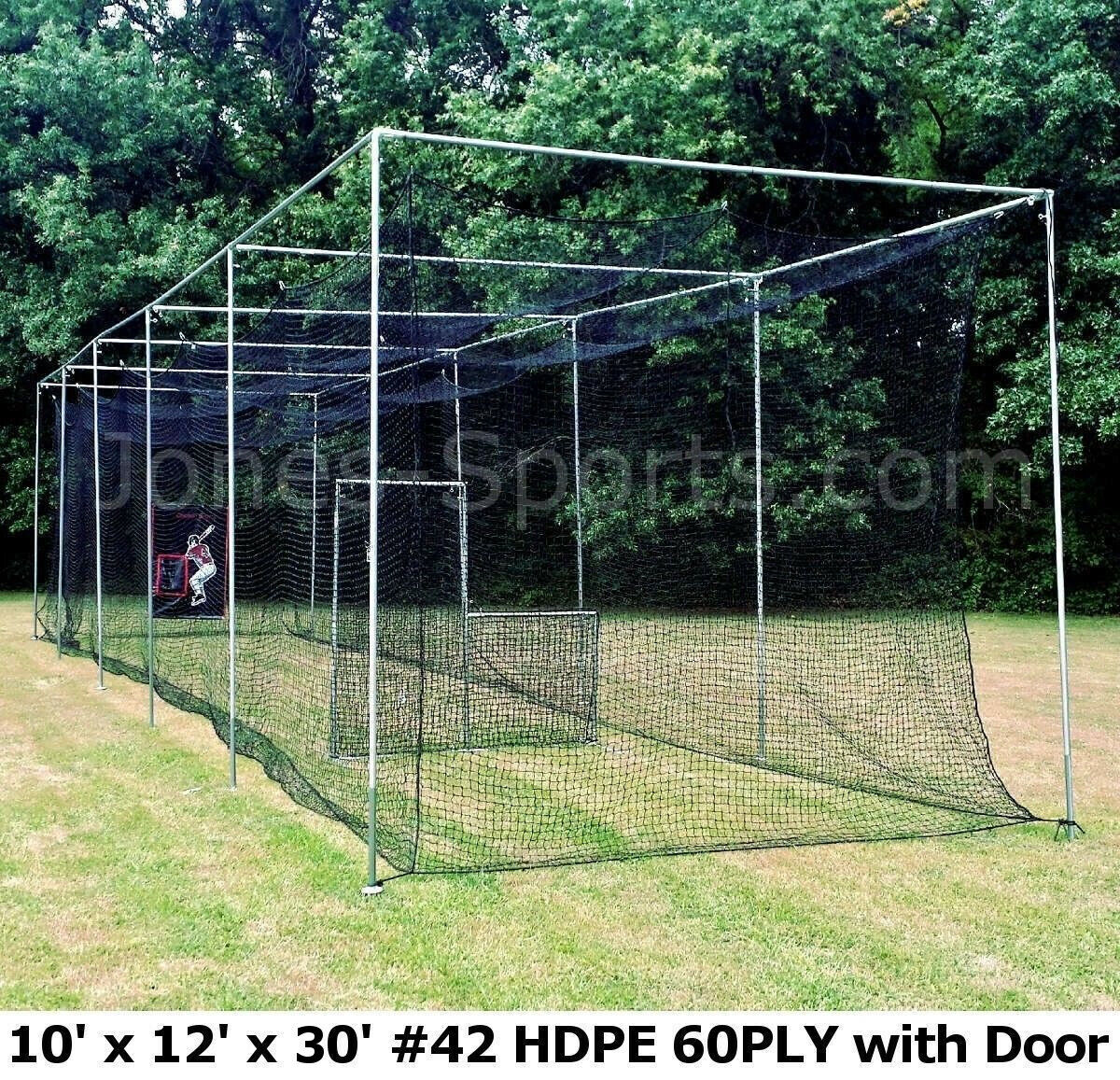
Black Baseball Batting Cage Net 10' H x 12' W x 30' L #42 Twine Size HDPE (60PLY) with Door
Constructed from #42 Twine Size knotted HDPE (High-Density Polyethylene). Includes all deluxe features. For youth through commercial applications, it fits in the typical batting cage square seen at most parks and fields. Net is hung on a square, which absorbs the impact of the balls over several meshes with no high spots to accelerate wear. UV & Weather protection is embedded during extrusion, it is not a cheap coating that will flake off in a couple of years. Life expectancy is 8 to 10 years. We believe this is the best batting cage for the dollar value on the market today.
Why buy from us? We are a family business started by my grandfather over 50 years ago. We intend on being in business for another 50 years. We have over 20 years' experience with netting and have shipped to 10's of thousands of customers worldwide. We only sell quality, well-made products.
What's the difference? Nylon vs. Polyethylene: Our Polyethylene nets, the UV inhibitors are inside the polymeric blend that gets extruded into the individual fibers. These fibers are twisted or braided into twine. Since the UV inhibitor is built into the fibers, it can't wear off. Polyethylene doesn't absorb water, doesn't rot, and loses very little strength year to year. Their nylon nets are coated with a UV inhibitor which tends to wear off in a year or two. Nylon absorbs water, encouraging mold, mildew, and rotting. See picture above. Typically, a new nylon net used outside in direct sun will lose 15% to 20% of its tensile strength each year.
What Twine size do I need? I recommend people buy the largest twine they can afford. A #42 twine net is about twice as thick and twice as strong as a #21 twine. The larger twined, heavier cages will snag balls better, look better, wear better, last longer, and you will be happier with it. You need a minimum of 60 lbs. of tensile strength.
A #18 twine net is light duty, it has 100 lbs. of tensile strength, generally considered the minimum necessary for a home use batting cage, with light use it could last 2 to 3 years.
A #21 twine net is pretty good, it has 125 lbs. of tensile strength, with moderate use it could last 3 to 4 years.
A #24 twine net is very good, it has 148 lbs. of tensile strength, it can be used for light commercial or middle school, it should last 4 to 6 years.
A #36 twine net is heavy-duty, it has 190 lbs. of tensile strength, it is considered commercial quality, it should last 6 to 8 years.
A #42 twine net is very heavy-duty, it has 220 lbs. of tensile strength, many pro teams will use this for their cages, it is good for commercial batting cages. It should last 8 to 10 years.
Why do I see such varying tensile strengths for the same size HDPE twine? Some manufacturers tend to exaggerate the strength of their twine, or maybe they are just distributors and don't really know the actual strength. For a #42 HDPE twine size it will vary a little from different manufacturers, but it will all be in the low 200s. I have tested #42 HDPE twine from manufacturers samples that is supposed to be over 300 lb. tensile strength. Put a 210 lb. to 220 lb. load on it, and it breaks. So, you cannot believe everything you read.
What does this net weigh? Read closely. This is important. This 10' x 12' x 50' #42 twine-size 60-ply net will weigh around 80 lbs. One of our main competitors based in England, Net World Sports / Greenbow Sports, their fortress net, same size #42 twine size net made out of an inferior material polypropylene (Which doesn't wear as well as our polyethylene) only weighs around 55 lbs. How is this possible? Frankly, in my opinion, it is not possible. Their net is approximately the same size and tensile strength as our #24 twine size nets. They advertise on eBay and Amazon. Call or message them about why their nets (Same #42 twine size) weigh so much less than other manufacturers. I have called. They know next to nothing about batting cages.
What is the difference between square-hung, and diamond-hung mesh? To put it simply, square mesh is better. Diamond mesh is cheaper.
What is Posi-lock stitching? It is a process where the machine tightly weaves a cord around the rope and the net to provide the strongest possible bond between the two. Some manufacturers will just weave the rope in and out of the netting panels which can result in the rope pulling away from or out of the panels.
Continental USA shipping only. If you need shipping to HI, AK, PR, VI, AS, GU, MP, or internationally please contact us for a shipping price.
Product Details:
Bottom Border: Standard Polyethylene
Dimensions: 30' Long x 12' Wide x 10 'High
Entry Flap: Yes
Mesh Size:1 3/4"
Net Construction: #42 Twine Size HDPE 60-Ply
Perimeter Ropes: HD 3/8" Polyethylene Woven and Sewn (Top, Center, and all 4 Corners)
Extended Ropes: HD 3/8" Polyethylene Woven and Sewn extend 4 to 6 ft (Top, Center, and all 4 Corners)
Recommended Use: Youth through Commercial
Seam Construction: 3-Piece (Others typically have 5!)
Weather Protection: Weather and UV Protection (Embedded During Extrusion)
Note: The Frame is not included with this net
For more info:


Buyers Who Bought This Item Also Bought:
Batting Cage Nets
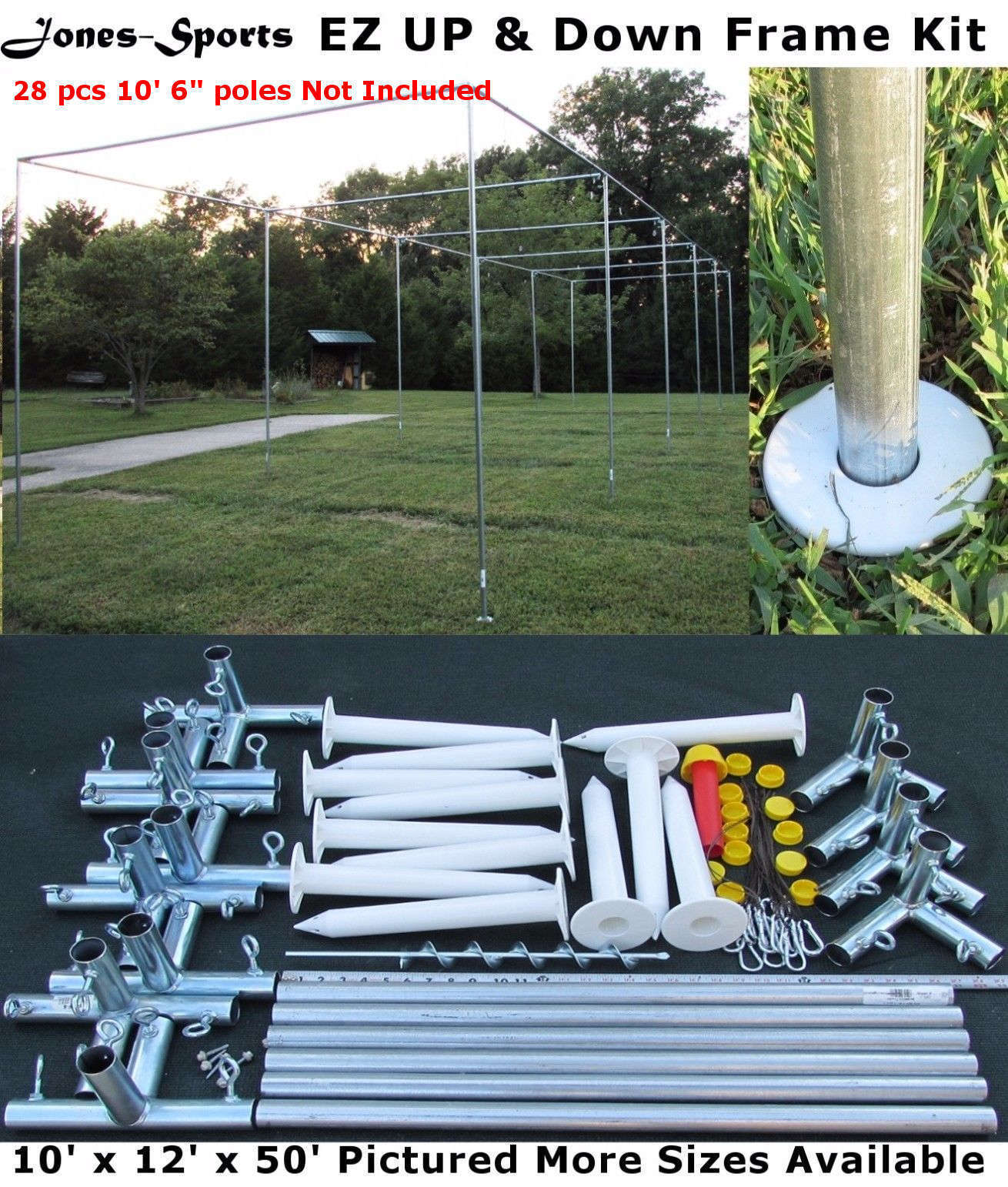
Batting Cage Frame Kits
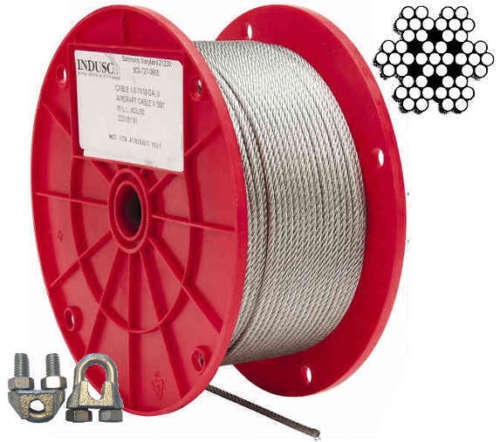 Steel Aircraft Cable Wire Rope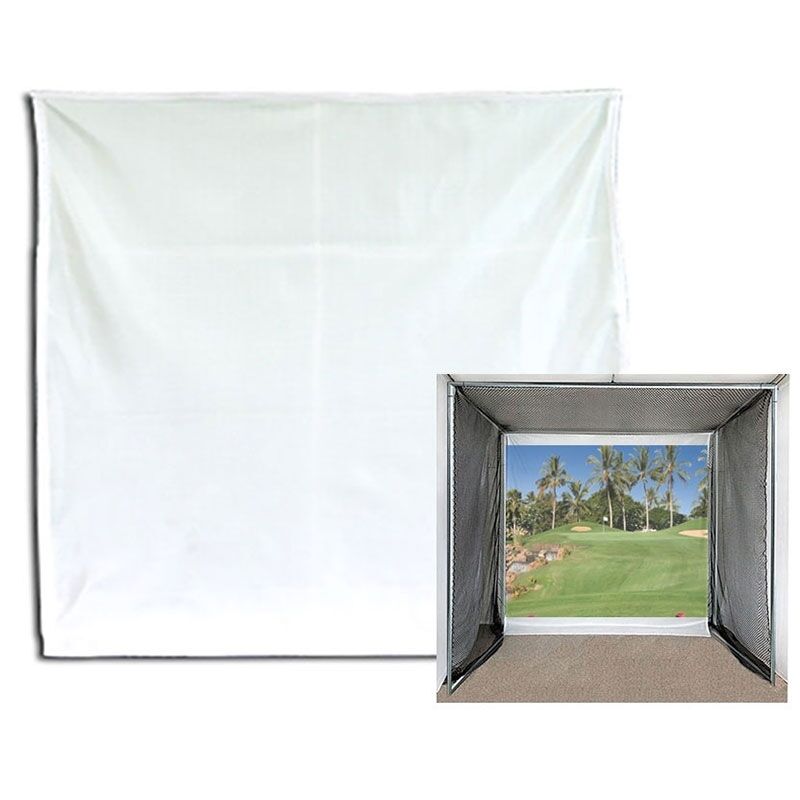
Golf Cages