
Introducing the new and exclusive Forged Fire Safety Stick Bracket Kit - the ultimate way to mount your Fire Safety Stick safely, securely and within easy reach in your vehicle. Available for a wide range of vehicles, this kit is precision-engineered to fit your BMW 1 Series F21 perfectly.
This bracket fits the BMW F21 and F20 chassis models. 2012-2019 model years. It is compatible with 3-door and 5-door hatchback models.
Please note that the mounting bracket can be fitted to seats on the right or left hand side.
This complete kit includes:
- A tailor-made mounting bracket for your BMW 1 Series F21
- 2x Fire Safety Stick clips with M6 nyloc nuts
- 2x Extended bolts, 2x Spacers and 2x Washers (only included with selected applications - see installation guide for details)
- Fire Safety Stick Pro 50 Second (or upgrade to the Pro 100 Second using the dropdown above)
- Bundle upgrade available that includes a second bracket and Safety Hammer (see 'Bundle Upgrade' below)
Our bespoke bracket is designed for a quick, simple installation. It fits neatly onto the front seat runners using the supplied nuts and bolts; sandwiched under the front mounting points of your seat. There's no drilling or cutting required - it can be fully fitted in just five minutes! Click here to view our installation guide.
Precision made from laser-cut 3mm steel and powder coated, the bracket is made to FIA standards, offering outstanding strength and durability.
The two Fire Safety Stick clips are CAD-designed and 3D-printed for a perfect fit with either the 50 or 100 second Fire Safety Stick. Made from high-strength, durable plastic, they allow for fast and effortless deployment - simply pull once to release the Fire Safety Stick when you need it most.
We include the Fire Safety Stick Pro as standard with our Forged Fire Safety Stick Bracket Kit. The Pro version includes a fitted anti-tamper tag which helps avoid the possibility of losing the essential striker needed to activate the extinguisher. If you want even more protection, you can upgrade to a Fire Safety Stick Pro 100 Second version using the dropdown menus above.
Key Features
- Complete kit including tailor-made mounting bracket, clips, fittings and Fire Safety Stick
- Option to upgrade to include additional bracket with Safety Hammer
- Certified to extinguish all major fire classes (fire types A, B, C, electrical & F)
- Ultra compact and lightweight
- 50 second discharge time (longer than much larger and heavier extinguishers), with optional 100 second version available
- Leaves no mess or residue (ideal for cars where conventional extinguishers can cause serious damage)
- Safe to breathe
- Eco-friendly, recyclable
- Very durable
- Helps aid escape
- Includes fitted tamper tag, maintenance stickers and free inspection log PDF
- Fire Safety Stick made in Italy. Bracket and clips made in Lithuania
- Great reviews from all over the world
What's Included
- Forged tailor-made mounting bracket for your BMW 1 Series F21
- Fire Safety Stick Pro 50 Second (or upgrade to the 100 second version using the dropdown above)
- 2x Fire Safety Stick Clips with M6 nyloc nuts - simply mount to the bracket using the included hardware
- 2x Extended bolts, 2x Spacers and 2x Washers (only included with selected applications - see installation guide for details)
- Bundle upgrade available that includes a second bracket and Safety Hammer (see 'Bundle Upgrade' below)
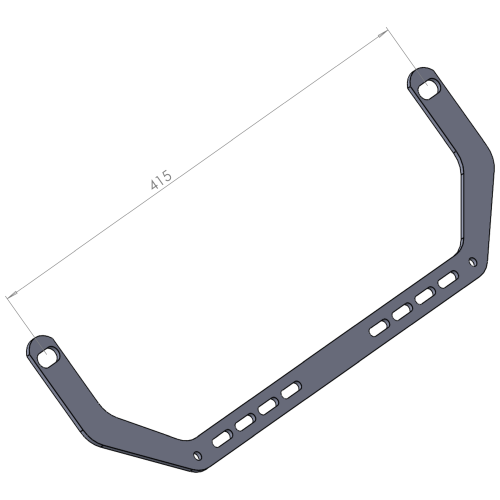
Forged tailor-made vehicle bracket (click to enlarge) (dimensions in mm)
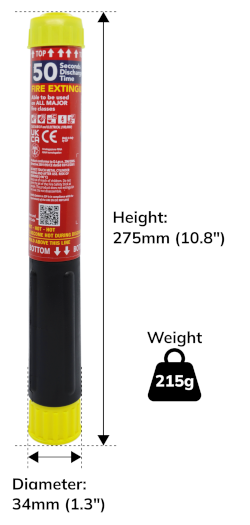
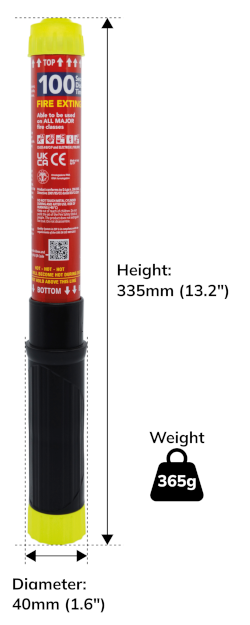
Fire Safety Stick - 50 or 100 Second Versions
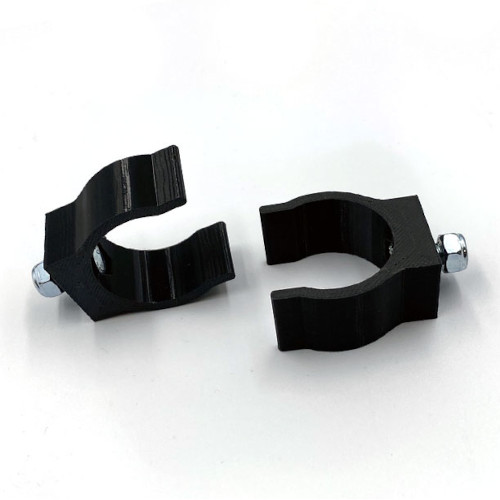
Pair of clips for mounting Fire Safety Stick
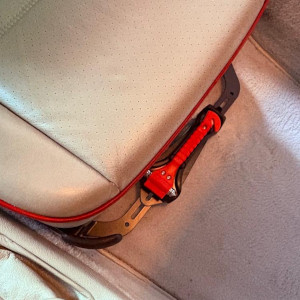
Bundle Upgrade
For complete protection we also offer an optional second bracket, along with a safety hammer. You will receive an additional tailored vehicle bracket, a safety hammer and an adaptor plate designed to fit perfectly to the vehicle bracket and the safety hammer. You can choose this option using the dropdown menu above.

Free and Fast Delivery
We offer free next day delivery** of your Forged Fire Safety Stick Bracket Kit. Just order before 12am and we will dispatch same day, for delivery to you on the next working day.
Once your order has dispatched you will receive tracking information via email.
**Please note that this applies to Mainland UK only, excluding the Highlands. Deliveries are made on weekdays only.
Also please be aware we are not able to dispatch this item outside the UK and Ireland.
How to Use the Fire Safety Stick


How to Activate:
- Hold the unit by the black plastic handle and remove the top cap or sleeve which protects the black resin at the top of the unit.
- Remove the striker cap from the bottom of the unit (this will be either a black or yellow plastic cap), on the inside, there is a red/brown rough surface.
- Still holding the plastic handle, point the stick away from your head and body. In your other hand, hold the striker cap so that the red/brown rough area is resting on top of the black resin on the top of the stick. Apply increased pressure between the resin and the striker cap, Then swiftly, move the striker away from the body, holding the stick firmly, ensuring the striker maintains contact with the resin. This is very much like striking a match against a matchbox. This friction should be enough to activate the black resin is initially sparking like a match. Just like a match if it's not activated on the first strike, then just repeat the above process of striking the resin.
- Discharge of the harmless agent will begin immediately. Then simply point the stick towards the base of the fire and its flames. The agent being discharged is completely harmless. There may be some sparks from the top opening of the stick but these are only a few centimetres in size and also harmless. Also, it may spray out a very small amount of black soot from the Fire Safety Stick, but again this is totally harmless and can be can be swept up afterwards.
How to Use It on a Fire:
- Once activated, simply point the top of the stick towards the fire, allowing the aerosol vapour to engulf the flames. It will continue to discharge for its complete cycle (of 50 or 100 seconds) - it is not possible to "switch it off".
- If it is outside with a wind blowing, and it is safe to do so, always approach the fire from the side of the wind - i.e. so that the flames are flowing away from you.
- Best practice is to activate the stick from a safe distance away from the fire, then once activated, approach the fire, pointing the stick towards the flames and base of the fire. Then simply walk towards the fire. All the time it is suppressing the fire, making it safe to approach the fire. Although it runs on a lower pressure than traditional extinguishers, it is still much safer as you have a much longer discharge time, and all the time it further suppresses the fire.
- There is no need to wave the stick around too much, just allow the vapour from the stick to engulf the flames and they will quickly die down. If you have missed a bit simply move the stick towards those flames to extinguish them.
- We always recommend, even if the fire is quickly extinguished, to continue pointing the stick towards the area where the fire was, for the complete discharge time of over 50 or 100 seconds. This ensures it is unlikely to reignite (in particular with cooking oil fires). Often, there may be a small part of the fire still alight that you may have missed, so this ensures you are ready to extinguish it completely.
- Once it's extinguished, assess the situation and call out the fire brigade if necessary.
- Again, please remember if the fire is too large to be extinguished by the Fire Safety Stick, then follow the fire brigade's advice to get out and call the fire brigade.
- Although the vapour from the Fire Safety Stick is completely harmless, do remember that the smoke and fumes from a burning fire can be very dangerous. Do not risk your own safety at all.
- You can leave the activated Fire Safety Stick inside a confined space to continue to repress the fire whilst you are escaping to safety. Just leave inside the room spraying towards the fire, you leave, remembering to close the door if possible as you leave.
- The metal body of the Fire Safety Stick can get warm during the process, please ensure you only hold the unit by the black plastic handle. Afterwards, once cooled down, it can be easily disposed of domestically, or by separating the plastic handle from the aluminium tube of the body.
Remember the Fire Safety Stick, like all extinguishers, is only to extinguish small fires that have only just started, or to aid your escape. Once a fire is well established or too large to fight, then that is no longer a job for a handheld extinguisher. You should then follow the fire brigade's advice of getting out, staying out, call the fire brigade and leave it to the professionals.
Technical Specification
How Does the Fire Safety Stick Work?
The Fire Safety Stick (FSS) is a manual, portable fire extinguishing device. It uses a potassium ion jet (a unique method among conventional fire extinguishers) that works by interrupting a fire's chain of reaction (the "auto-catalyst" of the fire). Fire Safety Stick is composed of stable, solid minerals; it does not contain gas and is not pressurised. The aerosol-like jet is only produced when the charger is struck with its base. The produced aerosol jet is free of thrust and is essentially an inert salt that emits gas already present in the atmosphere.
Here's the Chemistry Behind It
This process allows the stick to extinguish all types of fires through saturation, while its slow bio-degradation in the environment, further prevents the likelihood of subsequent fires. The extinguishing process involves two different reactions: one is physical and the other, chemical. The physical reaction relates to potassium ions (or free radicals) tendency to oxidise rapidly in air. When in contact with air, alkaline salts consume great quantities of oxygen, thus depriving fires of oxygen. Then the chemical reaction is created through the stable link between potassium particles and the fire's combustion particles. Through the two reactions, a quick oxidation process takes place, immediately transforming the jet from a solid state into a gaseous state freeing the potassium particles. These atoms are able to intercept and interrupt any other free particles produced by the fire's natural chain reaction combustion process. Potassium has strong inhibitor qualities due to its weak ionization energies. The extinguishing agent being used is composed of potassium nitrate, organic oxidizer, and plasticizer resin. When the potassium nitrate (KNO3) reacts (inside the body of the extinguisher) it breaks down and the aerosol that is formed is made up primarily of free radicals of potassium K+, of nitrogen N (an inert gas). The aerosol that comes out of the unit reacts with the fire. potassium radicals (K+) capture the oxygen of the combustion thereby extinguishing it.
At the end of the extinguishing process the following is discharged to the atmosphere:
- As a solid: particles of potassium (that have reacted with the oxygen of the fire) having a size between 3-4 microns. These particles are invisible at sight and heavier than air. They disperse in the atmosphere and tend to deposit on the ground in no appreciable amounts.
- As a gas: As nitrogen; an inert gas already present in the air we breathe at more or less 78%.
- As water vapour: extremely minimal toxic by-products that are a result of the combustion process (this amount is so slight, it is not conductive to electricity).
What's the Best Way to Tackle a Fire With It?
Unlike a dry chemical extinguisher that combats a blaze by depositing a large amount of solid powder on the fire, the Fire Safety Stick fights a fire by releasing a gas. This gas attaches itself to the oxygen surrounding the fire robbing its ability to stick to the chain of combustion (without affecting one's ability to breath that oxygen). The goal is therefore to use the gas coming out of the Fire Safety Stick to create a 'cloud of containment' around a fire. Creating a cloud that prevents any outside and un-attached oxygen from getting to the fire is essential and is the same strategy that should also be used with a halon/halotron or CO2 extinguisher.
The two worst things you can do when fighting a fire with a gas extinguisher is to be too close or to rush the process. Being very close to a fire means that a cloud cannot be formed blocking any new oxygen that will continue to feed the flame. This is particularly problematic in an isolated pan situation where being too close will only chase the flames around. Rushing the process by moving the extinguisher around a lot also prevents a cloud from being formed and diminishes the performance of the extinguisher. The best technique is to take advantage of the long discharge time offered by the Fire Safety Stick and to approach a fire from a moderate distance progressively getting closer to its source. During the approach, move the Fire Safety Stick slowly around the fire always directing towards the centre. This will contain the fire and allow the gas the ability to work. Tight areas with lots of pockets (like the engine bay of a car for example) brings out the strengths of the Fire Safety Stick as the gas, which is heavier than air, will fill all the voids not directly accessible; both putting out a fire and preventing a re-flash.
Certifications
Certifications of the Fire Safety Stick - gained from around the world.
The Fire Safety Stick is manufactured in Italy. There are a number of different names for the Fire Safety Stick around the world. In North America and Europe it is known as Element, whereas in Australasia and Africa it is known as Fire Stryker. Below are the various certifications and tests carried out on Fire Safety Stick from around the world.
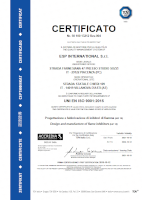
ISO 9001 Approval
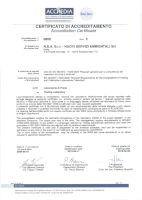
NSA Accreditation
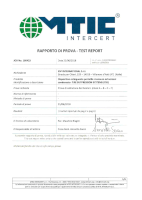
MTIC Test Report
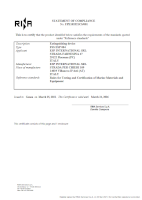
RINA Certification
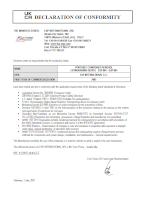
Italy UKCA Declaration
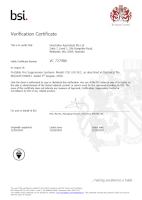
Australia BSi Certificate