|
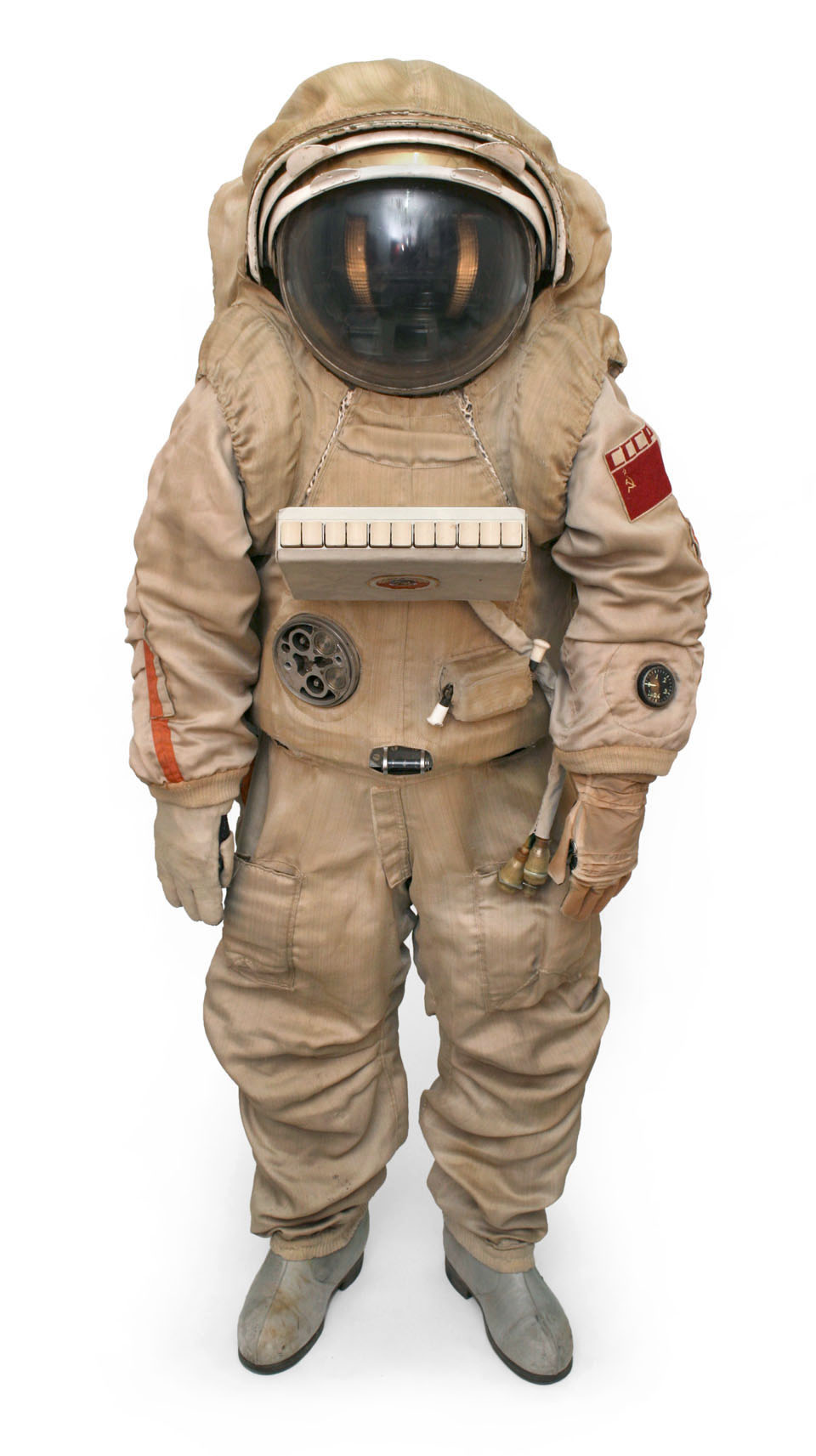
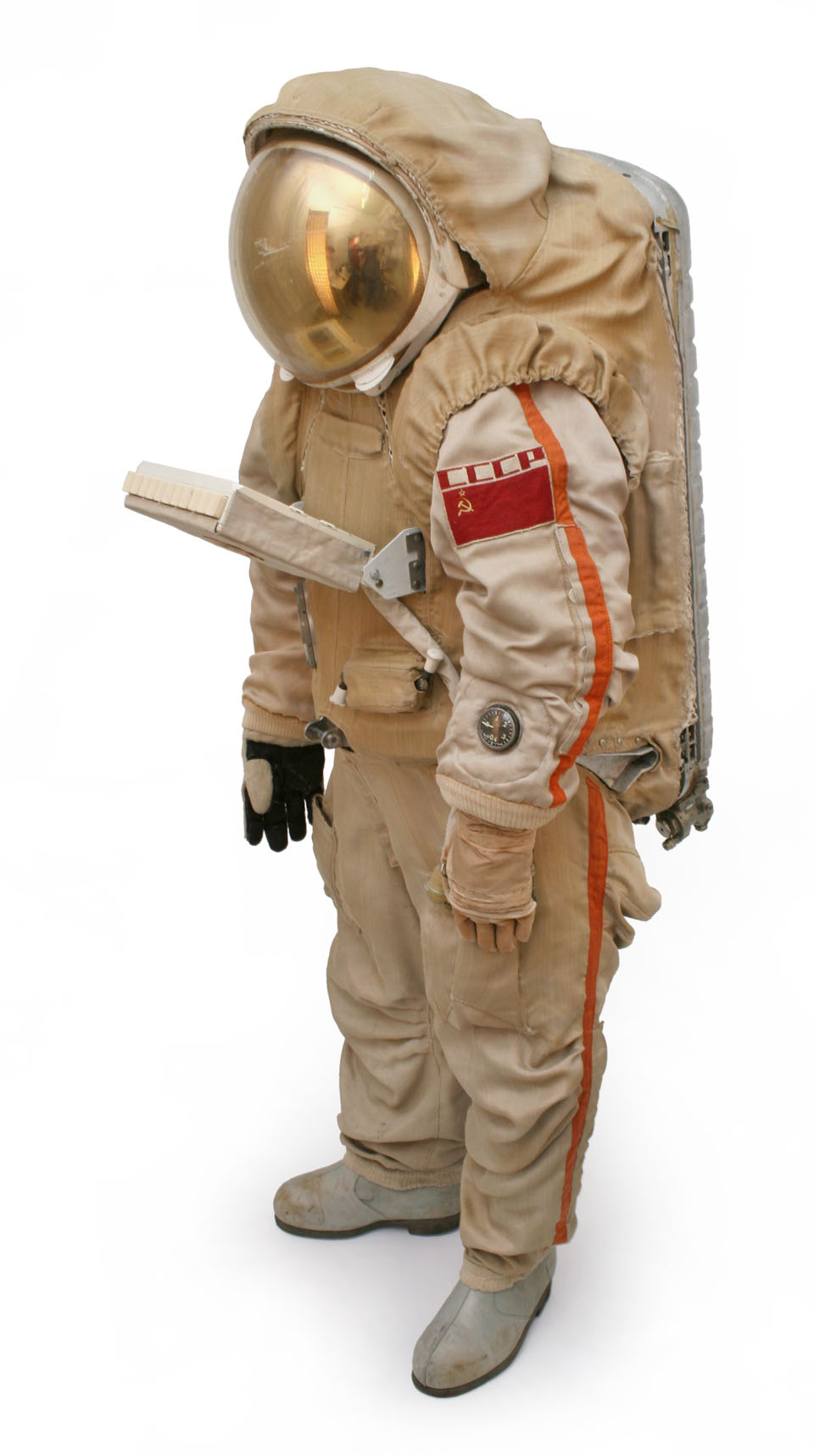
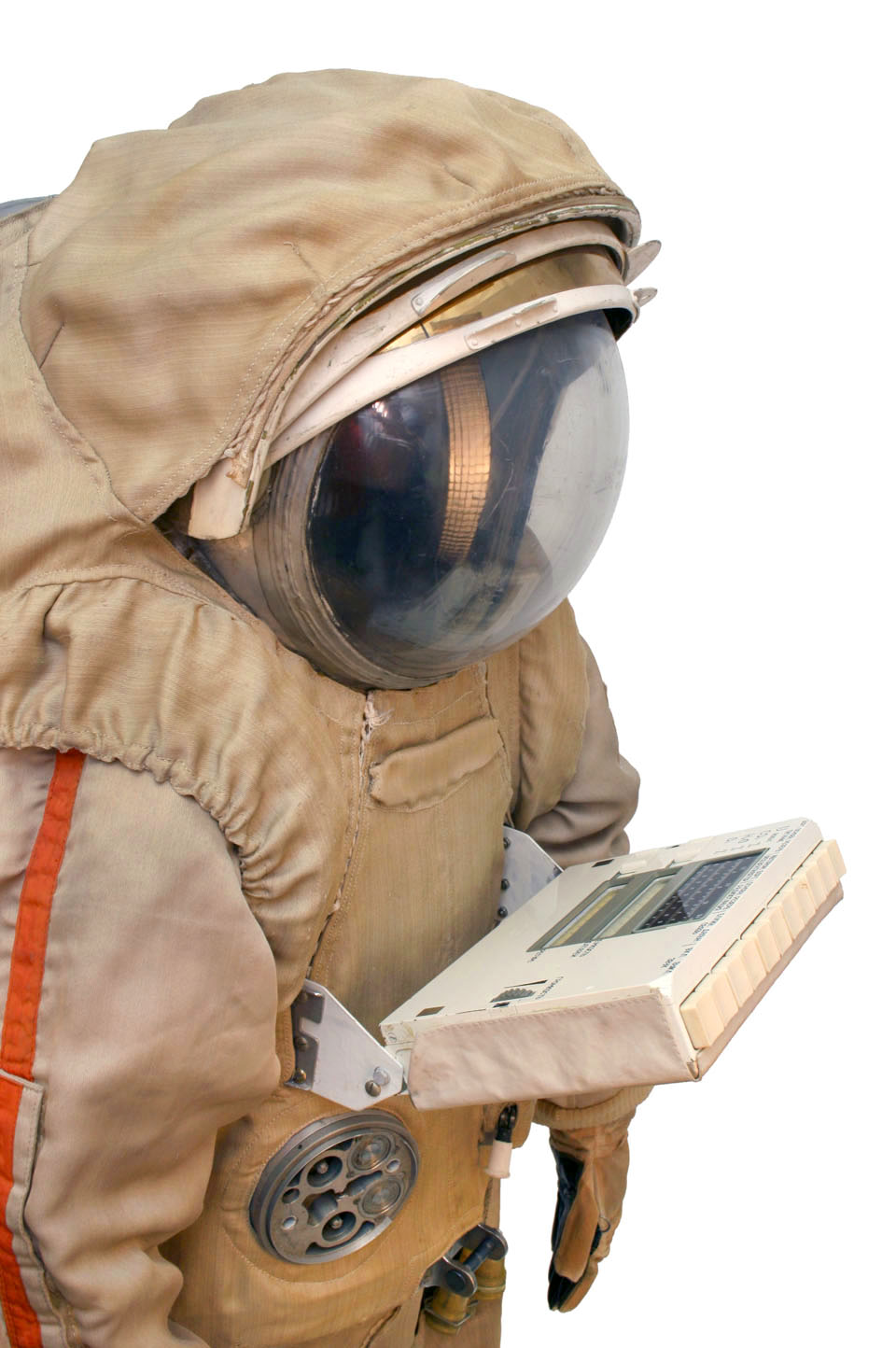
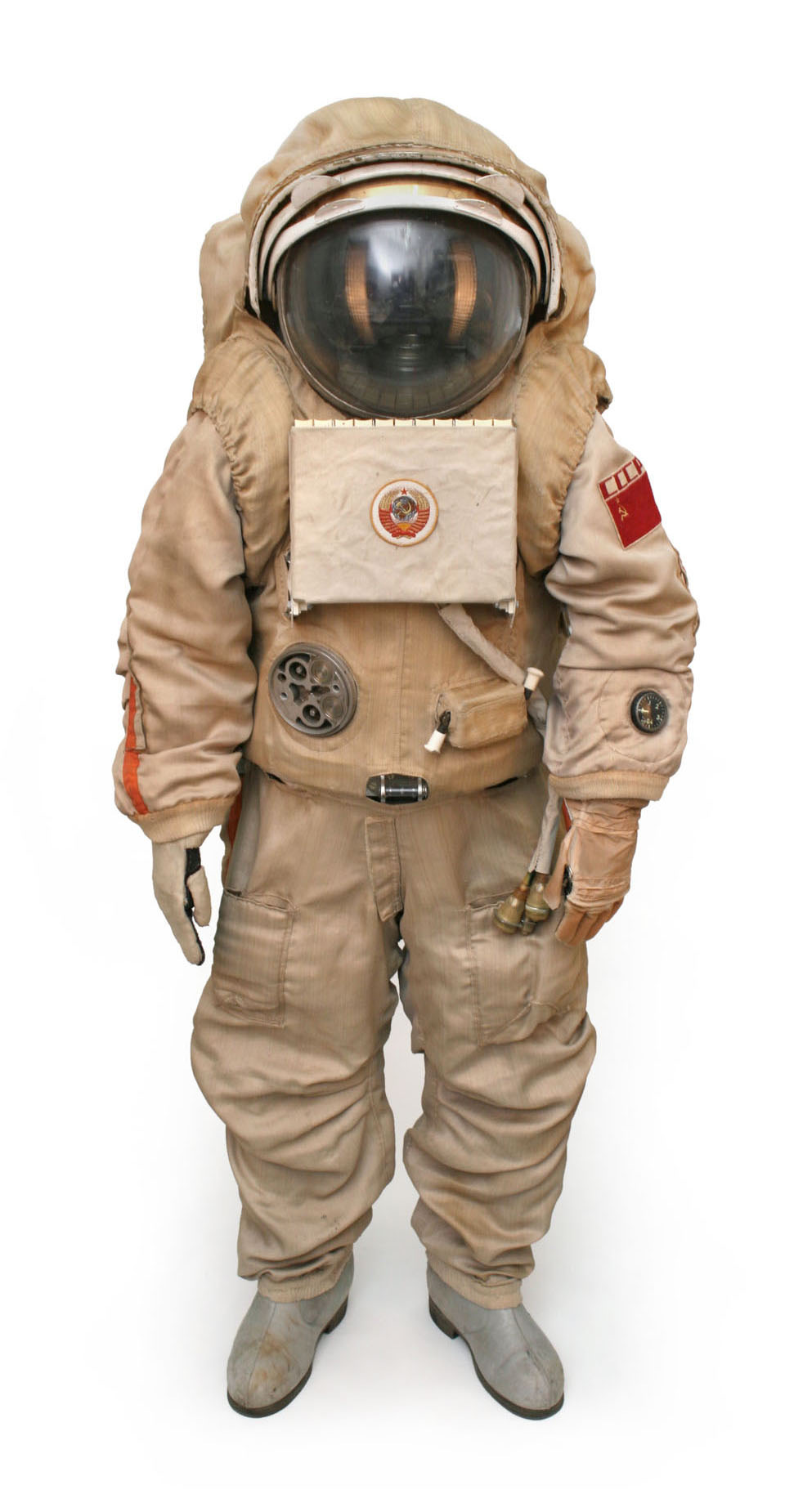 It's offered to your attention the famous KRECHET - one of the rarest remaining spacesuits of 1970-s for the cancelled Soviet manned lunar program, a prototype of the family of Orlan spacesuits for extra vehicular activity on orbital station.
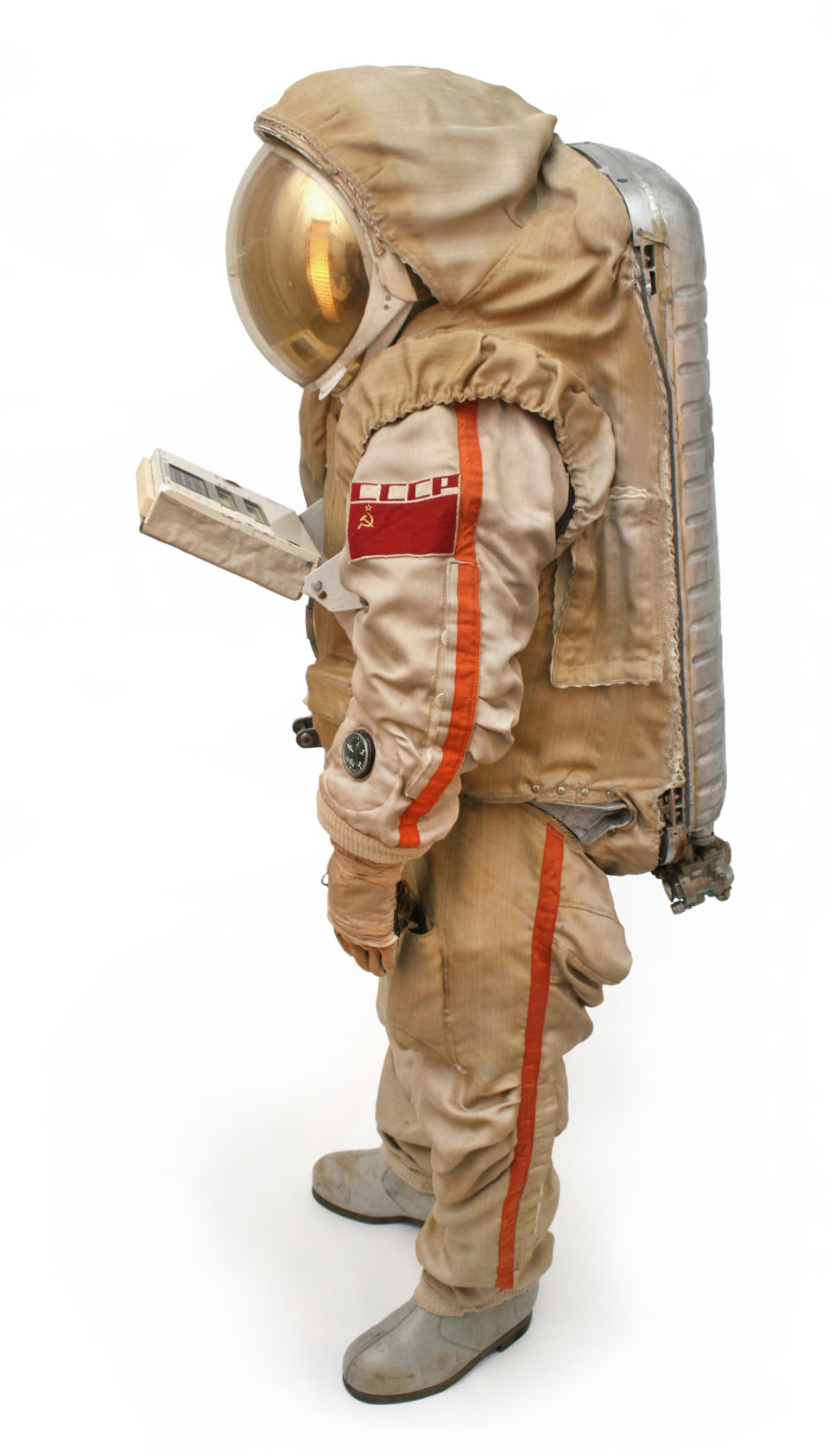
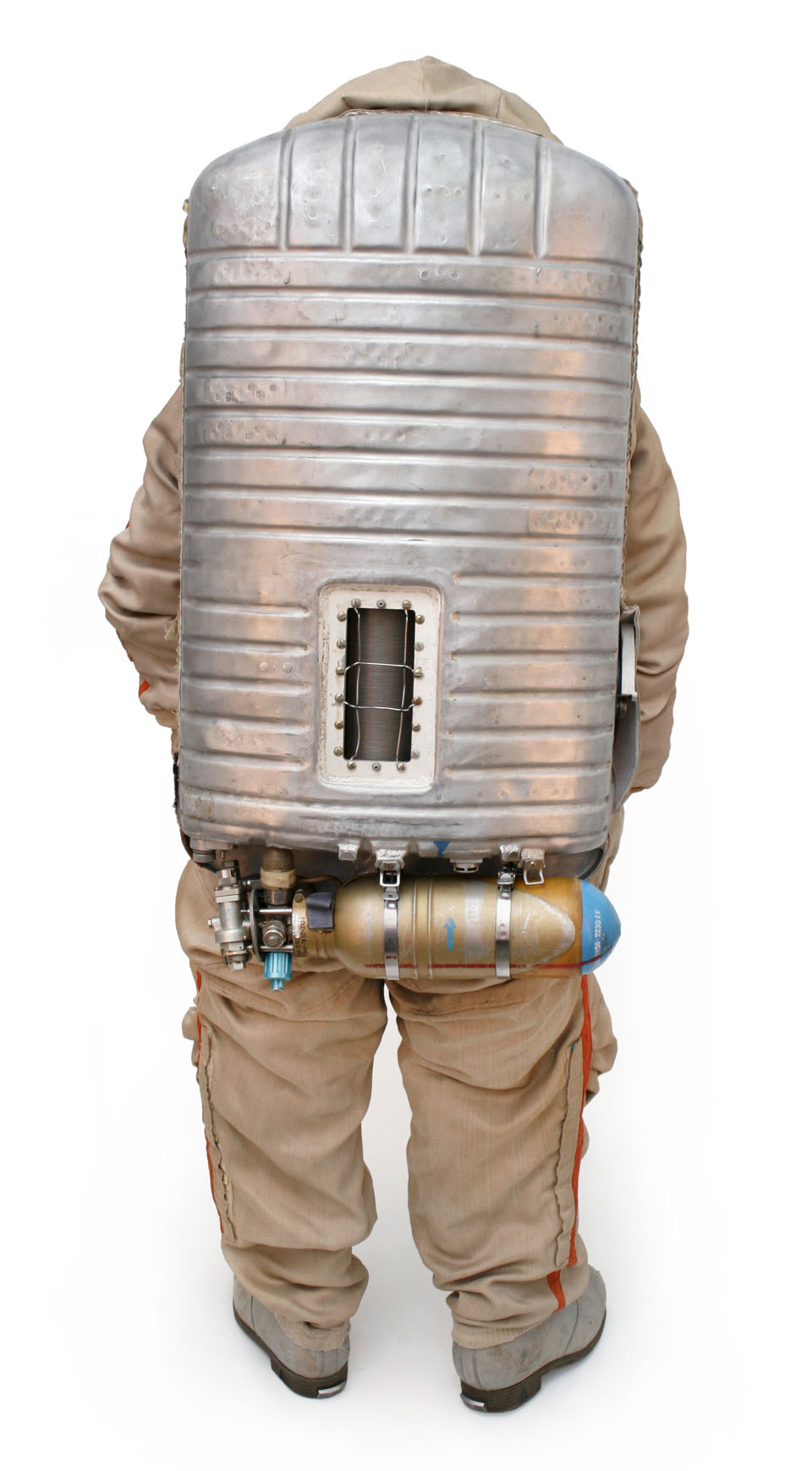
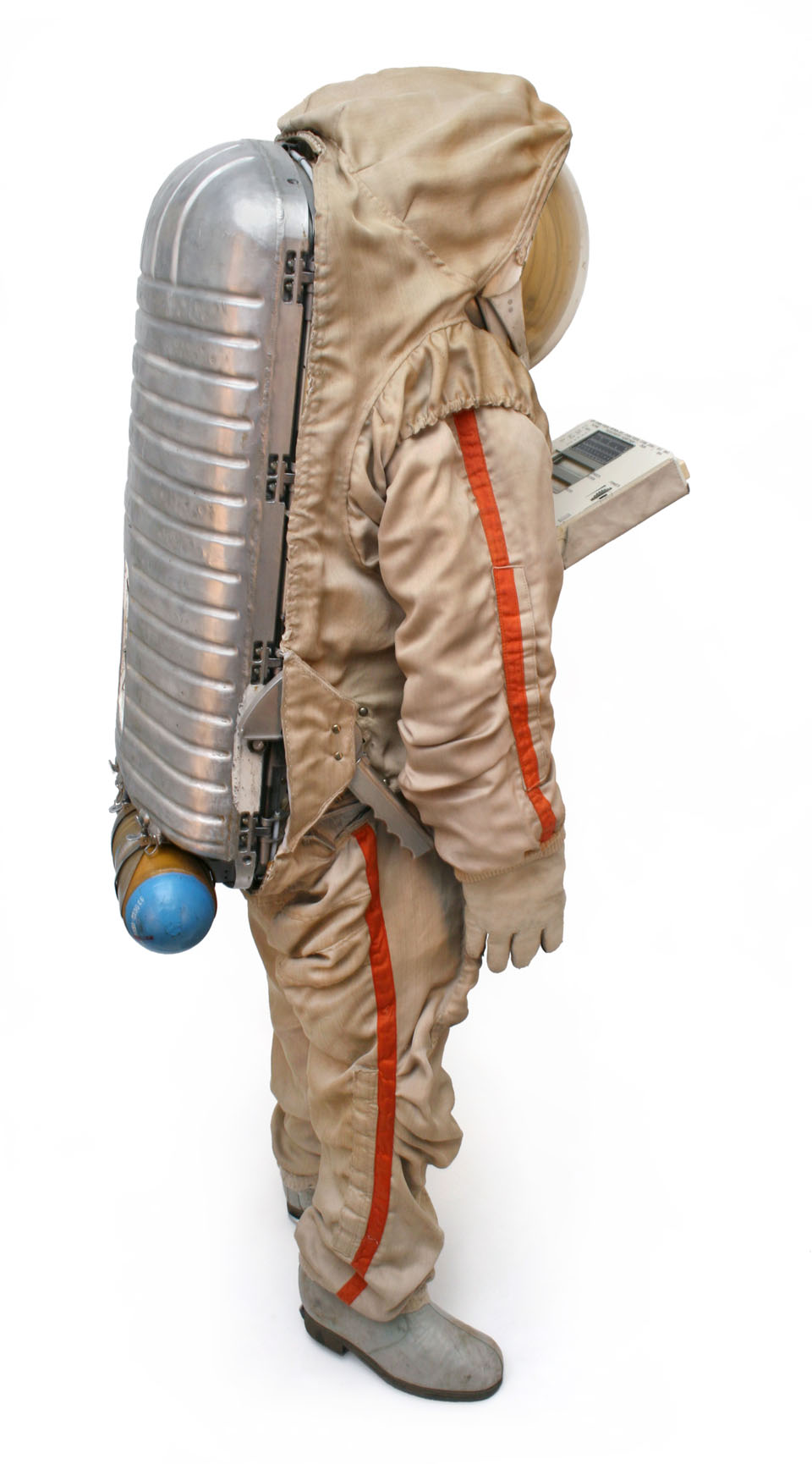
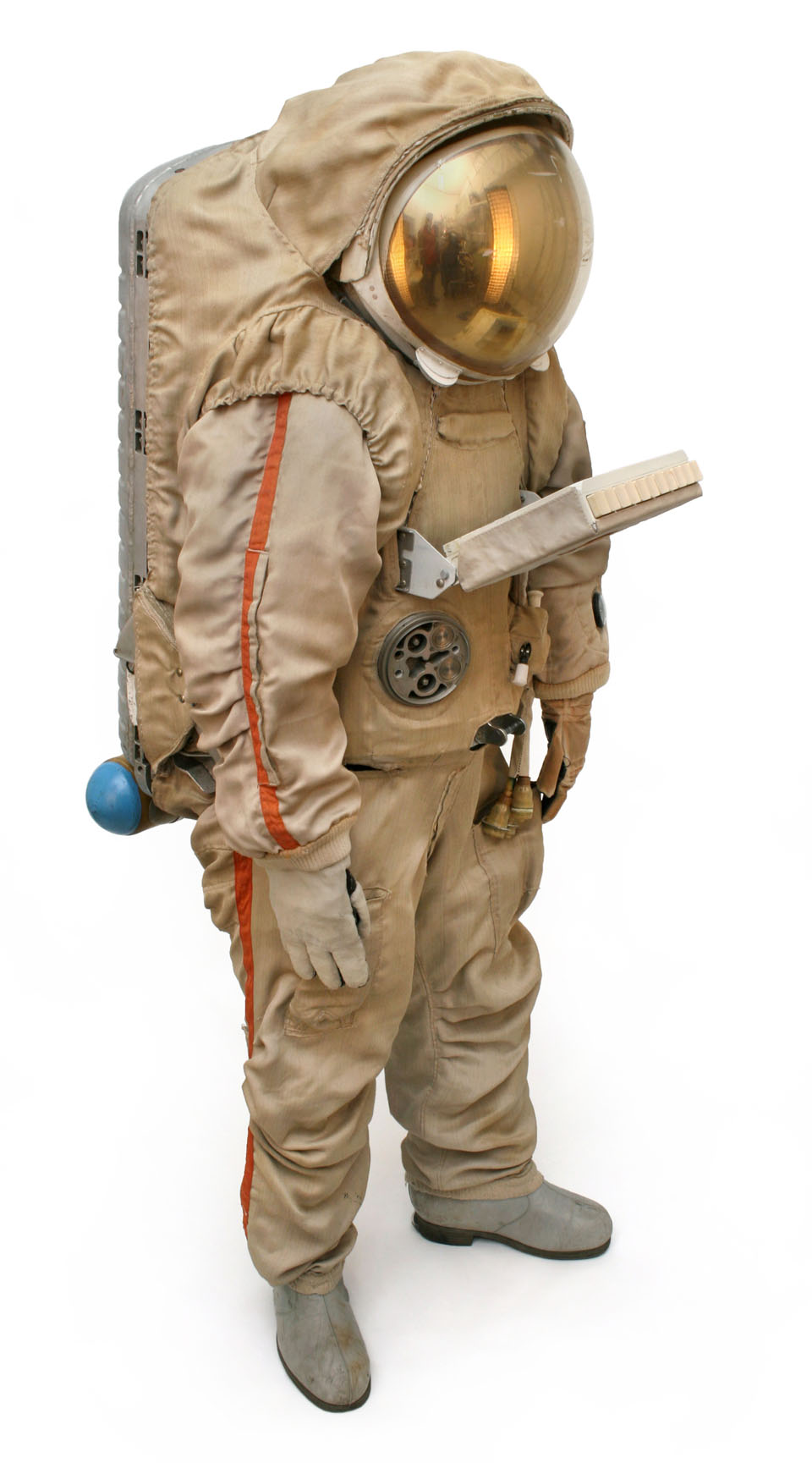
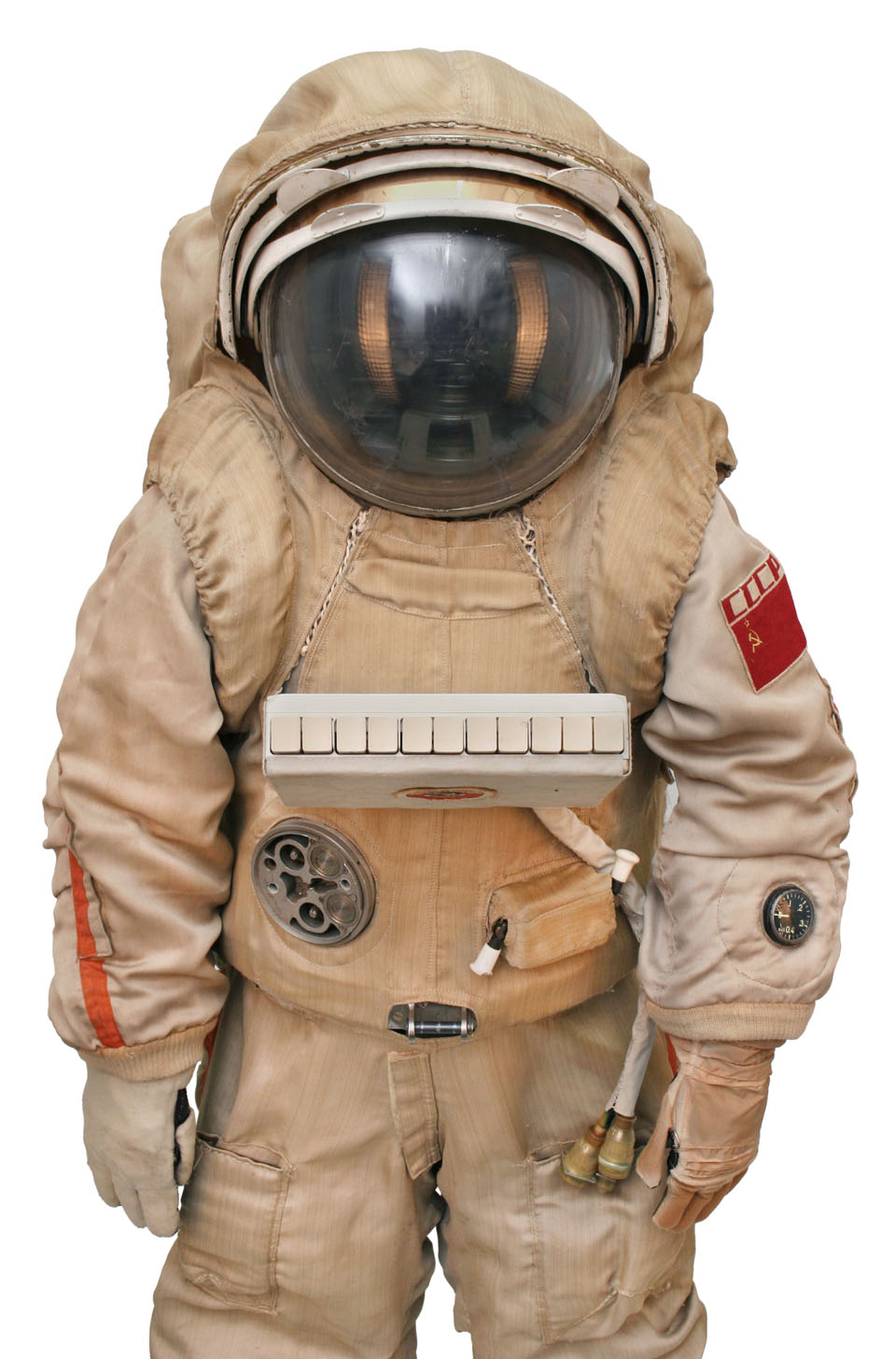
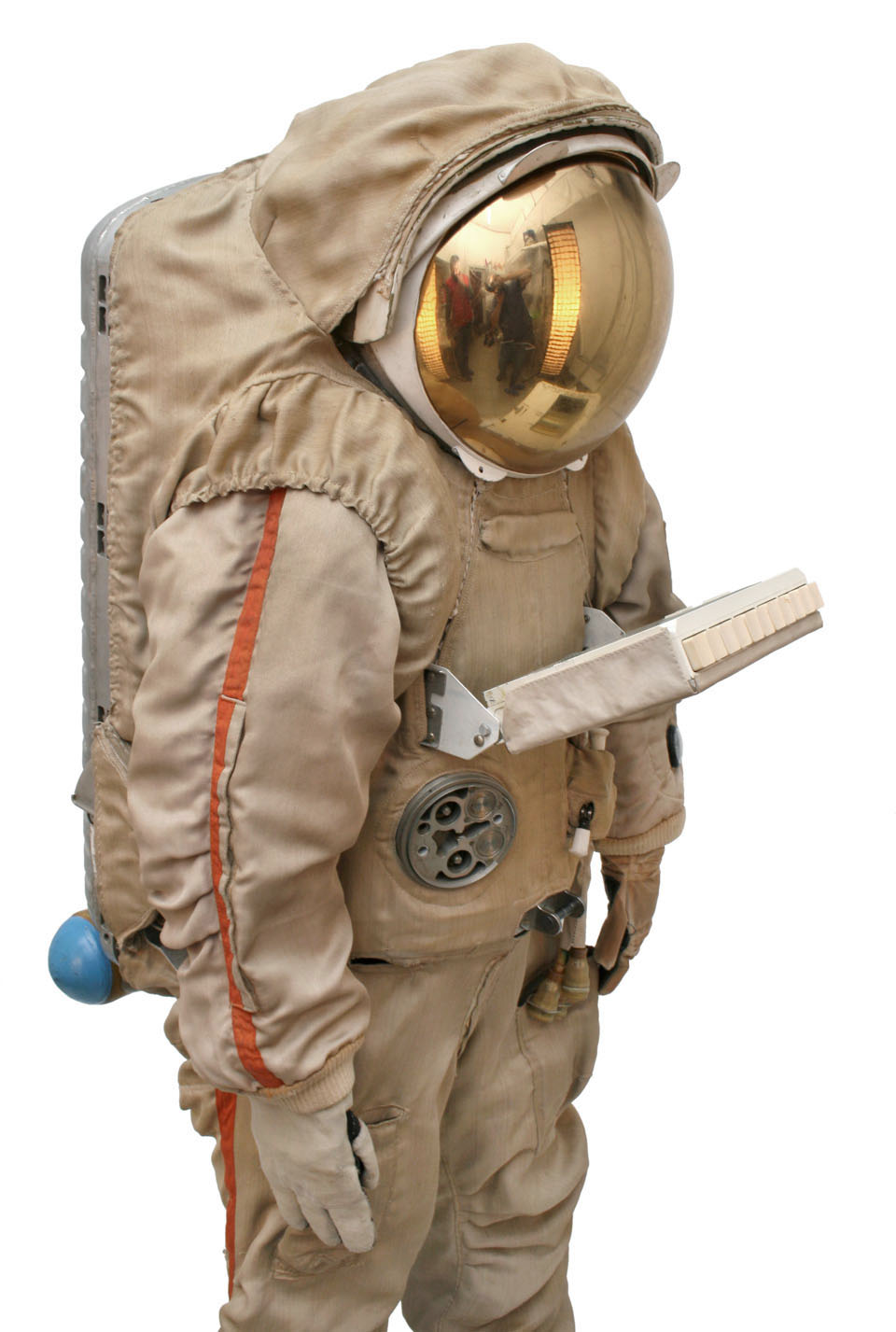
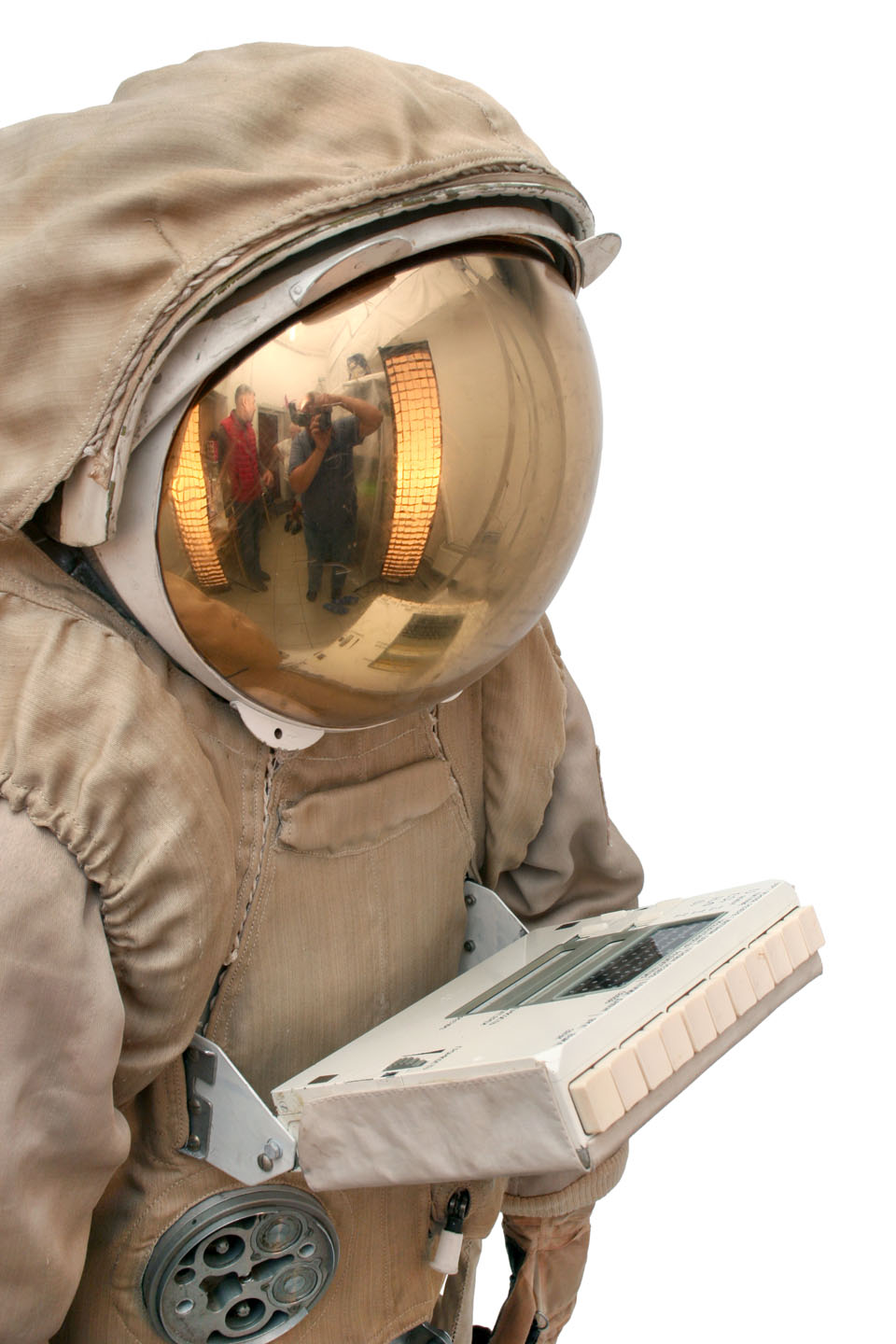
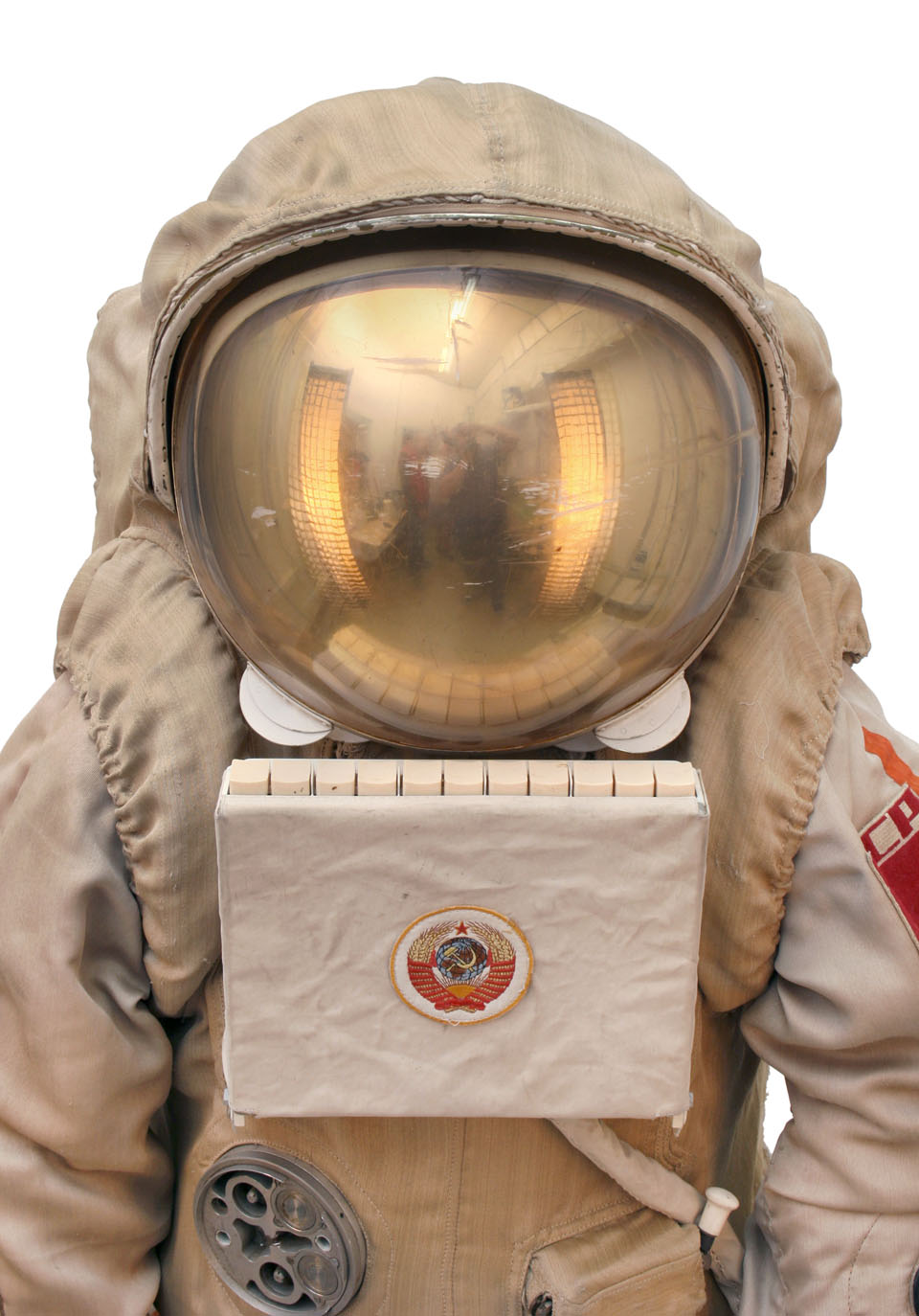
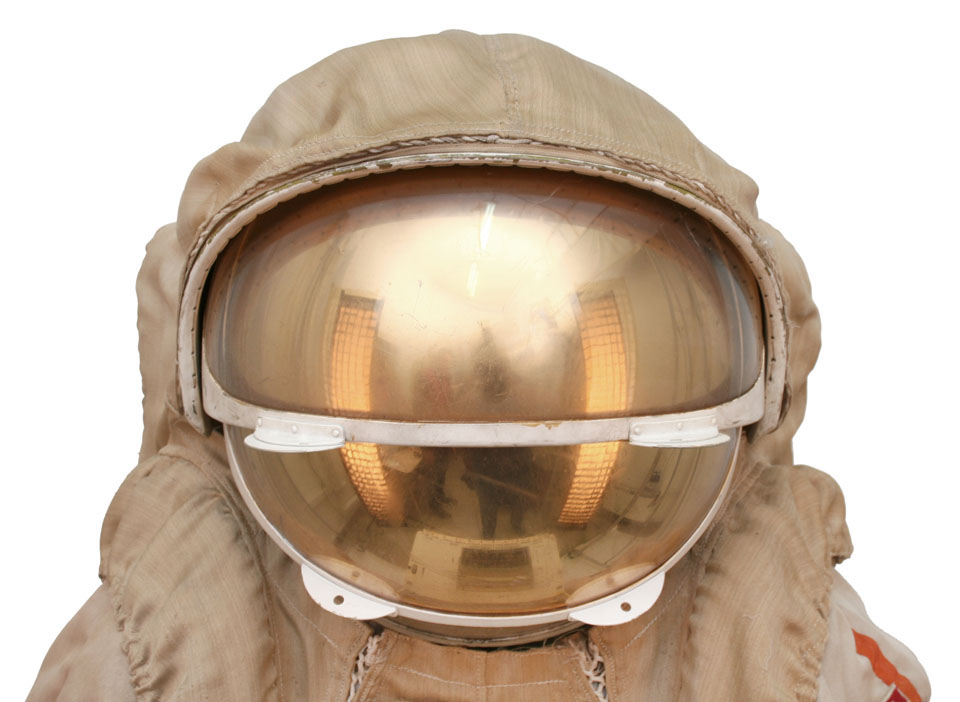
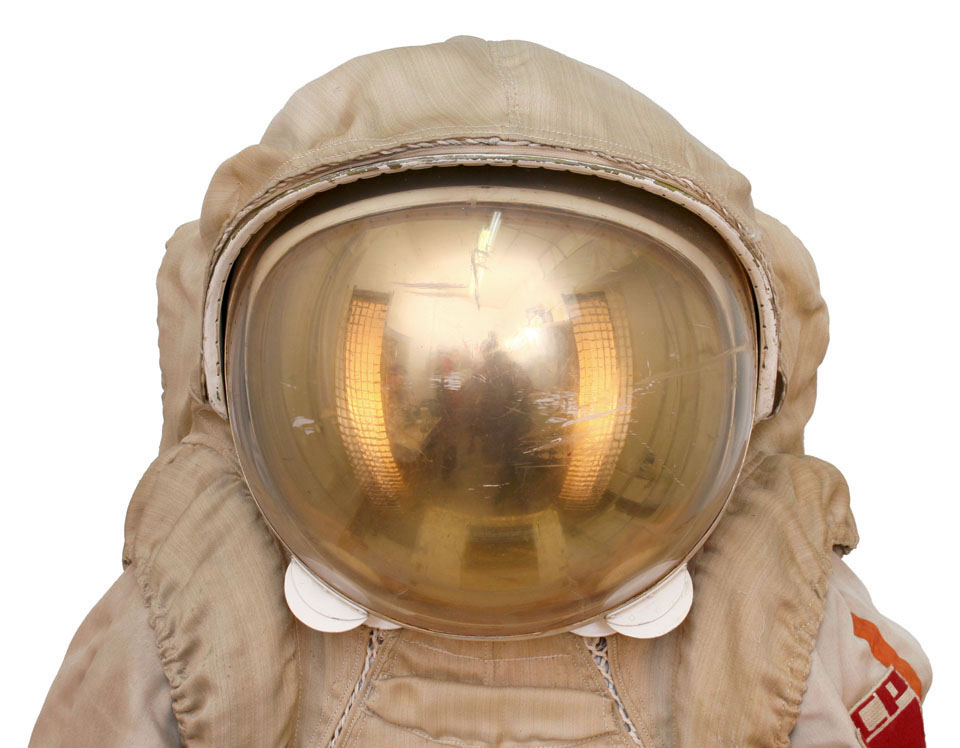
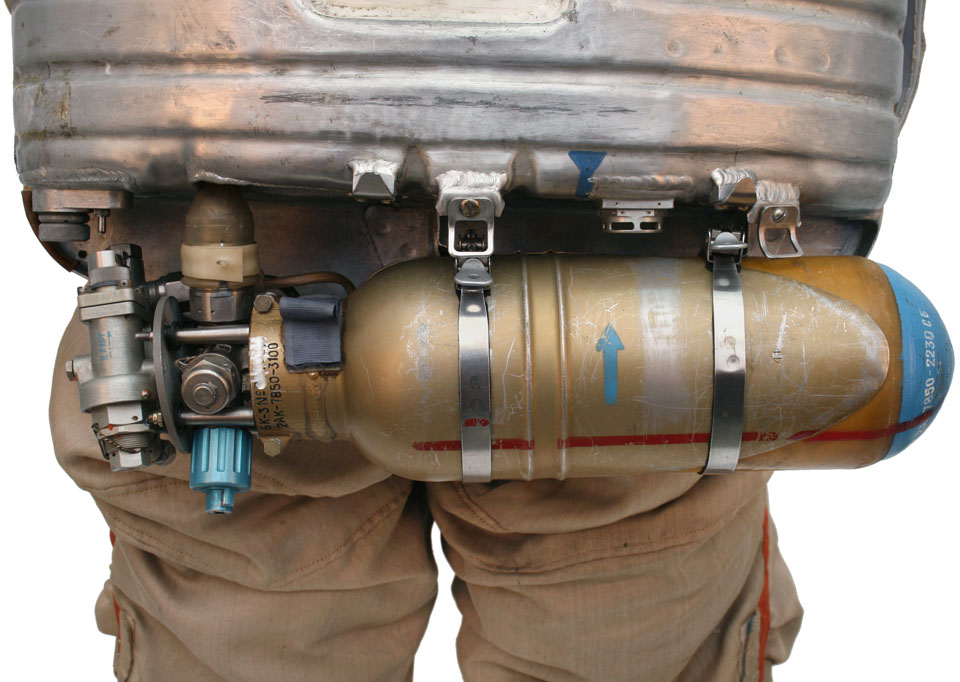
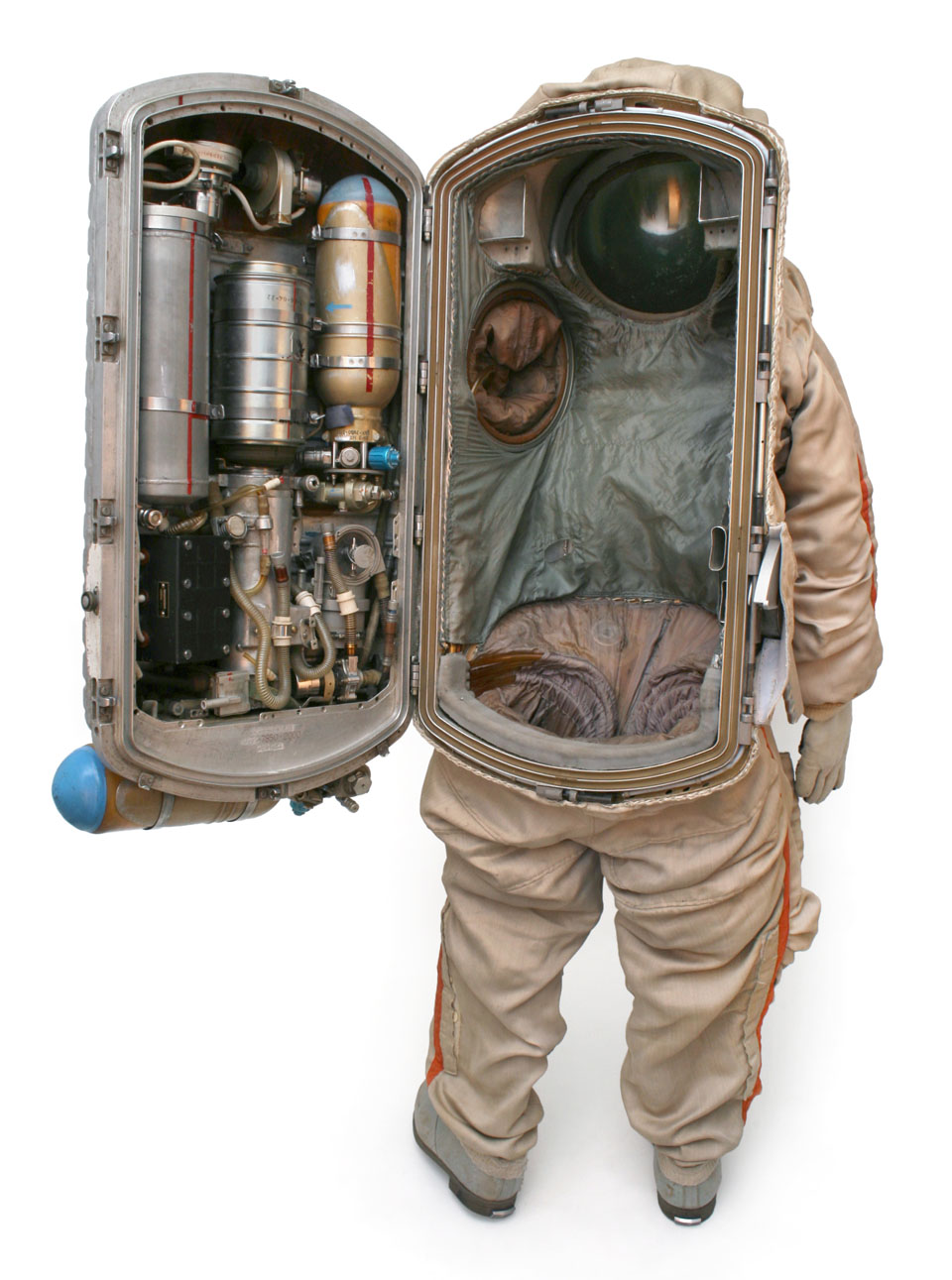
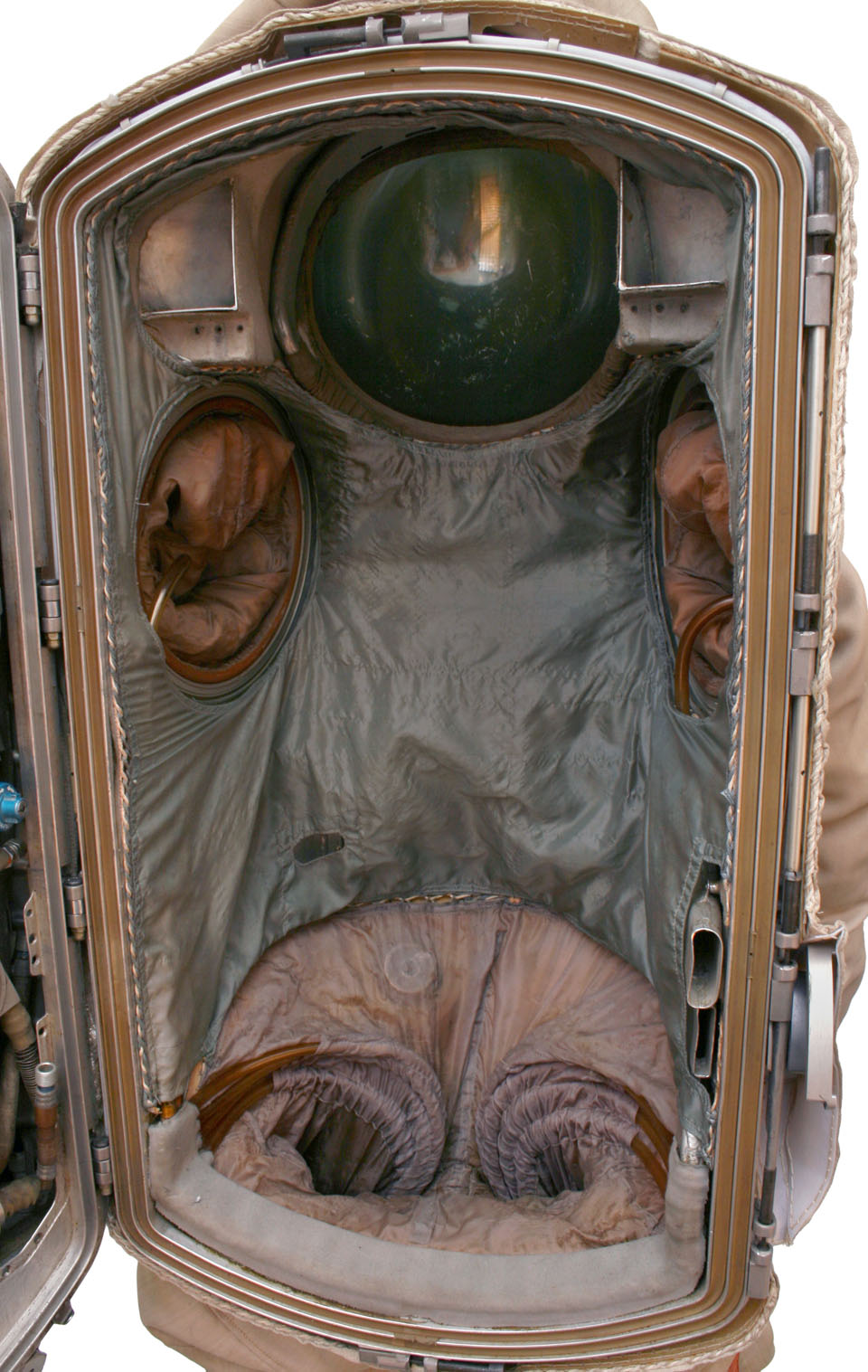
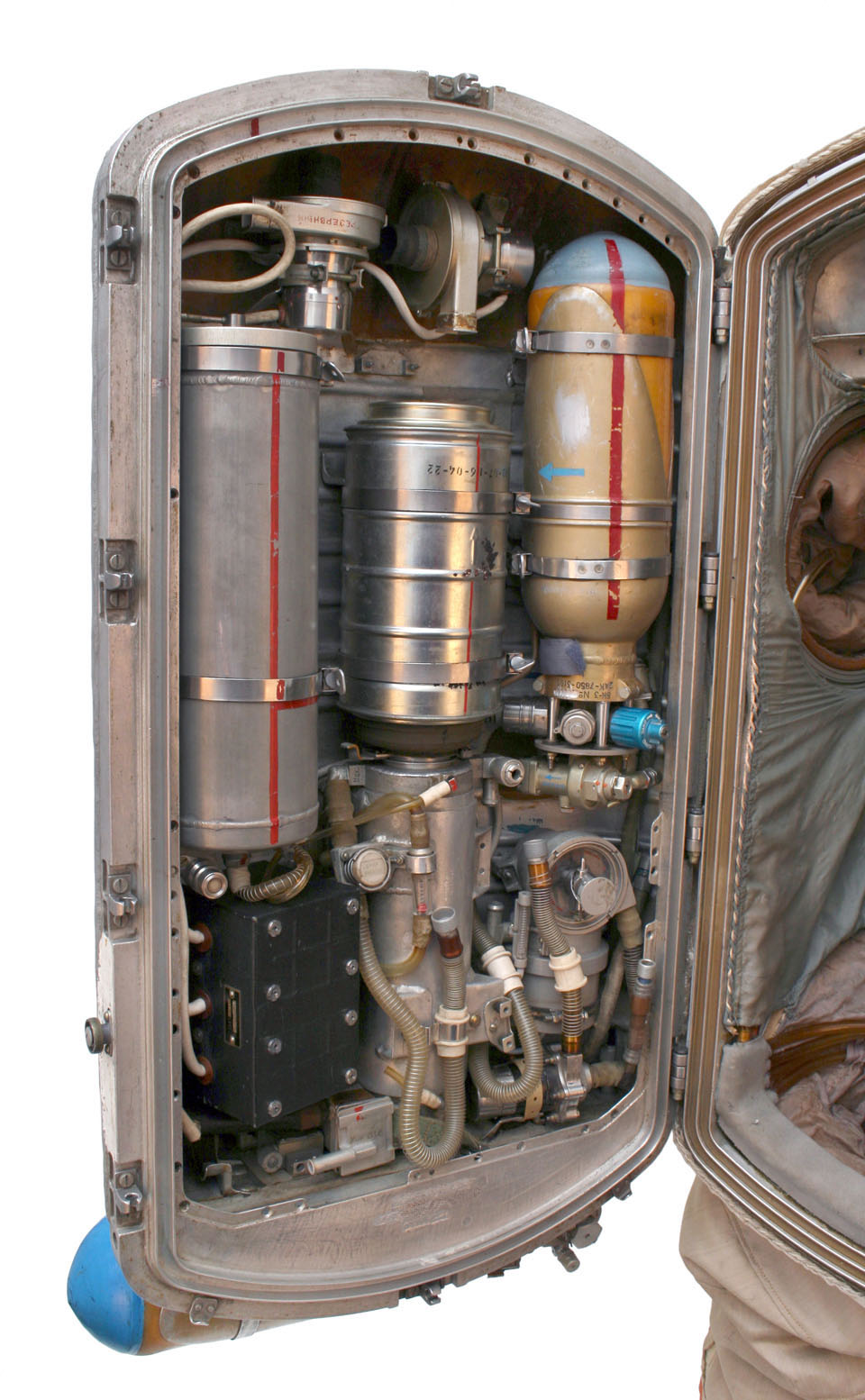
The semi-rigid type spacesuit with a built-in life support system. The body was manufactured together with a hard helmet made of sheet aluminum. The helmet visor has two protective gold-coated solar filters located on the outside and lowered separately. The sleeves and the legs are soft. The hatch for entering the suit is on the back, and the backpack holding life-support system acts as a hatch cover. The external pressure restraint layer is made of capron, the internal air-tight layer is made of rubber with a soft thin cloth liner. The sleeves are equipped with shoulder and wrist ball-bearing joints. The impact shielding cloth with screen-vacuum insulation is the feature of the outermost coverall layer. The antenna-feeder system is built into the clothing.
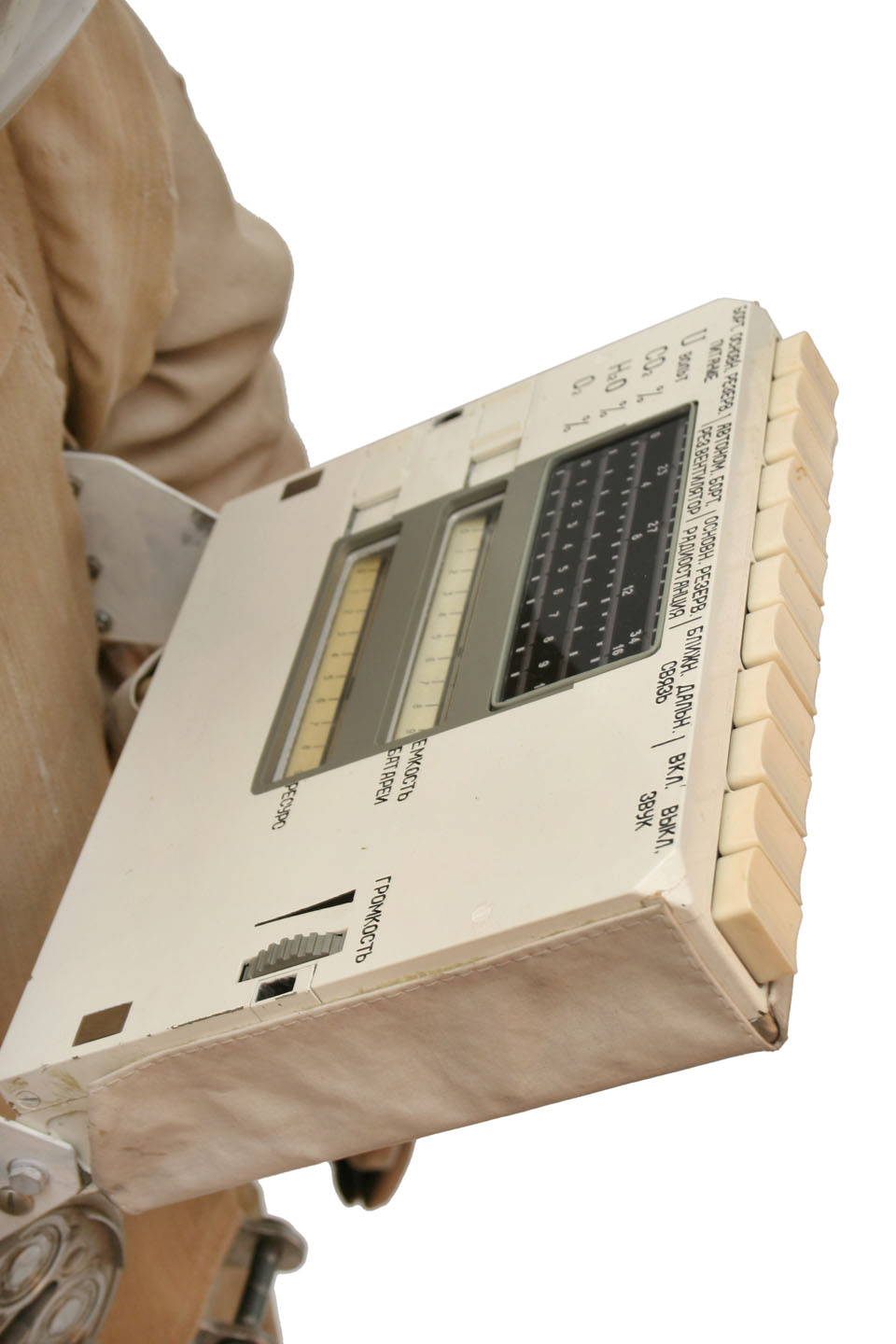
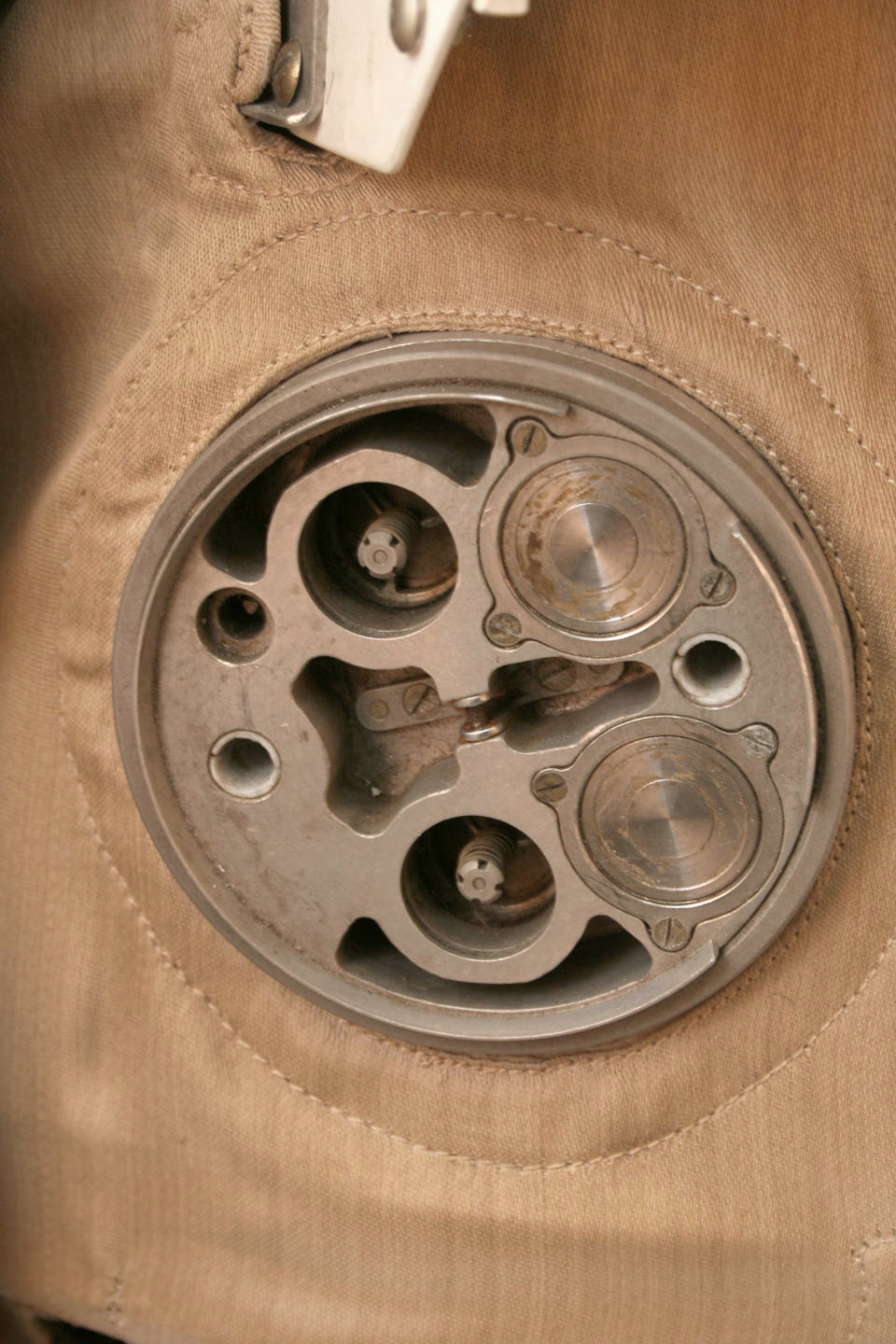
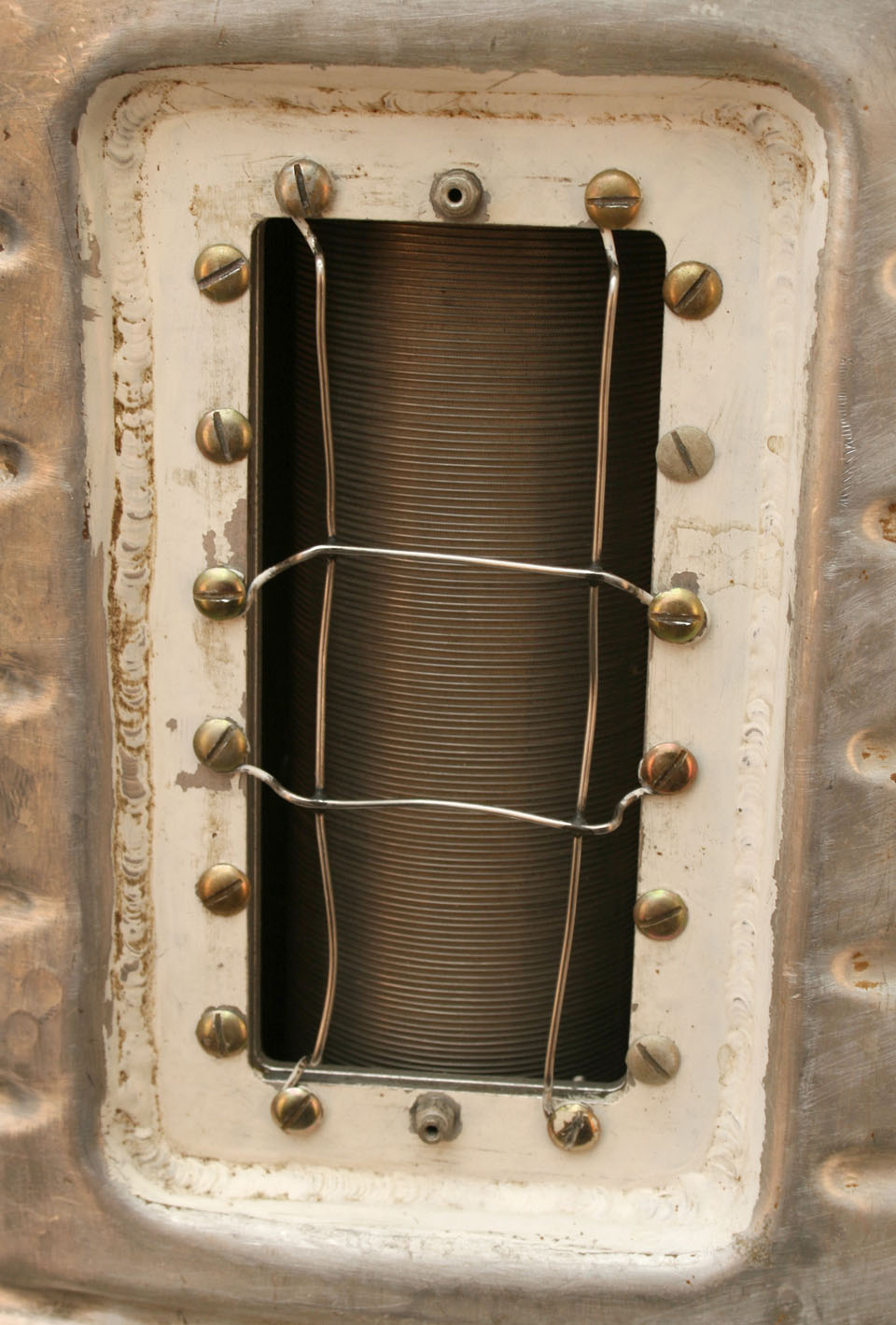
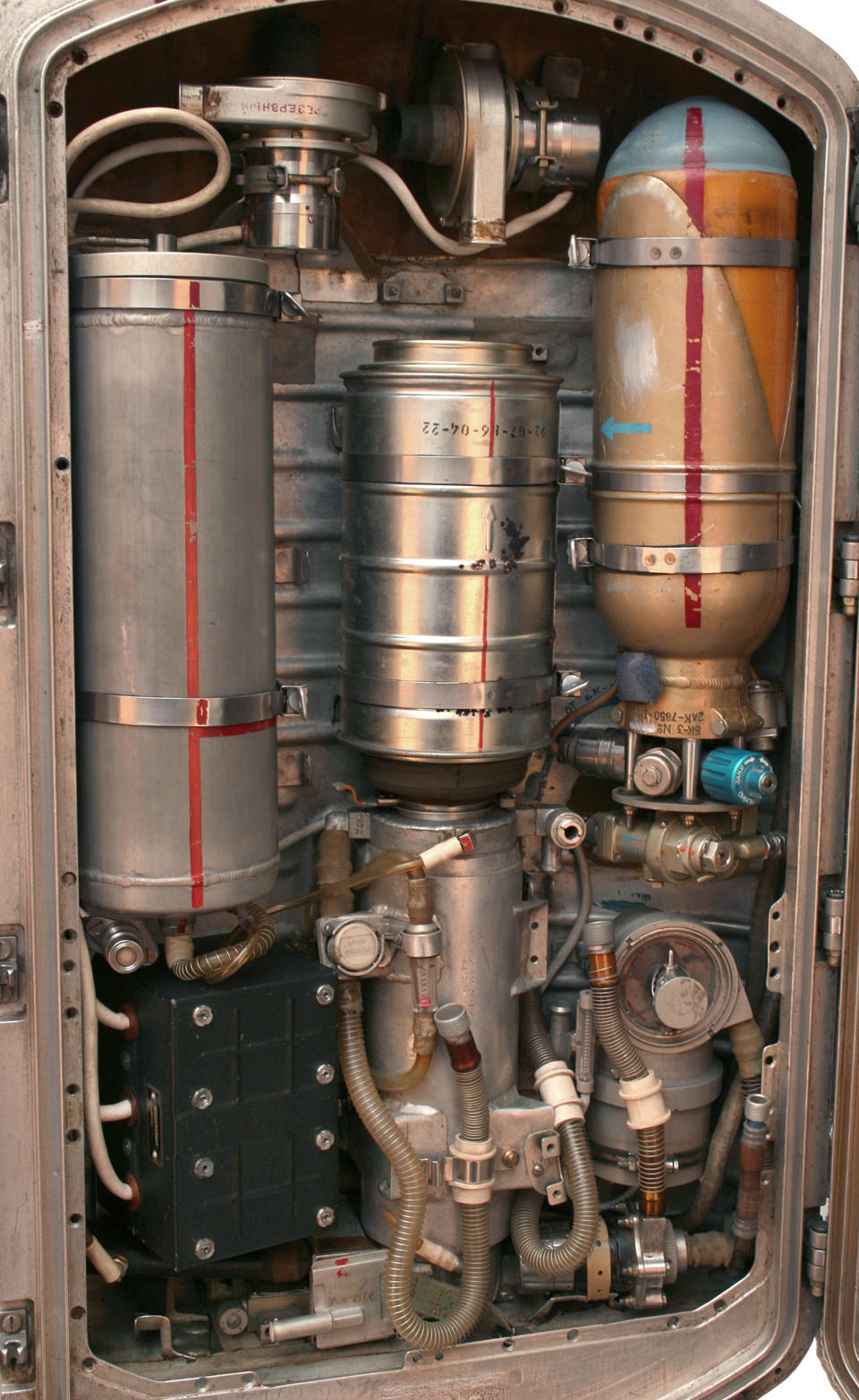
The independent life support system is of the regenerative closed-loop type. The thermal control system includes a liquid cooling system and a sublimator for the suit that is placed on the back side of the backpack. The control panel for the life support system is placed on the front side of the suit for the cosmonaut to access.
Manufactured in 1966-1972 at the Manufacturing Facility "Zvezda".
Weight - 106 kg (233 pounds US).
Life support endurance - up to 10 hours in open space.
Suitable for 164-182 centimeters tall (5 feet 3 inches to 5 feet 9 inches tall) cosmonauts.
These spacesuits have never been used in actual lunar mission operations due to the cancellation of the Soviet manned lunar landing program.
3 fully functional spacesuits were manufactured strictly for lab tests and further 22 improved suit samples were also manufactured - intended for a variety of tests and training related to lunar mission operations.
There were 9 more suits in production by the time of closure of the program.
 Made in the USSR Made in the USSR
|
|
This spacesuit was in production and therefore it was not fully completed when the Soviet lunar manned program was terminated in 1972. When production stopped, the spacesuit was left at the Manufacturing Facility "Zvezda". Some of its elements were disassembled for intended use on subsequent models modified for the orbital station program. The spacesuit was due to be destructed at the end of 1970s, but it was luckily saved at the factory. In the early 2000s, the suit came into private hands. The uniqueness of the Krechet is determined by its connection to the failed attempt of the USSR to land cosmonauts on the Moon, and therefore the extremely limited number of the spacesuits produced, many of which were subsequently destroyed. Restoring the spacesuit is complicated by the lack of original parts, which is a consequence of the destruction of the surviving Krechet spacesuits, as well as other elements of the Soviet manned lunar program.
|
|
The spacesuit is a nice looking exhibit, one of the very few ever manufactured Krechets, and believed to be the later modification designed for operations on the Moon surface. Having a typical Krechet exterior, this spacesuit differs from the basic model in its backpack's stuffing, which is more similar to that used in later Orlan-family spacesuits for extravehicular activity on the orbital station.
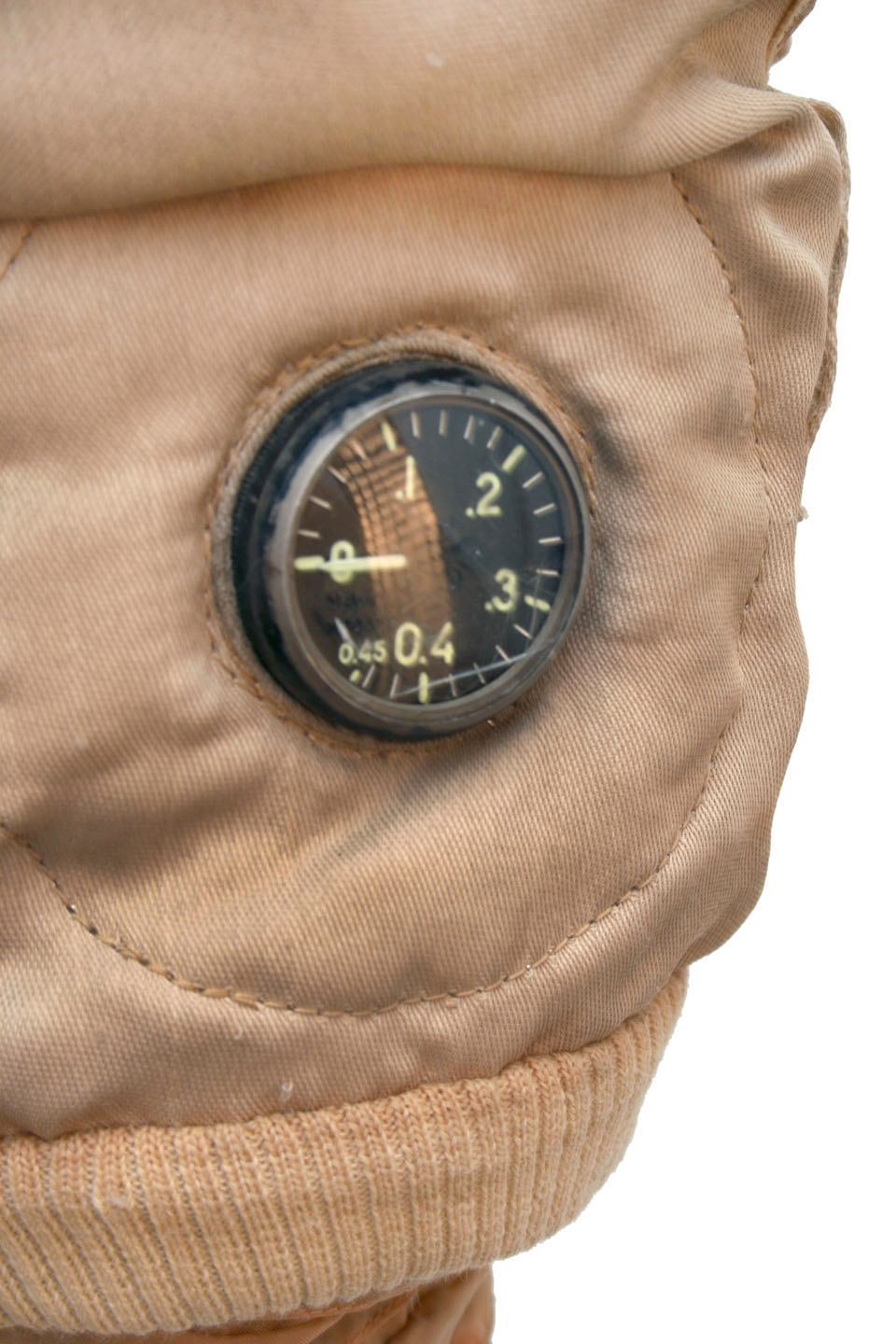
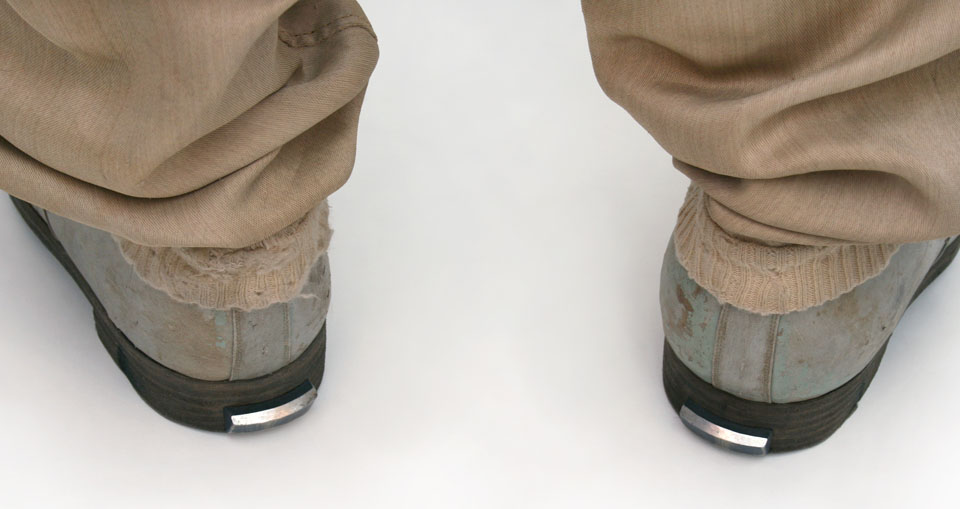
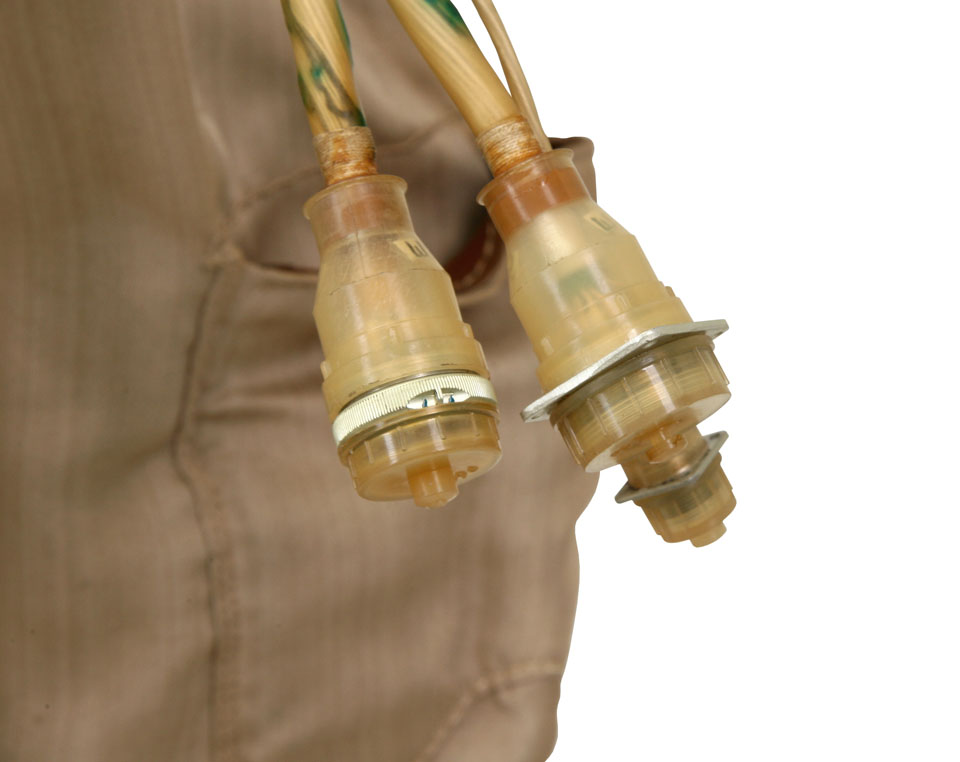
The elements of the pressure restraint layer have some minor contaminants and obvious traces of being in long-term storage. There are some scratches on both the glass and sun visors of the helmet. The control panel, connectors, switches, and sleeve manometer are without visible damage. The control panel is not wired to the systems of the spacesuit, its buttons were not checked for functionality. The boots have some traces of wear. The glove parts show signs of aging. The pressure shell and the seal of the backpack door appear undamaged. Some elements of the life support system may be absent, or have no connections to other elements of the suit. Due to the age of the spacesuit, the lack of necessary testing equipment and possible absence of some parts it is impossible to check its pressure integrity and the operation of its systems.
|
|
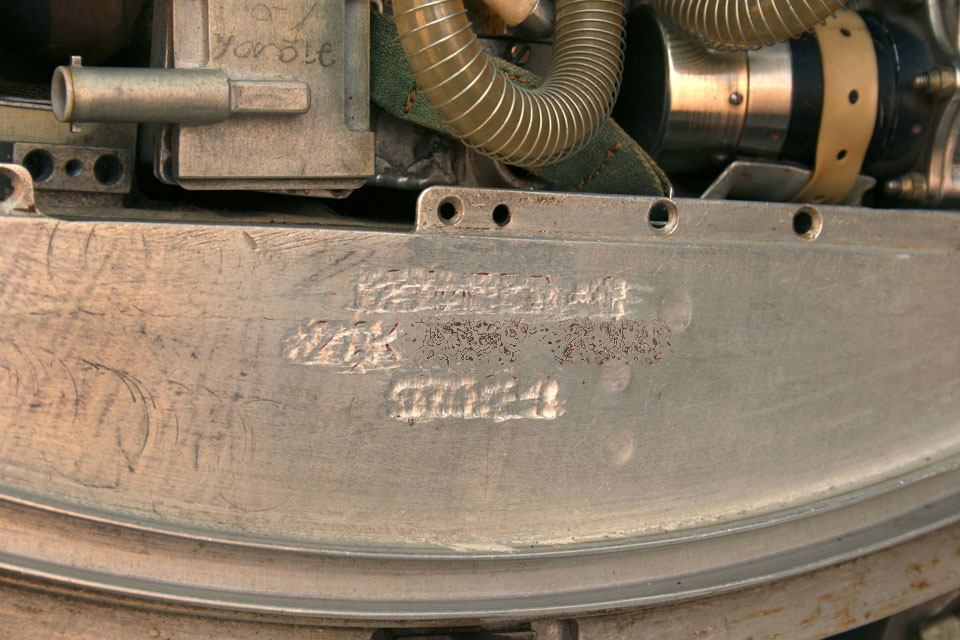
The completeness of the spacesuit corresponds to that shown in the photos. It has no shielding cloth segment of the backpack. Some elements of life-support system may be absent or not properly connected.
To display the spacesuit in standing position and to move it easely the supporting trolley may be required (not included). Another options for display are hanging it, or, installing a kind of supporting skeleton, or a mannequin inside the suit (both also not included).
|
|
Handling, packing and delivery
|
|
Handling time depends on packing process lasting. The spacesuit will be packed properly well for safe shipping. Due to different rules in different countries the delivery time may vary from 1 to 3 months, or longer. For easier shipping the spacesuit may be partly disassembled, and then reassembled closer to the place of final destination. Shipping may not be trackable on its all way, as various delivery methods may be used for efficiency.
|
|