DATE OF THIS ** ORIGINAL ** ITEM: 1906 Fairbanks, Morse and Company was an American manufacturing company in the late 19th and early 20th century. Founded in 1823 as a manufacturer of weighing scales, it later diversified into pumps, engines, windmills, coffee grinders, radios, farm tractors, feed mills, locomotives, and industrial supplies. It was purchased by the Penn-Texas conglomerate in 1958. There are three separate corporate entities that could be considered successors to the company, none of which is a complete and direct descendant of the original company. All claim the heritage of Fairbanks Morse and Company: Fairbanks Morse and Company began in 1823 when inventor Thaddeus Fairbanks opened an ironworks in St. Johnsbury, Vermont, to manufacture two of his patented inventions: a cast iron plow and a heating stove. In 1829 he started a hemp dressing business for which he built the machinery. Though unsuccessful in fabricating for fiber factories, another of Morse's inventions, the platform scale, formed the basis for the later company. It was patented in June 1832, and a generation later, with his brother Erastus Fairbanks, the E. & T. Fairbanks & Company was selling thousands of scales, first in the United States, later in Europe, South America, and Imperial China. Fairbanks scales won 63 medals over the years in international competition. In Wisconsin, former missionary Leonard Wheeler designed a durable windmill for pumping water, the Eclipse windmill. Wheeler set up shop in Beloit just after the Civil War. Soon half a million windmills dotted the landscape throughout the West and as far away as Australia. At about the same time, a Fairbanks & Company employee, Charles Hosmer Morse, opened a Fairbanks office in Chicago, from which he expanded the company's territory of operation and widened its product line. As part of this expansion, Morse brought Wheeler and his Eclipse Windmill pumps into business with the Fairbanks company. Morse later became a partner in the Fairbanks Company and by the end of the nineteenth century, it was known as Fairbanks Morse & Company and was headquartered in Chicago. Canadian and American cities had branch dealerships, with Fairbanks first coming to Montreal, Quebec, Canada, in 1876 and later opening a factory there. In the late nineteenth century, business expanded in the Western United States, as did the company's catalog. It grew to include typewriters, hand trucks, railway velocipedes, pumps, tractors, and a variety of warehouse and bulk shipping tools. The company became an industrial supplier distributing complete "turn-key" systems: tools, plumbing, gauges, gaskets, parts, valves, and pipe. Its 1910 catalog contained over 800 pages. The Fairbanks Morse Company began producing oil and naptha engines in the 1890s with the purchase of the Charter line of engines (the first commercially available gas engine). They had the idea that an engine could be used as backup power for when one of their Eclipse windmills wasn't getting wind. The Fairbanks Morse gas engine became a success with farmers. Electricity generation and oilfield work also used these engines. Small lighting plants built by the company were also popular. Fairbanks Morse power plants evolved by burning kerosene in 1893, coal gas in 1905, then to semi-diesel engines in 1913 and to full diesel engines in 1924. The Model N was popular in stationary industrial applications. In 1934, Fairbanks-Morse entered the radio business by acquiring the Audiola Radio Co. After a 1939 factory fire FM decided to exit the radio business. Fairbanks-Morse radios are well known for their colorfulness. The company also had brief forays into building automobiles, tractors, corn shellers, hammermills, cranes, televisions, and refrigerators, but output was small in these fields. After the expiration of Rudolf Diesel's American license in 1912, Fairbanks Morse (FM) entered the large engine business. The company's larger Model Y semi-diesel became a standard workhorse, and sugar, rice, timber, and mine mills used the engine. The model Y was available in sizes from one through six cylinders, or 10 to 200 horsepower (150 kW). The Y-VA engine was the first high-compression, cold-start, full diesel developed by Fairbanks Morse without the acquisition of any foreign patent. This machine was developed in Beloit and introduced in 1924. The company expanded its line to the marine CO engine (Many 100 H.P. CO marine engines were used in the Philippine Islands to power ferry boats) as well as the mill model E, a modernized Y diesel. From this, Fairbanks-Morse became a major engine manufacturer and developed plants for railway and marine applications. The development of the diesel locomotive, tug, and ship in the 1930s fostered the expansion of the company.
**For multiple purchases please ASK FOR + wait for our combined invoice. Shipping discount are ONLY available with this method. Thank You.
THIS ITEM IS A ONE-PAGE PRINT FROM AN ORIGINAL PERIODICAL. THERE IS ONE PHOTO, SO PLEASE LOOK OVER CAREFULLY FOR SIZE AND CONDITION! NOTE: SOME PHOTOS MAY HAVE A BLACK BOX COVERING UP THE NAME OF THE PERIODICAL - IT IS ONLY LAYING ON TOP OF THE ITEM - NOT PERMANENT.
ILLUSTRATOR / ARTIST: B/W ILLUSTRATION
OTHER INFO OF CONCERN FOR THIS LISTING - SPECIAL CHARACTERISTICS AND DESCRIPTIVE WORDS:
ADVERT SIZE: SEE RULER SIDES IN PHOTO FOR DIMENSIONS ( ALL DIMENSIONS IN INCHES)
Our AD's and COVER'S are ORIGINAL and 100% guaranteed --- (we code all our items to insure authenticity) ---- we stand behind this.
As graphic collectors ourselves, we take great pride in doing the best job we can to preserve and extend the wonderful historic graphics of the past.
PLEASE LOOK AT OUR PHOTO CLOSELY AS IT IS (ALBEIT LOWER RESOLUTION) THE PRODUCT BEING SOLD.....NOT STOCK IMAGES
**NOTE** : PAGES MAY SHOW AGE WEAR AND IMPERFECTIONS TO MARGINS, WITH CLOSED NICKS AND CUTS, WHICH DO NOT AFFECT AD IMAGE OR TEXT WHEN MATTED AND FRAMED. SOMETIMES THE PAGES HAVE BEEN TRIMMED.. PLEASE NOTE THE ACTUAL SIZE OF SELLING AD IN THE ATTACHED PHOTO IMAGE... WHAT YOU SEE IS WHAT YOU GET...
We ship via United States Postal Service. We have a 3 day handling time not including weekends or holidays but normally we have all orders processed, packed and shipped within 48 hrs.
A Note to our international buyers (Including Canada). Please read before placing a bid or buying an item:
**Import taxes, duties and charges are not included in the item price or shipping charges. These charges are the buyer's responsibility. Please check with your country's customs office to determine what these additional costs will be prior to bidding/buying on items. These charges are normally collected by the shipping company or when you pick the item up, this is not an additional shipping charge. We are not responsible for shipping times to international buyer's. Your country's customs may hold the package for a month or more.
**We pride ourselves on quality products, great service, accurate gradations and fast shipping.**
BRANCHWATER BOOKS

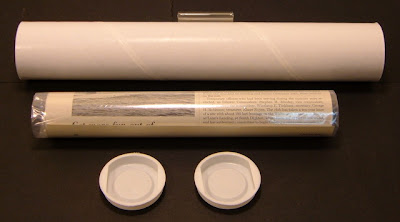
YOUR AD WILL BE SHIPPED ROLLED IN A PROTECTIVE PLASTIC BAG IN AN 80mm (TWICE USPS RECOMMENDED) THICK, 2 INCHES IN DIAMETER (SO AS NOT TO STRESS THE PAPER) SHIPPING TUBE WITH PRESS TIGHT PLASTIC END CAPS.
FC8518


Powered by SixBit's eCommerce Solution