ITEM SIZE CAN BE FOUND BY USING RULERS ALONG EDGE IN PHOTO - IN INCHES
THESE ARE 1/2 PAGE ADS, WHICH HAVE BEEN CUT - SO PAY ATTENTION TO SIZE AND CONDITION.
DETAILS OF ITEM:
Battle Creek Health Builder, Oscillo-Manipulator type MS-4, by the Sanatarium Equipment Co., Michigan, US, 1925-1935
This mechanical massaging machine stimulated the body via a vibrating belt. The maker of the Battle Creek Health Builder claimed it was effective for ailments such as constipation, emaciation, fatigue, headaches, high or low blood pressure, indigestion, insomnia, a large abdomen, menstrual disorders, poor circulation, rheumatism and paralysis. The instructions state: “The curative effects of massage are most diversified. Gently applied, the effect is calming…applied with vigour, it is a most powerful stimulus, arousing sluggish organs to action, energising weakened parts and producing powerful stimulant effects."
The Battle Creek Sanatorium in Michigan was an upmarket ‘health spa’. It was founded in the 1860s. It became popular after John Harvey Kellogg, of the ‘Kellogg’ cereal family, headed the medical department during the 1870s. It introduced mechanical exercise equipment such as the Health Builder by the 1920s. These were the forerunners to those we see in modern gyms.
Oscar Shaw (born Oscar Schwartz, October 11, 1887, in Philadelphia, Pennsylvania – died March 6, 1967, in Little Neck, Queens, New York City, New York) was a stage and screen actor and singer, remembered primarily today for his role as Bob Adams in the first film starring the Marx Brothers, The Cocoanuts (1929). United States census records show that Shaw was already working as a stage actor in 1910, while still living with his mother, brother, and stepfather.[citation needed]
In 1913, Shaw married Mary Louise Givler (a native of Carlisle, Pennsylvania), in England, where they both appeared in a show called the "First American Ragtime Review" at the London Opera House. The couple lived in the Village of Great Neck Estates, and in 1937, later moved to the Thomaston section of Great Neck, first in a private home, and later lived in an apartment building on Welwyn Road.
Shaw sold his home on 9 Myrtle Drive in March 1937, two months after he had settled a lawsuit with an actress, Florence Roberts (stage name: Etna Ross), who brought a $50,000 lawsuit against Shaw, alleging that he had thrown her down a staircase while the two worked together in a road company. It is not known whether the sale of his home was related to the settlement of the lawsuit.
Shaw's wife died March 31, 1964, at the age of 77. Shaw died on March 6, 1967, at the age of 79. He is buried in Evergreen Cemetery in Gettysburg, Pennsylvania.
Dorothy Knapp (born about 1900) was an American dancer, actress, model and Ziegfeld girl.
Early life[edit]
Dorothy Knapp was born in Chicago,[1] or Dallas (sources vary). She lived in New York City after 1915, and was dancing professionally by 1916, in the company of Norma Gould.[2][3][4]
Career[edit]
Knapp began modeling and entering beauty contests as a teenager, and was publicized as "American Venus" in 1922.[1][5] She won a precursor contest to what became the Miss America pageant in Atlantic City.[6] In a 1922 newsreel she was described as "the perfect woman".[7] Her measurements were published in detail,[8] and she was often photographed in a swimsuit doing exercises.[9] "Keeping fit is a pleasure by radio," one such photograph of Knapp was captioned.[10]
From beauty pageants and glamorous photographs, she was cast in variety shows, including Earl Carroll's Vanities in 1923, 1926, and 1928, and the Ziegfeld Follies of 1924 and 1925. Louise Brooks, who remembered Knapp as one of Ziegfeld's "prize beauties" and shared a dressing room with her, noted that "people like Walter Wanger and Gilbert Miller would meet there, ostensibly to hear my reviews of books that Herman Mankiewicz gave me to read. What they actually came for was to watch Dorothy doing a striptease in front of a full-length mirror."[11] In 1929 she starred on Broadway in Fioretta; the show's failure was blamed on Knapp's lack of musical talent,[12] and she was hospitalized after she was fired from the production,[13][14] and lawsuits followed.[15][16] She appeared twice more on Broadway, in Free For All (1931) and Broadway Interlude (1936), but both shows closed quickly.
On screen, she was seen in the films None But the Brave (1928), The Border Patrol (1930), Whoopee! (1930), and Under the Cock-Eyed Moon (1930). She appeared as a host and performer on several radio dramas on the NBC radio network, in the spring of 1931.[17] Her radio program "Backstage with Dorothy Knapp" was about her experiences in show business.[18] Simultaneous to her radio work in 1931, NBC was also preparing her for becoming a host on their new television broadcasts; the press frequently referred to her as NBC's "Television Girl," and she first appeared on some experimental television transmissions in June 1931.[19]
Personal life[edit]
Knapp was involved with Earl Carroll,[20] and was briefly engaged to actor Chick Chandler, cousin of illustrator Howard Chandler Christy.[21] In 1933 she married a Canadian radio announcer, Jack Edmond;[22] they divorced in 1934. She made public comments about withdrawing to a convent,[23] possibly in Mexico,[24] but had not done so before 1936, when she was reported living in Tudor City and making sculptures.[25] In 1957, Walter Winchell mentioned that Knapp was working at the jewelry counter of a department store, and living with Anna May Wong.[26]
ARTIST / ILLUSTRATOR: SANITARIUM EQUIPMENT HEALTH FITNESS EXERCISE DOCTOR JOHN HARVEY KELLOGG UNIVERSAL HOME HEALTH GYM EQUIPMENT
THEME:
EXTRA INFO (TEXT &IMAGE): BLACK AND WHITE INSERT PHOTOGRAPHY CAN EVOKE MANY MOODS / EMOTIONS.... WHEN FRAMED FOR DECOR USE. THESE INSERT PHOTO'S COME FROM VINTAGE PERIODICALS AND MOST OFTEN ARE THE *ONLY* GIVEN SOURCE OF THAT PHOTO. HAVING NEVER BEEN AVAILABLE FOR PURCHASE IN OTHER FORMATS THESE INSERT PHOTO'S ARE UNIQUE IN THIS FORM. THEY MAT AND FRAME UP WONDERFULLY WELL FOR THE WALL DECOR OF ANY HOME OR OFFICE. BLACK AND WHITE PHOTOGRAPHY HAS THAT DISTINCTIVE TOUCH OF ROMANTICISM AND NOSTALGIA THAT, THEREFORE, MAKES THEM BASICALLY TIMELESS IN STYLE.
CONDITION: CLEAN, PERFECT FOR FRAMING AND DISPLAYING.
INSERT PHOTO'S ARE CAREFULLY REMOVED FROM VINTAGE PERIODICALS AND MAY BE TRIMMED IN PREPARATION FOR DISPLAYING.
MARGINS ARE INCLUDED IN ADVERT SIZE.
**NOTE**: PAGES MAY SHOW AGE WEAR AND IMPERFECTIONS TO MARGINS, WITH CLOSED NICKS AND CUTS, WHICH DO NOT AFFECT AD IMAGE OR TEXT WHEN MATTED AND FRAMED.
THE ADVERT OR ARTICLE YOU RECEIVE WILL BE CRISP AND LEGIBLE, WE HAVE PURPOSEFULLY BLURRED THE IMAGE A LITTLE.
At ADVERTISINGSHOP(DIVISION OF BRANCHWATERBOOKS) we look for rare &unusual ADVERTISING, COVERS + PRINTS of commercial graphics from throughout the world.
ALL items we sell are ORIGINALand 100% guaranteed --- (we code all our items to insure authenticity) ---- we stand behind this.
As graphic collectors ourselves, we take great pride in doing the best job we can to preserve and extend to you wonderful historic graphics of the past.
PLEASE LOOK AT OUR PHOTO'S CLOSELY AS THEY ARE IMAGES OF THE PRODUCT BEING SOLD..... NOT STOCK PHOTO'S
**We pride ourselves on quality products, great service, accurate gradations and fast shipping.**
GREAT DECOR / ART FOR: HOME OFFICE BUSINESS SHOP STORE CASINO LOFT STUDIO GARAGE BEDROOM COLLECTION
MOST ITEMS ARE VERY GOOD AND BETTER... THE ACTUAL CONDITION CAN BE SEE BY HOVERING OVER THE PHOTO FOR A CLOSEUP.
**For multiple purchases please wait for our combined invoice. Shipping discount are ONLY available with this method. Thank You.
We ship via United States Postal Service. We have a 3 day handling time not including weekends or holidays.
A Note to our international buyers (Including Canada). Please read before placing a bid or buying an item:
**Import taxes, duties and charges are not included in the item price or shipping charges. These charges are the buyer's responsibility. Please check with your country's customs office to determine what these additional costs will be prior to bidding/buying on items.
We ask that payments be made within 3 days or notify us via email otherwise. We send out a reminder payment email once and then proceed with unpaid item report on the 7 th day.
****** WE PRIDE OURSELVES ON ACCURATE DESCRIPTION..... GREAT SERVICE ..... AND FAST...SAFE...SHIPPING *******

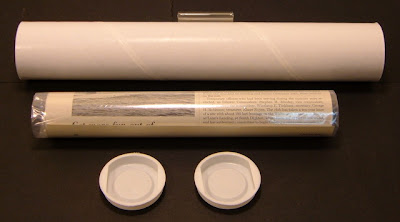
YOUR AD WILL BE SHIPPED ROLLED IN A PROTECTIVE PLASTIC BAG IN AN 80mm (TWICE USPS RECOMMENDED) THICK, 2 INCHES IN DIAMETER (SO AS NOT TO STRESS THE PAPER) SHIPPING TUBE WITH PRESS TIGHT PLASTIC END CAPS.
FDA271

Powered by SixBit's eCommerce Solution