|
DATE OF ** ORIGINAL ** INSERT PHOTO / COVER / PRINT: 1935 CITY / TOWN-STATE: DETAILS: The Winchester Repeating Arms Company was a prominent American manufacturer of repeating firearms and ammunition. The firm was established in 1866 by Oliver Winchester and was located in New Haven, Connecticut. The firm went into receivership in 1931 and was bought by the Western Cartridge Company, a forerunner of the Olin Corporation. The Winchester brand name is still owned by the Olin Corporation, which makes ammunition under that name. The Winchester name is also used under license for firearms produced by two subsidiaries of the Herstal Group – FN Herstal of Belgium and the Browning Arms Company of Ogden, Utah. History[edit]Early history[edit]Predecessors[edit]The ancestor of the Winchester Repeating Arms Company was the Horace Smith and Daniel Wesson partnership of Norwich, Connecticut (not to be confused with the famous Smith & Wesson Revolver Company founded later by the same men). Smith and Wesson acquired Lewis Jennings' improved version of inventor Walter Hunt's 1848 "Volition Repeating Rifle" and its caseless "Rocket Ball" ammunition, which had been produced in small numbers by Robbins & Lawrence of Windsor, Vermont. Jennings' rifle was a commercial failure, and Robbins & Lawrence ceased production in 1852.[1] Smith designed a much-improved rifle based on Jennings' design, and the partners also hired away Robbins & Lawrence shop foreman Benjamin Tyler Henry. In 1855, the Smith and Wesson partnership, in order to manufacture what they called the "Volcanic" lever-action rifle and pistol, sought investors and incorporated as the Volcanic Repeating Arms Company. Its largest stockholder was clothing manufacturer Oliver Winchester.[1] The Volcanic rifle had only limited success. The company moved to New Haven (without Smith or Wesson) in 1856, but by the end of that year, it became insolvent. Oliver Winchester and his partner John M. Davies purchased the bankrupt firm's assets from the remaining stockholders and reorganized it as the New Haven Arms Company in April 1857.[1] After Smith's departure, Benjamin Henry continued to work with a Smith development project, the self-contained metallic rimfire cartridge, and perfected the much larger, more powerful .44 Henry round. Henry also supervised a new rifle design based loosely on the Volcanic to use the new ammunition, retaining only the general form of the breech mechanism and the tubular magazine. This became the Henry rifle of 1860, which was manufactured by the New Haven Arms Company and used in considerable numbers by certain Union army units during the American Civil War. The Henry rifle ensured New Haven Arms' success, and together with the Spencer rifle, established the lever-action repeater in the firearms market.[citation needed] The Winchester rifle[edit]In 1866, Benjamin Henry, angered over what he believed was inadequate compensation, attempted to have the Connecticut legislature award ownership of New Haven Arms to him. Oliver Winchester, hastening back from Europe, forestalled the move and reorganized New Haven Arms yet again as the Winchester Repeating Arms Company.[2] Winchester had the basic design of the Henry rifle completely modified and improved to become the first Winchester rifle, the Model 1866, which fired the same .44 caliber rimfire cartridges as the Henry but had an improved magazine (with the addition of a loading gate on the right side of the receiver, invented by Winchester employee Nelson King) and, for the first time, a wooden forend. The Henry and the 1866 Winchester shared a unique double firing pin that struck the head of the rimfire cartridge in two places when the weapon was fired, increasing the chances that the fulminate in the hollow rim would ignite the 28 or so grains of black powder inside the case.[citation needed] Another extremely popular model was rolled out in 1873. The Model 1873 introduced the first Winchester center fire cartridge, the .44-40 WCF (Winchester Center Fire). These rifle families are commonly known as the "Gun That Won the West."[citation needed] The Model 1873 was followed by the Model 1876 (or "Centennial Model"), a larger version of the '73, which used the same toggle-link action and brass cartridge elevator used in the Henry. It was chambered for longer, more powerful cartridges such as .45-60 WCF, .45-75 WCF, and .50-95 WCF. The action was not long enough to allow Winchester to achieve their goal of producing a repeating rifle capable of handling the .45-70 Government cartridge; this would not happen until they began manufacture of the Browning-designed Model 1886.[citation needed] Oliver Winchester died in December 1880; his son and successor, William Wirt Winchester, died of tuberculosis four months later. William Wirt Winchester's widow, Sarah Winchester, used her inheritance and income from the company to build what is now known as the Winchester Mystery House. From 1883, John Browning worked in partnership with the Winchester Repeating Arms Company and designed a series of rifles and shotguns, most notably the Winchester Model 1885 Single Shot, Winchester Model 1887 lever-action shotgun, Model 1897 pump-action shotgun; and the lever-action Model 1886, Model 1892, Model 1894 and Model 1895 rifles. Several of these are still in production today through companies such as Browning, Rossi, Navy Arms, and others which have revived several of the discontinued models or produced reproductions.[citation needed] 20th-century developments[edit]The turn of the twentieth century[edit]The early years of the twentieth century found the Winchester Repeating Arms Company competing with new John Browning designs, manufactured under license by other firearm companies. The race to produce the first commercial self-loading rifle brought forth the .22 rimfire Winchester Model 1903 and later centerfire Model 1905, Model 1907, and Model 1910 rifles. Winchester engineers, after ten years of work, designed the Model 1911 to circumvent Browning's self-loading shotgun patents, prepared by the company's very own patent lawyers. One of Winchester's premier engineers, T.C. Johnson, was instrumental in the development of these self-loading firearms and went on to superintend the designs of Winchester's classic Model 1912, Model 52 and Model 54.[citation needed] The First World War[edit]The company was a major producer of the .303 Pattern 1914 Enfield rifle for the British Government and the similar .30-06 M1917 Enfield rifle for the United States during World War I. Working at the Winchester plant during the war, Browning developed the final design of the Browning Automatic Rifle (BAR), of which it produced some 27,000. Browning and the Winchester engineers also developed the Browning .50 caliber machine gun during the war. The caliber .50 BMG (12.7 x 99 mm) ammunition for it was designed by the Winchester ballistic engineers. The commercial rights to these new Browning guns were owned by Colt.[citation needed] Failure and recovery[edit]During the war, Winchester had borrowed heavily to finance its massive expansion. With the return of peace, the company attempted to use its surplus production capacity and pay down its debt by trying to become a general manufacturer of consumer goods – everything from kitchen knives to roller skates to refrigerators, to be marketed through 'Winchester Stores'. They also merged with the Simmons Hardware Company. The Winchester and Keen Kutter brands did business together during the 1920s, but in 1929, they agreed to separate and returned to their core businesses.[3] The consumer goods strategy was a failure for Winchester, and the Great Depression put the final nail in the company's coffin. The Winchester Repeating Arms Company went into receivership in 1931 and was bought at a bankruptcy auction by the Olin family's Western Cartridge Company on December 22 of that year. Oliver Winchester's firm would maintain a nominal existence until 1935 when Western Cartridge merged with its subsidiary to form the Winchester-Western Company. In 1944, the firearms and ammunition operations would be reorganized as the Winchester-Western Division of Olin Industries.[citation needed] Western's First Vice-President (John M. Olin) was a sportsman and gun enthusiast, and he started at once to restore the Winchester brand to its former luster by concentrating on its classic models and updated versions thereof, with particular attention to quality and prestige. Olin personally pushed the deluxe Model 52 Sporter and the semi-custom Model 21 double-barreled shotgun. Winchester flourished, even during the later Depression.[citation needed] The Second World War[edit]The U.S. M1 carbine (technically not a carbine in the sense of a short version of a parent rifle) was designed at Winchester by an eight-man team including Edwin Pugsley, Bill Roemer, Marsh Williams, Fred Humiston, Cliff Warner, and Ralph Clarkson, although the popular press played up the role of ex-convict Williams. More M1 carbines were manufactured by Winchester and other firms than any other U.S. small arm of World War II.[4] During World War II, Winchester produced the M1 Garand rifle and post-war was the first civilian manufacturer of the M14 rifle.[5] ARTIST: PHOTO OF GUYS MEETING AT THEIR HUNTING CABIN IN CANADA VIA THE CANADIAN NATIONAL RAILWAY - COMPLETE WITH VINTAGE AUTO FASHION LAKE IN BACKGROUND. TRAVEL - RIFLE MODEL 54 AND 21 SHOTGUN SHOWING IN AD. THEME: EXTRA INFO (TEXT & IMAGE): BLACK AND WHITE INSERT PHOTOGRAPHY CAN EVOKE MANY MOODS / EMOTIONS.... WHEN FRAMED FOR DECOR USE. THESE INSERT PHOTO'S COME FROM VINTAGE PERIODICALS AND MOST OFTEN ARE THE *ONLY* GIVEN SOURCE OF THAT PHOTO. HAVING NEVER BEEN AVAILABLE FOR PURCHASE IN OTHER FORMATS THESE INSERT PHOTO'S ARE UNIQUE IN THIS FORM. THEY MAT AND FRAME UP WONDERFULLY WELL FOR THE WALL DECOR OF ANY HOME OR OFFICE. BLACK AND WHITE PHOTOGRAPHY HAS THAT DISTINCTIVE TOUCH OF ROMANTICISM AND NOSTALGIA THAT, THEREFORE, MAKES THEM BASICALLY TIMELESS IN STYLE. CONDITION: CLEAN, PERFECT FOR FRAMING AND DISPLAYING. ADVERT SIZE: SEE PHOTO - DIMENSIONS AT SIDES ARE SHOWN IN INCHES DESCRIPTION OF ITEM: A GREAT VINTAGE ORIGINAL B/W INSERT PHOTO. INSERT PHOTO'S ARE CAREFULLY REMOVED FROM VINTAGE PERIODICALS AND MAY BE TRIMMED IN PREPARATION FOR DISPLAYING. MARGINS ARE INCLUDED IN ADVERT SIZE. **NOTE** : PAGES MAY SHOW AGE WEAR AND IMPERFECTIONS TO MARGINS, WITH CLOSED NICKS AND CUTS, WHICH DO NOT AFFECT AD IMAGE OR TEXT WHEN MATTED AND FRAMED. THE ADVERT OR ARTICLE YOU RECEIVE WILL BE CRISP AND LEGIBLE, WE HAVE PURPOSEFULLY BLURRED THE IMAGE A LITTLE. At ADVERTISINGSHOP (DIVISION OF BRANCHWATER BOOKS) we look for rare & unusual ADVERTISING, COVERS + PRINTS of commercial graphics from throughout the world. ALL items we sell are ORIGINAL and 100% guaranteed --- (we code all our items to insure authenticity) ---- we stand behind this. As graphic collectors ourselves, we take great pride in doing the best job we can to preserve and extend to you wonderful historic graphics of the past. PLEASE LOOK AT OUR PHOTO'S CLOSELY AS THEY ARE IMAGES OF THE PRODUCT BEING SOLD..... NOT STOCK PHOTO'S We ship via United States Postal Service. We have a 3 day handling time not including weekends or holidays. **Import taxes, duties and charges are not included in the item price or shipping charges. These charges are the buyer's responsibility. Please check with your country's customs office to determine what these additional costs will be prior to bidding/buying on items. These charges are normally collected by the shipping company or when you pick the item up, this is not an additional shipping charge. We do not mark merchandise values below value or mark items as GIFTS, US and International government laws prohibit this so please don't ask us to. We are not responsible for shipping times to international buyer's. Your country's customs may hold the package for a month or more. **We pride ourselves on quality products, great service, accurate gradations and fast shipping.**  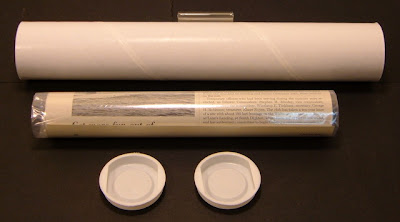
YOUR AD WILL BE SHIPPED ROLLED IN A PROTEctive PLASTIC BAG IN AN 80mm (TWICE USPS RECOMMENDED) THICK, 2 INCHES IN DIAMETER (SO AS NOT TO STRESS THE PAPER) SHIPPING TUBE WITH PRESS TIGHT PLASTIC END CAPS (TAPED FOR EXTRA PROTECTION). --If you cannot give 5 star rating please contact us so we may attempt to remedy the problem, Thank you.-- --Add ADVERTISINGSHOP to your seller favorite list today! We will be adding vintage and unusual advertising almost daily.-- Please visit our EBAY STORE: to find more vintage collectibles. Just click on the BOOK below. |
 |
| Branchwater Books and Ephemera |
31879

Powered by SixBit's eCommerce Solution