DATE OF THIS ** ORIGINAL ** ILLUSTRATED COVER: 1956 Li'l Abner is a satirical American comic strip that appeared in many newspapers in the United States, Canada and Europe. It featured a fictional clan of hillbillies in the impoverished mountain village of Dogpatch, USA. Written and drawn by Al Capp (1909–1979), the strip ran for 43 years – from August 13, 1934, through November 13, 1977. The Sunday page debuted six months after the daily, on February 24, 1935 It was originally distributed by United Feature Syndicate and, later by the Chicago Tribune New York News Syndicate. Comic strips typically dealt with northern urban experiences before Capp introduced Li'l Abner, the first strip based in the South. The comic strip had 60 million readers in over 900 American newspapers and 100 foreign papers in 28 countries. Capp "had a profound influence on the way the world viewed the American South. Li'l Abner Yokum: Abner's character was 6 feet 3 inches (1.91 m) tall and perpetually 19 years old. He was portrayed as a naive, simpleminded, gullible and sweet-natured hillbilly. He lived in a ramshackle log cabin with his pint-sized parents. Capp derived the family name "Yokum" as a combination of yokel and hokum. (Although it is also the approximate Northern European pronunciation of the name "Joachim".) In Capp's satirical and often complex plots, Abner was a country bumpkin Candide—a paragon of innocence in a sardonically dark and cynical world. Abner had no visible means of support, although his character earned his livelihood as a "crescent cutter" for the Little Wonder Privy Company and later "mattress tester" for the Stunned Ox Mattress Company. During World War II, the Abner character was drafted into the role as mascot emblem of the Patrol Boat Squadron 29. In one post-World War II storyline, Abner became a US Air Force bodyguard of Steve Cantor (a parody of Steve Canyon) against the evil bald female spy Jewell Brynner (a parody of actor Yul Brynner). Early in the strip's history, Abner's primary goal in the storyline was evading the marital designs of Daisy Mae Scragg, the virtuous, voluptuous, barefoot Dogpatch damsel and scion of the Yokums' blood feud enemies — the Scraggs, who were her character's bloodthirsty kinfolk. For 18 years of the run of the strip, Abner slipped out of Daisy Mae's marital crosshairs time and time again. When Capp finally gave in to reader pressure and allowed the couple to tie the knot, it was a major media event. It even made the cover of Life magazine on March 31, 1952 — illustrating an article by Capp titled "It's Hideously True!! The Creator of Li'l Abner Tells Why His Hero Is (SOB!) Wed!!" Daisy Mae Yokum (née Scragg): Beautiful Daisy Mae's character was hopelessly in love with Dogpatch's most prominent resident throughout the entire 43-year run of Al Capp's comic strip. During most of the epic, the impossibly dense Abner exhibited little romantic interest in her voluptuous charms (much of it visible daily thanks to her famous polka-dot peasant blouse and cropped skirt). In 1952, Abner reluctantly proposed to Daisy to emulate the engagement of his comic strip "ideel", Fearless Fosdick. Fosdick's own wedding to longtime fiancée Prudence Pimpleton turned out to be a dream — but Abner and Daisy's ceremony, performed by Marryin' Sam, was permanent. Abner and Daisy Mae's nuptials were a major source of media attention, landing them on the aforementioned cover of Life magazine's March 31, 1952, issue. Once married, Abner became relatively domesticated. Like Mammy Yokum and the other "wimmenfolk" in Dogpatch, Daisy Mae did all the work, domestic and otherwise — while the menfolk generally did nothing whatsoever. Mammy Yokum: Born Pansy Hunks, Mammy was the scrawny, highly principled "sassiety" leader and bare knuckle "champeen" of the town of Dogpatch. She had married the inconsequential Pappy Yokum in 1902; they produced two strapping sons twice their own size. Mammy dominated the Yokum clan through the force of her personality, and dominated everyone else with her fearsome right uppercut (sometimes known as her "Goodnight, Irene" punch), which helped her uphold law, order and decency. She is consistently the toughest character throughout Li'l Abner. A superhuman dynamo, Mammy did all the household chores — and provided her charges with no fewer than eight meals a day of "po'k chops" and "tarnips" (as well as local Dogpatch delicacies like "candied catfish eyeballs" and "trashbean soup"). Her authority was unquestioned, and her characteristic phrase, "Ah has spoken!", signaled the end of all further discussion. Her most familiar phrase, however, is "Good is better than evil becuz it's nicer!" (Upon his retirement in 1977, Capp declared Mammy to be his personal favorite of all his characters.) Li'l Abner's mom is the only character in the Dogpatch universe capable of defeating him in hand-to-hand combat. Pappy Yokum: Born Lucifer Ornamental Yokum, pint-sized Pappy had the misfortune of being the patriarch in a family that didn't have one. Pappy was so lazy and ineffectual, he didn't even bathe himself. Mammy was regularly seen scrubbing Pappy in an outdoor oak tub ("Once a month, rain or shine"). Ironing Pappy's trousers fell under her wifely duties as well, although she didn't bother with preliminaries — like waiting for Pappy to remove them first. Pappy is dull-witted and gullible (in one storyline after he is conned by Marryin' Sam into buying Vanishing cream because he thinks it makes him invisible when he picks a fight with his nemesis Earthquake McGoon), but not completely without guile. He had an unfortunate predilection for snitching "preserved turnips" and smoking corn silk behind the woodshed — much to his chagrin when Mammy caught him. Pappy Yokum wasn't always feckless, however. After his lower wisdom teeth grew so long that they squeezed his cerebral Goodness Gland and emerged as forehead horns, he proved himself capable of evil. Mammy solved the problem with a tooth extraction and ended the episode with her most famous dictum. Honest Abe Yokum: Li'l Abner and Daisy Mae's little boy was born in 1953 "after a pregnancy that ambled on so long that readers began sending me medical books", wrote Capp. Initially known as "Mysterious Yokum" (there was even an Ideal doll marketed under this name) due to a debate regarding his gender (he was stuck in a pants-shaped stovepipe for the first six weeks), he was renamed "Honest Abe" (after President Abraham Lincoln) to thwart his early tendency to steal. His first words were "po'k chop", and that remained his favorite food. Though his uncle Tiny was perpetually frozen at 151/2 "y'ars" old, Honest Abe gradually grew from infant to grade school age, and became a dead ringer for Washable Jones — the star of Capp's early "topper" strip. He would eventually acquire a couple of supporting character friends for his own semi-regularly featured adventures in the strip. In one storyline, he lives up to his nickname when during a nationwide search for a pair of socks sewn by Betsy Ross; after finding that his father was the current owner and preparing to trade them for the reward (a handshake from the President of the United States), he confesses at the last second that they were not his to give. Tiny Yokum: "Tiny" was a misnomer; Li'l Abner's kid brother remained perpetually innocent and 151/2 "y'ars" old — despite the fact that he was an imposing, 7-foot (2.1 m) tall behemoth. Tiny was unknown to the strip until September 1954, when a relative who had been raising him reminded Mammy that she'd given birth to a second "chile" while visiting her 15 years earlier. (The relative explained that she would have dropped him off sooner, but waited until she happened to be in the neighborhood.) Capp introduced Tiny to fill the bachelor role played reliably for nearly two decades by Li'l Abner himself, until his fateful 1952 marriage threw the carefully orchestrated dynamic of the strip out of whack for a period. Pursued by local lovelies Hopeful Mudd and Boyless Bailey, Tiny was even dumber and more awkward than Abner, if that can be imagined. Tiny initially sported a bulbous nose like both of his parents, but eventually, (through a plot contrivance) he was given a nose job, and his shaggy blond hair was buzz cut to make him more appealing. Salomey: The Yokums' beloved pet pig. Cute, lovable and intelligent (arguably smarter than Abner, Tiny or Pappy), she was accepted as part of the family ("the youngest", as Mammy invariably introduces her). She is 100% "Hammus Alabammus" — an adorable species of pig, and the last female known in existence. A plump, juicy Hammus Alabammus is the rarest and most vital ingredient of "ecstasy sauce", an indescribably delicious gourmet delicacy. Consequently, Salomey is frequently targeted by unscrupulous sportsmen, hog breeders and gourmands (like J.R. Fangsley and Bounder J. Roundheels), as well as unsavory wild boars with improper intentions (such as Boar Scarloff and Porknoy). Her moniker was a pun on both salami and Salome. That Certain Feeling is a 1956 American comedy film directed by Norman Panama and Melvin Frank and starring Bob Hope, Eva Marie Saint, and George Sanders. The cast also features Pearl Bailey and a young Jerry Mathers. Based on the Broadway play King of Hearts by Jean Kerr, the film includes a song of the same name with music by George Gershwin and lyrics by Ira Gershwin, written in 1925. Bailey was one of many singers who made a recording of it. A beautiful, sophisticated New York woman who goes by the name Dunreath Henry (Eva Marie Saint) seems to have it all. She is not only the private secretary to the wealthy and popular cartoonist Larry Larkin (George Sanders), she is also his fiancée. But back in Port Huron, Michigan when she was a girl, she was plain old Ethel Jankowski. And she used to be married to another cartoonist, the talented but neurotic Francis X. Dignan (Bob Hope), who was once an associate of the famed Al Capp. One day, when Larkin's syndicate complains that his boy-and-dog comic strip "Snips and Runty" hasn't been as funny as it used to be, Dunreath hatches a scheme. Larry is leaving on a business trip and she is busy planning their honeymoon, so why not hire Dignan to ghost-write the strip? Dignan doesn't want to do it and certainly can't stand the snooty Larkin, but he needs the money for his psychiatrist, who is trying to find out why any setback or stress leads to Dignan experiencing a bad case of nausea. A lot of interesting developments take place in Larkin's Manhattan penthouse while the cartoonist is away. Dignan's strips are humorous and a hit. Old feelings begin to stir in Dunreath, having him around. Larkin's housekeeper, Gussie, begins to play matchmaker. A young orphan, Norman, arrives one day because Larkin intends to adopt him. Dignan is impressed until he discovers that Larkin's interested only in the publicity, not in the child. The TV program Person to Person is coming to do a live interview, so Larkin wants a cute boy and happy puppy there by his side, just like his cartoon figures Snips and Runty. Dignan is offended. He is supposed to find a small dog for Larkin, but instead brings home one called Happy, a gigantic hound. Dignan also draws a cartoon using Larkin's name portraying Snips as a juvenile delinquent. And if that weren't enough, Larkin comes home to find Dignan and Dunreath dressed in matching pajamas, each having drunk one too many martini. Larkin fires Dignan just before the live TV appearance, which Dignan proceeds to interrupt by declaring his love for Larkin's fiancée. Dunreath decides to dump her betrothed and her fancy new name and live happily ever after with Dignan, Norman and Happy. ILLUSTRATOR: Alfred Gerald Caplin (September 28, 1909 – November 5, 1979), better known as Al Capp, was an American cartoonist and humorist best known for the satirical comic strip Li'l Abner, which he created in 1934 and continued writing and (with help from assistants) drawing until 1977. He also wrote the comic strips Abbie an' Slats (in the years 1937–45) and Long Sam (1954). He won the National Cartoonists Society's Reuben Award in 1947 for Cartoonist of the Year, and their 1979 Elzie Segar Award, posthumously for his "unique and outstanding contribution to the profession of cartooning". Capp's comic strips dealt with urban experiences in the northern states of the USA until the year he introduced "Li'l Abner". Although Capp was from Connecticut, he spent 43 years writing about the fictional Southern town of Dogpatch, reaching an estimated 60 million readers in more than 900 American newspapers and 100 more papers in 28 countries internationally. M. Thomas Inge says Capp made a large personal fortune through the strip and "had a profound influence on the way the world viewed the American South". Capp was born in New Haven, Connecticut, of East European Jewish heritage. He was the eldest child of Otto Philip Caplin (1885–1964) and Matilda (Davidson) Caplin (1884–1948). His brothers, Elliot and Jerome, were cartoonists, and his sister, Madeline, was a publicist. Capp's parents were both natives of Latvia whose families had migrated to New Haven in the 1880s. "My mother and father had been brought to this country from Russia when they were infants", wrote Capp in 1978. "Their fathers had found that the great promise of America was true – it was no crime to be a Jew." The Caplins were dirt-poor, and Capp later recalled stories of his mother going out in the night to sift through ash barrels for reusable bits of coal. In August 1919, at the age of nine, Capp was run down by a trolley car and had his left leg amputated above the knee. According to his father Otto's unpublished autobiography, young Capp was not prepared for the amputation beforehand; having been in a coma for days, he suddenly awoke to discover that his leg had been removed. He was eventually given a prosthetic leg, but only learned to use it by adopting a slow way of walking which became increasingly painful as he grew older. The childhood tragedy of losing a leg likely helped shape Capp's cynical worldview, which was darker and more sardonic than that of the average newspaper cartoonist. "I was indignant as hell about that leg", he revealed in a November 1950 interview in Time magazine. "The secret of how to live without resentment or embarrassment in a world in which I was different from everyone else", Capp philosophically wrote (in Life magazine on May 23, 1960), "was to be indifferent to that difference." The prevailing opinion among his friends was that Capp's Swiftian satire was, to some degree, a creatively channeled, compensatory response to his disability. Capp's father, a failed businessman and an amateur cartoonist, introduced him to drawing as a form of therapy. He became quite proficient, advancing mostly on his own. Among his earliest influences were Punch cartoonist–illustrator Phil May and American comic strip cartoonists Tad Dorgan, Cliff Sterrett, Rube Goldberg, Rudolph Dirks, Fred Opper, Billy DeBeck, George McManus, and Milt Gross. At about this same time, Capp became a voracious reader. According to Capp's brother Elliot, Alfred had finished all of Shakespeare and George Bernard Shaw by the time he turned 13. Among his childhood favorites were Dickens, Smollett, Mark Twain, Booth Tarkington, and later, Robert Benchley and S. J. Perelman. Capp spent five years at Bridgeport High School in Bridgeport, Connecticut, without receiving a diploma. He liked to joke about how he failed geometry for nine straight terms.[10] His formal training came from a series of art schools in the New England area. Attending three of them in rapid succession, the impoverished Capp was thrown out of each for nonpayment of tuition—the Boston Museum School of Fine Arts, the Pennsylvania Academy of Fine Arts, and Designers Art School in Boston—the last before launching his career. Capp already had decided to become a cartoonist. "I heard that Bud Fisher (creator of Mutt and Jeff) got $3,000 a week and was constantly marrying French countesses", Capp said. "I decided that was for me." In early 1932, Capp hitchhiked to New York City. He lived in "airless rat holes" in Greenwich Village and turned out advertising strips at $2 each while scouring the city hunting for jobs. He eventually found work at the Associated Press when he was 23 years old. By March 1932, Capp was drawing Colonel Gilfeather, a single-panel, AP-owned property created in 1930 by Dick Dorgan. Capp changed the focus and title to Mister Gilfeather but soon grew to hate the feature. He left the Associated Press in September 1932. Before leaving, he met Milton Caniff and the two became lifelong friends. Capp moved to Boston and married Catherine Wingate Cameron, whom he had met earlier in art class. She died in 2006 at the age of 96. Leaving his new wife with her parents in Amesbury, Massachusetts, he subsequently returned to New York in 1933, in the midst of the Great Depression. "I was 23, I carried a mass of drawings, and I had nearly five dollars in my pocket. People were sleeping in alleys then, willing to work at anything." There he met Ham Fisher, who hired him to ghost on Joe Palooka. During one of Fisher's extended vacations, Capp's Joe Palooka story arc introduced a stupid, coarse, oafish mountaineer named "Big Leviticus," a crude prototype. (Leviticus was much closer to Capp's later villains Lem and Luke Scragg than to the much more appealing and innocent Li'l Abner.) Also during this period, Capp was working at night on samples for the strip that eventually became Li'l Abner. He based his cast of characters on the authentic mountain-dwellers he met while hitchhiking through rural West Virginia and the Cumberland Valley as a teenager. (This was years before the Tennessee Valley Authority Act brought basic utilities such as electricity and running water to the region.) Leaving Joe Palooka, Capp sold Li'l Abner to United Feature Syndicate (later known as United Media). The feature was launched on Monday, August 13, 1934, in eight North American newspapers—including the New York Mirror—and was an immediate success. Alfred G. Caplin eventually became "Al Capp" because the syndicate felt the original would not fit in a cartoon frame.[11] Capp had his name changed legally in 1949. His younger brother, Elliot Caplin, also became a comic strip writer, best known for co-creating the soap opera strip The Heart of Juliet Jones with artist Stan Drake and conceiving the comic strip character Broom-Hilda with cartoonist Russell Myers. Elliot also authored several off-Broadway plays, including A Nickel for Picasso (1981), which was based on and dedicated to his mother and his famous brother.[12] What began as a hillbilly burlesque soon evolved into one of the most imaginative, popular, and well-drawn strips of the twentieth century. Featuring vividly outlandish characters, bizarre situations, and equal parts suspense, slapstick, irony, satire, black humor, and biting social commentary, Li'l Abner is considered a classic of the genre. The comic strip stars Li'l Abner Yokum—the simple-minded, loutish but good-natured, and eternally innocent hayseed who lives with his parents—scrawny but superhuman Mammy Yokum, and shiftless, childlike Pappy Yokum. "Yokum" was a combination of yokel and hokum, although Capp established a deeper meaning for the name during a series of visits around 1965–1970 with comics historians George E. Turner and Michael H. Price: The Yokums live in the backwater hamlet of Dogpatch, Kentucky. Described by its creator as "an average stone-age community", Dogpatch mostly consists of hopelessly ramshackle log cabins, pine trees, "tarnip" fields, and "hawg" wallows. Whatever energy Abner had went into evading the marital goals of Daisy Mae Scragg, his sexy, well-endowed, but virtuous girlfriend, until Capp finally gave in to reader pressure and allowed the couple to marry. This newsworthy event made the cover of Life on March 31, 1952. Capp peopled his comic strip with an assortment of memorable characters, including Marryin' Sam, Hairless Joe, Lonesome Polecat, Evil-Eye Fleegle, General Bullmoose, Lena the Hyena, Senator Jack S. Phogbound (Capp's caricature of the anti-New Deal Dixiecrats), the (shudder!) Scraggs, Available Jones, Nightmare Alice, Earthquake McGoon, and a host of others. Especially notable, certainly from a G.I. point of view, are the beautiful, full-figured women such as Daisy Mae, Wolf Gal, Stupefyin' Jones, and Moonbeam McSwine (a caricature of his wife Catherine, aside from the dirt), all of whom found their way onto the painted noses of bomber planes during World War II and the Korean War. Perhaps Capp's most popular creations were the Shmoos, creatures whose incredible usefulness and generous nature made them a threat to civilization as we know it. Another famous character was Joe Btfsplk, who wants to be a loving friend but is "the world's worst jinx", bringing bad luck to all those nearby. Btfsplk (his name is "pronounced" by simply blowing a "raspberry" or Bronx cheer) always has an iconic dark cloud over his head. Dogpatch residents regularly combat the likes of city slickers, business tycoons, government officials, and intellectuals with their homespun simplicity. Situations often take the characters to other destinations, including New York City, Washington, D.C., Hollywood, tropical islands, the moon, Mars, and some purely fanciful worlds of Capp's invention, including El Passionato, Kigmyland, The Republic of Crumbumbo, Skunk Hollow, The Valley of the Shmoon, Planets Pincus Number 2 and 7, and a miserable frozen wasteland known as Lower Slobbovia, a pointedly political satire of backward nations and foreign diplomacy that remains a contemporary reference. According to cultural historian Anthony Harkins: The strip's popularity grew from an original eight papers to eventually more than 900. At its peak, Li'l Abner was estimated to have been read daily in the United States by 60 to 70 million people (the U.S. population at the time was only 180 million), with adult readers far outnumbering children. Many communities, high schools, and colleges staged Sadie Hawkins dances patterned after the similar annual event in the strip. Li'l Abner has one odd design quirk that has puzzled readers for decades: the part in his hair always faces the viewer, no matter which direction Abner is facing. In response to the question "Which side does Abner part his hair on?", Capp would answer: "Both." Capp said he finally found the right "look" for Li'l Abner with Henry Fonda's character Dave Tolliver in The Trail of the Lonesome Pine (1936). In later years, Capp always claimed to have effectively created the miniskirt, when he first put one on Daisy Mae in the 1930s.
**For multiple purchases please wait for our combined invoice. Shipping discount are ONLY available with this method. Thank You.
SPECIAL CHARACTERISTICS/DESCRIPTIVE WORDS: MOVIE PEARL BAILEY GEORGE SAUNDERS THAT CERTAIN FEELING WESTERN AD
Cast
Main characters
Plot
Cast
Early life
Li'l Abner
ADVERT SIZE: SEE RULER SIDES IN PHOTO FOR DIMENSIONS ( ALL DIMENSIONS IN INCHES)
Our AD's and COVER'S are ORIGINAL and 100% guaranteed --- (we code all our items to insure authenticity) ---- we stand behind this.
IF YOU WISH TO PURCHASE A RE-MASTERED COPY PLEASE SEE "MODERN POSTERS" IN OUR STORE.
As graphic collectors ourselves, we take great pride in doing the best job we can to preserve and extend the wonderful historic graphics of the past.
PLEASE LOOK AT OUR PHOTO CLOSELY AS IT IS (ALBEIT LOWER RESOLUTION) THE PRODUCT BEING SOLD.....NOT STOCK IMAGES
**NOTE** : PAGES MAY SHOW AGE WEAR AND IMPERFECTIONS TO MARGINS, WITH CLOSED NICKS AND CUTS, WHICH DO NOT AFFECT AD IMAGE OR TEXT WHEN MATTED AND FRAMED. SOMETIMES THE PAGES HAVE BEEN TRIMMED.. PLEASE NOTE THE ACTUAL SIZE OF SELLING AD IN THE ATTACHED PHOTO IMAGE... WHAT YOU SEE IS WHAT YOU GET...
We ship via United States Postal Service. We have a 4 day handling time not including weekends or holidays but normally we have all orders processed, packed and shipped within 48 hrs.
A Note to our international buyers (Including Canada). Please read before placing a bid or buying an item:
**Import taxes, duties and charges are not included in the item price or shipping charges. These charges are the buyer's responsibility. Please check with your country's customs office to determine what these additional costs will be prior to bidding/buying on items. These charges are normally collected by the shipping company or when you pick the item up, this is not an additional shipping charge. We are not responsible for shipping times to international buyer's. Your country's customs may hold the package for a month or more.
**We pride ourselves on quality products, great service, accurate gradations and fast shipping.**
BRANCHWATER BOOKS

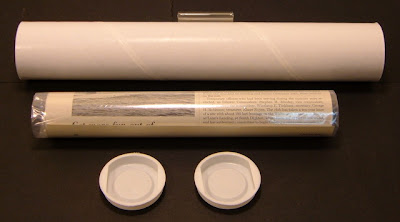
YOUR AD WILL BE SHIPPED ROLLED IN A PROTECTIVE PLASTIC BAG IN AN 80mm (TWICE USPS RECOMMENDED) THICK, 2 INCHES IN DIAMETER (SO AS NOT TO STRESS THE PAPER) SHIPPING TUBE WITH PRESS TIGHT PLASTIC END CAPS.
29123


Powered by SixBit's eCommerce Solution