

Ancient Greek Coin of THESSALIAN LEAGUE
Struck Circa 480 BC - 460 BC
Silver AR Obol - 9 mm, 9h, ~0.85 grams
Reference: HGC 4, 200
Certification: NGC VF 8243556-001
Obverse: Head of bridled horse facing left
Reverse: Θ-E, grain ear; all within incuse square
Coin Notes:
Provenance: From the Ancient Art in Miniature Collection
Arrives with specifications sheet for your reference
See the Genuine History Collection
Thessaly (Θεσσαλία, Πετθαλία) is a traditional geographic and modern administrative region of Greece, comprising most of the ancient region of the same name. Before the Greek Dark Ages, Thessaly was known as Aeolia (Ancient Greek: Αἰολία, Aiolía), and appears thus in Homer's Odyssey.
In Homer's epic, the Odyssey, the hero Odysseus visited Aeolia, the kingdom of Aeolus, which was the old name for Thessaly. The Plain of Thessaly, which lies between Mount Oeta/Othrys and Mount Olympus, was the site of the battle between the Titans and the Olympians. According to legend, Jason and the Argonauts launched their search for the Golden Fleece from the Magnesia Peninsula.
Thessaly was home to extensive Neolithic and Chalcolithic cultures around 6000–2500 BC (see Cardium pottery, Dimini and Sesklo). Mycenaean settlements have also been discovered, for example at the sites of Iolcos, Dimini and Sesklo (near Volos). In Archaic and Classical times, the lowlands of Thessaly became the home of baronial families, such as the Aleuadae of Larissa or the Scopads of Crannon.
In the summer of 480 BC, the Persians invaded Thessaly. The Greek army that guarded the Vale of Tempe was alerted by Alexander I of Macedon and evacuated the road before the enemy arrived. Not much later, Thessaly surrendered to the Persians. The Thessalian family of Aleuadae joined the Persians subsequently. The following year, the Persians were decisively defeated at the Battle of Plataea and withdrew from all of their European possessions, including Thessaly.
In the 4th century BC, after the Greco-Persian Wars had long ended, Jason of Pherae transformed the region into a significant military power, recalling the glory of Early Archaic times. Shortly after, Philip II of Macedon was appointed Archon of Thessaly, and Thessaly was thereafter associated with the Macedonian Kingdom for the next centuries.
Thessaly later became part of the Roman Empire as part of the province of Macedonia; when that was broken up, the name resurfaced in two of its late Roman successor provinces: Thessalia Prima and Thessalia Secunda.
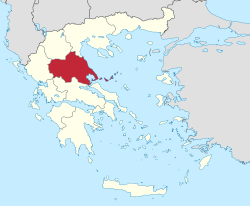
Thessaly within Greece