

Ancient Greek Coin of IONIA, EPHESUS
Struck Circa 340 BC - 325 BC by Uncertain Magistrate
IONIA. Ephesus. Silver AR Octobol (17mm, 4.90 gm, 12h)
Reference: SNG von Aulock 1841 var. (magistrate). Cf. SNG Kahan 249-242 for same type
Certification: NGC Choice XF Fine Style 8243713-006
Obverse: Diademed and draped bust of Artemis right, wearing stephane, hair tied in knot at back of head, bow and quiver over left shoulder
Reverse: Forepart of stag kneeling right, head reverted; E-Φ across fields, palm tree behind, bee in upper right field
Collector's Notes:
Nicely aligned dies with subtle marigold toning.
See the Genuine History Collection
Ephesus (Greek: Ἔφεσος, translit. Éphesos; Turkish: Efes) was a city in Ancient Greece on the coast of Ionia, 3 kilometres (1.9 mi) southwest of present-day Selçuk in İzmir Province, Turkey. It was built in the 10th century BC on the site of Apasa, the former Arzawan capital, by Attic and Ionian Greek colonists. During the Classical Greek era, it was one of twelve cities that were members of the Ionian League. The city came under the control of the Roman Republic in 129 BC.
The city was famous in its day for the nearby Temple of Artemis (completed around 550 BC), which has been designated one of the Seven Wonders of the Ancient World. Its many monumental buildings included the Library of Celsus and a theatre capable of holding 24,000 spectators.
Ephesus was a recipient city of one of the Pauline epistles and one of the seven churches of Asia addressed in the Book of Revelation. The Gospel of John may have been written there, and it was the site of several 5th-century Christian Councils (Council of Ephesus). The city was destroyed by the Goths in 263. Although it was afterwards rebuilt, its importance as a port and commercial centre declined as the harbour was slowly silted up by the Küçükmenderes River. In 614, it was partially destroyed by an earthquake.
Today, the ruins of Ephesus are a favourite international and local tourist attraction, being accessible from Adnan Menderes Airport and from the resort town Kuşadası. In 2015, the ruins were designated a UNESCO World Heritage Site.
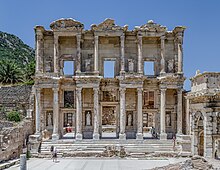
The Library of Celsus in Ephesus