1945 Germany WWII US Army War Military Document Farm Food Inspection Committees
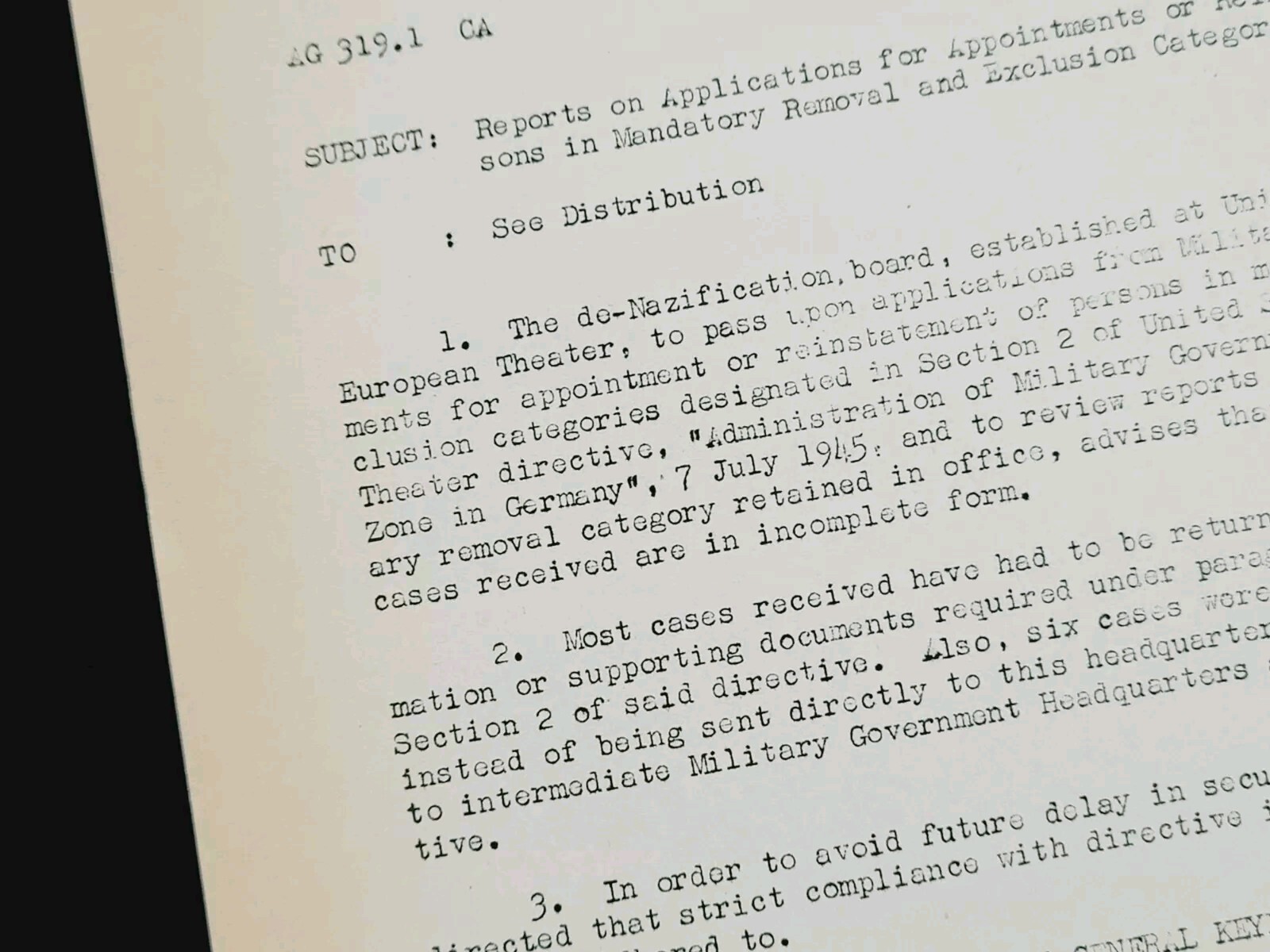
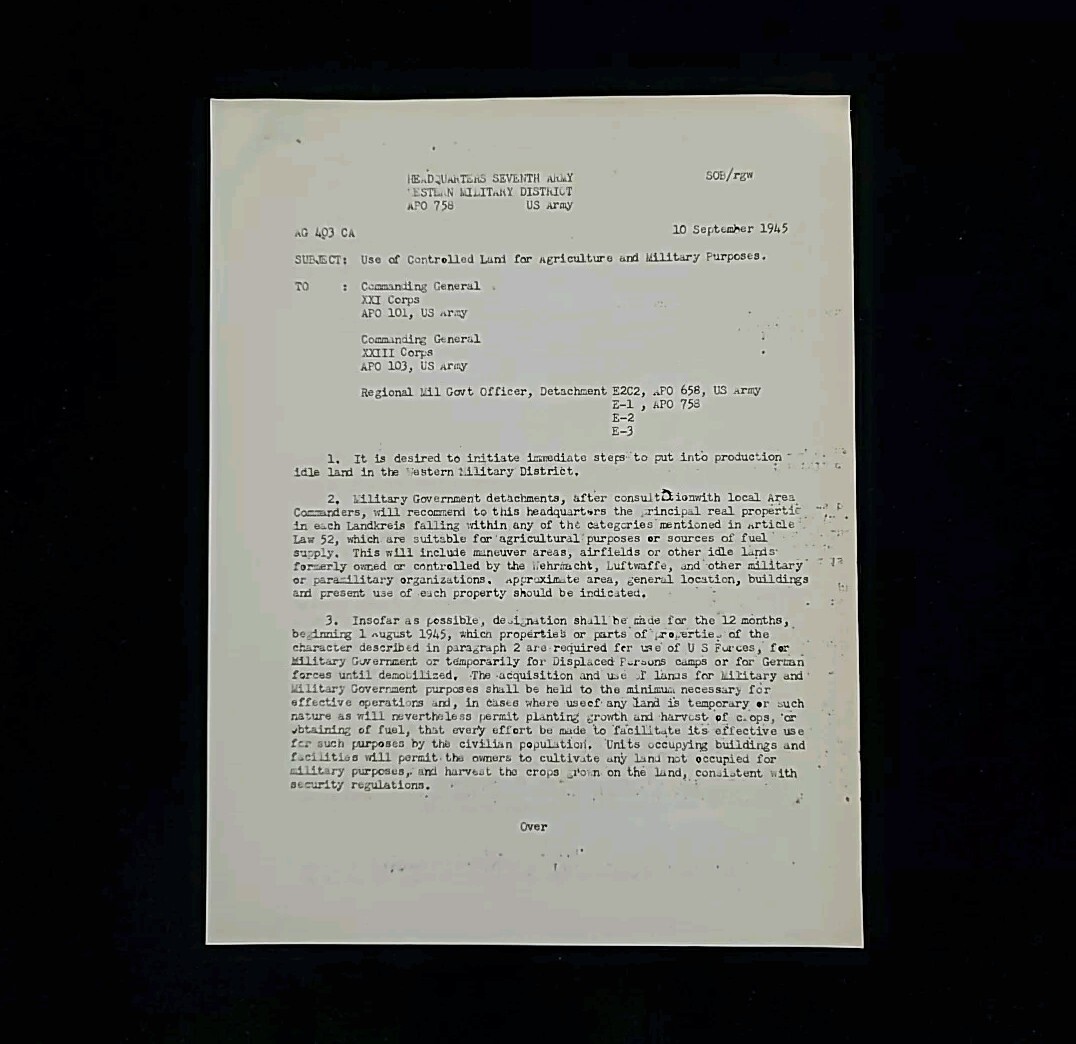
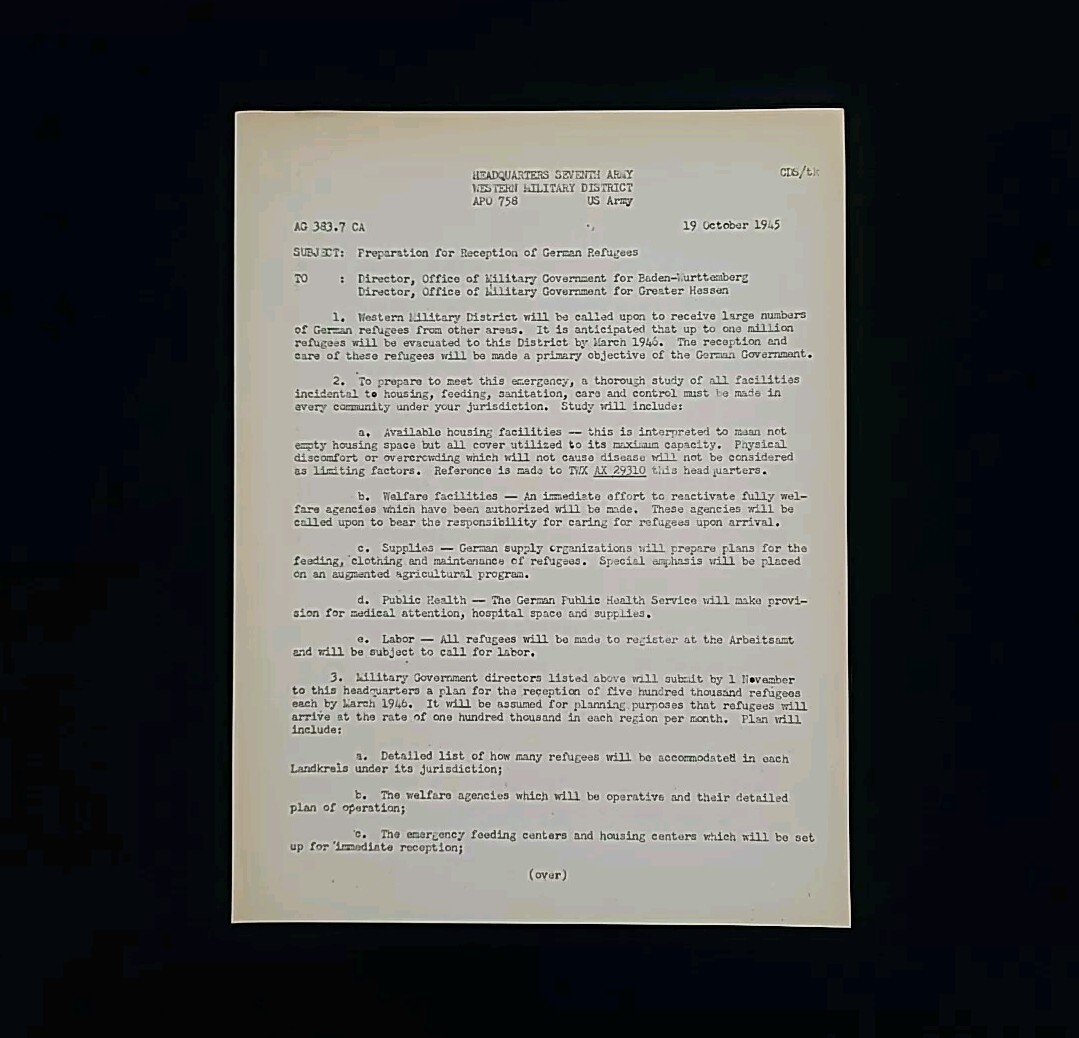
This exceedingly rare and historically significant WWII-era U.S. Army document, dated September 15, 1945, is an extraordinary artifact from the early months of the Allied occupation of Germany. Issued by Headquarters, Seventh Army, Western Military District (APO 758, U.S. Army), this RESTRICTED policy directive concerns the establishment of Farm Inspection Committees to Protect and Increase Food Production, a crucial initiative aimed at ensuring food security and agricultural recovery in post-war Germany. With widespread destruction, disrupted supply chains, and food shortages threatening both the German population and the occupying forces, the U.S. military administration took decisive action to regulate, oversee, and enhance agricultural productivity. This document provides an invaluable firsthand account of the policies implemented to restore food production and stabilize Germanys agricultural sector.
Produced in Occupied Germany for restricted distribution to authorized personnel, this directive reflects the U.S. Armys efforts to safeguard and improve agricultural resources under military governance. With millions of displaced persons, war refugees, and civilians facing food scarcity, the establishment of Farm Inspection Committees was essential to monitor food production, ensure equitable distribution, and prevent hoarding or black-market activity. This document likely details inspection procedures, criteria for farm assessments, resource allocation policies, and enforcement measures to maintain agricultural stability. The U.S. militarys involvement in food production management played a key role in preventing famine and supporting the economic and social rebuilding of post-war Germany.
Printed using the mimeograph process, a duplication method frequently used for military communications, this two-page document is a rare and authentic record of the U.S. Armys economic and agricultural policies in occupied Germany. Measuring 8.0" x 10.5", it remains well-preserved in fine condition, with minor toning due to prior exposure to sunlight, an expected characteristic that further confirms its authenticity. This museum-quality document offers a firsthand perspective on the food security challenges faced by the Allied forces and highlights the critical role of agricultural oversight in ensuring long-term economic stability.
This document is an exceptional acquisition for collectors of WWII militaria, Allied occupation memorabilia, and historical government records. As a genuine official U.S. Army-issued directive, it provides extraordinary insight into the economic and logistical measures taken to prevent food shortages and rebuild Germanys agricultural infrastructure. With its direct connection to post-war food security, agricultural recovery, and military governance, this artifact is a rare and historically invaluable piece, reflecting the immense challenges faced by the Allied forces in managing resources, stabilizing rural economies, and ensuring the well-being of a war-torn nation.