
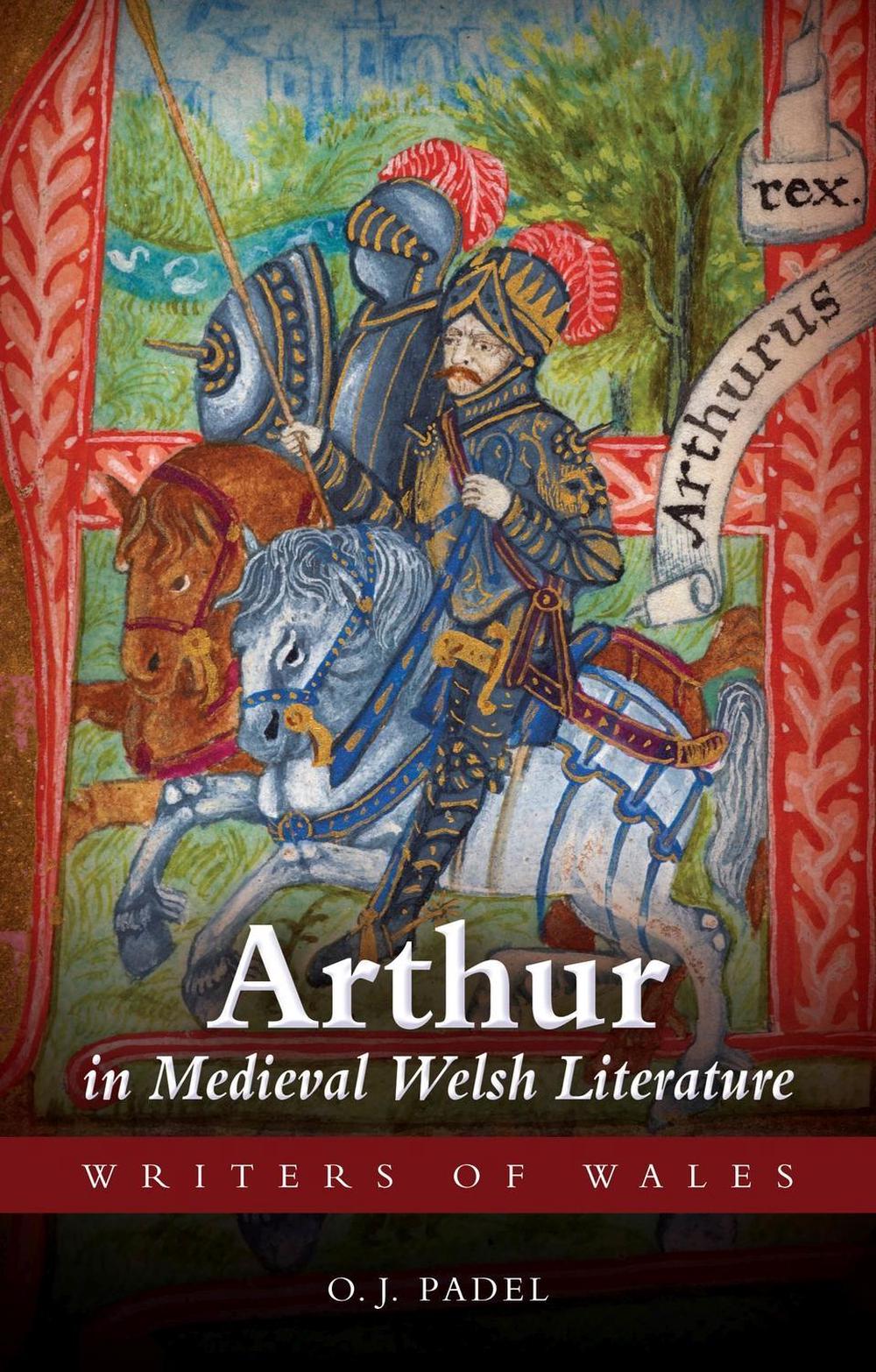
Arthur in Medieval Welsh Literature
by Oliver Padel
This is a survey of medieval Welsh literary references to Arthur, studying the figure behind the legend. The character of the references is examined with emphasis on understanding the nature of the text in which the allusions occur.
Paperback
English
Brand New
Publisher Description
Although the legends of Arthur have been popular throughout Europe from the Middle Ages on, the earliest references to Arthur are actually found in Welsh literature, beginning with the Welsh-Latin Historia Brittonum, which dates from the ninth century. In Arthur in Medieval Welsh Literature, O. J. Padel provides a survey of medieval Welsh literary references to Arthur and emphasizes their importance to Arthurian studies as a whole. Padel considers texts from different genres alongside one another, from the folk legends associated with magic and animals to those portraying Arthur as literary hero, soldier, and defender of country and faith. Other figures associated with Arthur, such as Cai, Bedwyr, and Gwenhwyfar, are also discussed.
Table of Contents
Preface to the new edition Acknowledgements 1. Introduction 2. The Earliest Texts 3. Arthur's World: Culhwch and Pa Wr yw'r Porthor? 4. Other Texts of the Central Middle Ages 5. Three Dialogue Poems 6. The Matter of Britain 7. The Continuing Tradition 8. Some Arthurian Characters 9. Was there an Arthur of the Welsh? Select Bibliography
Review
'Although the title indicates that this is a book on Arthurian literature, any book on Arthur will have something to interest folklorists. This one, unlike so much which is published on this famous hero, is an excellent survey-cum-study, written with authority and assurance.' Folklore '...fills a major gap by providing a concise and easily digested introduction to Arthur as he appears in medieval Welsh literature...If this elegantly written and intelligent guide may be primarily intended for tyros, the freshness and perceptiveness with which the author approaches his subject is also sure to please the old salts.' Gwales.com "Few scholars could have undertaken the present work with more success. The volume has the distinction of imposing order on enormously diverse texts, genres, and periods and is additionally controlled by Padel's judgement and fluid prose. It is never an entirely easy task for an expert in any field to change tone and level in order to write a book for non-experts. Padel has done so admirably in a work that is assured, accurate and eminently readable" -Zeitschrift fr celtische Philologie
Review Text
This is a new edition of the book first published in 2000 (with an additional bibliography) and presents a detailed and lively analysis of the many versions of Arthur throughout the medieval period. As the title indicates, the focus is on Welsh literature, but the nature of the subject means that accounts in French and Latin are also brought into the picture.The book carefully traces the changes in the way Arthur was portrayed in texts from the ninth century (almost certainly reflecting earlier stories) to the fourteenth. He began as a warrior, out for excitement and, in the author's words, well-intentioned but not very bright; he then appeared in local folklore and as a capricious character in lives of the saints. The major change in his image came in Geoffrey of Monmouth's History of the Kings of Britain , written in the 1130s primarily for a Norman audience but also very popular in Wales, in which he became the most glorious of the kings of Britain and a magnificent international warlord, not only defeating the Saxons but cutting a large swathe through western and northern Europe until he was brought back to Britain by treachery and fatally wounded in a crucial battle. The fact that British resistance to the Saxons subsequently crumbled only emphasised the extent of his power and greatness. He later appeared as a character in Welsh Romances influenced by the codes of French chivalry, shown as a regal figure of dignified authority with a sense of responsibility completely lacking from the comic and often capricious adventurer of the earlier stories.Padel skilfully marshals a wide range of sources to trace the ways in which the figure of Arthur changed across time to respond to social and political influences and developments in Welsh society during this period, and provides a clear guide to the presentation of a character who modulates from a warlord at the end of the so-called 'Dark Ages' to the flower of medieval chivalry. His conclusion that the figure of Arthur has to be considered contextually, in relation to the nature of each text in which he appears arises from a clear, accessible and enjoyable consideration of the ways in which one of the most pervasive figures in medieval Welsh literature was presented across five centuries.Gwyneth Tyson-RobertsIt is possible to use this review for promotional purposes, but the following acknowledgment should be included: A review from , with the permission of the Welsh Books Council. Gellir defnyddio'r adolygiad hwn at bwrpas hybu, ond gofynnir i chi gynnwys y gydnabyddiaeth ganlynol: Adolygiad oddi ar , trwy ganiatd Cyngor Llyfrau Cymru.
Review Quote
"This thought-provoking study of Arthurian literature will ensure that we return to read the Welsh poems and stories with a more open mind than familiarity with them might sometimes tempt us to do."
Author Comments
O. J. Padel was formerly Reader in Cornish and Celtic in the University of Cambridge.
Details
