
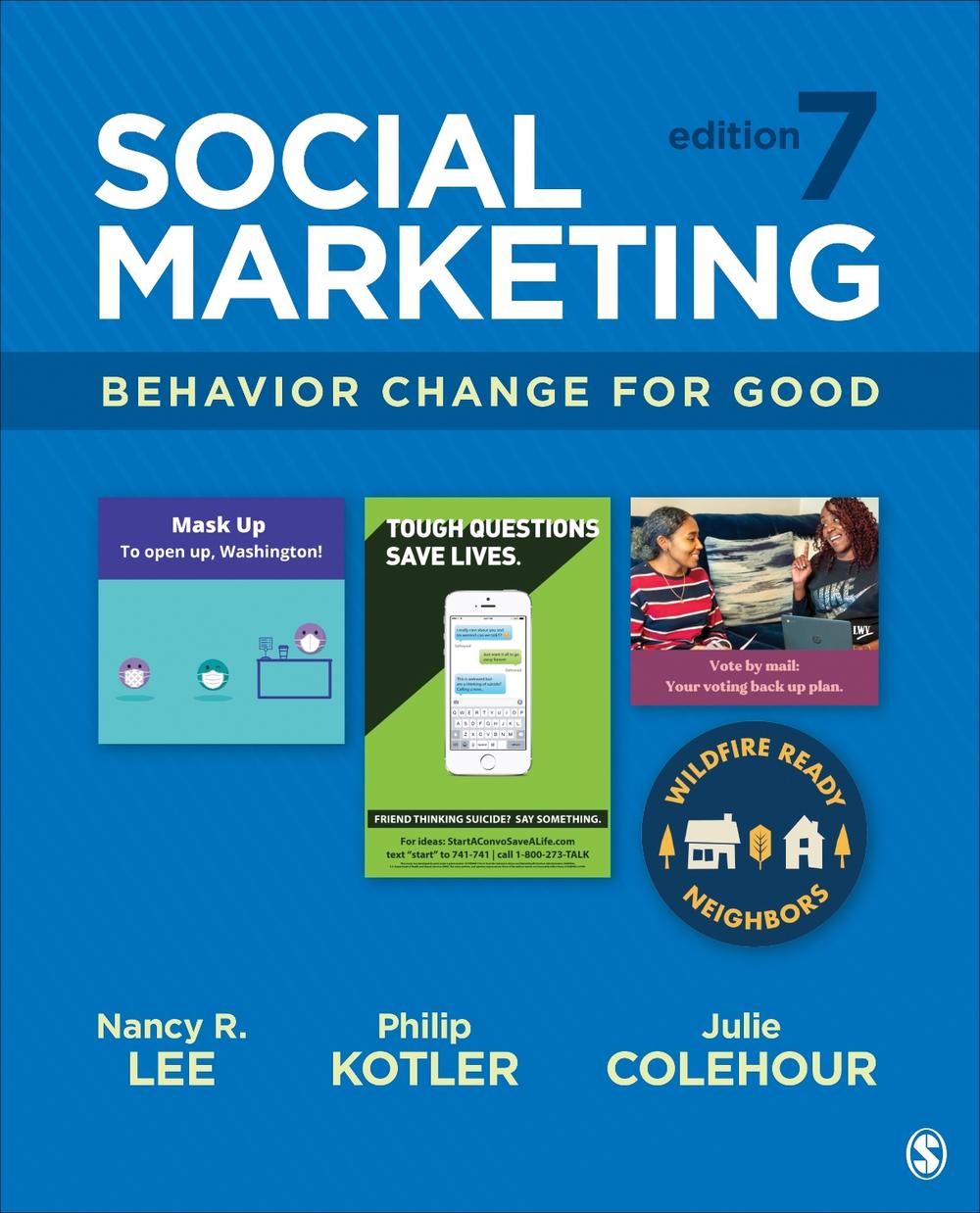
Social Marketing
by Philip Kotler, Julie Colehour, Nancy R. Lee
Social Marketing: Behavior Change for Good, 7th Edition is the definitive guide for designing and implementing memorable social marketing campaigns. Authors Nancy R. Lee, Philip Kotler, and Julie Colehour present a proven 10-step strategic marketing plan and guides students through each stage of the process.
Paperback
English
Brand New
Publisher Description
Social Marketing: Behavior Change for Good, 7th Edition is the definitive guide for designing and implementing memorable social marketing campaigns. Authors Nancy R. Lee, Philip Kotler, and Julie Colehour present a proven 10-step strategic marketing plan and guides students through each stage of the process.
Table of Contents
ForewordPart I • Understanding Social MarketingCHAPTER 1 • Defining and Distinguishing Social MarketingWhat Is Social Marketing?Where and When Did Social Marketing Originate?How Does It Differ From Commercial Marketing?How Does Social Marketing Differ From Other Disciplines?Who Does Social Marketing?What Social Issues Can Benefit?Other Ways to Impact Social IssuesSocial Marketing Upstream and MidstreamCHAPTER 2 • 10-Step Strategic Planning ModelA 10-Step Planning ModelWhy Is Systematic Planning Important?Where Does Research Fit In?CHAPTER 3 • Research OptionsMajor Marketing Research TerminologySteps in Developing a Research PlanResearch That Won't "Break the Bank"CHAPTER 4 • Behavior Change Theories, Models, and FrameworksInforming Selection of Priority AudiencesInforming Behavior Objectives and GoalsDeepening Understanding of Audience Barriers, Benefits, Motivators, the Competition, and Influential OthersInspiring Development of Marketing Intervention Mix StrategiesPart II • Determining Plan Purpose, Focus, Audience, Behaviors, InsightsCHAPTER 5 • Steps 1 & 2: Social Issue, DEI Considerations, Purpose, Focus, Situation AnalysisStep 1: Describe Social Issue, DEI Considerations, Background, Purpose, and FocusStep 2: Conduct Situation Analysis and Review Prior EffortsThe Role of Exploratory Research When Choosing FocusEthical Considerations When Choosing FocusCHAPTER 6 • Step 3: Selecting Priority AudiencesStep 3: Select Priority AudiencesSteps in Selecting Priority AudiencesVariables Used to Segment MarketsCriteria for Evaluating SegmentsHow Priority Audiences Are SelectedEthical Considerations When Selecting Priority AudiencesCHAPTER 7 • Step 4: Behavior Objectives and Target GoalsStep 4: Set Behavior Objectives and GoalsBehavior ObjectivesKnowledge and Belief ObjectivesTarget GoalsEthical Considerations Setting Objectives and GoalsCHAPTER 8 • Step 5: Audience InsightsStep 5: Identify Audience InsightsWhat You Need to Know About Your Priority AudienceHow to Learn More About Priority AudienceHow Insights Help Develop StrategyPotential RevisionsEthical Considerations When Researching Priority AudiencePart III • Developing Marketing Intervention StrategiesCHAPTER 9 • Step 6: Crafting a Desired PositioningPositioning DefinedStep 6: Develop Positioning StatementHow Positioning Relates to BrandingEthical Considerations for Developing a Positioning StatementCHAPTER 10 • Step 7.1: Product: Creating a Product PlatformProduct: The First "P"Step 7.1: Develop the Social Marketing Product PlatformDecisions Regarding Tangible GoodsDecisions Regarding ServicesBrandingCHAPTER 11 • Step 7.2: Price: Determining Incentives and DisincentivesPrice: The Second "P"Step 7.2: Determine Incentives and Disincentives: Six Options to ConsiderMore on Commitments and PledgesSetting Prices for Tangible Goods and ServicesCHAPTER 12 • Step 7.3: Place: Making Access Convenient and PleasantPlace: The Third "P"Step 7.3: Develop Place StrategyEthical Considerations When Selecting Distribution ChannelsCHAPTER 13 • Step 7.4: Promotion: Deciding on Messages, Messengers, Creative Strategies, and Communication ChannelsPromotion: The Fourth "P"Message StrategyMessenger StrategyCreative StrategyPretestingSelecting Communication ChannelsFactors Guiding Communication Channel DecisionsEthical Considerations Related to Promotion StrategiesPart IV • Managing Social Marketing ProgramsCHAPTER 14 • Step 8: Monitoring and EvaluationStep 8: Develop a Plan for EvaluationWhy Are You Conducting This Measurement?What Will You Measure?How Will You Measure?When Will You Measure?How Much Will It Cost?Ethical Considerations in Evaluation PlanningCHAPTER 15 • Step 9: Budget and Funding PlansStep 9: Budgets and Funding SourcesDetermining BudgetsFinding Sources for Additional FundingAppealing to FundersRevising Your PlanEthical Considerations When Establishing FundingCHAPTER 16 • Step 10: Implementation and Sustaining Behaviors PlansStep 10: Complete an Implementation PlanPhasingSustainabilitySharing and Selling Your PlanEthical Considerations When Implementing PlansEpilogueAppendixReferencesIndex
Details
