Item Condition: **NOTE** : PAGES MAY SHOW AGE WEAR AND IMPERFECTIONS TO MARGINS, WITH CLOSED NICKS AND CUTS, WHICH DO NOT AFFECT AD IMAGE OR TEXT WHEN MATTED AND FRAMED.
DATE OF THIS ** ORIGINAL ** ADVERTISEMENT / ADVERT / AD:
DATE PRINTED ON ITEM: 1910
GREAT DECOR / ART FOR: HOME OFFICE BUSINESS SHOP STORE CASINO LOFT STUDIO GARAGE SHE SHED Hudson seemed to be the right car at the right time, since it had appeared in an ad in June of 1909, started selling by July at its Detroit factory, and in one calendar year had retailed 4200 copies. This was a new record in first-year sales volume for any car of this era! Hudson capitalized on February 24, 1909 with $100,000. The company had opened for business after the Panic of 1907 but before the recession of 1913, so it was in an economic sweet spot for obtaining materials and labor to manufacture cars. But beyond the timing and the amount of capital, what made its new-found status appealing to the industry insiders and customers was knowing the people who were at the company’s helm: Roy D. Chapin and Howard E. Coffin, formerly of the Olds Motor Works, Thomas-Detroit, and Chalmers-Detroit George W. Dunham and Roscoe B. Jackson, also from Olds This team of enterprising auto manufacturers were poised for greatness. Joseph L. Hudson of the Hudson department stores in Detroit had put up most of the capital, as he was related to Jackson. Chalmers, who had backed Chapin and Coffin in their previous ventures, decided to sell his share, and thus the company was named Hudson. Company Growth Hudson sold cars into the middle market, and so its aim was to build a small, efficient, and affordable conveyance.Hudson would position its car up against the Ford Model T, and although the Hudson at $900 was $50 more than the Ford, Hudsons had a few innovations that set them apart. 1910 Hudson 20 Roadster. Classy, or what? AACA library The Model 20 became Hudson’s bread-and-butter model to establish the company. By 1910 they had set a sales volume record and were ranked in the top twenty among automobile movers and shakers! 1911 and 1912 saw steady growth and the introduction of a new model, the “33.” Along with the Model 33 came Hudson’s cutdown speedster model, the Mile-A-Minute Roadster. It was a true speedster in that it presented in cutdown style, had a raked steering wheel and laid-back seats, and was minus passenger compartment body panels when compared to the Model 33 Roadster. Plus, the Mile-A-Minute had smaller wheels. To sum it all up, The Mile-A-Minute was a “stripper” in the true speedster tradition of the period. This car no doubt gave birth to the expression “Goes like 60!” Hudson kept its two product lines simple (the Model 20 and the 33), and with that approach - products that fulfilled what customers were looking for - sales grew steadily from 4556 in 1910 to 5708 in 1912. And kept growing. The Crucible of Racing Chapin and Coffin believed in testing their cars at the track, as this would prove what worked and what needed fixing. An ad in 1913 summed up what they were learning from this: • full-on lubrication a requirement; • cylinders cast en bloc were easier and stronger; • valve covers to protect the valvetrain from the elements kept down the wear-and-tear; • steel gears and chain drive for cams lasted longer; • lightening and strengthening the frame meant a better-handling and safer car. All of these would pay dividends in design improvements for newer models in years hence. The Models 20 and 33 had set the foundation for what would become a history of design excellence based on competition. Hudson figured out that racing put the car in the eyes of the public, improved the breed, and drove sales like no other type of promotion. They would apply this technique again and again over different decades, and each time it worked its magic on sales. Hudson was a strong independent that lasted for 60 years in a field that showed no mercy to non-conglomerated companies. And Hudson even produced a few more speedster models! But that is a story for another time… The Hudson Motor Car Company made Hudson and other branded automobiles in Detroit, Michigan, U.S., from 1909 until 1954. In 1954, Hudson merged with Nash-Kelvinator to form American Motors Corporation (AMC). The Hudson name was continued through the 1957 model year, after which it was discontinued. The name "Hudson" came from Joseph L. Hudson, a Detroit department store entrepreneur and founder of Hudson's department store, who provided the necessary capital and gave permission for the company to be named after him. A total of eight Detroit businessmen formed the company on February 20, 1909, to produce an automobile which would sell for less than US$1,000 (equivalent to approximately $33,911 in 2023 funds). One of the lead "car men" and an organizer of the company was Roy D. Chapin Sr., a young executive who had worked with Ransom E. Olds. (Chapin's son, Roy Jr., would later be president of Hudson-Nash descendant American Motors Corporation in the 1960s). The company quickly started production, with the first car driven out of a small factory in Detroit on July 3, 1909, at Mack Avenue and Beaufait Street on the East Side of Detroit, occupying the old Aerocar factory. The new Hudson "Twenty" was one of the first low-priced cars on the American market and became successful with 4,508 sold the first year. This was the best first year's production in the history of the automobile industry and put the newly formed company in 17th place industry-wide, "a remarkable achievement at a time" when there were hundreds of makes being marketed. Successful sales volume required a larger factory. A new facility was built on a 22-acre (8.9 ha) parcel at Jefferson Avenue and Conner Avenue in Detroit's Fairview section that was diagonally across from the Chalmers Automobile plant.The land was the former farm of D.J. Campau. It was designed by the firm of renowned industrial architect Albert Kahn with 223,500 square feet and opened on October 29, 1910. Production in 1911 increased to 6,486. For 1914, Hudsons for the American market were now left-hand drive. Coachbuilder Fisher Body Co. built bodies for Hudson cars (as well as many other automotive marques) until they were bought out by General Motors in 1919. From 1923, Hudson bodies were built exclusively by Massachusetts company Biddle and Smart. The lucrative contract with Hudson would see Biddle and Smart buy up many smaller local coachbuilders to meet the Hudson demand. Peak shipments came in 1926, when the company delivered 41,000 bodies to Hudson. An inability to stamp steel meant that their products were made using aluminum. On 1 July 1926, Hudson's new US$10 million ($172,105,263 in 2023 dollars) body plant was completed where the automaker could now build the all-steel closed bodies for both the Hudson and Essex models. Biddle and Smart continued to build aluminum body versions of the Hudson line and were marketed by Hudson as "custom-built" although they were the same as the steel-body vehicles. With Hudson now building in-house, Biddle and Smart saw their work for Hudson drop by 60%. From 1927 Hudson gradually began to utilize local coachbuilders Briggs Manufacturing Company and Murray Corporation of America to supplement Hudson's production which was expanding domestically and internationally. With car prices falling due to the Great Depression and the costs to transport vehicles from Massachusetts to Detroit becoming too expensive, the contract with Biddle and Smart was terminated in 1930, and Biddle and Smart went out of business shortly thereafter. At their peak in 1929, Hudson and Essex produced a combined 300,000 cars in one year, including contributions from Hudson's other factories in Belgium and England; a factory had been built in 1925 in Brentford in London. Hudson was the third largest U.S. car maker that year, after Ford Motor Company and Chevrolet.
**For multiple purchases please wait for our combined invoice. Shipping discount are ONLY available with this method. Thank You.
SPECIAL CHARACTERISTICS/DESCRIPTIVE WORDS:
ILLUSTRATOR/ARTIST: ILLUSTRATION
ADVERT SIZE: SEE PHOTO FOR DIMENSIONS (ALL DIMENSIONS IN INCHES)
ALL items we sell are ORIGINAL and 100% guaranteed --- (we code all our items to insure authenticity) ---- we stand behind this.
As graphic collectors ourselves, we take great pride in doing the best job we can to preserve and extend the wonderful historic graphics of the past.
PLEASE LOOK AT OUR PHOTO CLOSELY AS IT IS (ALBEIT LOWER RESOLUTION) THE PRODUCT BEING SOLD.....NOT STOCK IMAGES
We ship via United States Postal Service. We have a 3 day handling time not including weekends or holidays.
A Note to our international buyers (Including Canada). Please read before placing a bid or buying an item:
**Import taxes, duties and charges are not included in the item price or shipping charges. These charges are the buyer's responsibility. Please check with your country's customs office to determine what these additional costs will be prior to bidding/buying on items. These charges are normally collected by the shipping company or when you pick the item up, this is not an additional shipping charge. We do not mark merchandise values below value or mark items as GIFTS, US and International government laws prohibit this so please don't ask us to. We are not responsible for shipping times to international buyer's. Your country's customs may hold the package for a month or more.
**We pride ourselves on quality products, great service, accurate gradations and fast shipping.**
BRANCHWATER BOOKS GRADING SCALE:
GOOD-->VERY GOOD-->FINE

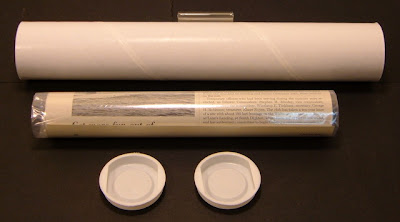
YOUR AD WILL BE SHIPPED ROLLED IN A PROTECTIVE PLASTIC BAG IN AN 80mm (TWICE USPS RECOMMENDED) THICK, 2 INCHES IN DIAMETER (SO AS NOT TO STRESS THE PAPER) SHIPPING TUBE WITH PRESS TIGHT PLASTIC END CAPS.
FC7626

Powered by SixBit's eCommerce Solution