Item Condition: **NOTE** : PAGES MAY SHOW AGE WEAR AND IMPERFECTIONS TO MARGINS, WITH CLOSED NICKS AND CUTS, WHICH DO NOT AFFECT AD IMAGE OR TEXT WHEN MATTED AND FRAMED.
DATE OF THIS ** ORIGINAL ** ADVERTISEMENT / ADVERT / AD:
DATE PRINTED ON ITEM: 1930
GREAT DECOR / ART FOR: HOME OFFICE BUSINESS SHOP STORE CASINO LOFT STUDIO GARAGE SHE SHED The Series AC was powered by Chevrolet's new overhead valve 194 cu in (3,180 cc) six-cylinder engine, producing 46 hp (34 kW) @ 2400 rpm. The engine became known as the "Stovebolt Six" because single-slot screws were used to attach covers for the pushrod and overhead valves to the engine block. The Oakland Six flathead was replaced by the Oakland V8 in 1929 and the companion junior brand Pontiac was introduced in 1926 with the Series 6-27 and the split-flathead Pontiac straight-6 engine, making room for Chevrolet to offer their new Chevrolet straight-6 engine. Further up the brand hierarchy Oldsmobile Six continued to be offered until 1938, having been introduced in 1917. Standard items included a banjo-style rear axle, single plate dry disc clutch, four wheel mechanical brakes with pressed steel 20" disc wheels. Options offered were front and rear bumper, to be considered standard equipment in later years, rear mounted extendable trunk rack, heater for passenger compartment, cigar lighter, and the introduction of a hood ornament. In May 1925 the Chevrolet Export Boxing plant at Bloomfield, New Jersey was repurposed from a previous owner where Knock-down kits for Chevrolet, Oakland, Oldsmobile, Buick and Cadillac passenger cars, and both Chevrolet and G. M. C. truck parts are crated and shipped by railroad to the docks at Weehawken, New Jersey for overseas GM assembly factories. On November 8, 1911, the Chevrolet Motor Car Company was incorporated. It was founded by Swiss race car driver and automotive engineer Louis Chevrolet with his brother Arthur Chevrolet, William C. Durant and investment partners William Little (maker of the Little automobile), former Buick owner James H. Whiting, Edwin R. Campbell (son-in-law of Durant) and in 1912 R. S. McLaughlin CEO of General Motors in Canada. Former Buick officers were also employed, including Curtis R. Hatheway as secretary. Durant was dismissed from his senior management position at General Motors in 1910, a company that he had founded in 1908. In 1904 he had taken over the Flint Wagon Works and Buick Motor Company of Flint, Michigan. He also incorporated the Mason and Little companies. As head of Buick, Durant had hired Louis Chevrolet to drive Buicks in promotional races. Durant planned to use Chevrolet's reputation as a racer as the foundation for his new automobile company. The first factory location was in Flint, Michigan at the corner of Wilcox and Kearsley Street, now known as "Chevy Commons" at coordinates 43.00863°N 83.70991°W, along the Flint River, across the street from Kettering University. One of the technical advancements Chevrolet benefited from was the implementation of an overhead valve engine from the very beginning, as the company was developed by the former owner of Buick, which had patented the overhead valve and cross-flow cylinder design as being more efficient than the conventional use of the flathead engine. Actual design work for the first Chevy, the costly Series C Classic Six, was drawn up by Etienne Planche, following instructions from Louis. The first C prototype was ready months before Chevrolet was actually incorporated. However, the first actual production was not until the 1913 model. So in essence there were no 1911 or 1912 production models, only one pre-production model was made and fine tuned throughout the early part of 1912. Then in the fall of that year the new 1913 model was introduced at the New York auto show. Chevrolet first used the "bowtie emblem" logo in 1914 on the H series models (Royal Mail and Baby Grand) and The L Series Model (Light Six). It may have been designed from wallpaper Durant once saw in a French hotel room. More recent research by historian Ken Kaufmann presents a case that the logo is based on a logo of the "Coalettes" coal company. An example of this logo as it appeared in an advertisement for Coalettes appeared in the Atlanta Constitution on November 12, 1911. Others claim that the design was a stylized Swiss cross, in tribute to Chevrolet's home country. Over time, Chevrolet used several different iterations of the bowtie logo at the same time, often using blue for passenger cars, gold for trucks, and an outline (often in red) for cars that had performance packages. Chevrolet eventually unified all vehicle models with the gold bowtie in 2004, for both brand cohesion as well as to differentiate itself from Ford (with its blue oval logo) and Dodge (who has often used red for its imaging), its two primary domestic rivals. Louis Chevrolet had differences with Durant over design and in 1914 sold Durant his share in the company. By 1916, Chevrolet was profitable enough with successful sales of the cheaper Series 490 to allow Durant to repurchase a controlling interest in General Motors. After the deal was completed in 1918, Durant became president of General Motors, and Chevrolet was merged into GM as a separate division. In 1919, Chevrolet's factories were located at Flint, Michigan; branch assembly locations were sited in Tarrytown, N.Y., Norwood, Ohio, St. Louis, Missouri, Oakland, California, Ft. Worth, Texas, and Oshawa, Ontario General Motors of Canada Limited. McLaughlin's were given GM Corporation stock for the proprietorship of their Company article September 23, 1933 Financial Post page 9. In the 1918 model year, Chevrolet introduced the Series D, a V8-powered model in four-passenger roadster and five-passenger tourer models. Sales were poor and it was dropped in 1919. Beginning also in 1919, GMC commercial grade trucks were rebranded as Chevrolet, and using the same chassis of Chevrolet passenger cars and building light-duty trucks, sharing an almost identical appearance with GMC products. Until 1921, Chevrolet Corporate headquarters were located at 57th and Broadway in New York City until April when the office was relocated to the General Motors Building at Cadillac Place in Detroit. In January 1921 a General Motors management survey recommended that the Chevrolet Division be cancelled, but Alfred P. Sloan Jr. recommended that the division be saved and William S. Knudsen, a former Ford employee who oversaw production of the Model T, was made Vice President of Operations and performance improved In May 1925 the Chevrolet Export Boxing plant at Bloomfield, New Jersey was repurposed from a previous owner where Knock-down kits for Chevrolet, Oakland, Oldsmobile, Buick and Cadillac passenger cars, and both Chevrolet and G. M. C. truck parts are crated and shipped by railroad to the docks at Weehawken, New Jersey for overseas GM assembly factories. Chevrolet continued into the 1920s, 1930s, and 1940s competing with Ford, and after the Chrysler Corporation formed Plymouth in 1928, Plymouth, Ford, and Chevrolet were known as the "Low-priced three". In 1929 they introduced the famous "Stovebolt" overhead-valve inline six-cylinder engine, giving Chevrolet a marketing edge over Ford, which was still offering a lone flathead four ("A Six at the price of a Four"). In 1933 Chevrolet launched the Standard Six, which was advertised in the United States as the cheapest six-cylinder car on sale. During the Great Depression the Chevrolet Master introduced a streamlined appearance, showing Art Deco influences and before and after the World War II era, the Chevrolet Deluxe and Chevrolet Fleetline found many buyers. Ronald Norman McLeoD Born:1897 - St. Paul, Minnesota - Died:1977 - Bradenton, Florida Next
**For multiple purchases please wait for our combined invoice. Shipping discount are ONLY available with this method. Thank You.
SPECIAL CHARACTERISTICS/DESCRIPTIVE WORDS:
The Chevrolet Series AD Universal or Chevrolet Universal AD is a Chevrolet car which began sales in 1930. Available in a variety of body types including as a 2-door coupe, 4-door sedan and a delivery van. Total production was down due to the Wall Street crash of 1929 while 864,243 were manufactured and 39,773 came from Oshawa. The seven-millionth Chevrolet since 1912 was built May 28, 1930 at Flint Assembly
STANDARD COUPE - The Chevrolet Series AC International is an American vehicle manufactured by Chevrolet in 1929 to replace the 1928 Series AB National. In all, 1,328,605 Series ACs were manufactured in a range of ten body styles, with 73,918 from Oshawa. The Series AC was distinguished from the AB by the introduction of a new six-cylinder engine, the first Chevrolet with a six-cylinder since the 1915 Chevrolet Series C Classic Six. Advertised as "A Six for the price of a Four", it was only $10 more than the outgoing four-cylinder Series AB ($177 in 2023 dollars ). To simplify production operations, each factory was designated one body style for national consumption and shipped by railroad to major American cities. The serial number of origin was relocated to the right body sill underneath the rubber floormat except for the roadster and phaeton, which were inscribed on the right side of seat frame. Prices listed started at US$525 for the roadster or phaeton ($9,316 in 2023 dollars ) to US$725 for the Landau Convertible ($12,865 in 2023 dollars ).
ILLUSTRATOR/ARTIST: COLOR ILLUSTRATION
Born in St. Paul, Minnesota, Ronald McLeod was raised in Chicago where he attended the University of Chicago for two years before enlisting in the Royal Canadian Engineers for service in World War I. Upon his return from France in 1919, he started his career as an illustrator for a Chicago advertising agency and, to earn some extra money, playing piano for radio station KYW, Chicago. He was married in 1923.
Wanting more professional independence, he and his wife moved to Paris in early 1925, his intentions being education, particularly drawing, and work. After considering and rejecting other schools, he enrolled at Delacluse Academy.
ADVERT SIZE: SEE PHOTO FOR DIMENSIONS (ALL DIMENSIONS IN INCHES)
ALL items we sell are ORIGINAL and 100% guaranteed --- (we code all our items to insure authenticity) ---- we stand behind this.
As graphic collectors ourselves, we take great pride in doing the best job we can to preserve and extend the wonderful historic graphics of the past.
PLEASE LOOK AT OUR PHOTO CLOSELY AS IT IS (ALBEIT LOWER RESOLUTION) THE PRODUCT BEING SOLD.....NOT STOCK IMAGES
We ship via United States Postal Service. We have a 3 day handling time not including weekends or holidays.
A Note to our international buyers (Including Canada). Please read before placing a bid or buying an item:
**Import taxes, duties and charges are not included in the item price or shipping charges. These charges are the buyer's responsibility. Please check with your country's customs office to determine what these additional costs will be prior to bidding/buying on items. These charges are normally collected by the shipping company or when you pick the item up, this is not an additional shipping charge. We do not mark merchandise values below value or mark items as GIFTS, US and International government laws prohibit this so please don't ask us to. We are not responsible for shipping times to international buyer's. Your country's customs may hold the package for a month or more.
**We pride ourselves on quality products, great service, accurate gradations and fast shipping.**
BRANCHWATER BOOKS GRADING SCALE:
GOOD-->VERY GOOD-->FINE

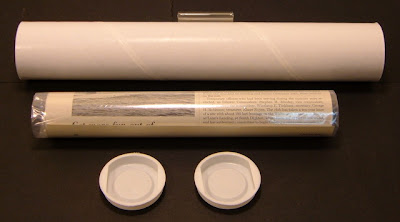
YOUR AD WILL BE SHIPPED ROLLED IN A PROTECTIVE PLASTIC BAG IN AN 80mm (TWICE USPS RECOMMENDED) THICK, 2 INCHES IN DIAMETER (SO AS NOT TO STRESS THE PAPER) SHIPPING TUBE WITH PRESS TIGHT PLASTIC END CAPS.
FC6747

Powered by SixBit's eCommerce Solution