Characteristics of directional sound:
1. Sound travels in a straight line like a flashlight beam, and is almost inaudible from the sides and back;
2. Like light, directional sound scatters or reflects off walls, making it more suitable for open spaces;
In small spaces, the scattered sound from directional sound hitting the walls can affect the directional effect, causing sounds to be heard from the sides.
3. When directional sound is projected onto walls, windows, or decorative paintings, it creates the illusion of sound emanating from outside.
This feature can be used in art exhibitions, escape rooms, and to promote sleep by playing natural sounds like rain or flowing water outside the window. The sound will feel very realistic, as if it's coming from outside.
4. Directional sound has no penetrating power and cannot penetrate paper, walls, or glass. With the door closed, it's barely audible outside. A piece of paper placed in front of the speaker will produce very little sound behind it. Sound emitted downstairs will not be heard upstairs.
5. The volume of directional sound does not decrease within a certain range.
For example, the volume is essentially the same at a distance of 1 meter and 5 meters.
6. Directional sound is similar to a flashlight, projecting sound forward at a certain angle. The greater the distance, the larger the lateral diameter of the directional sound.
7. Directional sound is 3D sound; it feels like the sound is coming right next to your ear, creating a realistic, immersive experience. Even in noisy environments, directional sound can be heard clearly at low volumes.
Not suitable for:
1. In confined spaces, directional sound reflected off walls or floors will affect its directional effect. Therefore, it's unsuitable for home or office use where only one person needs to hear it, while others cannot. Directional speakers are better suited for large spaces like exhibition halls.
Keep the volume low enough and use sound-absorbing materials like foam or fabric on the walls to significantly reduce directional sound reflection.
2. Not suitable for music listening. Directional sound is achieved through ultrasonic technology and modulation algorithms; currently, high-fidelity directional sound is unavailable worldwide, making it unsuitable for applications requiring high sound quality.
3. Directional sound lacks penetrating power and cannot penetrate paper, walls, glass, or other materials. Therefore, it's unsuitable for applications with obstructions, such as sound from downstairs to upstairs.
Features:
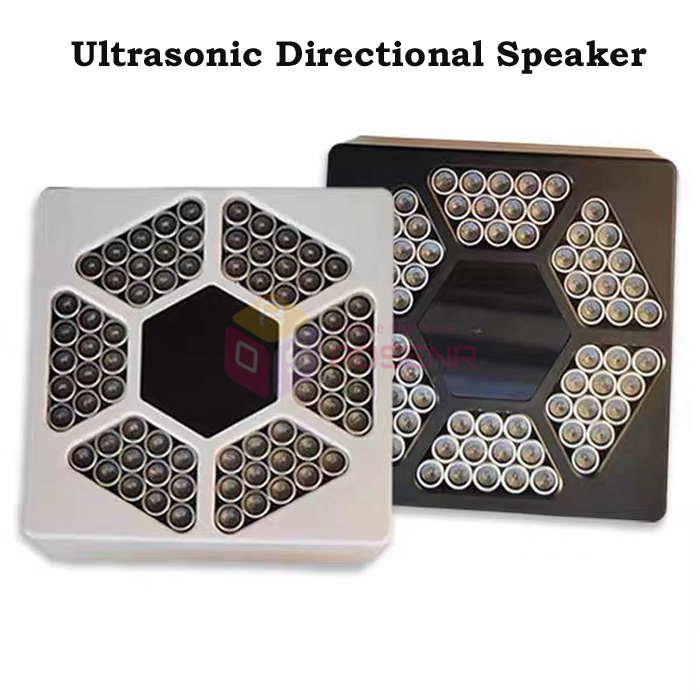
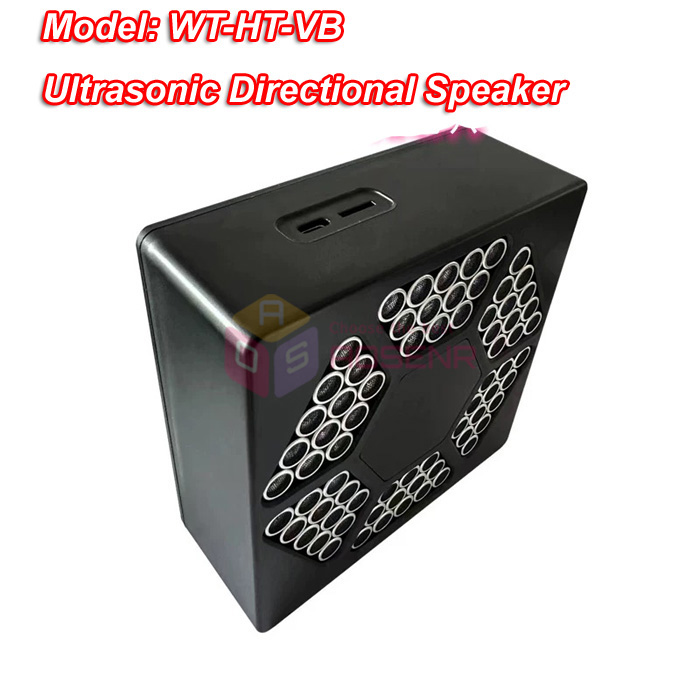
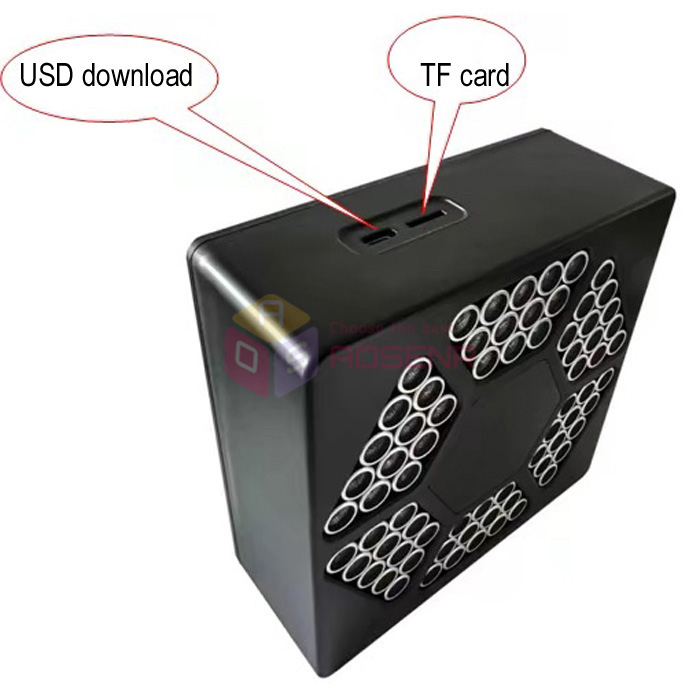
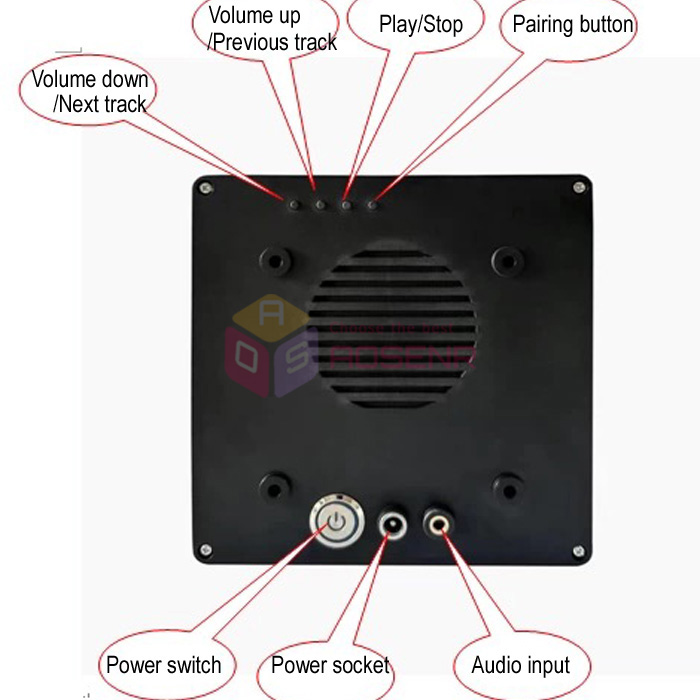
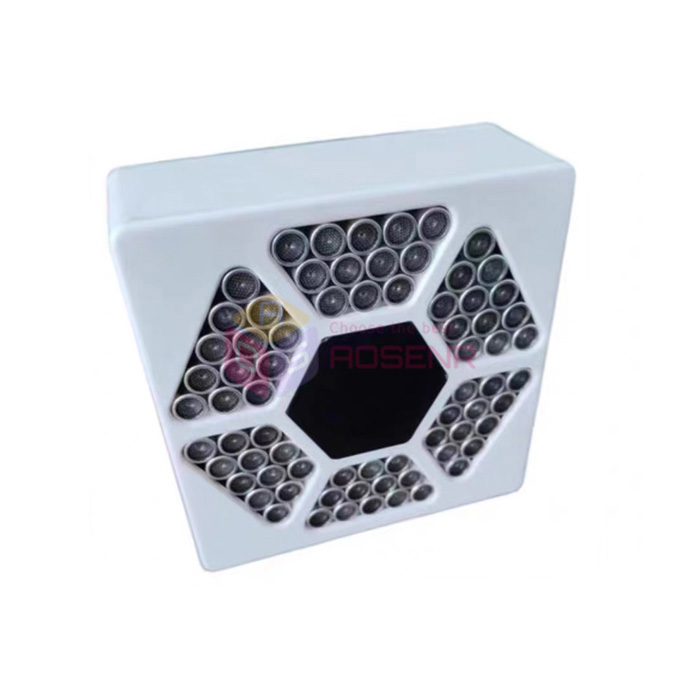
1. Directional speaker all-in-one unit with built-in amplifier, simple design, direct audio input via cable;
2. All-metal casing: excellent shielding and anti-interference;
3. New digital design replaces traditional analog design, low power consumption and low heat generation, good long-term working stability, eliminating the noise and energy consumption of an additional fan;
Specification:
Propagation Distance: Within 100 meters
Dimensions: 13*13*50CM
Casing: ABS plastic
Casing Color: White
Directional Angle: 10-15 degrees
Frequency Range: 400Hz-44kHz
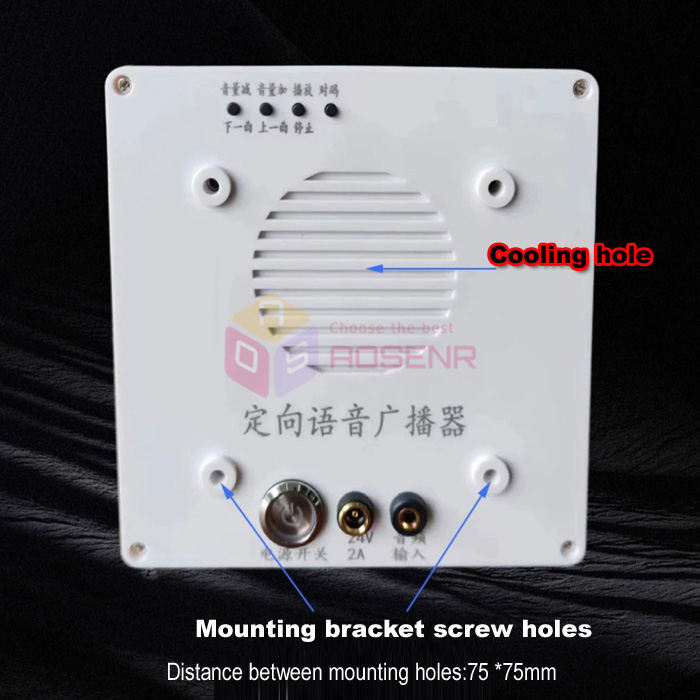
Mounting Holes: 7.5# 7.5CM
Maximum Power: 20W
Sound Pressure Level: 80dB@1kHz/1M
Power Input: 24V/2A
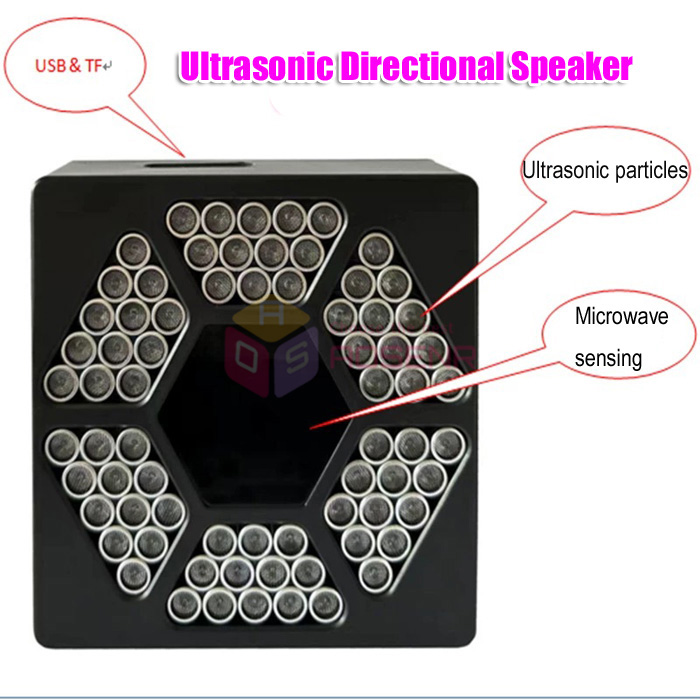
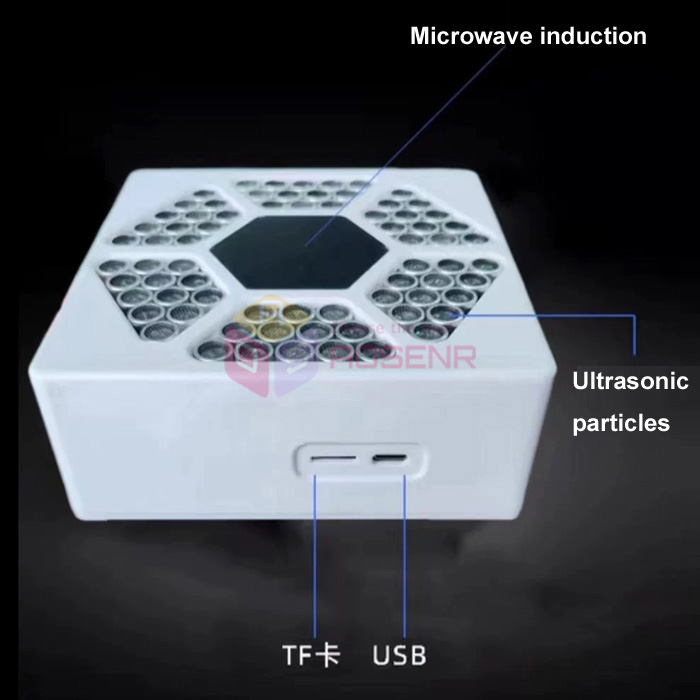
Microwave Sensing Distance: 5-8 meters
Specific Application Scenarios
1. Subway stations, train stations, bus stops, airports, exhibition halls, museums, science and technology museums, art galleries, hospitals, schools, banks, civic centers
2. Parks, zoos, tourist attractions
3. Transportation (buses, subways, highway rescue)
4. Plaza stages, billboards, entertainment venues
5. Shopping malls, shops, restaurants, storefront advertising
6. Counter-terrorism, loudspeakers.
External Installation Applications
Gathering crowds, clear and distinct like a whisper in your ear
Easy Installation: Optional tabletop bracket or wall mount installation, adjustable angle.