


MAX GRE A/B also is also acid resistant thus reducing oxidation or rusting of the metal tank.
Both steel(Fe) or aluminum(Al) tanks metal tanks are more susceptable to oxidation or corrosion.
Click On The Image To View The Video Demonstration
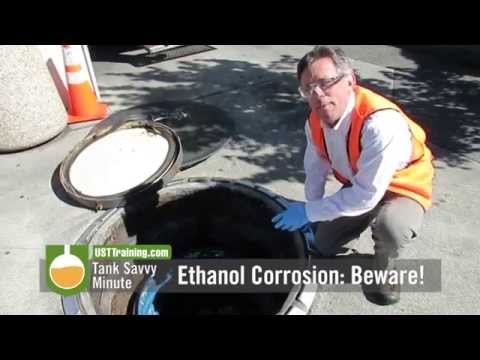
MAX GRE A/B is 100% solids and does not contain non-reactive components that affects chemical resistance and stability. Upon cure, it is resistant to swelling, softening, loss of adhesion from immersion and direct contact to modern gasoline and diesel fuels.
MAX GRE A/B is used as a barrier coating for metal and FRP fuel cells.
It provides a high degree of chemical-resistance against petroleum-based gasoline, diesel, and ethanol fuel blends (E85).
MAX GRE A/B is an anti-corrosion coating for steel substrates, and prevents oxidation on aluminum and copper metals. MAX GRE A/B works well as an impregnating resin for fiberglass, carbon fiber fabrics for patching, reinforcing and fabricating FRP composite fuel cells. MAX GRE A/B is used as a strong adhesive for bonding metals, FRP composites, and most porous substrates.
Physical And Mechanical Properties
Density | 1.10 G/CC |
Form and Color | Clear Liquid |
Viscosity | 2500-3000 cPs @ 25ºC Mixed |
Mix Ratio | 2:1 |
Working Time | 45 – 50 Minutes @ 25°C(100 Gram Mass) |
Peak Exotherm | 70°C (100 Gram Mass) |
Thin Film Set Time | 4 to 6 Hours |
Handle Time | 8 Hours |
Cure Time | 2 to 7 days @ 25°C |
Accelerated Cure Time | 8 Hours @ 25°C + 4 hours at 38°C (100°F) |
Hardness | 80 ± 5 Shore D -Fully Cured |
Tee-Peel Strength | 3.4 Lbs. per inch Width-Fully Cured |
| Values After Fully Cured |
Tensile Shear Strength | 2,935 psi @ 25°C |
| 1,970 psi @ -40°C |
| 1250 psi @ 100°C |
Elongation | 3.0% @ 25°C |
Flexural Strength | 13,000 psi |
Flexural Modulus | 344,000 psi |
Heat Deflection Temp. | 60°C |
CHEMICAL RESISTANCE PERFORMANCE
Full Immersion At 15°C to 30°C
MEASURED PERCENT CHANGE IN WEIGHT
REAGENT | 10 Days | 100 Days |
Deionized Water | 0.09 % | 0.03 % |
Sea Water | 0.01 % | 0.08 % |
Methanol 15% | 3.93 % | Destroyed |
Ethanol 50% | 0.98 % | 0.82 % |
Toluene | 0.40 % | 2.86 % |
Xylene | 0.24 % | 2.55 % |
Gasoline (E85 Blend) | 0.10 % | 0.03 % |
MEK | 2.96% | Destroyed |
10% Lactic Acid | 0.81 % | 0.42 % |
10% Acetic Acid | 0.11 % | 0.45 % |
70% Sulfuric Acid | 0.08 % | 0.14 % |
50% Sodium Hydroxide | 0.00 % | 0.10 % |
10% Sodium Hypochlorite | 0.51 % | 1.36 % |
ELECTRICAL AND THERMAL CONDUCTIVITY PROPERTIES
Volume Resistivity | 4.7 X 10¹³ Ohms-Cm |
Dielectric Strength | 510 Volts/Mil 60 Cycles |
Dielectric Constant | 4.0 (10 kHz) |
Dissipation Factor | 0.014 (10 kHz) |
Thermal Conductivity (Unfilled) 40°-45°C | 0.25 W F/mK |
Corrosion Of Aluminum Fuel Tanks From Ethanol Blended Fuels
To learn more about alcoholate corrosion of aluminum, please perform a web search on "Ethanol Tank Corrosion".
Surface Preparation Prior To Application
The efficacy of any product used for similar applications is dependent on how well the surface is prepared to ensure a strong bond.
For repairing or coating used or old tanks, the substrate requires degreasing to remove lubricants and fuel additive residue.
The strength of adhesion is dependent on how well the substrate is prepared.
This critical step applies to both metal and composite tanks.
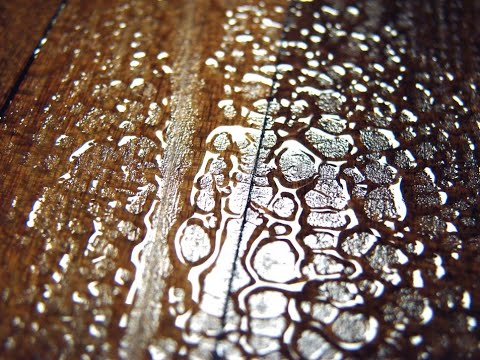
View The Following Video Demonstration Regarding Surface Tension.
The video demonstrates how the surface tension of a solid surface affects the wettability of the applied liquid.
The liquid can be an adhesive coating, colored paints or printing inks.
Good substrate wetting yields good adhesion, may it be for coating applications, composites fabrication, or general bonding use.
Click On The Image To View The Video Demonstration
The substrate, metal or otherwise must be cleaned appropriately to remove oily residue by chemical degreasing. Use acetone to degrease the surface and ensure that the substrate is dry and free from contamination before application.
Do not use rubbing alcohol or denature alcohol; acetone works best for degreasing and removing surface residue that affects adhesion. Remove loose or flaking rust, and for the best adhesion performance, abrade or sandblast so the MAX GRE A/B coating is in direct contact with the metal substrate.
For aluminum substrates, chromic acid etching or sanding to bare metal is recommended for bonding and coating applications.
An aluminum etching solution formulation is posted below.
Use the same water bead test to determine the wettability of the substrate.
If the water does not form a continuous film as demonstrated in the video, the surface requires more surface modification, until the surface yields good wetting.

The Following Surface Preparation Procedures Are Recommended.
METALS AND CONCRETE Degrease Metals– Wipe surface with lint-free rag dampened with Methyl Ethyl Ketone (MEK) or acetone to remove all oil, dirt, and grease. Etch Metals – For optimum results, metal parts should be immersed in a chromic acid bath solution consisting of:
The solution is held at 160°F (71°C), and the parts left immersed for 5 to 7 minutes. Rinse – remove metal parts from etching bath and rinse with clean water. (distilled water is recommended). Etch Concrete- Use commercially sold concrete etching solution (hydrochloric acid based works best). Neutralized per instructions, rinse and allow to dry thoroughly. ALTERNATE PROCEDURE Degrease and dry – Degrease the surface as noted above, sand or sandblast the surface lightly but thoroughly. Rinse with acetone or Methyl Ethyl Ketone (MEK), and dry. | GLASS Degrease – With MEK as above, or with a strong boiling solution of a good grade household detergent. Etch – For optimum results, degreasing can be followed by the chromic acid bath outlined above. WOOD Sand – Bonding surfaces should be sanded lightly, but thoroughly to remove all external contamination. Clean – Carefully remove all dust, or particles of wood from sanded areas. A stiff and clean brush or compressed air can be used. PLASTIC Clean – Remove all dirt, oil, or other surfaces contaminated with detergent soap or degreasing solvent and water, followed by thorough rinsing and drying. A solvent that does not have a detrimental effect may also be used. Sand – Surfaces to be bonded should be sanded lightly, but thoroughly to remove surface sheen. Clean – Carefully remove all dust or particles of plastic from the sanded area. A clean brush, lint-free cloth, or compressed air may be used. |
Mixing And Application
Precaution: As with industrial chemicals of the same nature, avoid direct skin contact using protective gloves and eyewear. Ensure the work area is well ventilated and extinguish any flame source to prevent fuel vapors accidental ignition vapor fuels.

MAX GRE A/B is mixed 2:1 by weight or by volume and offers a 35 to 45 minute working time.
Use a scale to measure the proper mix ratio accurately, which dramatically affects cured chemical resistance, especially when mixing small batch sizes.
The mixed consistency is similar to cooking oil. MAX GRE is self-leveling and will continue to flow until the MAX GRE resin gels or converts to a solid.
The ideal coating thickness to create a hermetic barrier is 0.015-inch or 15 mils and may require several applications to achieve the target coating thickness. Allow the first coat to cure for 5 to 6 hours at 75°F and repeat the application directly on top of the previous application. Once the desired thickness is achieved, allow the MAX GRE to fully cure 36 to 48 hours at 25°C to 30°C before use.
To use the MAX GRE as an adhesive, prepare the substrates to its bare condition so the MAX GRE is directly applied and in full contact with the base substrate. Ensure bond foot-print is relative to the amount of force that is expected.
Mix the proper amount of the resin and curing agent for the application.
Bondline control media such as ‘Potter’s Glass Bead’ is typically mixed with the MAX GRE to meter the ideal bondline thickness of 5 to 7 mils. Apply the mixed MAX GRE on both substrates to be bonded and assemble. Apply sufficient clamping force to ensure both substrates are mated until the MAX GRE cures. Allow to cure for 12 to 18 hours at room temperature for the the MAX GRE to be tack-free and handleable. Allow the MAX GRE to fully cure for 36 to 48 hours at 25°C to 30°C before use with fuels.
Potting Compound: MAX GRE A/B Is Self Leveling And Suitable For Thick Potting Or Casting Application
MAX GRE also works well as a potting compound for encapsulating fuel level sensors. It is suitable up to a ¾-inch thick casting or embedding. Upon cure, MAX GRE is non-conductive and provides electrical insulation for low voltage signals for gauges and meters. MAX GRE bonds well to copper wires and holds connections in place. It is resistant to pull-outs from expansion and contraction coefficients and mechanical vibration from average use and environment.
Impregnating Resin For Fiberglass Or Carbon Fiber
As an impregnating resin for composite fabrication, use silane or volan treated fabrics for the best epoxy resin compatibility and wet-out.
Saturate the fabric with the mixed MAX GRE at 33 percent resin content.
Allow to fully cure for 48 hours at 25°C to 30°C before use.
Observe composite fabricating guidelines for making fuel cells.
Review COMPOSITE FABRICATING BASICS Below For More Details
MAX GRE Chemical Resistance Test
Cured MAX GRE Specimens in E85 Gasoline Continuous Immersion Test
Specimens have been in complete immersion in E85 gasoline and diesel E85 fuel since 06/15/2009 with no change in is cured properties.
The stability in weight or hardness (Shore Durometer) of the MAX GRE demonstrates its superior chemical resistance to modern fuels.
No Change In Weight Or Durometer Hardness Demonstrating Its Chemical Resistance Properties.

Test Procedure After Continuous Immersion In Fuel
Testing the cured Durometer Hardness of the specimens determines if it is being affected by the fuel immersion. Both nonblended and E85 blended gasoline and diesel fuels was used in the immersion test
The specimen weights and cured hardness were measure before and after the immersion test and any changes in are recorded. After several years of continuous fuel immersion, the MAX GRE test specimens exhibits no change in weight or hardness.
Poor chemicals resistance will bloat the specimens, increasing in mass and reduce in Shore Durometer Hardness. MAX GRE A/B has proven its excellent resistance against various petroleum fuels.


June 2009 | Start Date |
March 2014 | No appreciable change in dimension, weight, Durometer Hardness |
February 2017 | No appreciable change in dimension, weight, Durometer Hardness |
November 2019 | No appreciable change in dimension, weight, Durometer Hardness |
November 2020 | No appreciable change in dimension, weight, Durometer Hardness |


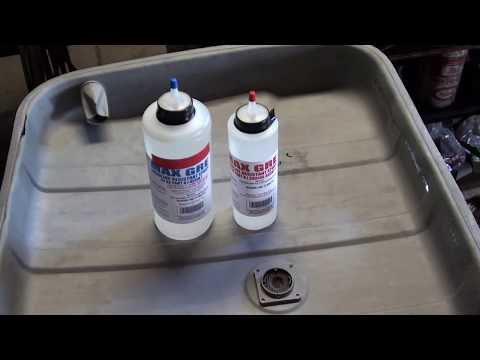
Customer Refurbish And Repaired Gasoline Tank With MAX GRE A/B
Coverage Calculation
48 Ounce Kit Coverage At 0.030 Inch Coating Thickness = 20 Square Feet48 Ounce Kit Coverage With 10 Ounce Per Square Yard Fiberglass Cloth With 70/30 Fabric To Resin Ratio By Weight =
6.5 Square Yards Of 10 Ounce Fiberglass Per This 48 Fluid Ounce Kit.
Best Style Fabric For Patching; 7781 Style 8 Harness Satin Weave
Use this satin weave style fiberglass fabric that offers excellent draping over curved and corners.
This weave style is also much tighter and has less opening between the fiberglass yarn.
Once impregnated with the MAX GRE resin, the laminate is impermeable and provides better hermetic sealing.
Free Shipping For This Item Only
https://www.ebay.com/itm/223385247088

During the colder season, use and infrared lamp to increase the ambient temperature to minimize slow cure due to the colder temperatures. IR Lamps works best for warming large areas.

Best Style Fabric For Patching And Fabricating Fuel Tanks
Weave Style 7781 8 Harness Satin Weave
https://www.ebay.com/itm/223669319695
Carbon Fiber Motorcycle Gas Tank Fabricated With MAX GRE A/B


***********************************************************
Best Style Fabric For Patching And Fabricating Fuel Tanks Carbon Fiber Motorcycle Gas Tank Fabricated With MAX GRE A/B
|
IMPORTANT NOTICE
Your purchase constitutes the acceptance of this disclaimer. Please review before purchasing this product.
The user should thoroughly test any proposed use of this product and independently conclude the satisfactory performance in the application. Likewise, if the manner in which this product is used requires government approval or clearance, the user must obtain said approval.
The information contained herein is based on data believed to be accurate at the time of publication. Data and parameters cited have been obtained through published information, PolymerProducts and Polymer Composites Inc. laboratories using materials under controlled conditions. Data of this type should not be used for a specification for fabrication and design. It is the user's responsibility to determine this Composites fitness for use.
There is no warranty of merchantability for fitness of use, nor any other express implied warranty.
The user's exclusive remedy and the manufacturer's liability are limited to refund of the purchase price or replacement of the product within the agreed warranty period. Polymer Composites Inc. and its direct representative will not be liable for incidental or consequential damages of any kind.
Determination of the suitability of any kind of information or product for the use contemplated by the user, the manner of that use and whether there is any infringement of patents is the sole liability of the user.
IMPORTANT NOTICE
Your purchase constitutes the acceptance of this disclaimer. Please review before purchasing this product.
The user should thoroughly test any proposed use of this product and independently conclude the satisfactory performance in the application. Likewise, if the manner in which this product is used requires government approval or clearance, the user must obtain said approval.
The information contained herein is based on data believed to be accurate at the time of publication. Data and parameters cited have been obtained through published information, PolymerProducts and Polymer Composites Inc. laboratories using materials under controlled conditions. Data of this type should not be used for a specification for fabrication and design. It is the user's responsibility to determine this Composites fitness for use.
There is no warranty of merchantability for fitness of use, nor any other express implied warranty.
The user's exclusive remedy and the manufacturer's liability are limited to refund of the purchase price or replacement of the product within the agreed warranty period. Polymer Composites Inc. and its direct representative will not be liable for incidental or consequential damages of any kind.
Determination of the suitability of any kind of information or product for the use contemplated by the user, the manner of that use and whether there is any infringement of patents is the sole liability of the user.