Polyethersulfone (PES) Syringe Filters,0.22μm, 33mm, for Sterile Filtration,Sterile Individually Packed
PES (Polyethersulfone)-Most Popular Membrane. PES is hydrophilic and constructed from pure polyethersulfone polymer membrane for maximum sample recovery. Low protein and drug binding characteristics make it ideally suited for use in life sciences applications.

Product features
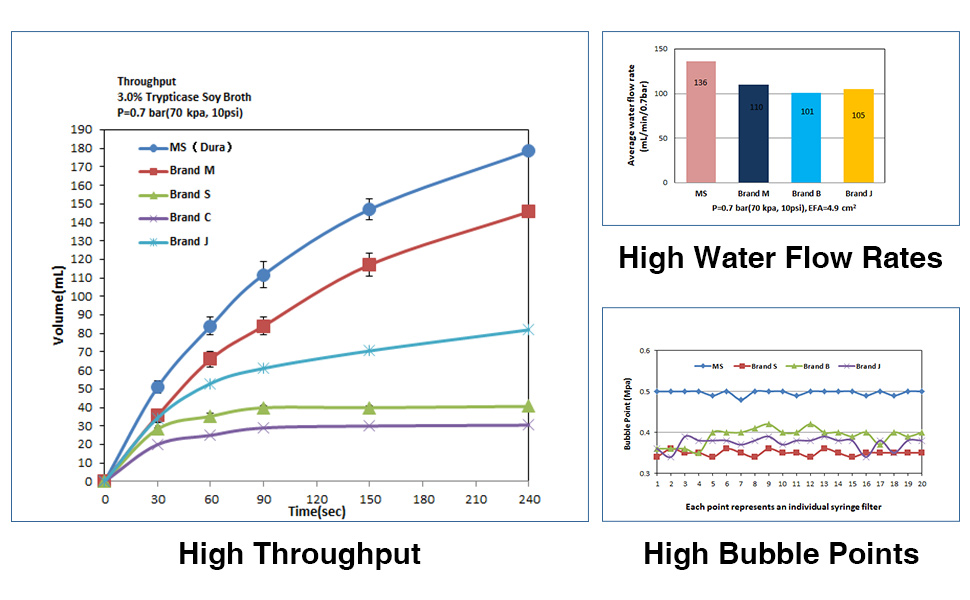
• Prefilter syringe filter provides two times greater throughput than standard filter without pre-filtration.
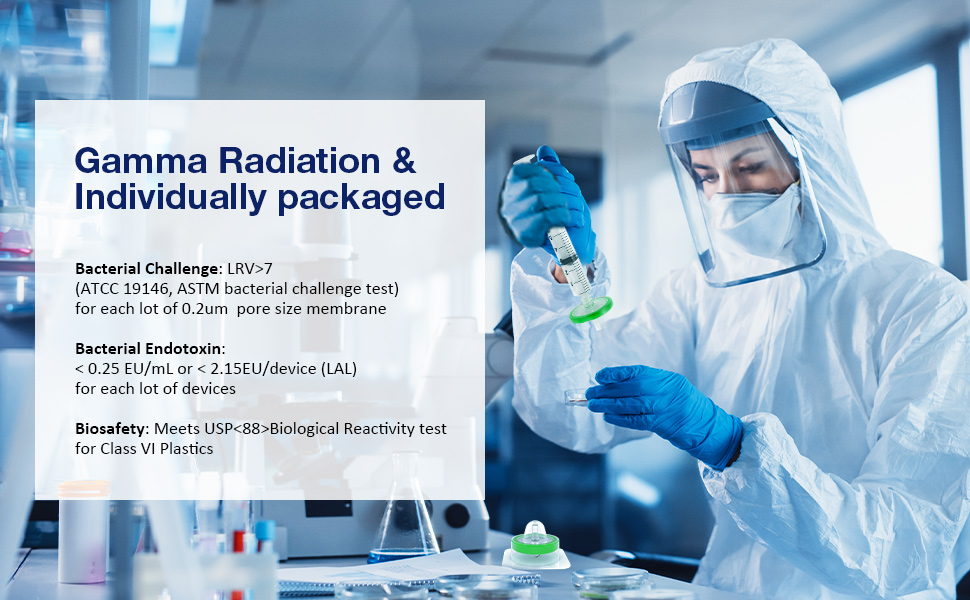
• Sterile syringe filter is 100% integrity tested.
• Both for mechanical and tensile high level of strength.
• Used for most mid-polar liquids and organic solvents.
• Low level extractable makes them suitable for environment analysis,proteins and extractables.
• High level flow rate because of symmetric structure.


| Specification | |
| Product Type | PES Syringe Filters |
| Membrane | Polyethersulfone (PES) |
| Housing Material | PP |
| Primary Color | Green |
| Primary Material | Polypropylene |
| Wettability | Hydrophilic |
| Pore Size | 0.22μm |
| Filter Diameter | 33mm |
| Sterile | Yes |
| Non-pyrogenic | Yes |
| RNase/DNase Free | Yes |
| Sample Volume | 100mL |
| pH Range | 1-14 pH |
| Flow Rate | 120-146ml/min (10 psi, 25℃) |
| Sterilization and filtration efficiency | LRV>7 |
| Filtration Area | 4.9cm2 |
| Hold-up Volume (µL) | <110μL |
| Maximum Operating Pressure | 87 psi |
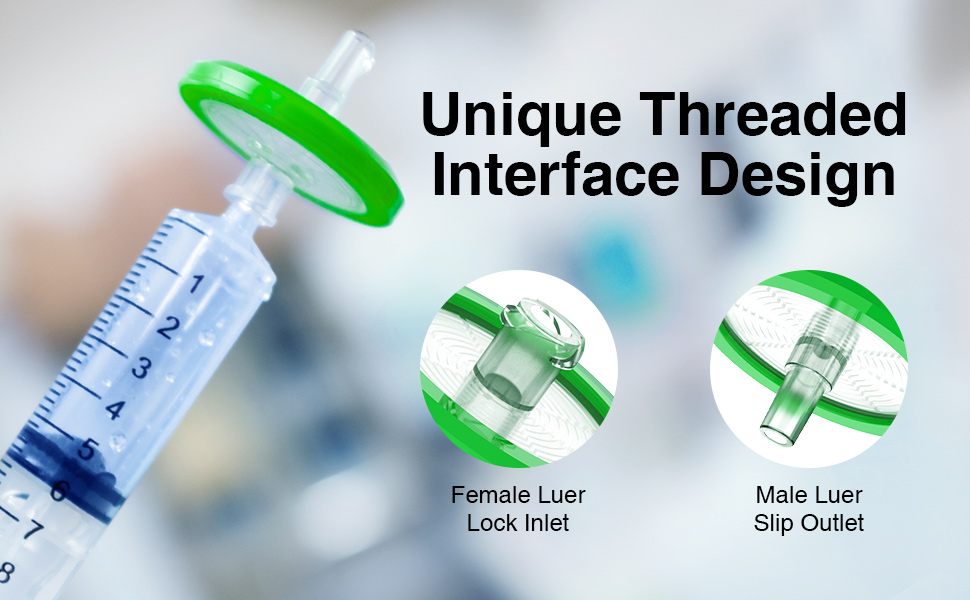
| Inlet Connection | Female Luer Lock |
| Outlet Connection | Male Luer Slip |
| Application 1 | Buffer & Media |
| Application 2 | Sterile Filtration |
| Sample Types | Aqueous、Solvents and harsh liquids according to chemical compatibility |
| Pack Description | Individual |
| Case Quantity | 10 |

Clarification of protein laden solutions
Sterilization of food sciences, life sciences and biopharmaceutical solution
Filtration of fluids with high particle loads
Processing immunoassay and nucleic acid hybridization samples
Polyethersulfone (PES) for serum, plasma and tissue culture
Protein based samples in aqueous solutions
Mild organic solutions
Routine sample preparation
Environmental samples

Package list:
50pcs Sterile PES Syringe Filters

How to use a syringe filter?
Choose the right type of membrane material based on the properties of your sample. Be careful of the chemical compatibility to avoid extractables and leachables. Read this article about How to choose a syringe filter.
1. Load the sample into the syringe.
2. Attach the filter to the luer-lock of the syringe with a twisting motion. Make sure it is securely attached.
3. Filter the sample. Hold the syringe and filter vertically, and gently press the plunger to push the sample through the filter. Take care not to apply too much force or you may damage the filter.
4. Discard the used filter and repeat for the next sample.


