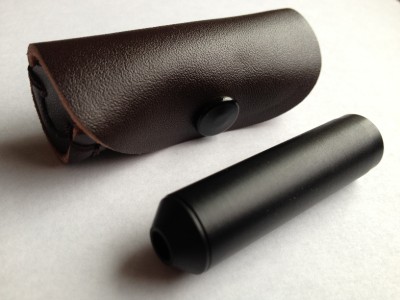
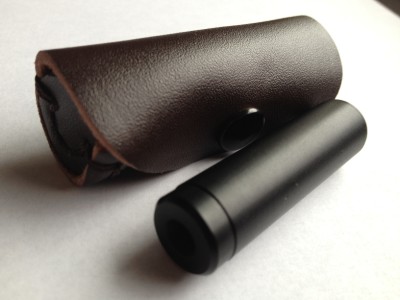
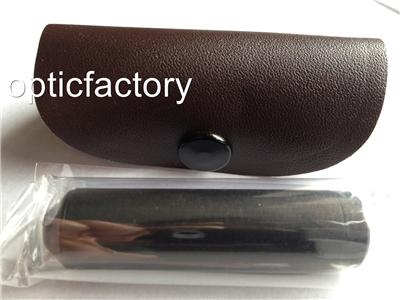
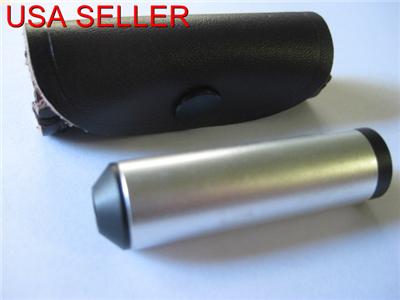
It is the same spectroscope that JTV.COM sells for $99
Pocket Diffraction Grating Spectroscope – Fixed Slit & Fixed Focus for Gemstone Analysis
Description:
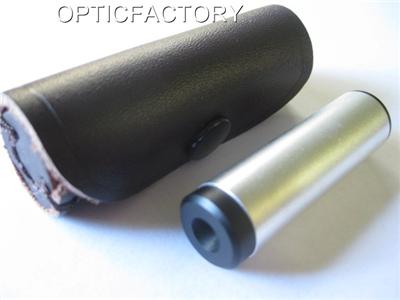
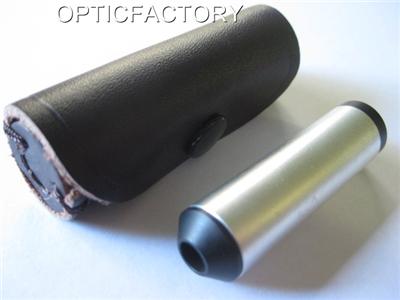
This Pocket Diffraction Grating Spectroscope is a precision optical instrument designed for gemologists, jewelers, and hobbyists to identify gemstones by analyzing their unique spectral signatures. Compact, durable, and easy to use, it lets you observe the absorption spectrum of gemstones and other transparent materials.
Features:
-
High-Quality Construction: Made of stainless steel and black acetol for durability and corrosion resistance.
-
Compact & Lightweight: Measures 55mm long, 14.5mm wide, and weighs just 28 grams.
-
Fixed Slit & Fixed Focus Design: Ensures consistent and reliable results without the need for adjustments.
-
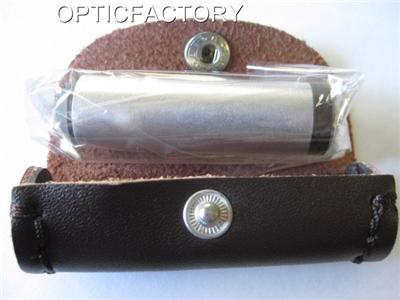
Protective Carrying Case: Includes a leather pouch for easy storage and portability.
How It Works:
The spectroscope analyzes the light passing through a gemstone.
White light contains all visible colors—red, orange, yellow, green, blue, indigo, and violet. When this light passes through a gemstone, certain wavelengths are absorbed, and others are transmitted.
The absorbed wavelengths appear as vertical black lines in the spectrum viewed through the spectroscope. Each gemstone displays a unique absorption pattern, acting as a “fingerprint” for identification. Recognizing these characteristic lines helps determine the type of gemstone being examined.
Applications:
-
Gemstone and mineral identification
-
Jewelry appraisal and authentication
-
Educational and scientific observation
Package Includes:
Condition:
Brand new, ready to use.
Spectroscope Buying Guide In gemology, there are two different types of spectroscopes,
each with its own characteristics.
1. Diffraction grating spectroscope
The diffraction grating spectroscope is based on the
principle of diffraction. Light enters through a narrow slit
and is then diffracted by a thin film of diffraction grating
material. This produces a linear spectrum image with a
generally larger view of the red part than a prism
spectroscope. Inside the diffraction grating spectroscope
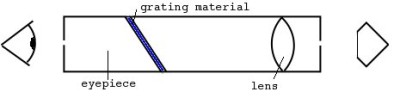

2. Prism Spectroscope
The prism spectroscope is based on dispersion. The light
enters through a narrow slit and is then dispersed through a
series of prisms. These models are generally more expensive
than their diffraction type cousins. Because prism spectroscopes are based on dispersion, the
blue area of the spectrum is more spread out and the red
parts are more condensed than the diffraction grating types. Inside the prism spectroscope 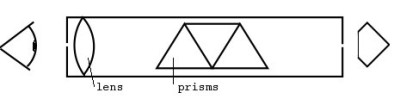
In conclusion, prism type is better than diffraction type,
because it has a larger and more clear image.
We have both types of spectroscopes, please click the links below
Diffraction Spectroscope (Small Size) Diffraction Spectroscope (Medium Size) Prism Spectroscope
|