| |
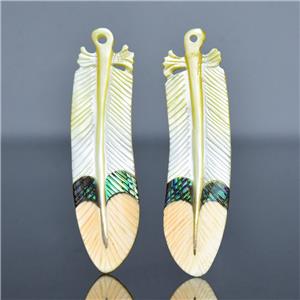
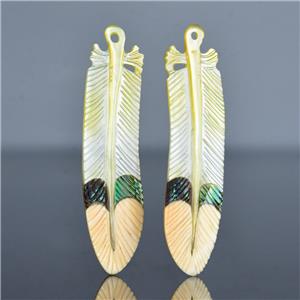
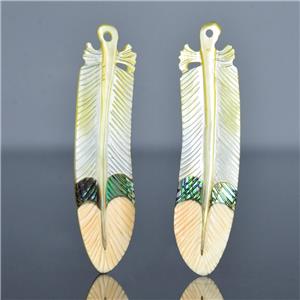
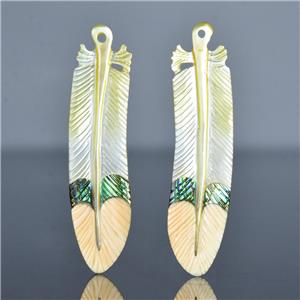
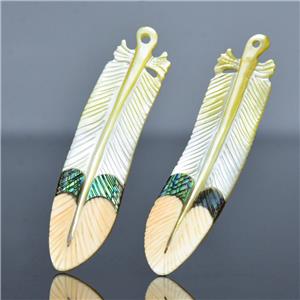
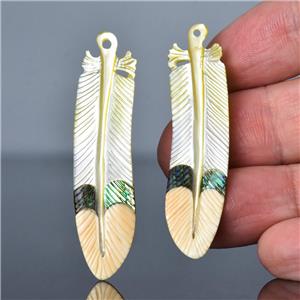
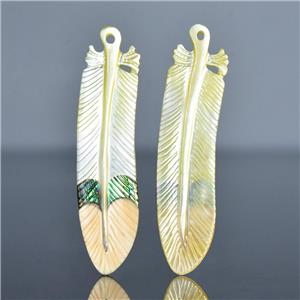
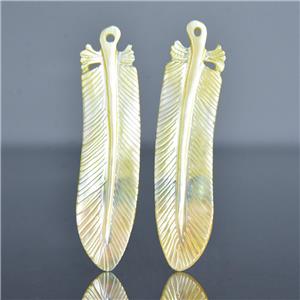
NATURAL MULTICOLOR SHELL PARROT FEATHER DESIGN CARVING EARRING PAIR – Hand-carved
|
|
| |
Item # |
: |
212 1632
|
|
| |
Type |
: |
Hand-carved natural multicolor shell inlay-work ~ a pair for your stunning earrings design
~ this pair of shell carvings could make stunning earrings or another designer jewelry
Simply use a hang-in earring hook / ear wire and your earrings are ready.
This is not ready to wear jewelry.
|
|
| |
Amount |
: |
1 (one) earring pair = 2 (two) pieces
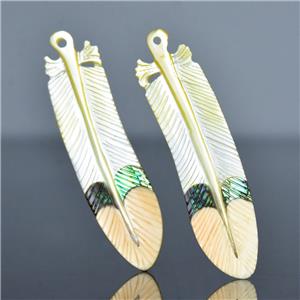
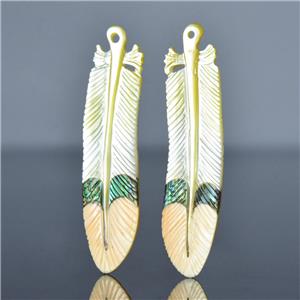
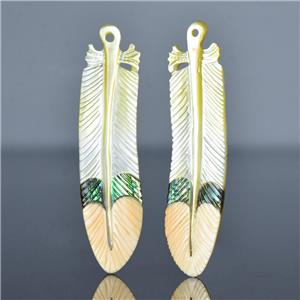
* All photos are taken from the actual item *
|
|
| |
Design |
: |
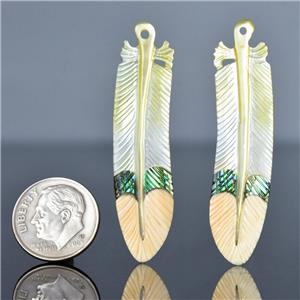
A beautiful PARROT FEATHER DESIGN from our “Birds of a Feather Collection”
These carvings are slightly curved in the shape of the natural shell (not flat).
Each piece is hand-carved one by one by master-craftsmen and therefore the design may vary slightly.
This makes each carving a one-of-a-kind piece of art.
|
|
| |
Color |
: |
Fine natural multicolor shell with a beautiful silken luster
|
|
| |
Weight |
: |
approx. 3.40 grams
|
|
| |
Dimensions |
: |
Length: approx. 48.80 mm = 1.92 inches
Width: approx. 11.95 mm (measured at the widest point)
Thickness of shells: approx. 2.22 mm
|
|
| |
Perforation |
: |
This pair of carved shell feathers has an approx. 1.20 mm diameter drill-hole on the top part of the carving.
|
|
| |
Origin |
: |
We buy all our shell material from the pearl farms (aqua culture) off the coast of the Island of Sumbawa.
Paua Abalone shell we buy directly from New Zealand.
These shell carvings are handcrafted in Bali (Indonesia) by our in-house Balinese shell carvers.
|
|
| |
Hand-carving |
: |
Our shell carvings are all hand carved. This is not a machine mass produced item.
This item is handmade and each piece is made one by one which makes each piece a one-of-a-kind piece of art.
We know you will enjoy using and wearing our shell carvings as much as we enjoyed making them.
|
|
| |
Mother-of-Pearl |
: |
Mother-of-Pearl is produced by the Pinctada maxima mollusk ~ the South Sea pearl oyster
They are currently cultured in areas throughout the Indian and Pacific Oceans, primarily in Indonesia, Australia and the Philippines.
These waters are the native habitat of a large oyster known as Pinctada maxima. This oyster grows up to 12 inches in diameter and is much larger than other saltwater oysters
There are two varieties of Pinctada maxima, the silver-lipped and the gold-lipped. The two are distinguished by their distinct coloration of the outer edge of the interior. This type of shell is known as Mother-of-Pearl and is responsible for the coloration of the cultured pearls produced, therefore the name.
|
|
| |
Paua Abalone Shell |
: |
Paua Abalone shell ~ Haliotis iris is produced by the New Zealand Abalone), the most colorful shell.
The name Paua is the name the Maori call the shell we know as Abalone from the deep waters of the South Island of New Zealand.
These waters are a lot colder being so close to the Antarctic Basin. This is why the colors of Paua Abalone are more vibrant and deeper in color than any other Abalone found in the world.
The lustrous iridescence is a rainbow blue, green and various shades of red.
This Paua Abalone shell is an inspiration from nature’s spectrum of rainbow colors.
|
|
| |
Apricot Trumpet Shell |
: |
Syrinx aruanus, common name the Australian trumpet or false trumpet, is a species of extremely large sea snail measuring up to 91 cm long and weighing up to 18 kg. It is a marine gastropod mollusk in the family Turbinellidae and is the only species in the genus Syrinx.
This is the largest living snail (shelled gastropod) species in the world, and arguably the largest (heaviest) gastropod in the world. Although the shell itself is quite well known to shell collectors because of its extraordinary size, little is known about the ecology and behavior of the species, except for one study about its feeding habits.
This species occurs in the northern half of Australia and adjacent areas, including eastern Indonesia and Papua New Guinea.
These giant snails live on sandy bottoms in the intertidal zone and the sublittoral down to about 30 meters.
It has not been overfished, and this snail is locally very common.
It is fished for food / consumption.
|
|
| |
Remarks |
: |
These finely carved shells could make spectacular earrings.
This is not ready to wear jewelry.
Don’t miss the opportunity to own this beautiful hand-carved natural shell earring pair |
|
| |
|
|
|
|
|