| |
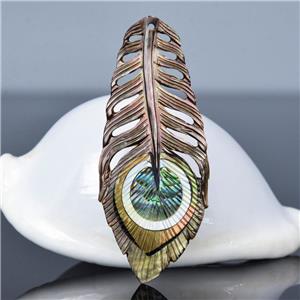
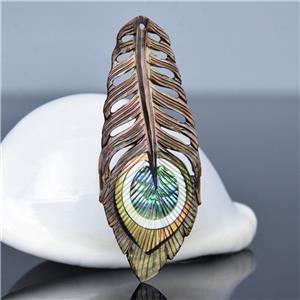
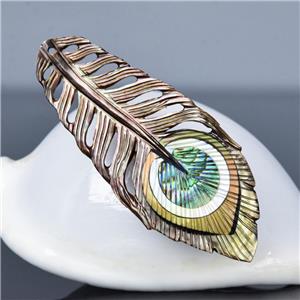
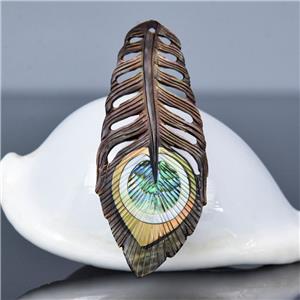
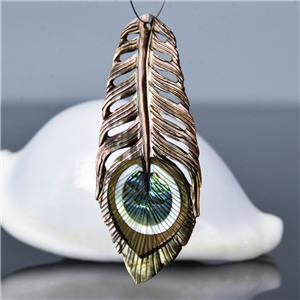
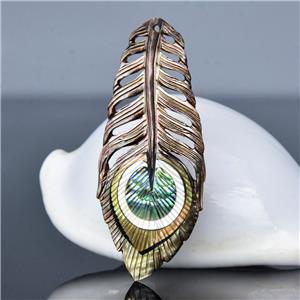
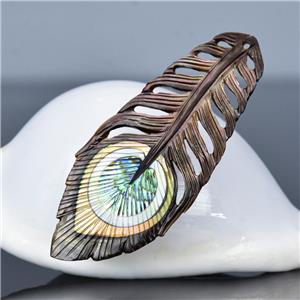
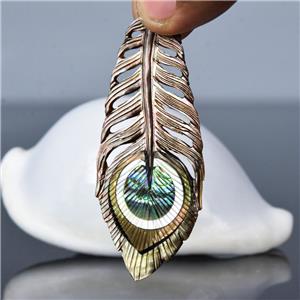
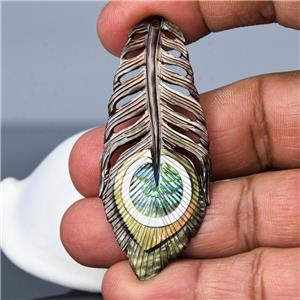
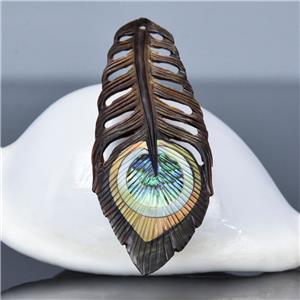
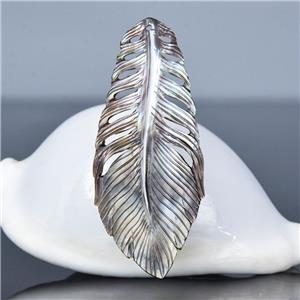
NATURAL MULTICOLOR SHELL PEACOCK FEATHER DESIGN CARVING for PENDANT DESIGN – Hand-carved
|
| |
Item # |
: |
212 1592
|
|
| |
Type |
: |
Hand-carved natural multicolor shell inlay-work ~ a stunning carving for pendant design
~ this shell carving could make a stunning pendant or another designer jewelry
Simply use a hang-in pendant bail finding and your pendant is ready.
This is not ready to wear jewelry.
|
|
| |
Amount |
: |
1 (one) piece
* All photos are taken from the actual item *
|
|
| |
Design |
: |
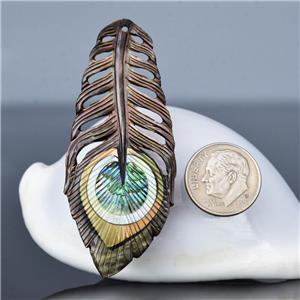
A beautiful PEACOCK FEATHER DESIGN from our “Birds of a Feather Collection”
This carving is very slightly curved in the shape of the natural shell (not flat).
Each piece is hand-carved one by one by master-craftsmen and therefore the design may vary slightly.
This makes each carving a one-of-a-kind piece of art.
|
|
| |
Color |
: |
Fine natural multicolor shell with a beautiful silken luster
|
|
| |
Weight |
: |
approx. 2.81 grams
|
|
| |
Dimensions |
: |
Length: approx. 61.37 mm = 2.41 inches
Width: approx. 25.50 mm (measured at the widest point)
Thickness of shells: approx. 2.05 mm
|
|
| |
Perforation |
: |
This carved shell feather has an approx. 1.50 mm diameter drill-hole on the top part of the carving.
|
|
| |
Origin |
: |
We buy all our shell material from the pearl farms (aqua culture) off the coast of the Island of Sumbawa.
Paua Abalone shell we buy directly from New Zealand.
These shell carvings are handcrafted in Bali (Indonesia) by our in-house Balinese shell carvers.
|
|
| |
Hand-carving |
: |
Our shell carvings are all hand carved. This is not a machine mass produced item.
This item is handmade and each piece is made one by one which makes each piece a one-of-a-kind piece of art.
We know you will enjoy using and wearing our shell carvings as much as we enjoyed making them.
|
|
| |
Black Mother-of-Pearl |
:
|
Pinctada margaritifera ~ Black-lip Pearl Oyster
Pinctada margaritifera, commonly known as the black-lip pearl oyster, is a species of pearl oyster, a saltwater clam, a marine bivalve mollusk in the family Pteriidae. This species is common in the Indo-Pacific within tropical coral reefs.
The ability of P. margaritifera to produce pearls means that the species is a valuable resource to humans. The oysters are harvested wild from coral reefs and are also commonly grown in aquaculture, both primarily taking place in the Indo-Pacific region.
The common name of this species refers to the black coloring along the margins of the interior of the shell. Externally the shell is dark grayish brown or green, though white spots are common across the shell. Adults usually reach between 20 and 25 cm (7.9 and 9.8 inches) in height.
|
|
| |
Bronze Mother-of-Pearl Shell |
:
|
Bronze Mother-of-Pearl – Pteria Penguin ~ Penguin Winged Oyster
Pteria is a genus of winged oyster closely related to Pinctata that also produces commercial quantities of pearls. Winged oysters are edible but unpalatable and seldom produce precious pearls.
It is a tropical species, with pearly interiors and long, wing-like projections of the hinge, and has fragile shells.
Winged oysters are found naturally on rocks and coral near channels and capes where the current runs fast and they attach themselves to the ocean bottom and to wharf pilings. Pteria Penguin is a major source of Mabe Pearl production.
The Black Winged Oyster, Pteria Penguin that grows up to 20-30 cm in diameter is also called “the penguin wing oyster” from its shape like a wing. They commonly display a silver color under the oyster muscle with a rich mauve, gold banding towards the black/brown outer lip.
The Black Winged Oyster produces brilliant nacre with a rainbow-like spectrum of hues and possesses a uniquely penetrating brilliance, with hues ranging from light pink through deep "rainbow".
Sometimes the pearls have gold or other hues of high rarity. This rich variety of lustrous hues combines with nacreous layers of a rarely seen fineness of texture to give this pearl. The Black Winged Pearl Oyster can be found in the east to the western tropical Pacific and from the southern islands of Japan in the north to the southern waters of Australia and Indonesia.
|
|
| |
Paua Abalone Shell |
: |
Paua Abalone shell – Haliotis iris
It is produced by the New Zealand Abalone), the most colorful shell.
The name Paua is the name the Maori call the shell we know as Abalone from the deep waters of the South Island of New Zealand.
These waters are a lot colder being so close to the Antarctic Basin. This is why the colors of Paua Abalone are more vibrant and deeper in color than any other Abalone found in the world.
The lustrous iridescence is a rainbow blue, green and various shades of red.
This Paua Abalone shell is an inspiration from nature’s spectrum of rainbow colors.
|
|
| |
Green-lipped Mussel |
:
|
Green-lipped Mussel ~ Perna canaliculus, the New Zealand green-lipped mussel, also known as the New Zealand mussel, the green shell mussel, kuku, and kutai, is a bivalve mollusc in the family Mytilidae. P. canaliculus has economic importance as a cultivated species in New Zealand.
We use the inside of the mussel which is blue.
|
|
| |
White Mother-of-Pearl Shell |
:
|
Golden Mother-of-Pearl shell – Pinctada maxima
Mother-of-Pearl is produced by the Pinctada maxima mollusk ~ the South Sea pearl oyster.
They are currently cultured in areas throughout the Indian and Pacific Oceans, primarily in Indonesia, Australia and the Philippines.
These waters are the native habitat of a large oyster known as Pinctada maxima. This oyster grows up to 12 inches in diameter and is much larger than other saltwater oysters
There are two varieties of Pinctada maxima, the silver-lipped and the gold-lipped. The two are distinguished by their distinct coloration of the outer edge of the interior. This type of shell is known as Mother-of-Pearl and is responsible for the coloration of the cultured pearls produced, therefore the name.
|
|
| |
Remarks |
: |
This finely carved shell could make a spectacular pendant or other designer jewelry.
This is not ready to wear jewelry.
Don’t miss the opportunity to own this beautiful hand-carved natural shell feather |
|
| |
|
|
|
|
|