|

| |
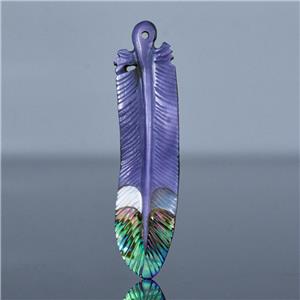
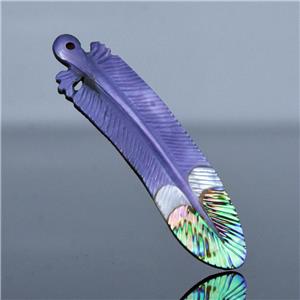
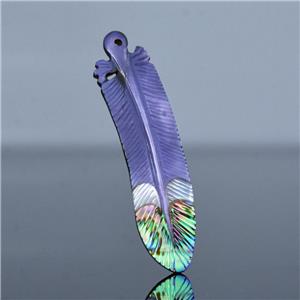
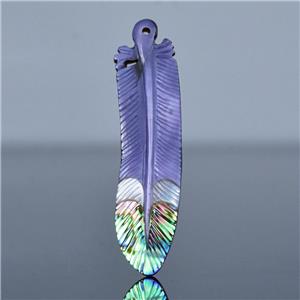
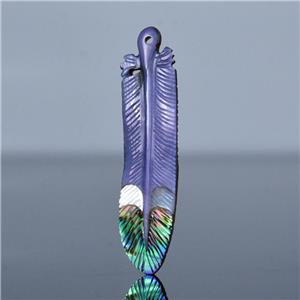
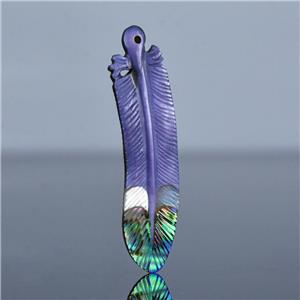
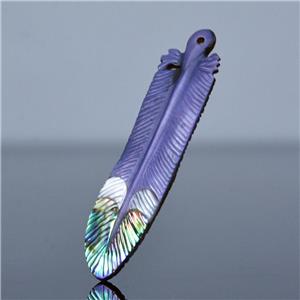
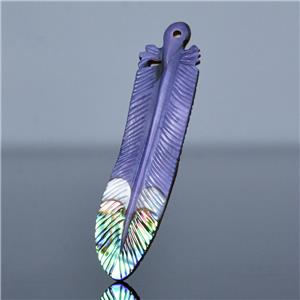
NATURAL MULTICOLOR SHELL PARROT FEATHER DESIGN CARVING for PENDANT DESIGN – Hand-carved
|
| |
Item # |
: |
212 1644
|
|
| |
Type |
: |
Hand-carved natural multicolor shell inlay-work ~ a stunning carving for pendant design
~ this shell carving could make a stunning pendant or another designer jewelry
Simply use a hang-in pendant bail finding and your pendant is ready.
This is not ready to wear jewelry.
|
|
| |
Amount |
: |
1 (one) piece
* All photos are taken from the actual item *
|
|
| |
Design |
: |
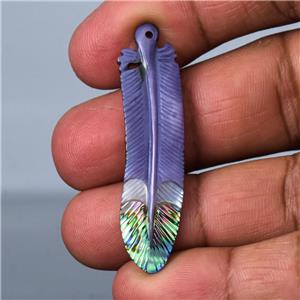
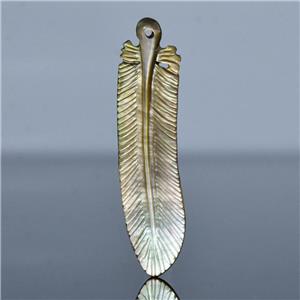
A beautiful PARROT FEATHER DESIGN from our “Birds of a Feather Collection”
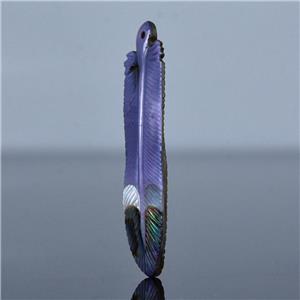
This carving is very slightly curved in the shape of the natural shell (not flat).
Each piece is hand-carved one by one by master-craftsmen and therefore the design may vary slightly.
This makes each carving a one-of-a-kind piece of art.
|
|
| |
Color |
: |
Fine natural multicolor shell with a beautiful silken luster
|
|
| |
Weight |
: |
approx. 2.07 grams
|
|
| |
Dimensions |
: |
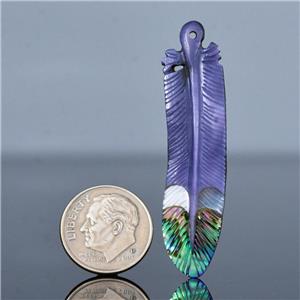
Length: approx. 47.86 mm = 1.88 inches
Width: approx. 12.16 mm (measured at the widest point)
Thickness of shells: approx. 2.20 mm
|
|
| |
Perforation |
: |
This carved shell feather has an approx. 1.20 mm diameter drill hole on the top part of the carving.
|
|
| |
Origin |
: |
We buy all our shell material from the pearl farms (aqua culture) off the coast of the Island of Sumbawa.
Paua Abalone shell we buy directly from New Zealand.
These shell carvings are handcrafted in Bali (Indonesia) by our in-house Balinese shell carvers.
|
|
| |
Hand-carving |
: |
Our shell carvings are all hand carved. This is not a machine mass produced item.
This item is handmade and each piece is made one by one which makes each piece a one-of-a-kind piece of art.
We know you will enjoy using and wearing our shell carvings as much as we enjoyed making them.
|
|
| |
Purple Clam Shell |
:
|
Purple Clam Shell ~ Nuttallia obscurata
The purple mahogany clam, dark mahogany clam, varnish clam or savory clam, is a species of saltwater clam, a marine bivalve mollusc in the family Psammobiidae.
The valves are thin, relatively shallow, and almost oval. They can reach 6.4 cm (2.5 inches) long. Individuals can achieve a maximum weight of 45 grams. The exterior of the valves is covered in a shiny brown periostracum, hence one of its common names, "varnish clam". The periostracum is often worn away at the umbo. There are concentric rings on the outside of the valves which can be observed where the periostracum has been removed. The interior of the valves is deep purple to almost white in some individuals. The prominent hinge ligament is external to the valves. Nuttallia obscurata has a large white, muscular foot that it uses to dig in the sand and for propulsion. The animal has two long, white, separate siphons.
These clams are found in the mid to high intertidal zone, buried in sand, gravel, or silt, from just below the surface to 20 centimetres (7.9 inches) deep. They have greater tolerance for salinity conditions than native clams and are sometimes found in brackish waters near freshwater seeps.
The species is native to Japan, Korea, China, and Indonesia.
It has been naturalized in British Columbia, Washington and Oregon. Its range includes the coast of Vancouver Island, the Strait of Georgia, Puget Sound, and south along the coast to Coos Bay. It is considered an invasive species in North America.
The first collection of Nuttallia obscurata in North America occurred in 1991 near Vancouver. It is hypothesized that planktonic larvae were released by a ship disposing of ballast water she had pumped aboard in Asia. A 2006 study of reproductive ecology and dispersal potential suggested that a "lengthy planktonic phase, combined with favourable oceanographic circulation patterns, has contributed to the rapid dispersal and geographic range expansion of the varnish clam in the Northeast Pacific." By 1998, the species had reached Washington beaches. Where they find suitable habitat, these clams can reach densities of as high as 800 individuals per square meter.
Nuttallia obscurata can live at least six years. They begin life as free-swimming plankton. This planktonic stage can last from 3 to 8 weeks before they settle to the bottom as recognizable clams. They become reproductively mature at one year old. This species is protandrous, where the young forms are male and then become female later in life. In each population, there are males and females in approximately equal numbers, and 4-5% of the population is hermaphroditic. In some populations, the sex ratio skews towards males for reasons that are not known. Females have been observed to produce between 40,000 and 6,000,000 eggs during the summer breeding season. These oocytes are 55 micrometres (0.0022 inches) in diameter. Fertilization takes place by broadcast spawning.
Nuttallia obscurata has two methods of feeding. It is a filter feeder, drawing water in with one siphon and straining out algae and other nutrients. It then ejects water and waste from its other siphon. This species also can gather material from the surrounding sand with its foot, sweeping detritus to its mouth.
|
|
| |
White Mother-of-Pearl Shell |
: |
White Mother-of-Pearl shell – Pinctada maxima
Mother-of-Pearl is produced by the Pinctada maxima mollusk ~ the South Sea pearl oyster.
They are currently cultured in areas throughout the Indian and Pacific Oceans, primarily in Indonesia, Australia and the Philippines.
These waters are the native habitat of a large oyster known as Pinctada maxima. This oyster grows up to 12 inches in diameter and is much larger than other saltwater oysters
There are two varieties of Pinctada maxima, the silver-lipped and the gold-lipped. The two are distinguished by their distinct coloration of the outer edge of the interior. This type of shell is known as Mother-of-Pearl and is responsible for the coloration of the cultured pearls produced, therefore the name.
|
|
| |
Paua Abalone Shell |
: |
Paua Abalone shell – Haliotis iris
It is produced by the New Zealand Abalone), the most colorful shell.
The name Paua is the name the Maori call the shell we know as Abalone from the deep waters of the South Island of New Zealand.
These waters are a lot colder being so close to the Antarctic Basin. This is why the colors of Paua Abalone are more vibrant and deeper in color than any other Abalone found in the world.
The lustrous iridescence is a rainbow blue, green and various shades of red.
This Paua Abalone shell is an inspiration from nature’s spectrum of rainbow colors.
|
|
| |
Remarks |
: |
This finely carved shell could make a spectacular pendant or other designer jewelry.
This is not ready to wear jewelry.
Don’t miss the opportunity to own this beautiful hand-carved natural shell feather |
|
| |
|
|
|
|
|
|
Our photographs have been enlarged to show details. Most details shown in the large image are actually not visible to the naked eye. We have made the image as close as possible to the original item when viewed on our screen. Depending on the viewers monitor settings, these items may appear a few shades lighter or darker in comparison to the original object.
Why Shop with AGUSTUS-Collection
|
» eBay Seller since the Year 2000
» Very high Approval Rating
» Outstanding Collection
» Custom Orders & Wholesale
|
» Combine Shipping for 10 days
» Secure Packing & Shipping Services
» Secure Payment
|
» Items are guaranteed as described
» Clear Return Policy
» Fast Support Response
» Outstanding Customer Service
|
|