Best Cooling Vest for Construction Workers: Why I Recommend the Iceman Pro-X III (Cell-Max)
If you've spent any time on a construction site, in a workshop, or in a factory during summer, you already know the problem: standard cooling vests and ice packs just don't last. And fan-cooled "air-conditioned" workwear — while popular — has a serious blind spot that nobody talks about enough.
After spending time researching and handling cooling gear sold in Japan, one product stands out as the best option currently available for workers who need real, sustained cooling in tough conditions: the Iceman Pro-X III Cell-Max water-cooled vest (model ICMPX3S-BLV-SET) from Yamashin.
This isn't a sponsored "Made in Japan" pitch. It's a personal recommendation based on what I've actually seen used on the ground in Japan — and it's currently the best cooling vest I'd point a construction worker, mechanic, or factory technician toward.
Why Regular Cooling Vests Fall Short
Most cooling vests on the market rely on ice packs or phase-change material (PCM) inserts. They work — for a while. The problem is that ice packs melt fast in real heat, and once they're gone, you're just wearing a heavy, damp vest with no cooling left. On a full 8-10 hour shift outdoors, that's simply not enough.
Why Fan-Cooled Workwear Isn't the Answer for Every Job
Fan-cooled "air vests" have become popular in the U.S. in recent years, and for good reason — they're lightweight and comfortable in clean, open-air environments. But they have one major limitation that matters a lot for certain trades: they pull in outside air, which means they also pull in dust, metal shavings, sawdust, and airborne particles.
On a job site with grinding, cutting, welding, or heavy dust, a fan vest can actively work against you — circulating debris and irritants right up against your skin and into your breathing zone. For woodworking shops, metal fabrication, demolition, and dusty outdoor sites, fan-based cooling simply isn't a safe option.
This is exactly where a water-circulation vest has the advantage: no fan, no airflow, no dust intake. Just water cooling your body directly.
How the Iceman Pro-X III Cell-Max Works
Instead of a simple ice pack or a hose running along your back, this vest uses what Yamashin calls "Cell-Max" — a TPU water-channel cooling sheet that spreads cold water across a much wider surface area than older hose-style water vests. Most competing water vests only cool a narrow line down your spine; this one cools your entire back and both sides of your chest.
Worth noting: this vest is manufactured in China, though it's designed and sold by Yamashin, a Japanese company — so this isn't a "Made in Japan" pitch in the literal sense. What convinced me is real-world use, not a country-of-origin label. For context, it's currently one of the better-selling models in its category through major Japanese industrial suppliers, which lines up with what I've seen used on actual job sites.
A few details worth calling out: the shoulder straps use a honeycomb-foam pad design to reduce load on your shoulders, the side pockets are large enough to hold a standard water bottle, and the harness-style strap system is built to keep the vest snug against your back rather than pulling loose — something that matters if you're also wearing a full-body harness on site.
How to Use It
Getting the vest ready and running is simple, and takes just a few minutes once you've built the habit.
Before your shift
- Freeze the included water bottle ("Monster Max") the night before — or use a standard plastic water bottle if you're in a pinch.
- Make sure the wireless battery is charged (a full charge takes about 2.5 hours and easily covers a full shift).
Setting up
- Insert the frozen bottle into the vest's insulated pouch.
- Slowly pour a small amount of room-temperature water over the frozen bottle. This is what actually creates the circulating ice water — the melt runs through the system rather than sitting as a solid block.
- Connect the battery, which powers the small pump that circulates the water through the Cell-Max sheet.
Putting it on
- Adjust the cross-fit strap system so the back panel sits flush against your body — this is what makes the cooling sheet actually contact your skin instead of just hanging loose.
- The shoulder straps sit over the honeycomb padding, so there's no direct pressure point even with a harness on top.
During your shift
- Cold water should circulate for roughly 4 hours under hot conditions (manufacturer's internal testing at 35°C). On a full 8-10 hour shift, that typically covers the hottest stretch of the day — late morning through mid-afternoon — which is when it matters most.
- The side pockets are large enough to hold a spare water bottle for drinking, so you're not digging through a bag mid-shift.
- The vest itself is machine washable, so cleanup at the end of the day is straightforward.
A practical tip: you don't need the official bottle to make this work. A lot of people just freeze a regular plastic water bottle, drop it into the vest, and let it melt as it cools you down — then drink the water once it's thawed. It's a simple way to stay hydrated without carrying extra water separately.
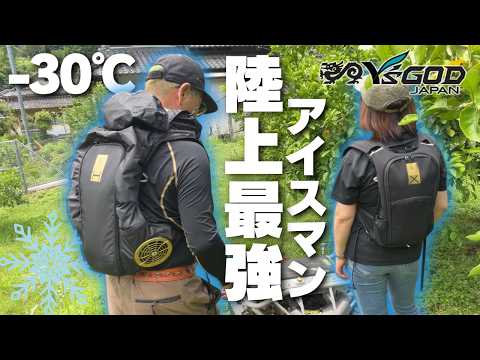
For a visual reference, here's a Japanese-language video showing the vest and its cooling mechanism in action. It's not in English, but the setup and cooling process are easy to follow just by watching:
Proven in Japanese Factories
This isn't a niche gadget — it's a vest that's actually being used on real factory floors and job sites in Japan, where summer heat and humidity rival anything you'll find in the southern U.S. That real-world adoption, rather than marketing claims, is what convinced me this is worth recommending.
Who This Vest Is Best For
- Construction workers on dusty or debris-heavy sites
- Welders and metal fabricators (where fan vests are a non-starter)
- Warehouse and factory workers doing long shifts in the heat
- Mechanics working in non-ventilated garages
- Anyone who has tried an ice-pack vest and found it doesn't last the day
Final Thoughts
This isn't the cheapest cooling vest you'll find, but it solves the two biggest problems with everything else on the market: short cooling duration and incompatibility with dusty work environments. We've shipped this exact model internationally before, so availability and shipping aren't a concern.
If you're on a job site where a fan vest just isn't practical, this is the one I'd point you toward.
Specifications
- ●Cooling Method: Water-circulation, Cell-Max wide-surface cooling sheet (no fan)
- ●Cold Water Duration: Approx. 4 hours (manufacturer internal testing at 35°C)
- ●Battery: 5,000mAh wireless battery, approx. 2.5 hr charge time
- ●Size: Free size (chest 80–115cm, roughly S–5XL)
- ●Weight (g): 800
- ●Outer Material: 100% Polyester
- ●Lining Material: 88% Nylon, 12% Polyurethane
- ●Cooling Fan: None
- ●Ice Pack Pocket: Yes
- ●Country of Manufacture: China (designed by Yamashin, Japan)
- ●Care: Machine washable
- ●Includes: Vest, wireless battery, insulated water bottle ("Monster Max"), ice pack, charging cable, manual
- Find other Yamashin cooling equipment:
- Workwear & Safety Gear > Heat Safety > Cooling Vests > Water-Circulation Cooling Vests
Note: For US buyers, import duties are included in the price. For buyers outside the US, import duties are not included in the price.