Tylecodon paniculatus SEEDS - SAMEN Butterbaum | Tylecodon paniculatus

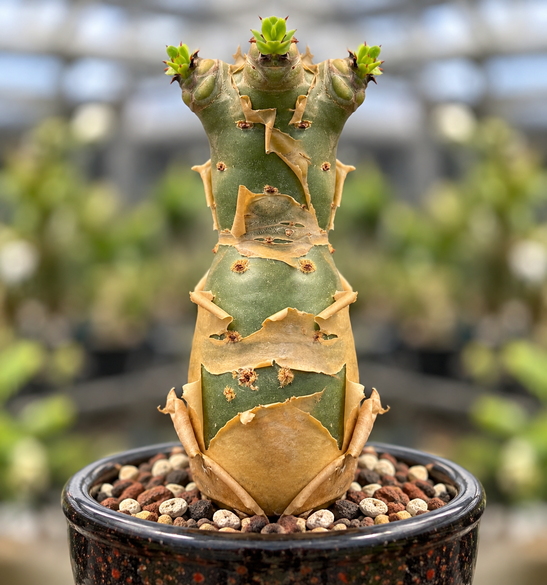
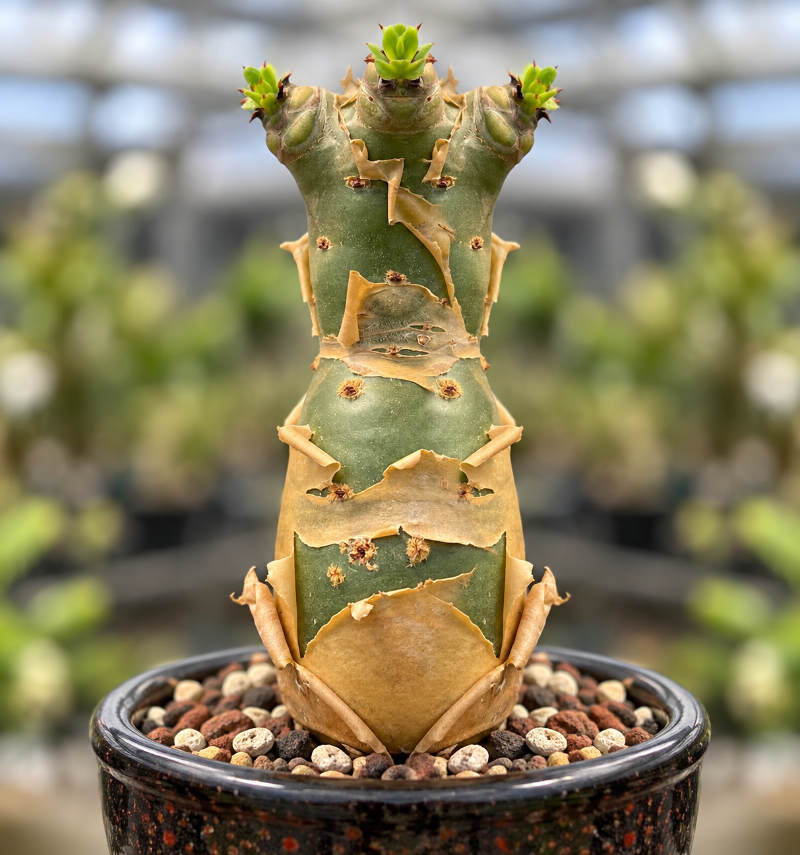
Tylecodon paniculatus seeds grow into the butter tree or candlewood — a slow-growing succulent shrub native to the desert and dry shrubland biome of South Africa and Namibia, growing in rocky Namaqualand, the Succulent Karoo and Little Karoo habitats. Originally described as Cotyledon paniculata by Linnaeus filius (L.f.) in Supplementum Plantarum (1782) and transferred to Tylecodon by Toelken (Helmut R. Toelken, 1938–2010). The epithet paniculatus means 'paniculate', referring to the large panicle of orange-red to red tubular flowers produced in summer when the plant is leafless. Produces a thick, fleshy, smooth-barked stem with a characteristic papery peeling outer skin; the leaves are large and fleshy but fall off completely in summer before the flowers appear — a classic example of summer-deciduous succulent behaviour. All parts are extremely toxic — contains bufadienolides (cardiac glycosides) that have caused livestock deaths in South Africa ('krimpsiekte'). Family Crassulaceae.Full sun; extremely well-drained rocky or sandy desert soils; dry summer dormancy (when leafless and flowering); very frost-sensitive. All parts EXTREMELY TOXIC to animals — do not plant in paddocks. 'Paniculatus' = paniculate; large panicle of orange-red flowers on leafless plant in summer Originally Cotyledon paniculata L.f. (1782); transferred by Toelken; peeling papery bark; summer-deciduous S. Africa and Namibia — desert or dry shrubland biome; Namaqualand, Succulent Karoo, Little Karoo ALL PARTS EXTREMELY TOXIC — bufadienolides; causes 'krimpsiekte' in livestock; cardiac glycosides Full sun; rocky desert soils; extremely drought-tolerant; frost-sensitive; Family Crassulaceae Tylecodon paniculatus is the butter tree — a slow-growing sculptural desert succulent from the rocky Karoo and Namaqualand whose summer flowering on a completely leafless stem, peeling papery bark and highly toxic cardiac glycosides make it one of the most dramatically unusual and dangerous-to-livestock plants of the South African desert flora. IMPORTANT: Pictures show the adult plant, which is not for sale. The offer is only for seeds.

Tylecodon paniculatus SEEDS - SAMEN Butterbaum | Tylecodon paniculatus

Tylecodon paniculatus seeds grow into the butter tree or candlewood — a slow-growing succulent shrub native to the desert and dry shrubland biome of South Africa and Namibia, growing in rocky Namaqualand, the Succulent Karoo and Little Karoo habitats. Originally described as Cotyledon paniculata by Linnaeus filius (L.f.) in Supplementum Plantarum (1782) and transferred to Tylecodon by Toelken (Helmut R. Toelken, 1938–2010). The epithet paniculatus means 'paniculate', referring to the large panicle of orange-red to red tubular flowers produced in summer when the plant is leafless. Produces a thick, fleshy, smooth-barked stem with a characteristic papery peeling outer skin; the leaves are large and fleshy but fall off completely in summer before the flowers appear — a classic example of summer-deciduous succulent behaviour. All parts are extremely toxic — contains bufadienolides (cardiac glycosides) that have causéd livestock deaths in South Africa ('krimpsiekte'). Family Crassulaceae.

Full sun; extremely well-drained rocky or sandy desert soils; dry summer dormancy (when leafless and flowering); very frost-sensitive. All parts EXTREMELY TOXIC to animals — do not plant in paddocks.

  • 'Paniculatus' = paniculate; large panicle of orange-red flowers on leafless plant in summer
  • Originally Cotyledon paniculata L.f. (1782); transferred by Toelken; peeling papery bark; summer-deciduous
  • S. Africa and Namibia — desert or dry shrubland biome; Namaqualand, Succulent Karoo, Little Karoo
  • ALL PARTS EXTREMELY TOXIC — bufadienolides; causes 'krimpsiekte' in livestock; cardiac glycosides
  • Full sun; rocky desert soils; extremely drought-tolerant; frost-sensitive; Family Crassulaceae

Tylecodon paniculatus is the butter tree — a slow-growing sculptural desert succulent from the rocky Karoo and Namaqualand whose summer flowering on a completely leafless stem, peeling papery bark and highly toxic cardiac glycosides make it one of the most dramatically unusual and dangerous-to-livestock plants of the South African desert flora.


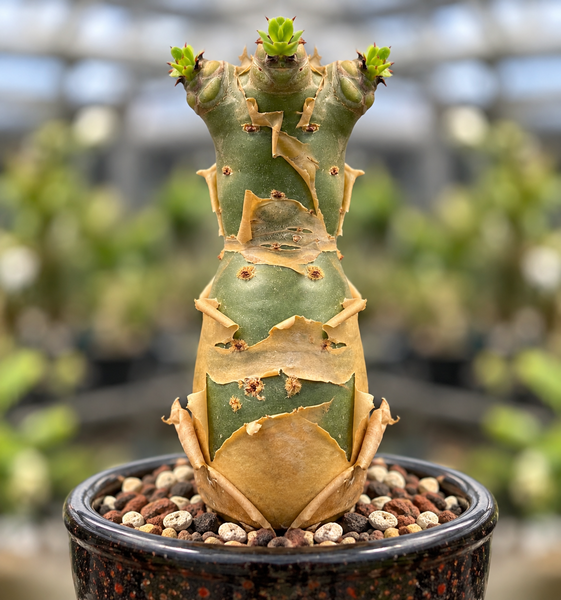
IMPORTANT: Pictures show the adult plant, which is not for sale. The offer is only for seeds.


Disclaimers and important info

Plants: Pictures Keep on mind that the plant may have grown since pictured.
Plants: Seasonality Be aware that most plants change across seasons. If present foliage could have been fallen or change in its color.
Plants: Shipment Plants will be sent bare roots and with no soil.
Plants: Phytosanitary Certificates A phytosanitary certificate (for additional costs of 20,00 EURO) is necessary for export plants from Italy to ALL destinations out of EUROPEAN COMMUNITY. Among which: United Kingdom Turkey, South America, USA, Canada, Australia, Japan, Singapore, Philippines, South Korea, Thailand, etcetera. You can buy it in our eBay store. 1 single certificate can cover several plants purchase that are sent together in same shipment. If you will not buy the certificate and the plants, we will not be responsible for any capture by customs of destination.
Plants: Recognition and Nomenclature Plants nomenclature has been done at our best knowledge, please see picture to see the product.
Seeds: Legal Purchases We ship worldwide but please be sure that the seeds are legal in your country. We will not accept any claims in case the seeds are confiscated by your local authorities
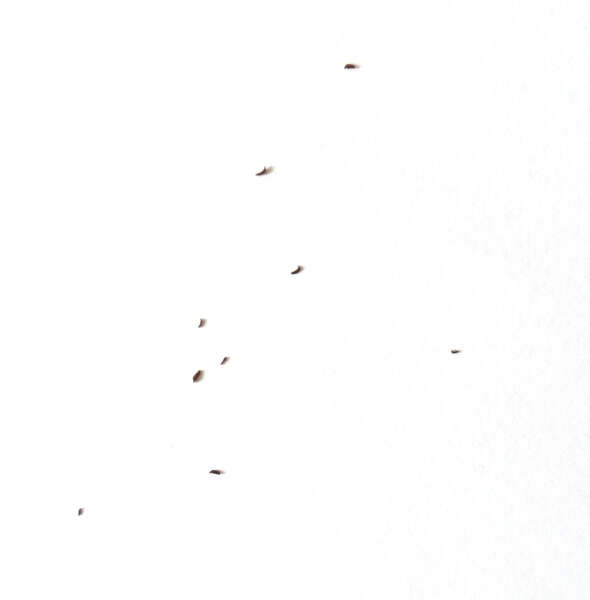
Seeds: Shipment Seeds are clean and each species is handled in a transparent small bag. Latin names of nomenclature are indicated in each bag of seeds.

Additional Pictures


Postage info

Click the Postage tab above the listing description for more info

Click the Postage tab above the listing description for more info!

Additional delivery notes

PICK UP OPTION

Sorry, our items are NOT available for pick-up.

PAYING VIA PAYPAL


We accept PayPal on our all our items so you can shop with confidence.

Simple choose the PayPal option when proceeding through the checkout.

Additional Information

No additional information at this time

Ask seller a question

To contact our Customer Service Team, simply click the button here and our Customer Service team will be happy to assist.

Ask seller a question

© Botanical Archive

Click the Postage tab above the listing description for more info

Accepted Payment Methods

  • PayPal

Returns are accepted

Items must be returned within 14 days of the auction ending

Buyer will pay for return shipping.