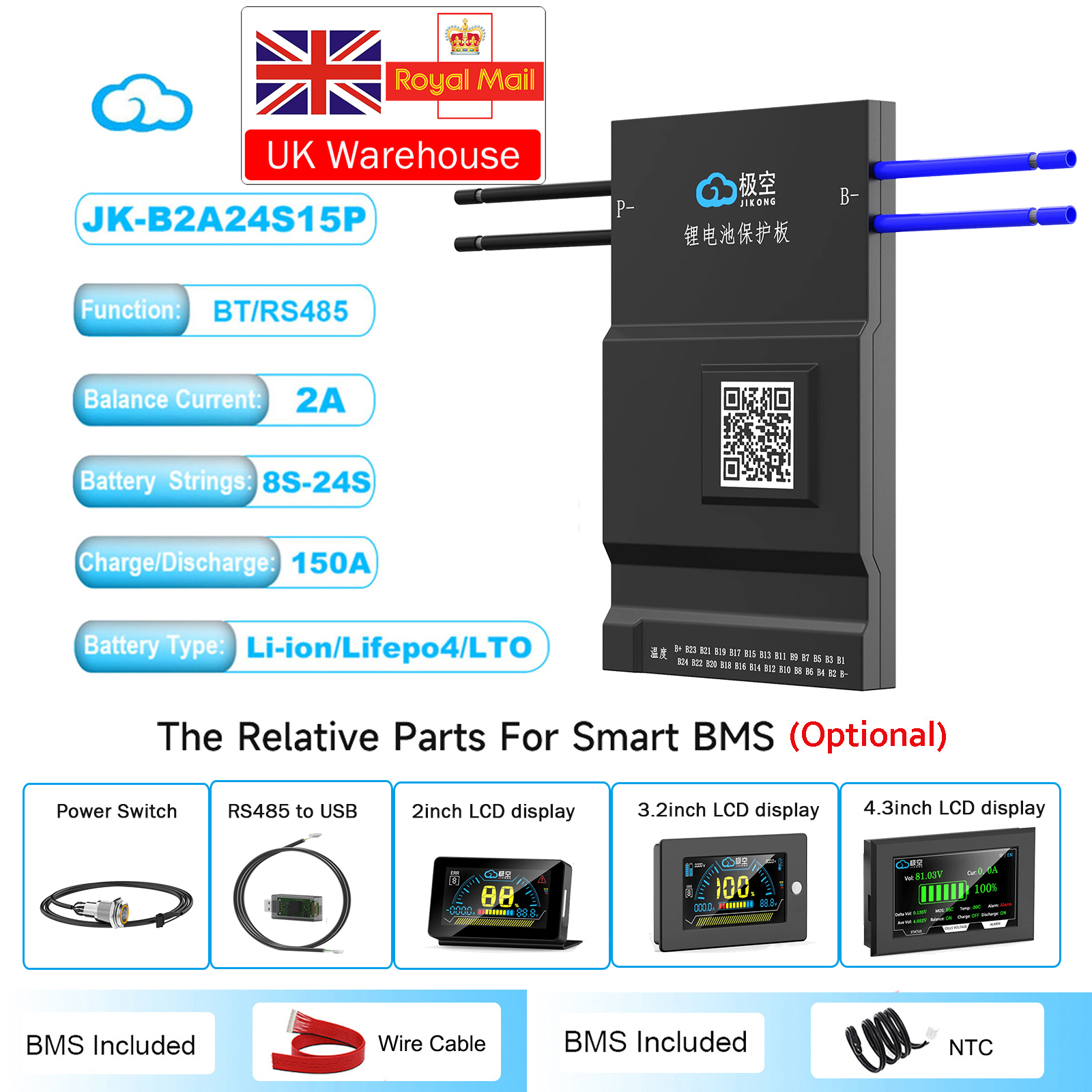




B2A24S-15P
Lifepo4 range:7~24S
Li-ion range: 8~24S
LTO range: 12S ~24S
Single cell voltage: 1~5 V
acquisition accuracy : ±5 mV
Continuous discharge: 150A
Max discharge: 300A
Balance mode: active
Balance current: 2 A
Main circuit conduction : 0.5mQ
Overcharge protection voltage : 1.2V-4.25V adjustable
Overcharge release: 1.2V-4.25V V adjustable
Charging overcurrent / protection (adjustable) : 10 ~150 A
Charging overcurent release time : 2~120S adjustable
Over discharge protection : 1.2V-4.25V adjustable
Over discharge recovery voltage : 1.2V-4.25V adjustable
Discharge overcurrent protection (adjustable) : 10~150 A
Discharge overcurrent release time : 2~120S adjustable
Temperature protection: yes
Short circuit protection: yes
Coulomb counter: Yes
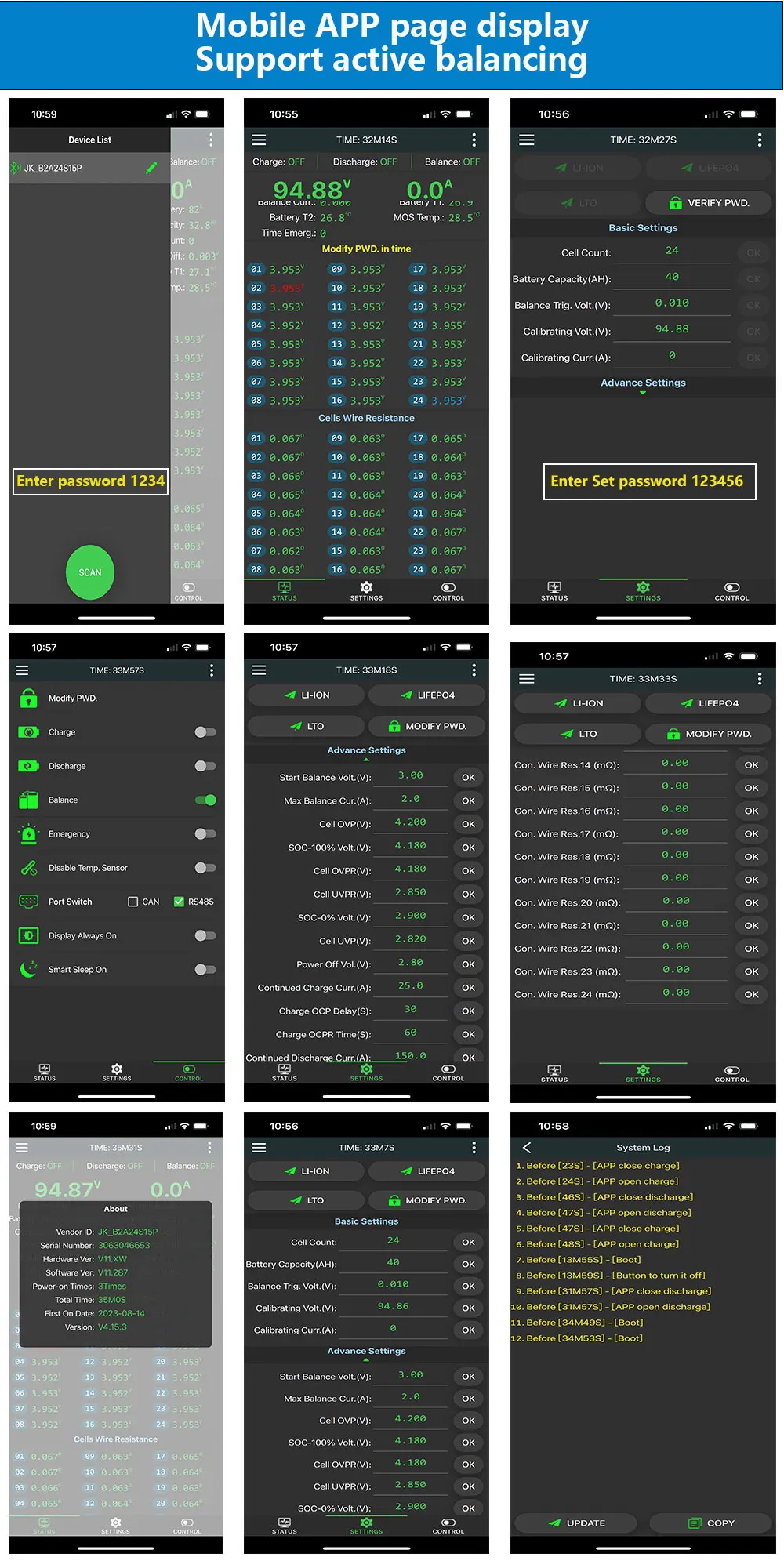
Bluetooth function : support for android / ios iphone
Other port : RS485/CAN , need to contact us for custom made
temperature: -20~70℃
Power requirements: 24V ~ 100V, can be powered by battery or external power supply
Power dissipation: balanced: 10mA and 100V, unbalanced: 6mA and 100V
BMS Package includes:
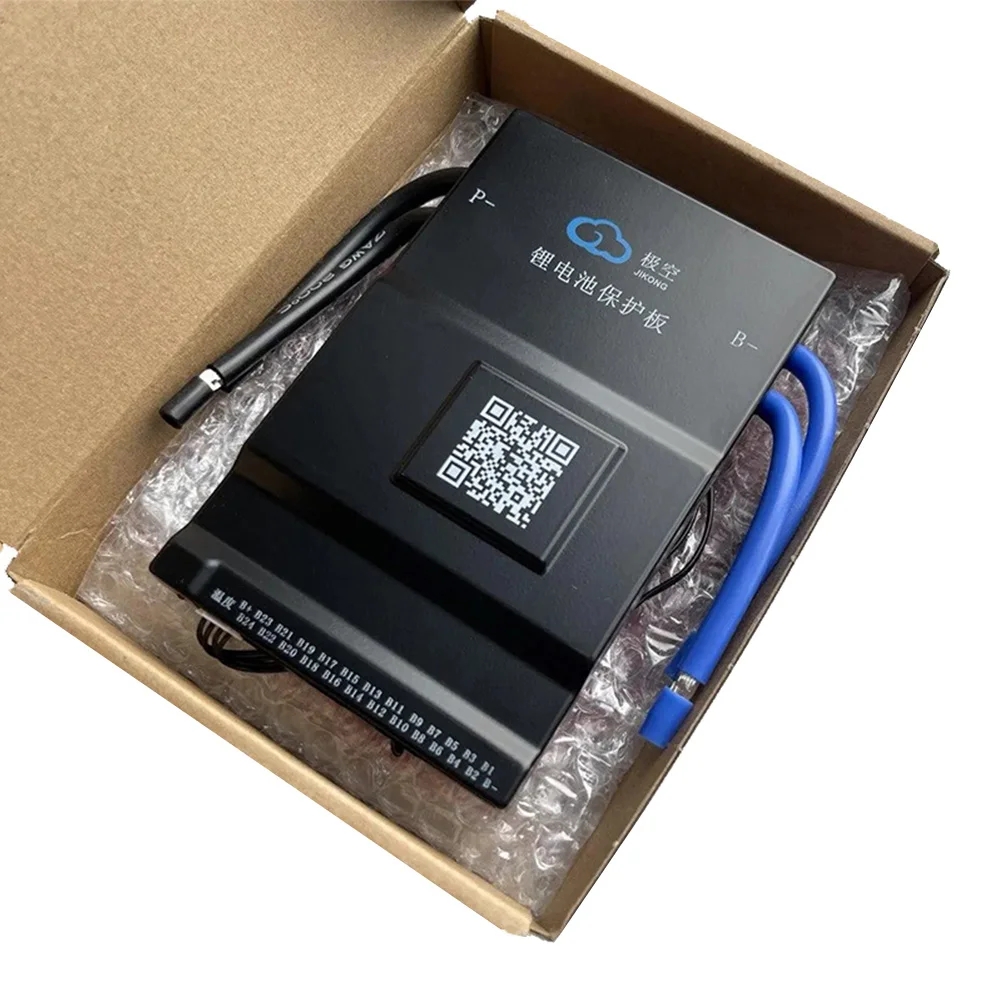
1*JK smart bms (Built-in Bluetooth)
1*Cable
1*Temperature Sensor
Other Accessories:(optional)
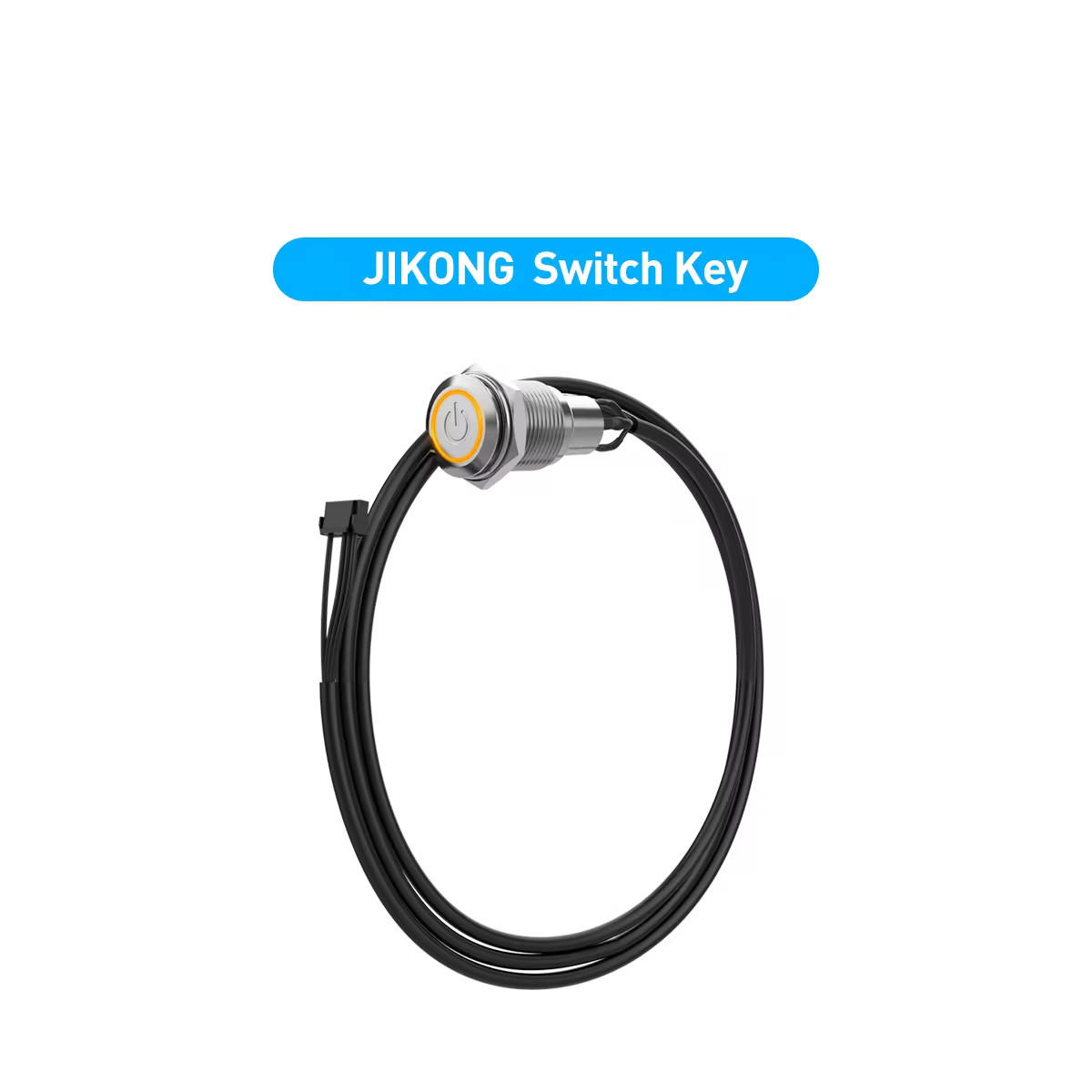
1*Power switch (optional)
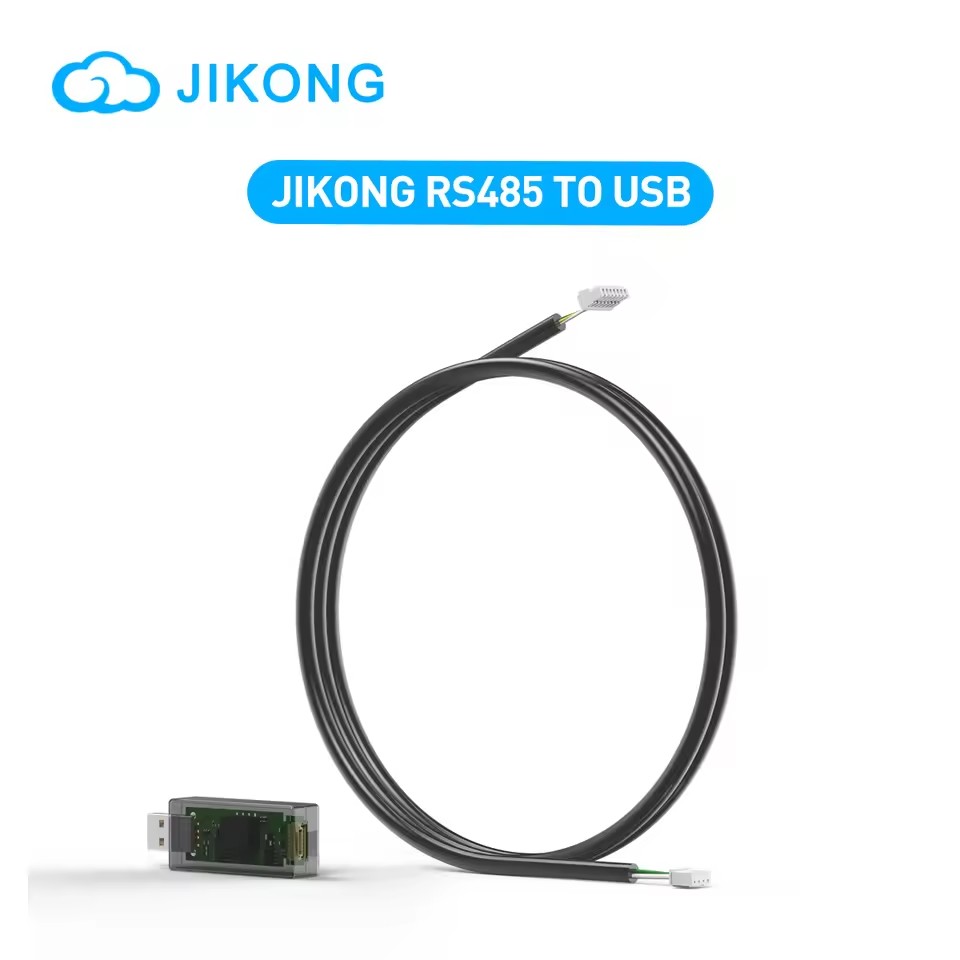
1*RS485 to USB Cable (optional)
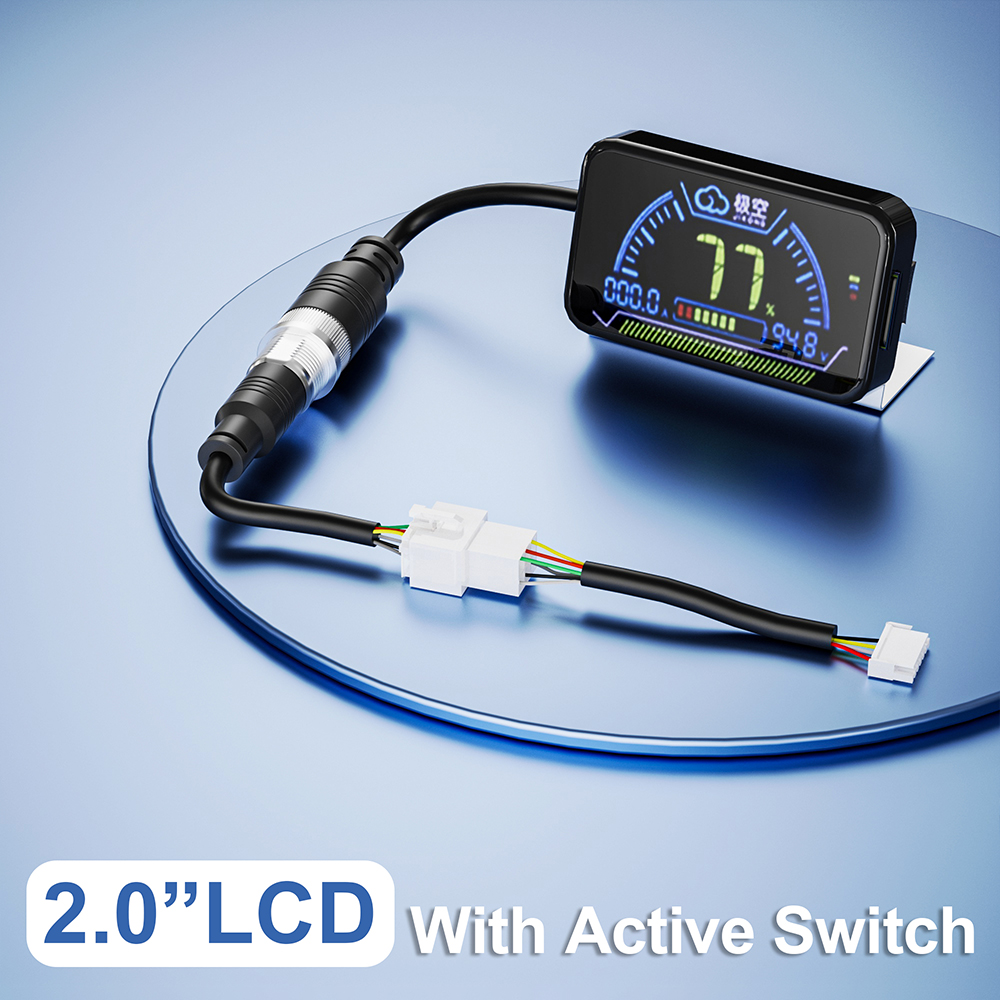
1*2inch LCD display (optional)
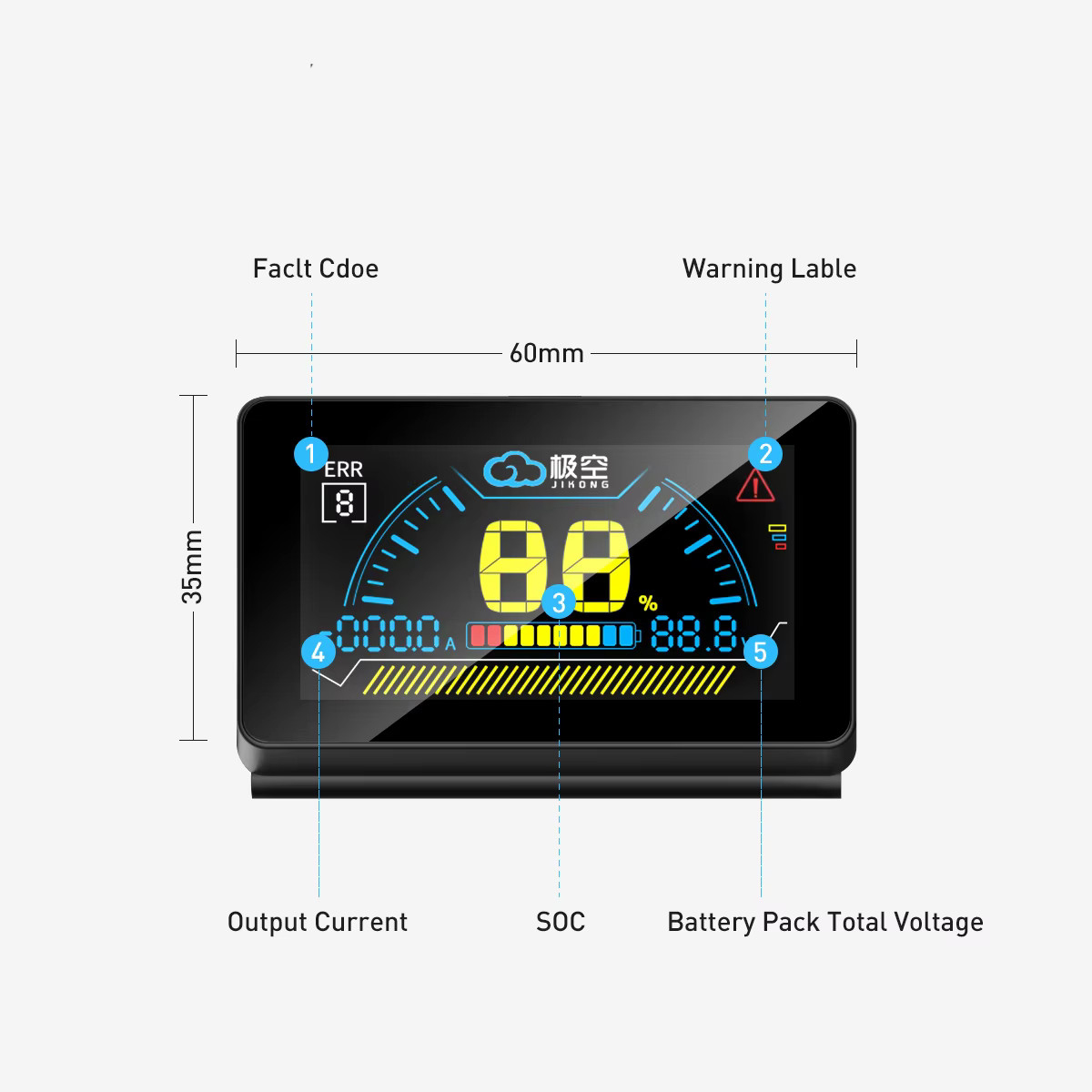
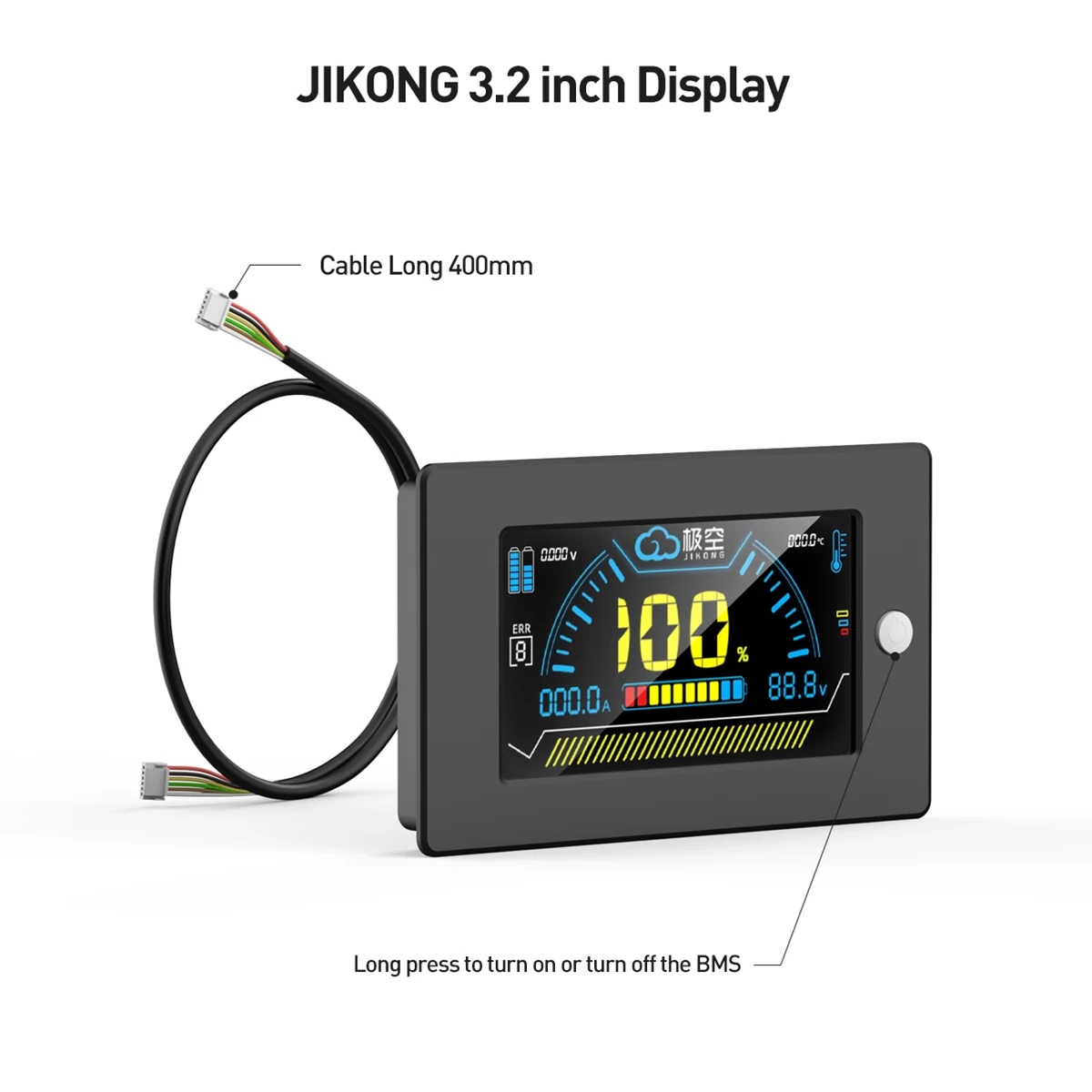
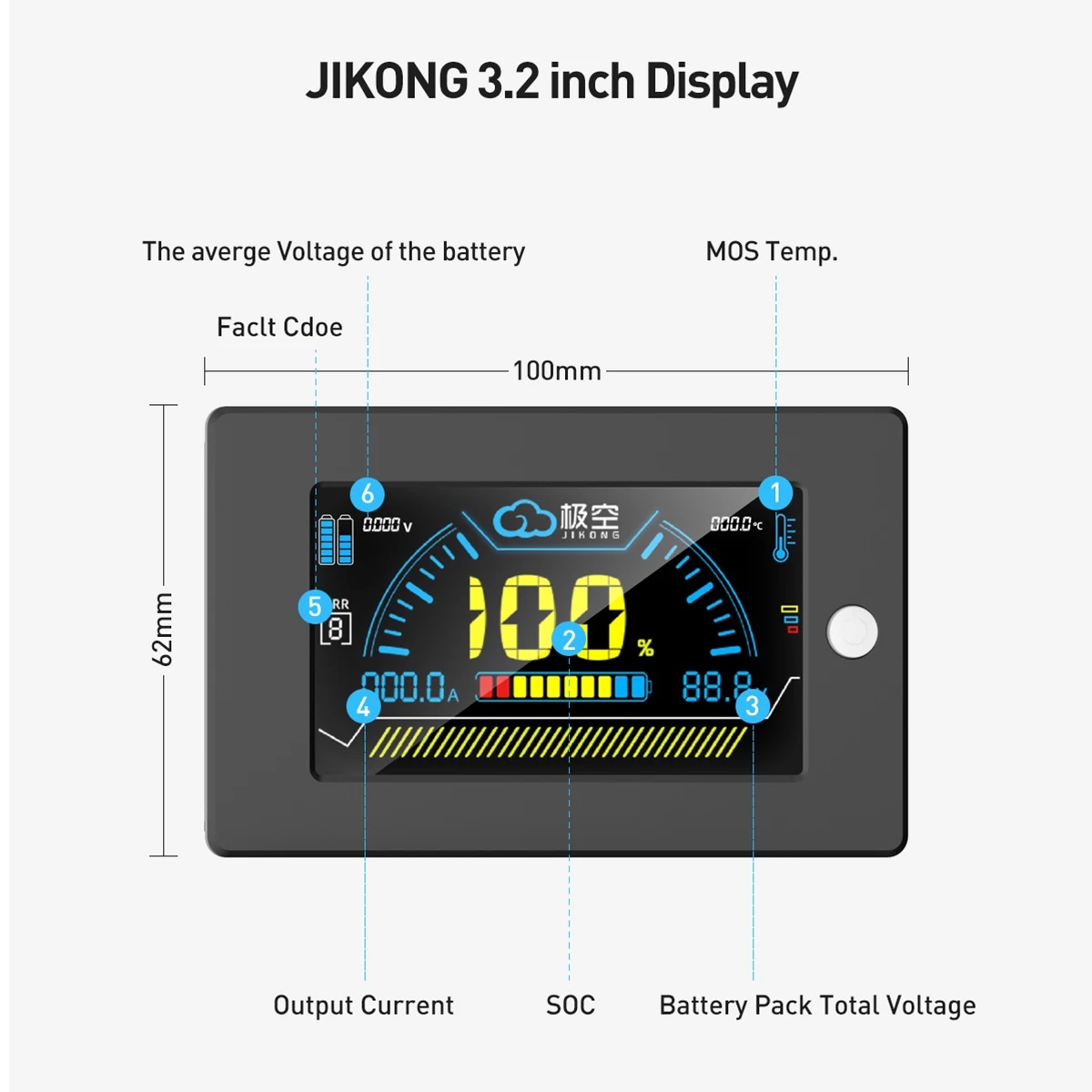
1*3.2inch LCD display (optional)
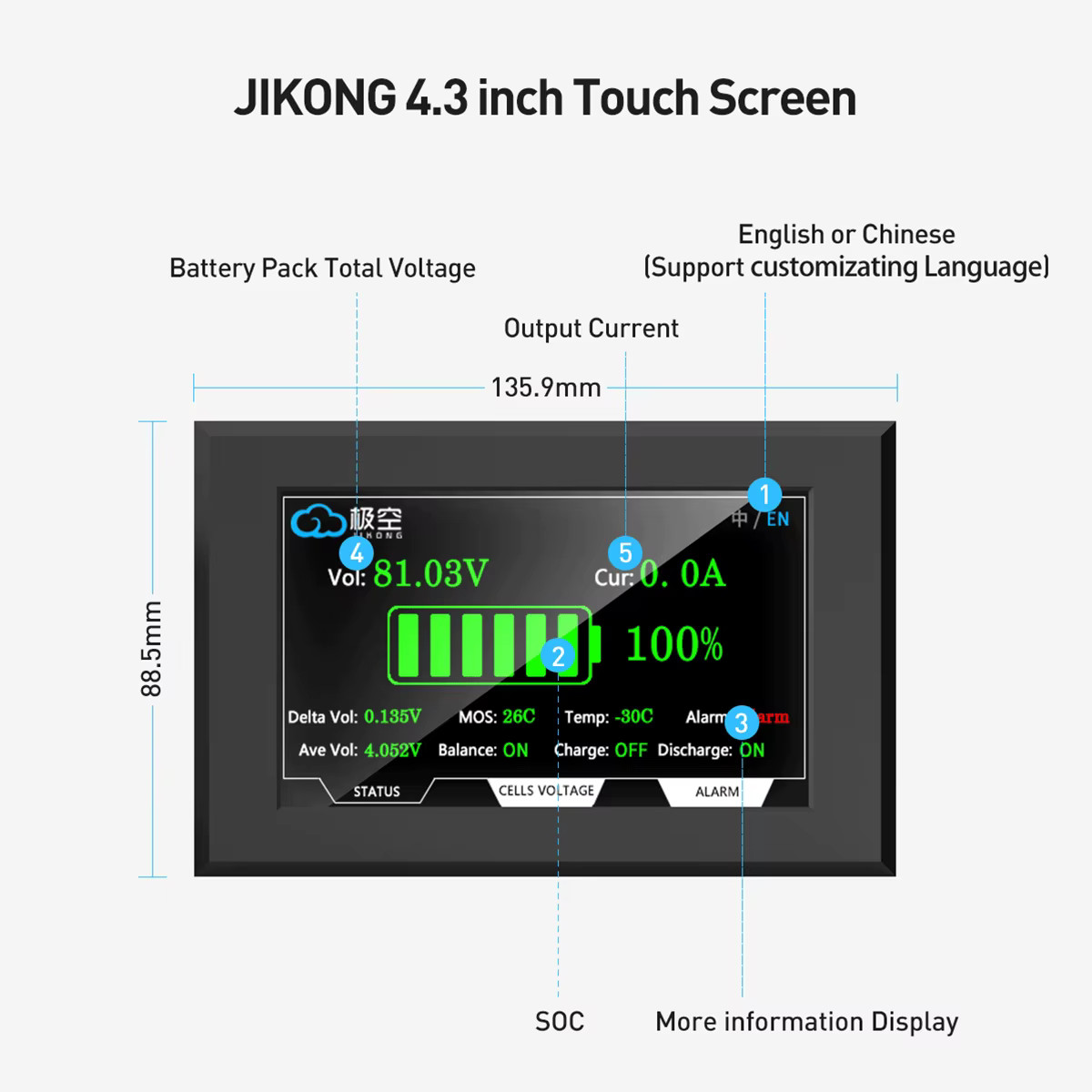
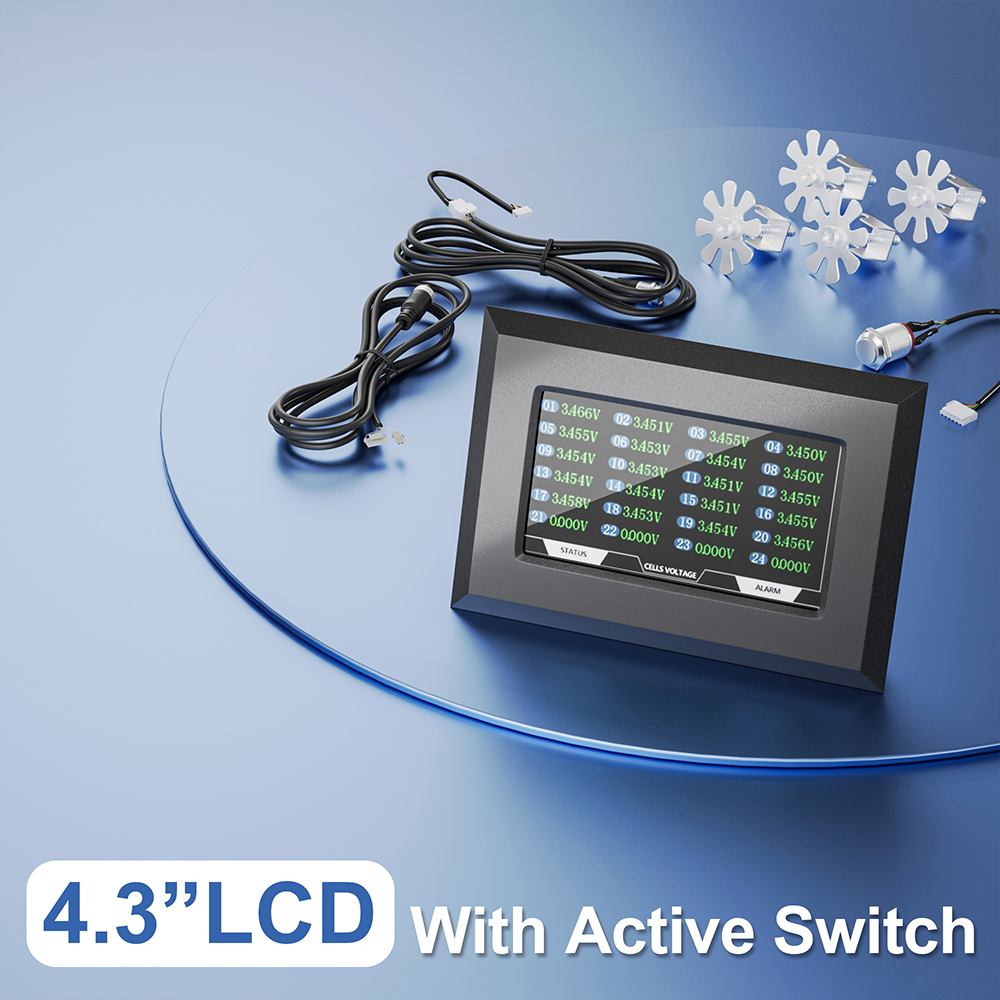
1*4.3inch LCD display (optional)
FAQ:
No power on
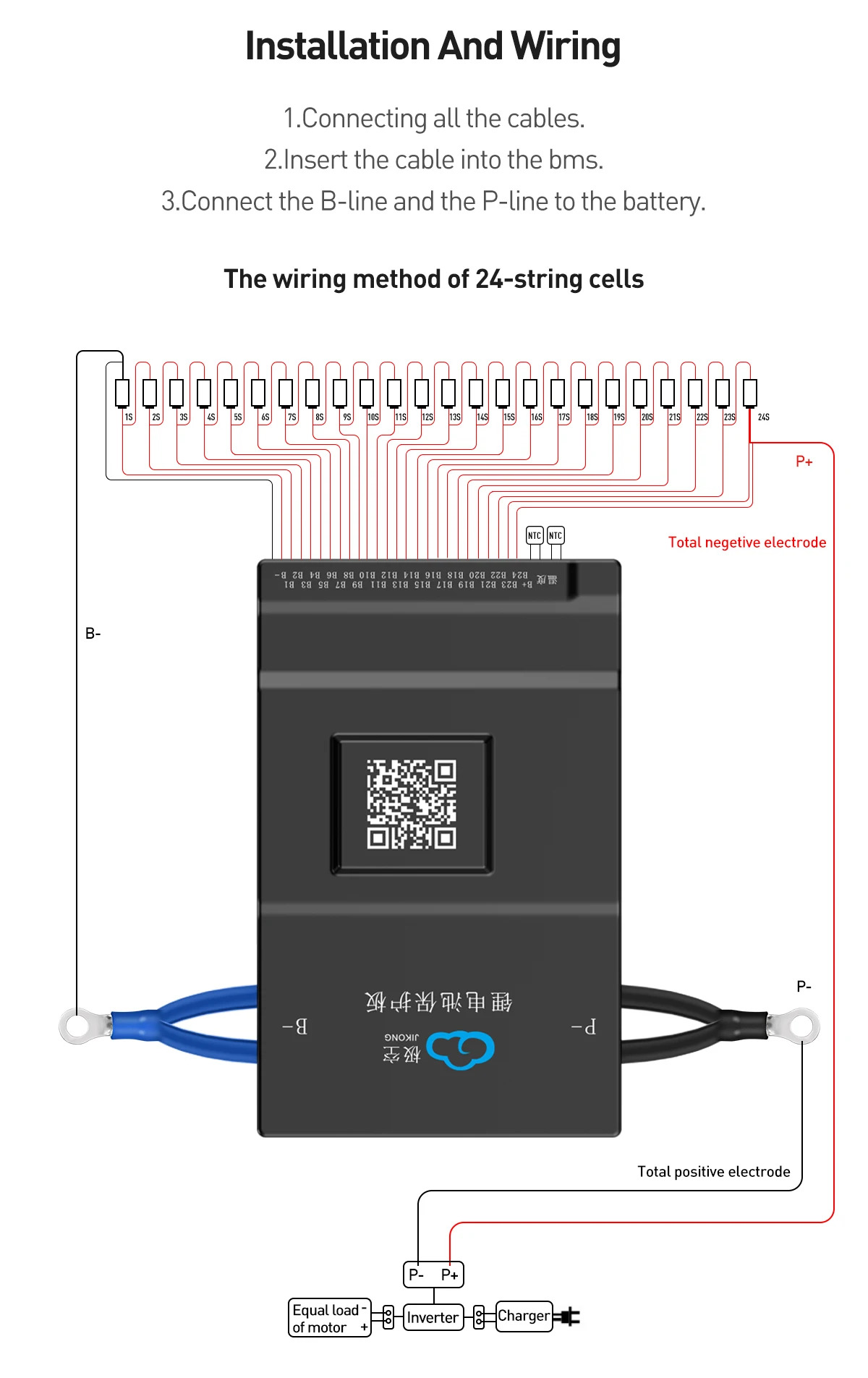
1. Ensure that the last "B +" line has been connected to the battery total positive pole.
2. Charge activation, make sure the charger voltage is more than 4V above the battery
pack voltage to activate.
3. Check whether the charger has voltage output.
voltage inaccuracy
Measure the actual total voltage of the battery pack with a multimeter, and fill in the actual
total voltage into the "Voltage Calibration" in the parameter setting page.
The current is not allowed
1. BMS B- and P- are two 7AWG wires, both need to be connected in parallel, otherwise it will
lead to current error.
2. Use a clamp meter to measure the actual current of the battery pack, fill in the actual current into
the parameter setting page "current calibration" inside; the larger the actual current, the higher
the calibration accuracy.
Capacity is not allowed
The first step, first set the battery capacity, the battery was how much, set how much capacity can
be set slightly larger, for example, the battery capacity of 100AH, can be set to 120AH or 150AH.
The second step, through the electric instrument to the battery discharge, the battery discharge,
put the protection board prompts the single under voltage protection.
The third step is to charge the battery, don't interrupt when charging, and keep charging until the
BMS prompts the single-unit over-voltage protection.
After doing the above steps, the capacity will be automatically updated, APP battery capacity
shown is the actual capacity of the battery, this time the SOC is also accurate, all the capacity-
related are accurate.
The number of designed strings does not match the actual number of strings
1. Check the parameter settings inside the "number of single unit" is set correctly.
2. If there is no voltage in the middle of a 2S or more strings, check whether the collection line is off.

