- FURNITURE
- SEATS
- LIGHTING / CANDLE HOLDERS
- TABLE ART
- PORCELAIN EARTHENWARE
- SILVERWARE
- MIRRORS / FRAMES
- SCULPTURES
- PAINTINGS / GRAPHIC ARTS
- WATCHMAKING
- ANTIQUE JEWELRY
- GLASSWARE / CRYSTALWARE
- RELIGIOUS OBJECTS
- DISPLAY OBJECTS
- COLLECTIBLES
- ASIAN OBJECTS
- MAGHREB OBJECTS
- ARCHITECTURE

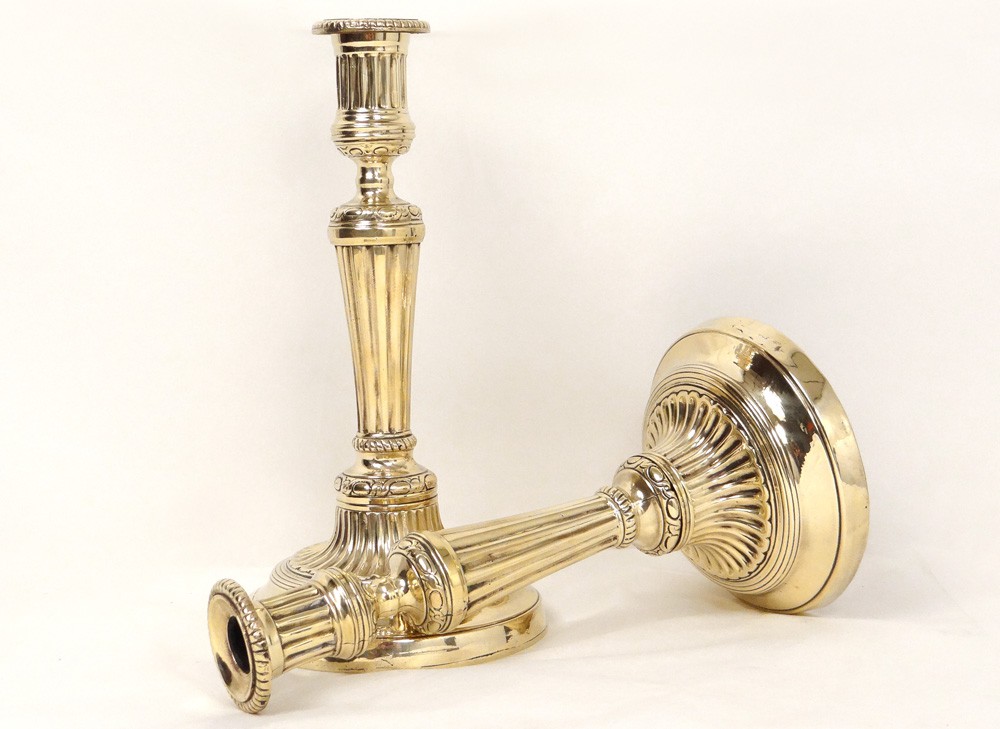
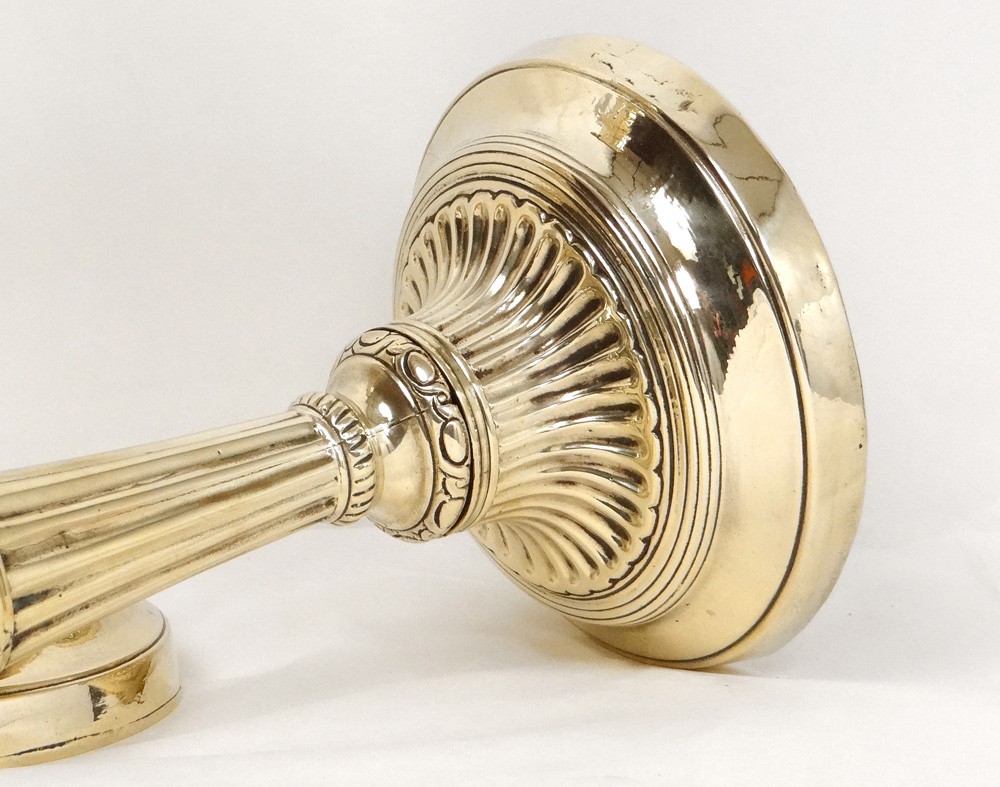
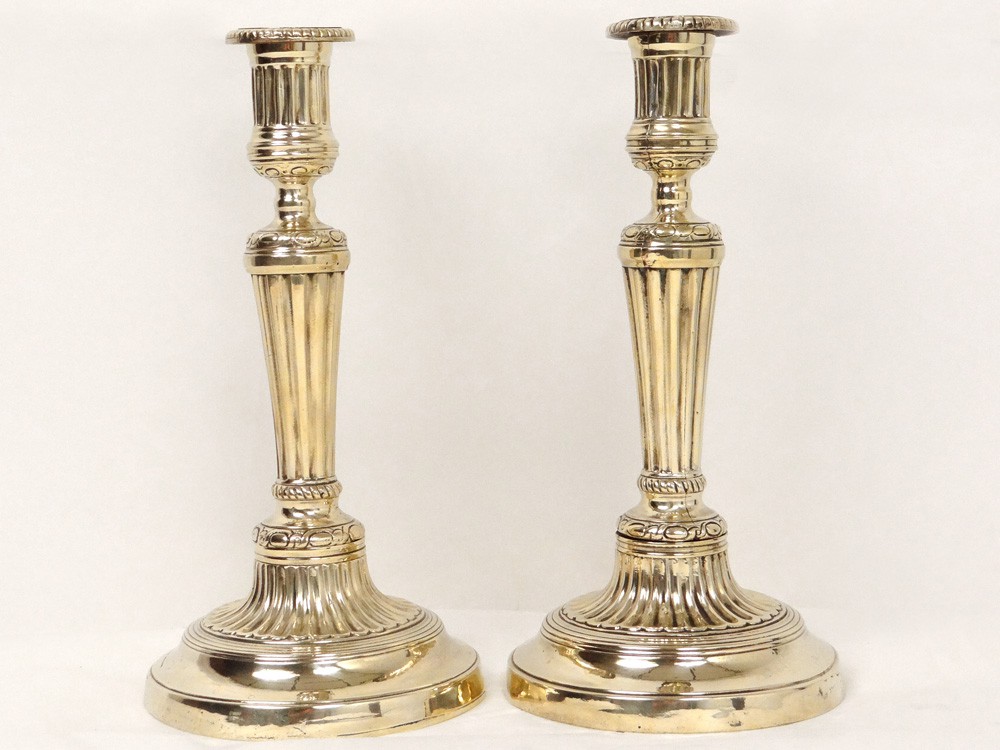
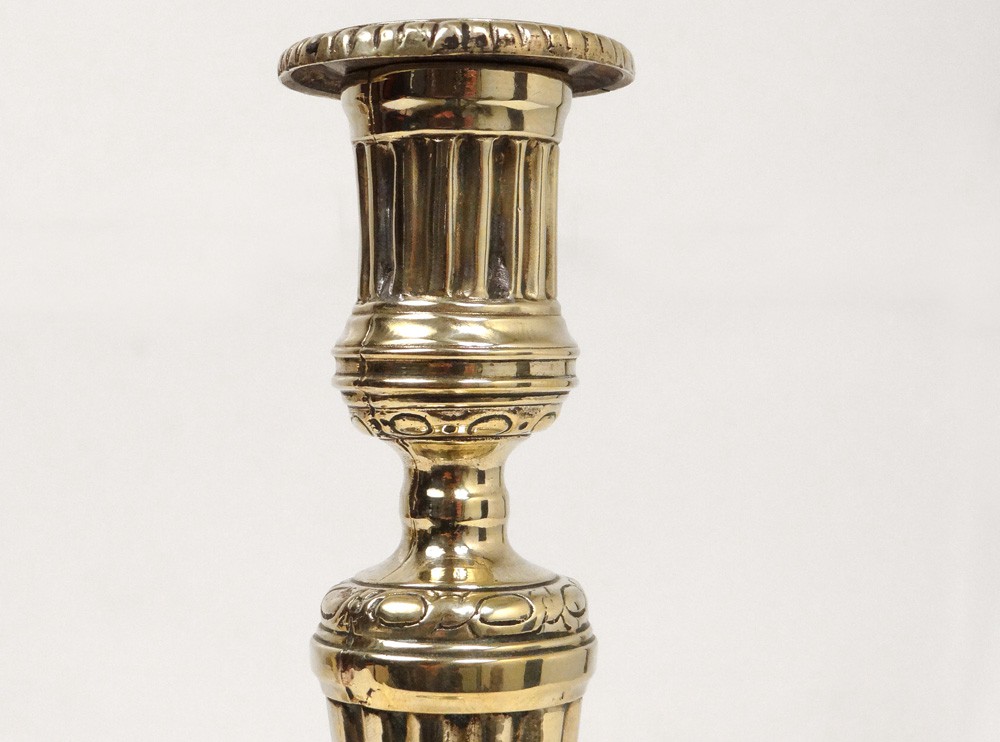
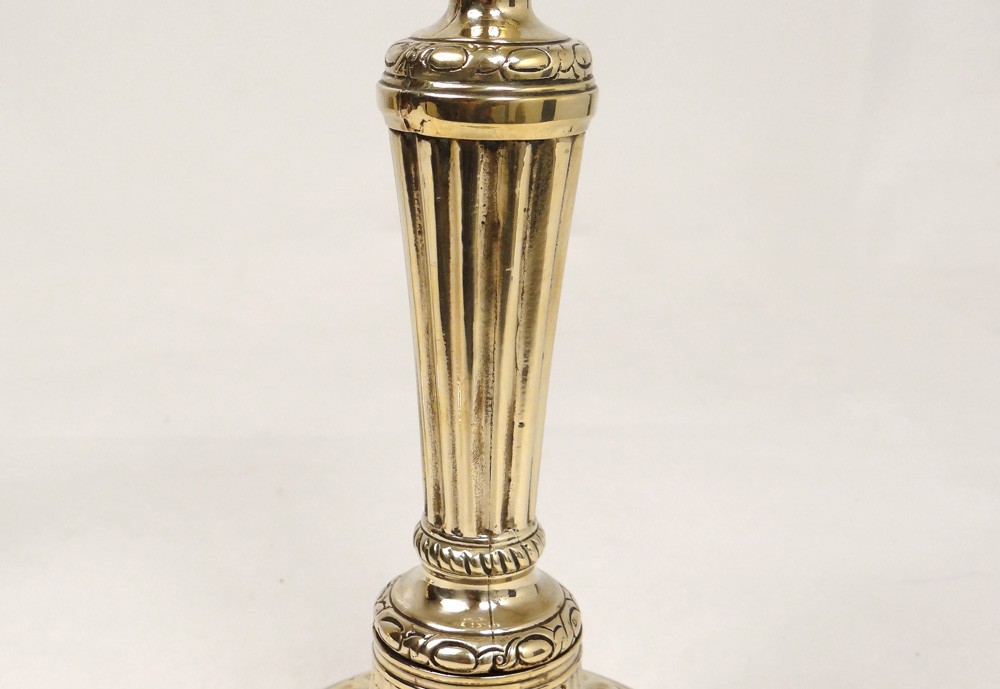
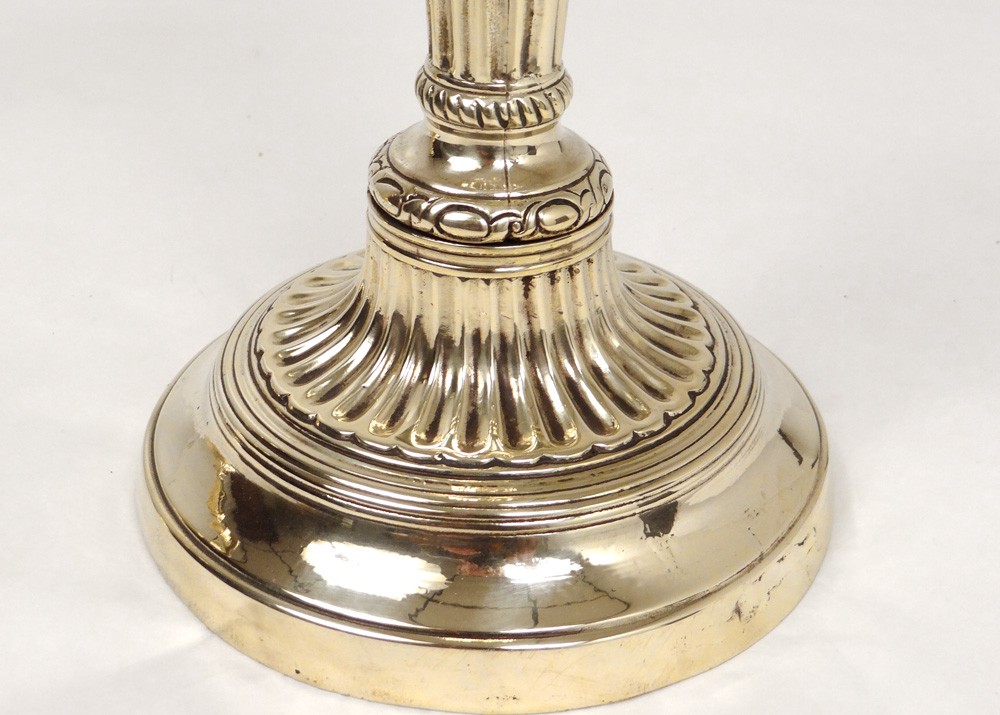
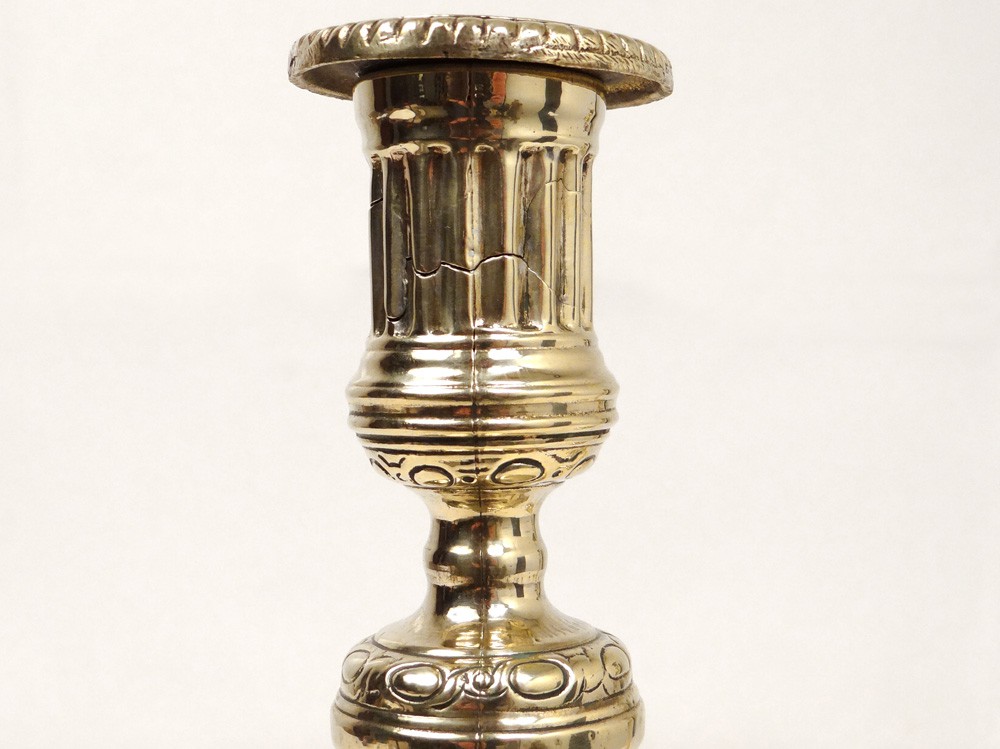
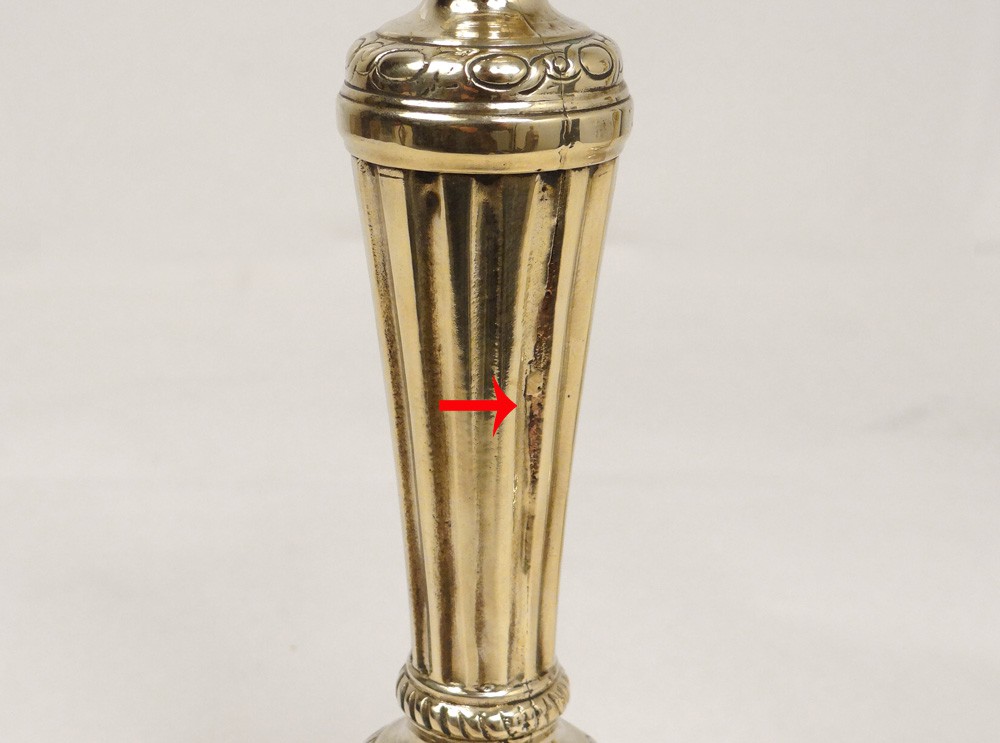
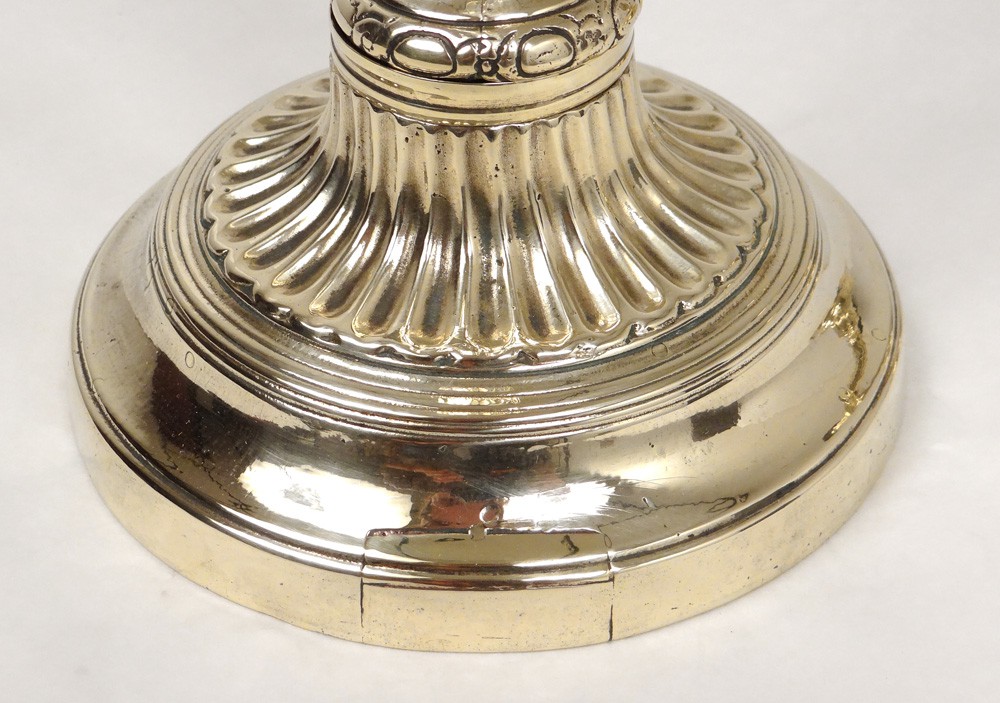
Very pretty pair of Louis XVI candlesticks in gilded bronze, fluted socket, conical and fluted shaft, mounted on a round base decorated with pleats, from the 18th century.
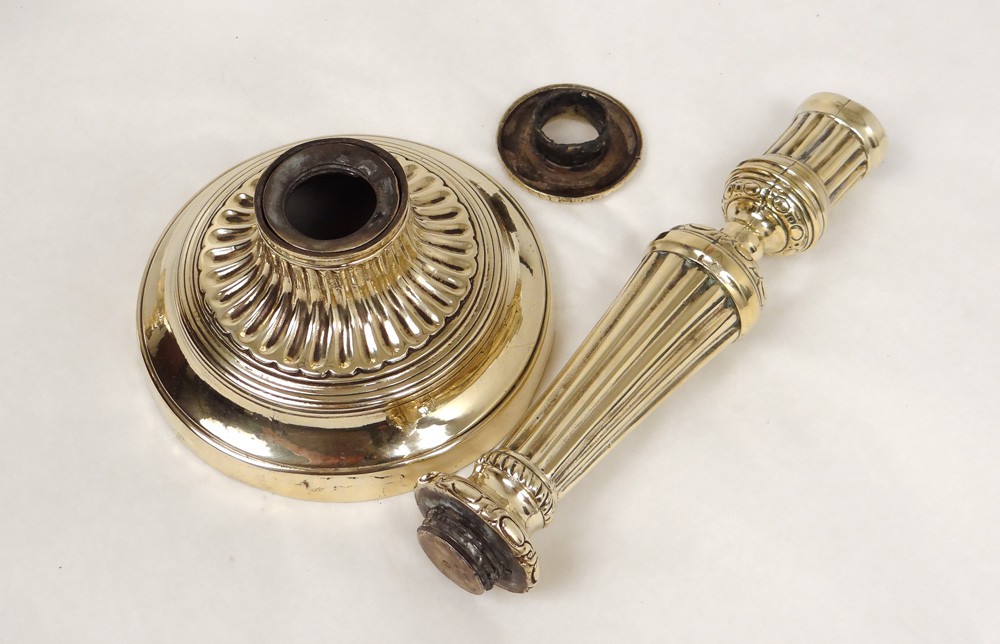
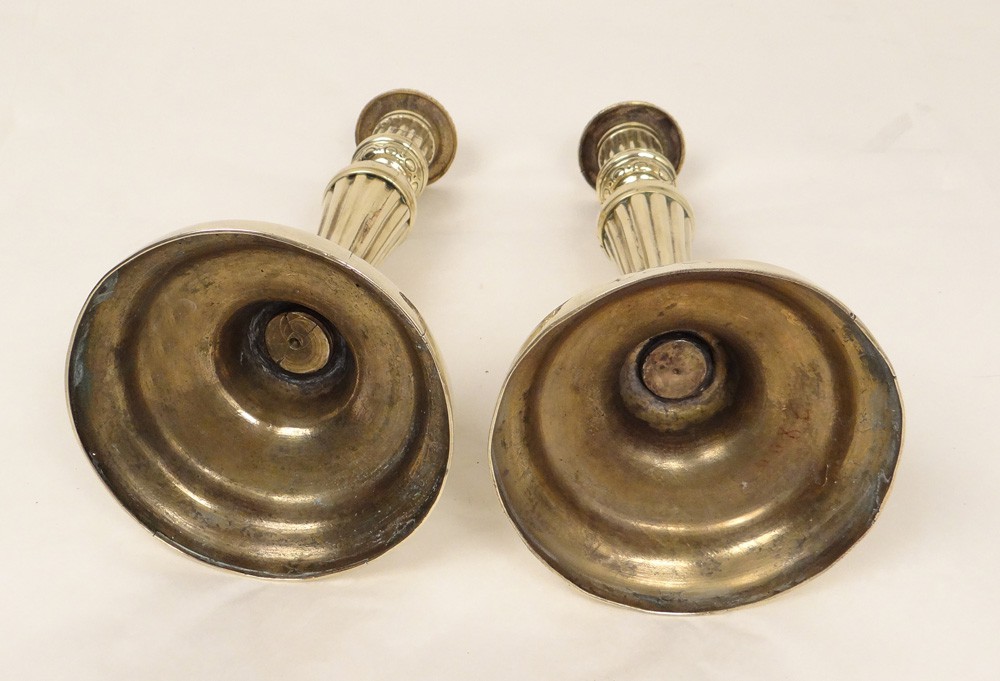
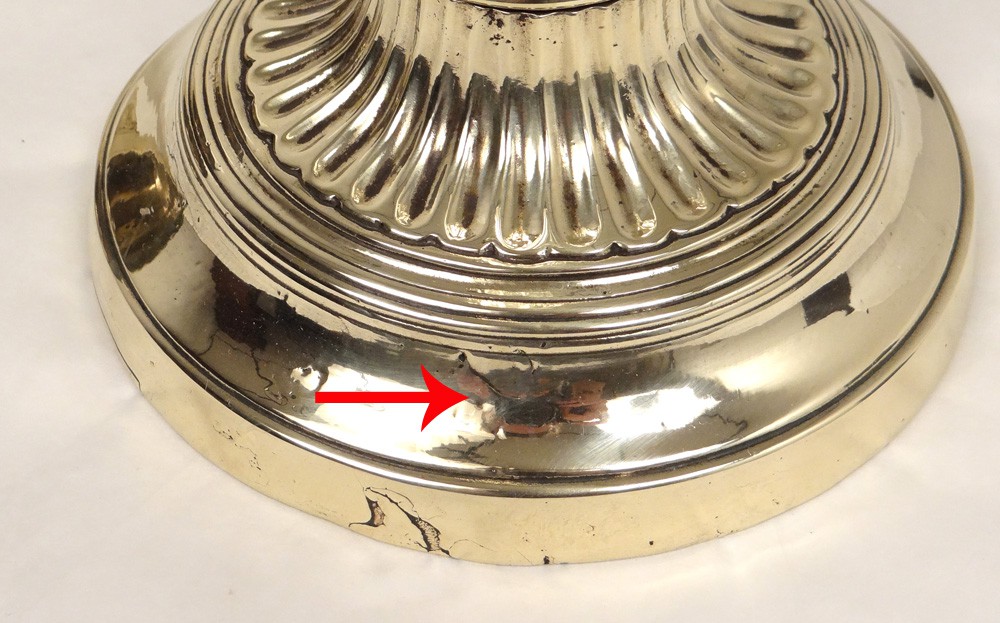
These candlesticks are in good general condition, they have been restored.
Please note: traces of restorations, wear and tear, see photos (red arrows).
* THE candlestick Or torch became synonymous with candlestick, then more precisely a single-light table or fireplace candlestick. Generally arranged in pairs, the candlesticks are made up of three parts made of silver, bronze or silver-plated metal and which screw into each other: the foot, the barrel and the binet. At 17th century, the torches have a fluted barrel, quite short and square in section, resting on a large square or canted base. Their silhouette is not very elegant but they are stable.
At the beginning of 18th century, the candle holder adopts the slender shape that has become familiar to us: baluster barrel with sides, slightly pyramidal octagonal base, topped with an inverted tulip bulge. The classic canted torch was manufactured until the end of the century. A society in love with refinement, however, prefers more refined ornamentation: twisted ribs on the base, friezes of eggs, gadroons, cartouches, hooks and rocailles strewn on the shaft and the binet, garlands of flowers; other candle holders are decorated withLoves, extraordinary rockeries, caryatids.
Under theEmpire THE truncated barrel on a circular basis and the flared tulip binet brutally replace the baluster silhouette, the whole is enhanced with a light palmette frieze. After the Restoration, the silver or bronze torch returns to its previous forms. But it loses its utilitarian role and becomes a simple extra, on either side of the fireplace.
Remarkable pieces have also been made in several European countries by the greatest goldsmiths and are considered masterpieces (for example, France: Meissonnier, Ballin, Gouel, Besnier, Roettiers, de Lamerie, Lenhendrick, / Holland: Wolff, Van der Torn, Mouritz, / England: Smythier, Denny, Margas, Willaume, Lowes, Liger, Nelme, Crespin, Heming, Gould, Pantin , Sprimont, Wickes, / Germany: Feindt, Pepfenhauser, Speltz).
Diameter : foot 14.6 cm
Height : 29cm
Reference : 300 79