

Repetitive Transcranial Magnetic Stimulation
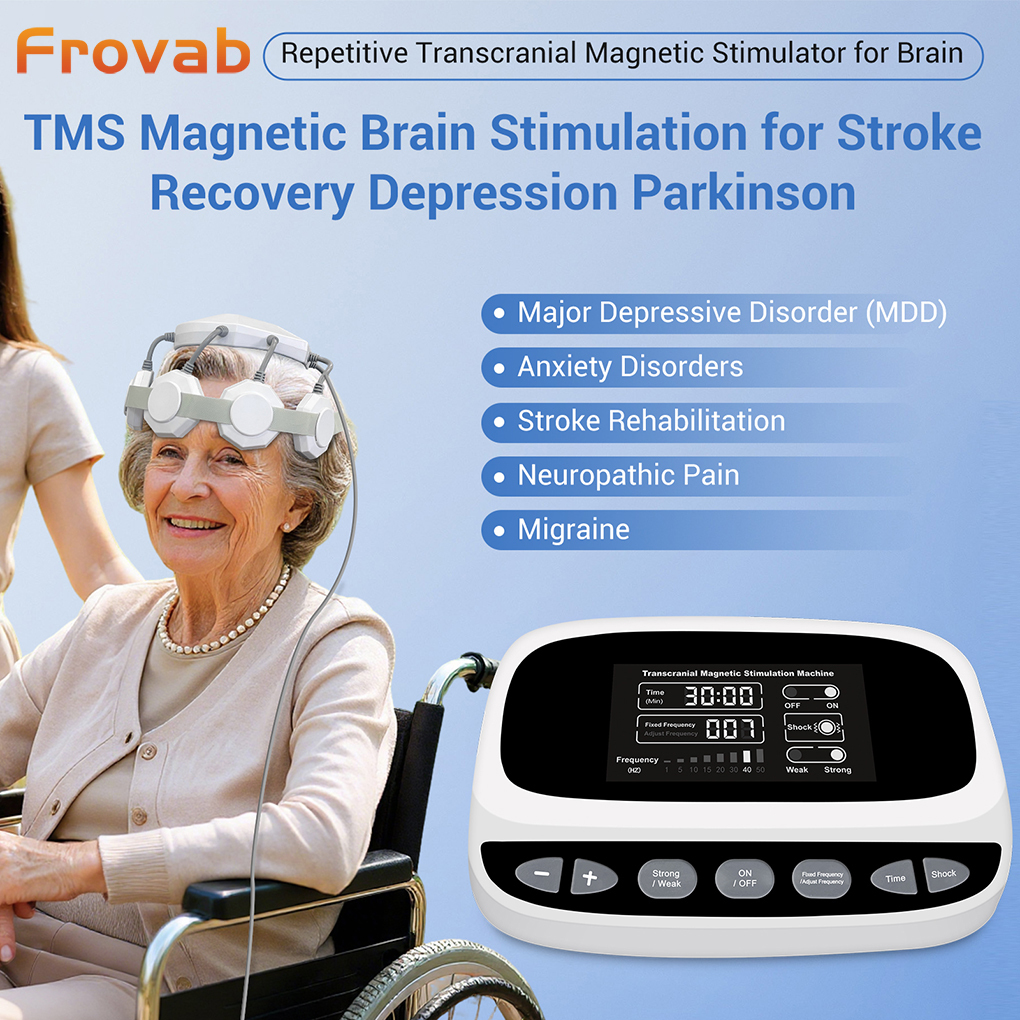
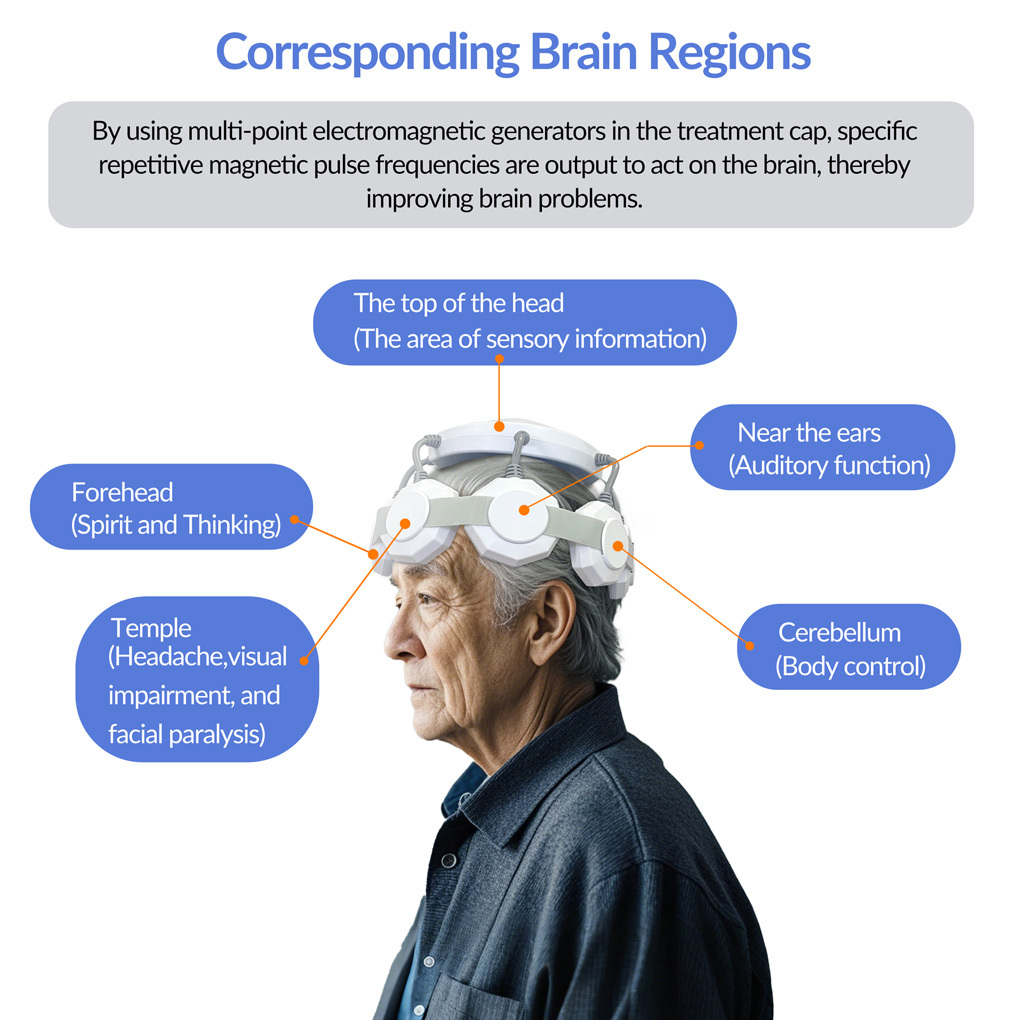
rTMS is a non-invasive brain stimulation technique that uses magnetic fields to influence brain activity. Transcranial Magnetic Stimulation Therapeutic Instrument is a kind of therapeutic equipment for brain diseases developed by using the push-button control mode, based on the brain physiology, biophysics and clinical encephalopathy therapy, integrating repeated transcranial magnetic stimulation (rTMS) and electric stimulation theory, and applying.
Principle of TMS Treatment
The rTMS machine generates rapidly changing magnetic fields through a coil placed on the scalp, which induces electrical currents in targeted areas of the brain. These electrical currents modify neuronal activity, either stimulating or inhibiting brain regions depending on the frequency and intensity of the magnetic pulses. Tests have proved that the use of transmagnetic therapy can expand cerebral blood vessels and promote blood circulation; on the damaged brain cells can play a role in promoting metabolism, enhance its repair ability: interference and inhibition of abnormal cerebral electricity, cerebral magnetism and propagation of the occurrence.
Application of Transcranial Magnetic Stimulation Therapy
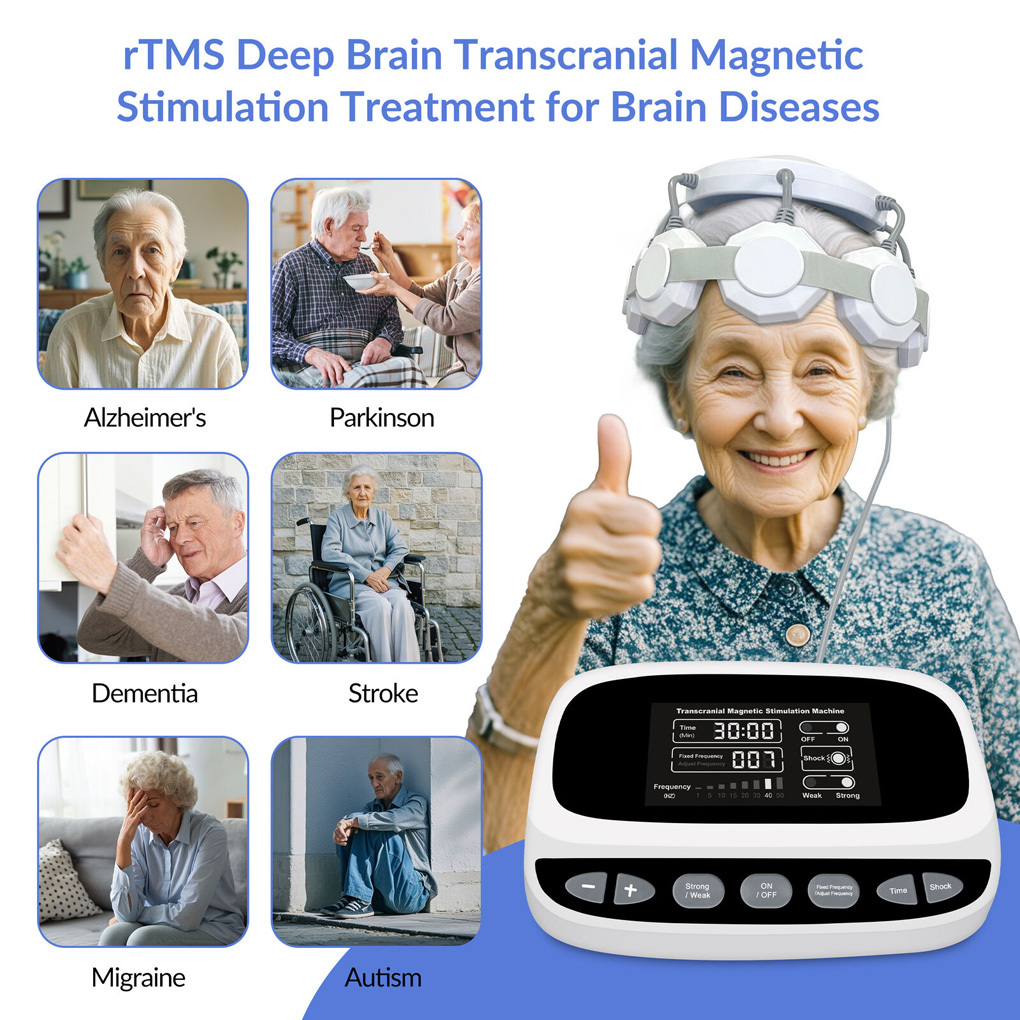
rTMS treatment is a painless, non-invasive, and no side effect treatment method. 1, treat Alzheimer Stroke disease; 2, Treat motor diseases(e.g., Parkinson's disease); 3, Alleviate psychiatric diseases, such as depression, anxiety; 4, Relieve chronic neuropathic Pain; 5, Improve amyotrophic lateral sclerosis, multiple sclerosis; 6, Improve disorders of consciousness (e.g., vegetative state or minimally conscious state).
Multi-functions of rTMS Therapy
Transcranial Magnetic Treatment has 8 fixed frequency modes: 1/5/10/15/20/30/40/50Hz, adjustable; Transmagnetic stimulation therapy has 11 frequency conversion modes to choose from; Magnetic field strength of transcranial therapy can be optional: strong(11mT-19mT), weak(6mT-10mT); Shock, no shock optional; Time: 0-95 minutes, adjustable. the transcranial magnetic brain stimulation is recommend 20-30min each time, 5 times a week, continuously for 6-8 weeks or more.
Includes 1* Transcranial Magnetic Stimulation Machine+ 1 set x Magnetic Therapeutic Head, 1* Charging Power Supply,1* User's Manual, and 1* Packing Box. Also we provides one year warranty. More detail information, please see the product manual.If you have any questions about Our transcranial magnetic stimulation treatment, please contact us. We are committed to providing you with satisfactory services.

Transcranial Magnetic Stimulation (TMS)
Transcranial Magnetic Stimulation (TMS) is a procedure that uses magnetic fields to stimulate nerve cells in the brain to improve brain disorders (such as Depression, Obsessive Compulsive Disorder, Migraine, Smoking Cessation). It is a safe and effective non-invasive treatment. When used to treat brain disorders, this treatment involves sending out repetitive magnetic pulses, so it is called repetitive TMS or rTMS. During TMS treatment, highly focused electromagnetic pulses are applied to the scalp using an insulated coil. The magnetic pulses are applied in rapid sequence and extend to the area of the brain that is damaged by the disease.This treatment method was first developed in 1985 and is now widely used to treat a variety of mental health and brain-related disorders.
Working Principle of rTMS:
1. Magnetic Coil:
• A magnetic coil is placed on the scalp, usually over the prefrontal cortex (a region often linked with mood regulation).
• The coil generates a rapidly changing magnetic field, which can penetrate the skull and induce electric currents in the underlying brain tissue.
2. Induction of Electrical Currents:
• The magnetic field induces small electrical currents in the brain. These currents can depolarize neurons (nerve cells) in targeted regions, effectively stimulating or modulating their activity.
3. Stimulation of Neurons:
• Depending on the frequency and pattern of the magnetic pulses, rTMS can either increase or decrease the activity of specific brain regions.
• High-frequency rTMS (e.g., 10 Hz and above): Typically enhances neuronal activity in the targeted area.
• Low-frequency rTMS (e.g., 1 Hz): Generally suppresses neuronal activity.
4. Repetition and Neuroplasticity:
• The "repetitive" nature of the treatment involves delivering these pulses repeatedly over multiple sessions. This repeated stimulation can lead to lasting changes in neuronal connectivity and function, a process known as neuroplasticity.
Product Name: Transcranial Magnetic Stimulation Machine
Model Number: JLC01
Number of Therapeutic Heads: 1 Large Therapeutic Head + 8 Small Therapeutic Head
Magnetic Field Frequency: 1/5/10/15/20/30/40/50Hz, 8 Fixed Frequency Adjustable
Variable Frequency Modes: 11 Modes to Choose
Weak Level Magnetic Strength: 6mT-10mT
Strong Level Magnetic Strength: 11mT-19mT
Vibration Function: Magnetic Therapy Head Vibration Mode
Time: 0-95 Minutes, Every 5 Minutes Adjustable
Material: ABS
Machine: 1kg / 2.21lbs
Therapeutic Head: 0.7kg / 1.54lbs"
Machine Size: 27.97*18.97*8.06cm / 11.01*7.47*3.17in
Working Voltage: AC 110V-240V, 50Hz/60Hz
Transcranial Magnetic Stimulation (TMS) can treat or improve symptoms of several diseases and conditions, including:
1. Major Depressive Disorder (MDD): Often used for treatment-resistant depression.
2. Anxiety Disorders: Including generalized anxiety disorder and social anxiety.
3. Post-Traumatic Stress Disorder (PTSD): Aims to alleviate trauma-related symptoms.
4. Obsessive-Compulsive Disorder (OCD): Can help reduce OCD symptoms, especially when other treatments are ineffective.
5. Chronic Pain: Such as neuropathic pain and fibromyalgia.
6. Parkinson’s Disease: Investigated for improving motor functions and reducing symptoms.
7. Stroke Recovery: Aids in rehabilitation by enhancing motor function and recovery.
8. Cognitive Impairments: Explored for enhancing memory and cognitive functions in both healthy individuals and those with cognitive disorders.
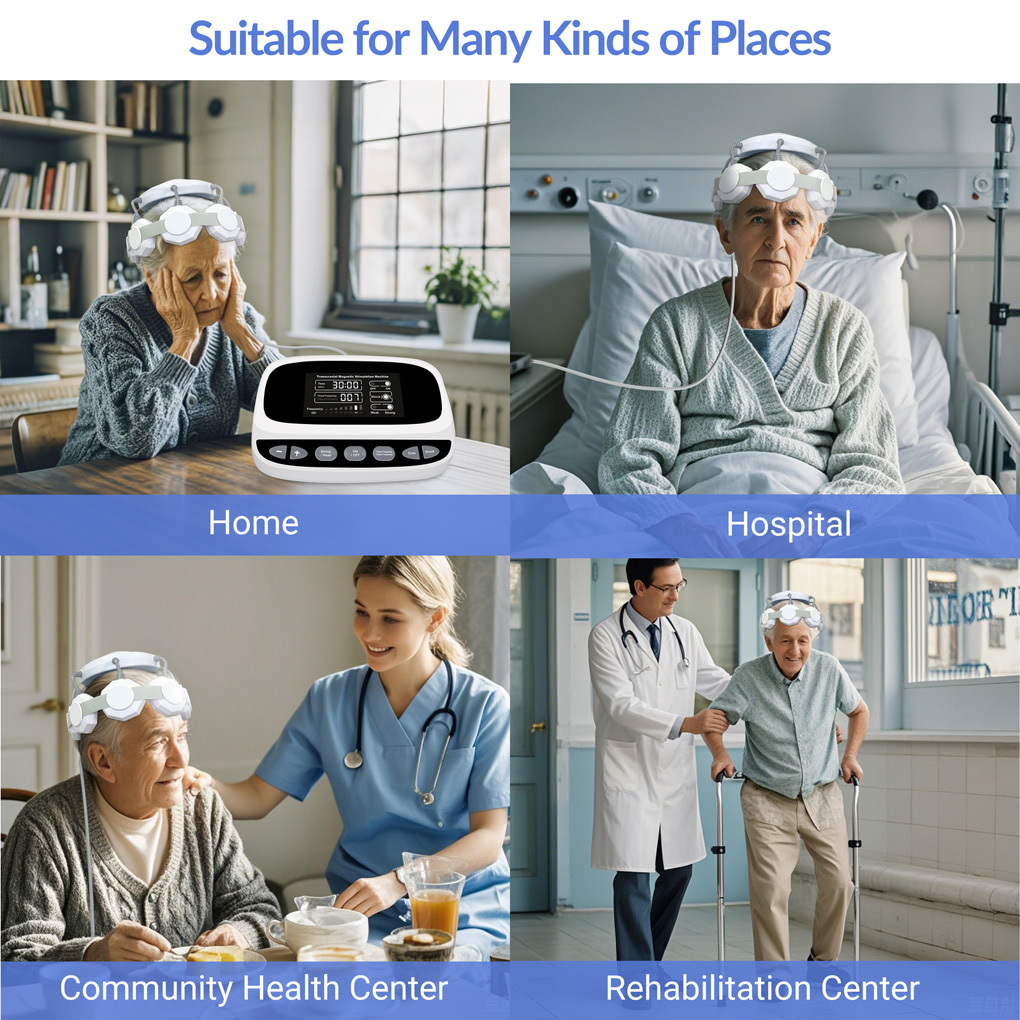
This is a non-invasive treatment method that usually takes 20-30 minutes to complete.
Step 1: You need to sit or lie down and place the electromagnetic coil near your head, especially in the brain area that regulates emotions.
Step 2: The coil wil generate magnetic pulses to your brain. This feeling is not painful, but it may feel like tapping or patting the head.
Step 3: These pulses will generate electrical currents in your nerve cells. After rTMS treatment, you can resume normal activities (including driving).
It is recommended to use it 5 times a week for 20-30 minutes each time, continuously for 6-8 weeks. Based on individual reactions. the treatment time may be longer or shorter.
TMS is performed in an office setting while the patient is awake and alert. No sedation is required, and patients can return to normal activities immediately after treatment.
1-2 Weeks: Over 68% of our patients see improvement in their depression and anxiety symptoms in 1-2 weeks and without negative side effects.
3-6 Weeks: Over 82% of our patients were no longer depressed after 3-6 weeks treatment.
After 1 Year: Over 90% of our patients are still in remission 1 year after treatment.
More significantly, these improvements are lasting after completion of the TMS therapy.
(**It is recommended to use it 5 times a week for 20-30 minutes each time, continuously for 6-8 weeks. Based on individual reactions, the treatment time may be longer or shorter).
1*Transcranial Magnetic Stimulation Device
1*Magnetic Therapeutic Heads
1*Packing Box
1*Charging Cord
1*User Manual
1. Targeted Modulation of Brain Activity:rTMS allows for precise targeting of specific brain regions. By modulating the activity of these areas, rTMS can help restore normal brain function in conditions like depression, OCD, and chronic pain.
2. Non-Invasive and Well-Tolerated: Unlike invasive procedures such as deep brain stimulation, rTMS does not require surgery or anesthesia. Most patients tolerate the procedure well, without side effects.
3. Neuroplasticity: The repeated stimulation of rTMS promotes neuroplasticity, leading to lasting changes in brain circuits. This can result in sustained improvements in mood, cognitive function, and pain relief, even after treatment ends.
4. Alternative to Medication: For patients who do not respond well to medications or cannot tolerate their side effects, rTMS offers a drug-free alternative.This is particularly valuable in treatment-resistant cases.
5. No Downtime: Patients can typically resume their normal activities immediately after a TMS session, as there is no recovery period required.
6. Customization: rTMS protocols can be customized in terms of frequency, intensity, and location of stimulation, allowing for tailored treatments based on the specific needs of the patient.
7. Cumulative Benefits: Over a series of sessions, TMS can lead to sustained improvements in symptoms, and some patients experience long-lasting benefits even after the treatment course is completed.
1. For all your inquiries about us or our products, we will reply you in detail at the first time.
2. We have well-trained and professional sales & after- sale staff and services.
3. We offer OEM &ODM services. We can print your own logo on product and customize the retail box packing and other details.And we also support wholesale&dropshiping service.
4. We have experienced R&D engineers and strong ability in professional guidance.
5. For our products,we provide one year warranty from the date of purchase.


