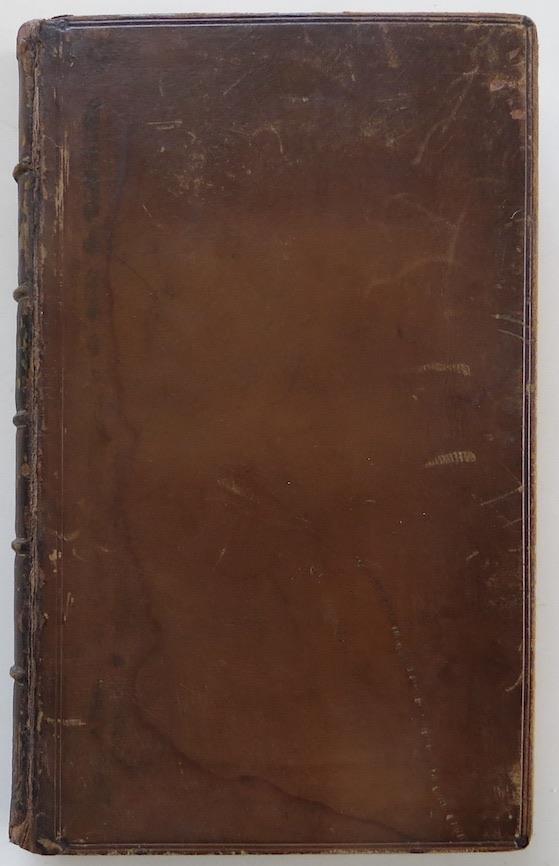
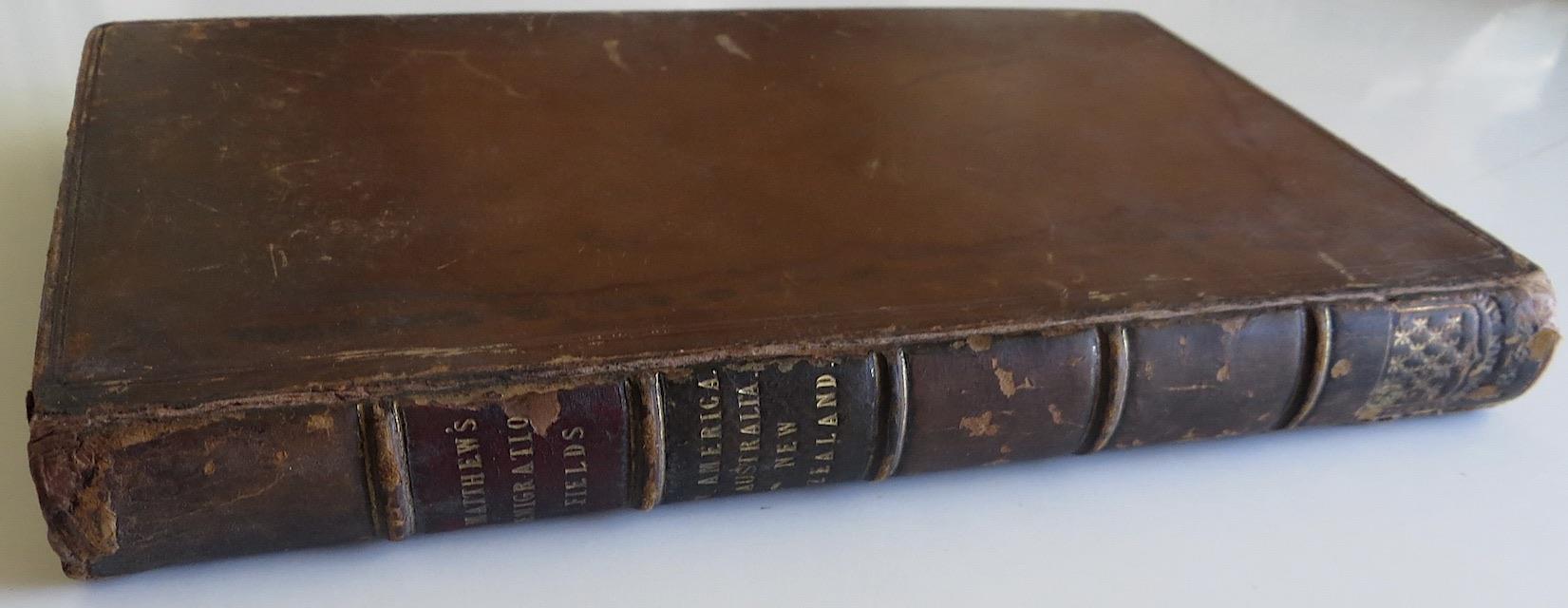
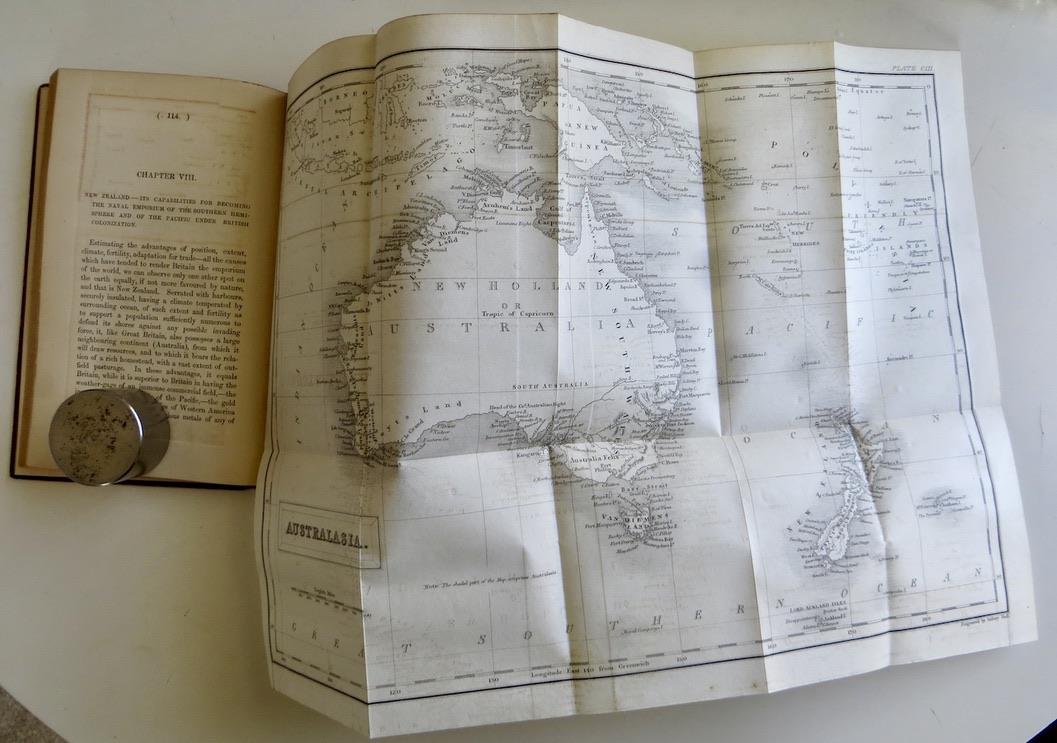
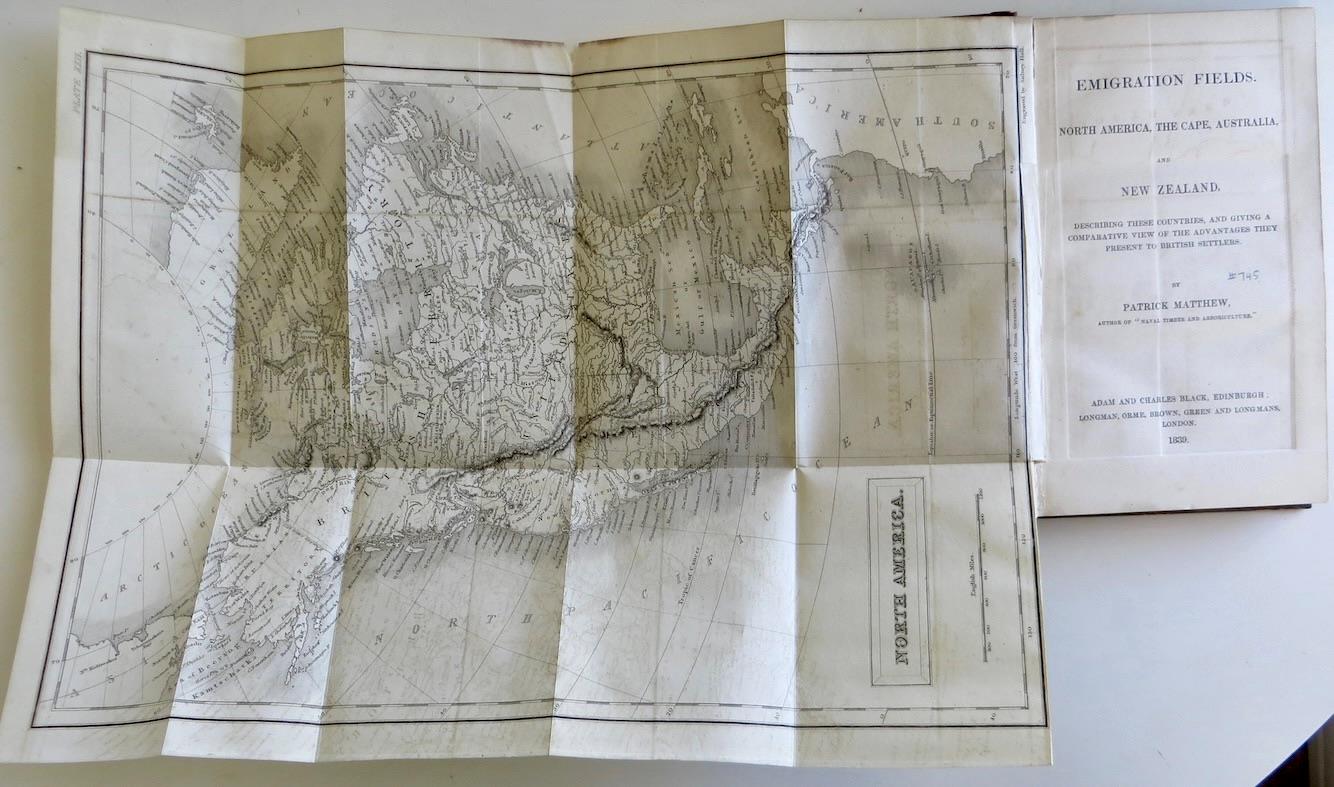
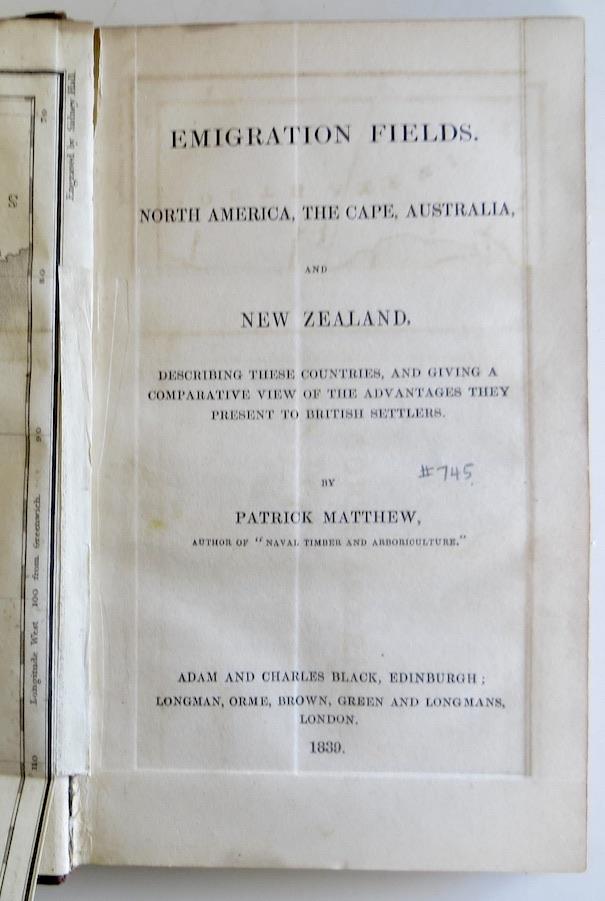
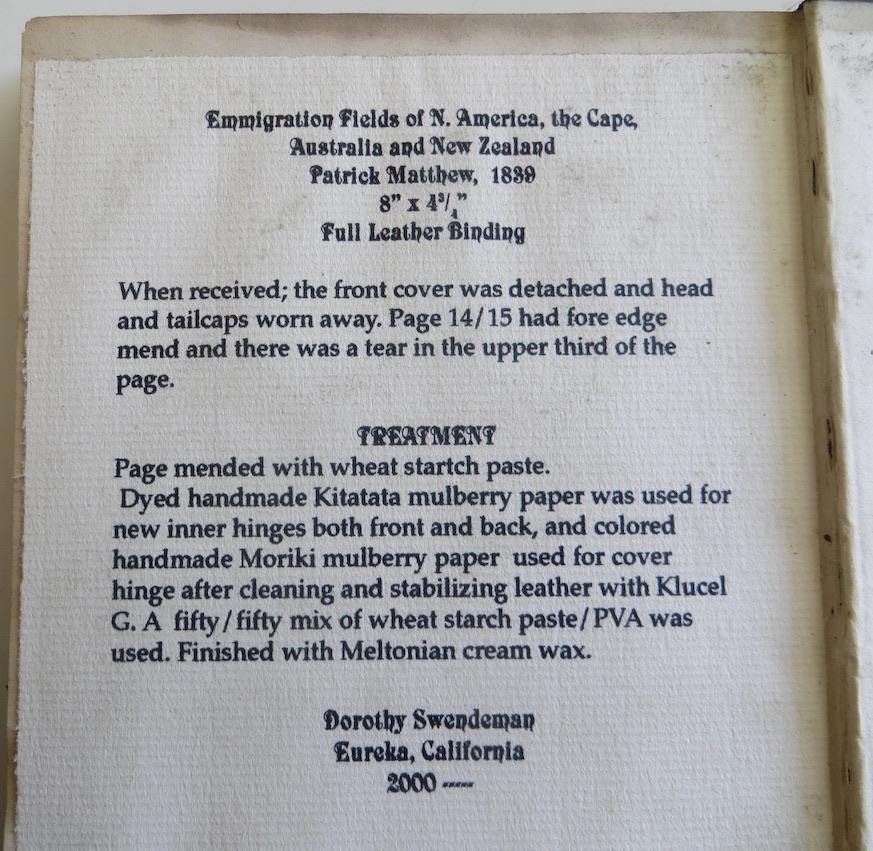
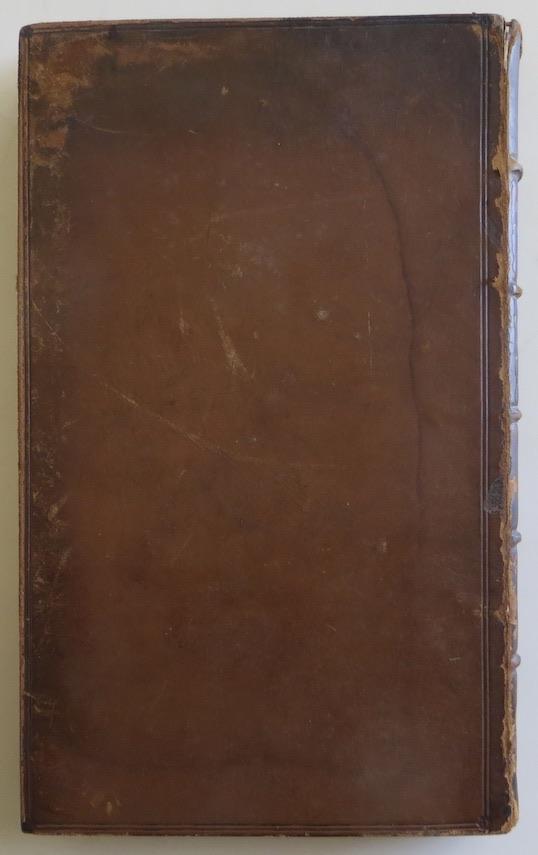
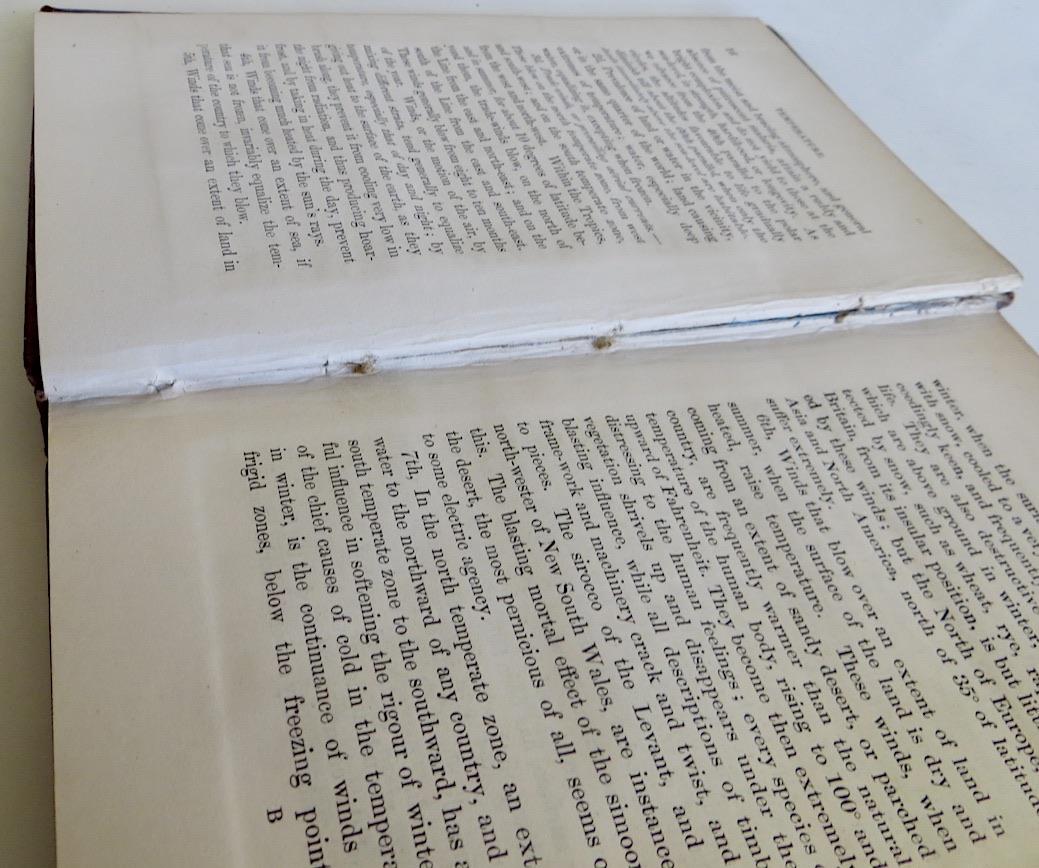
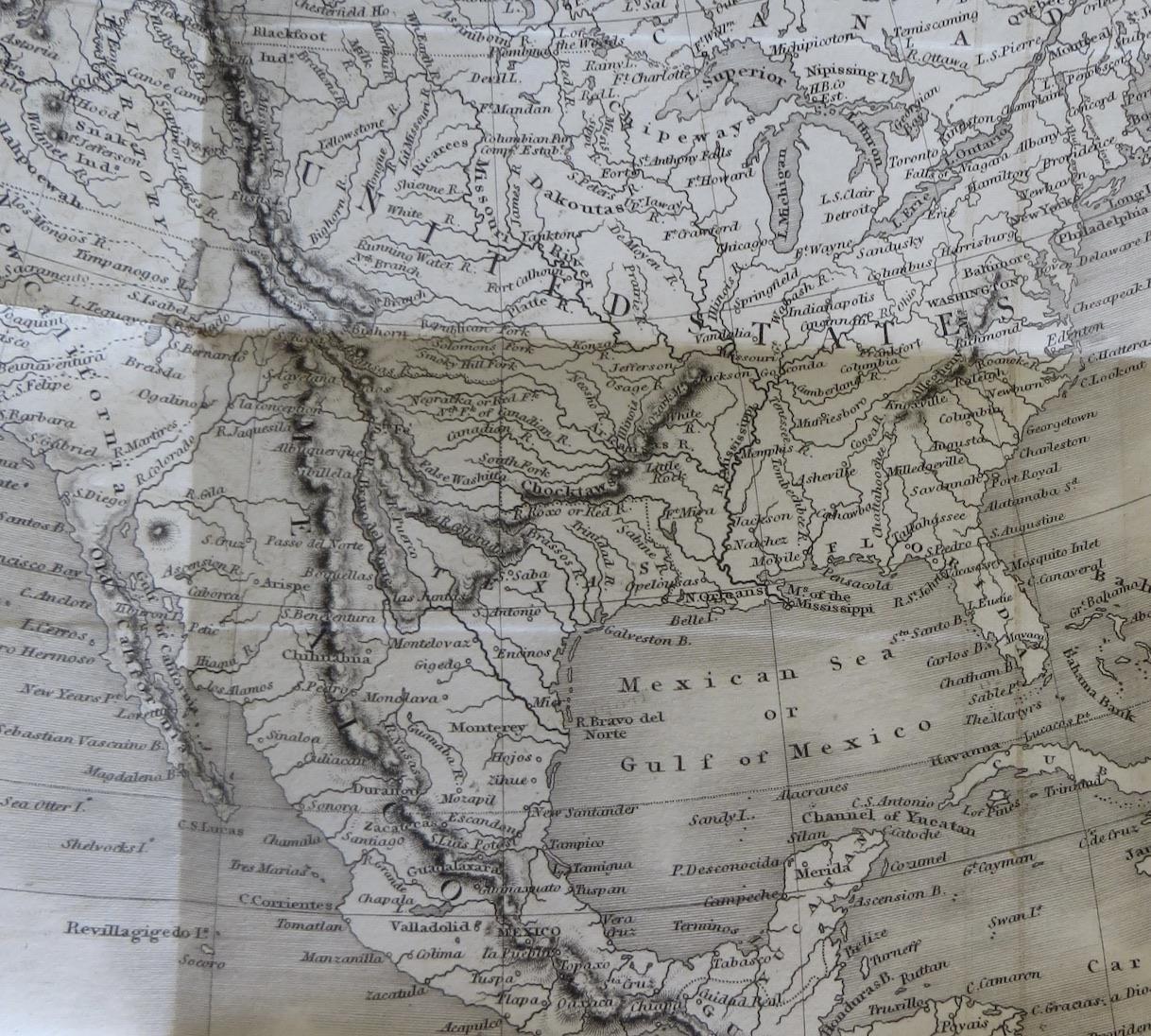
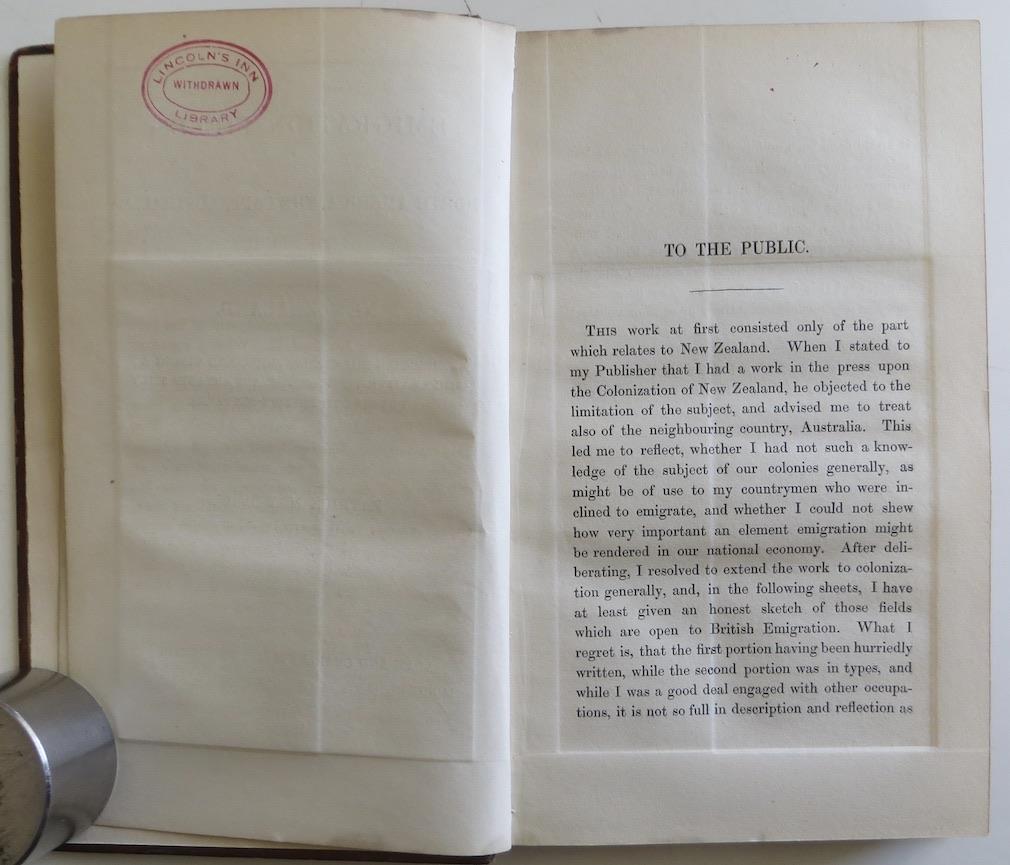
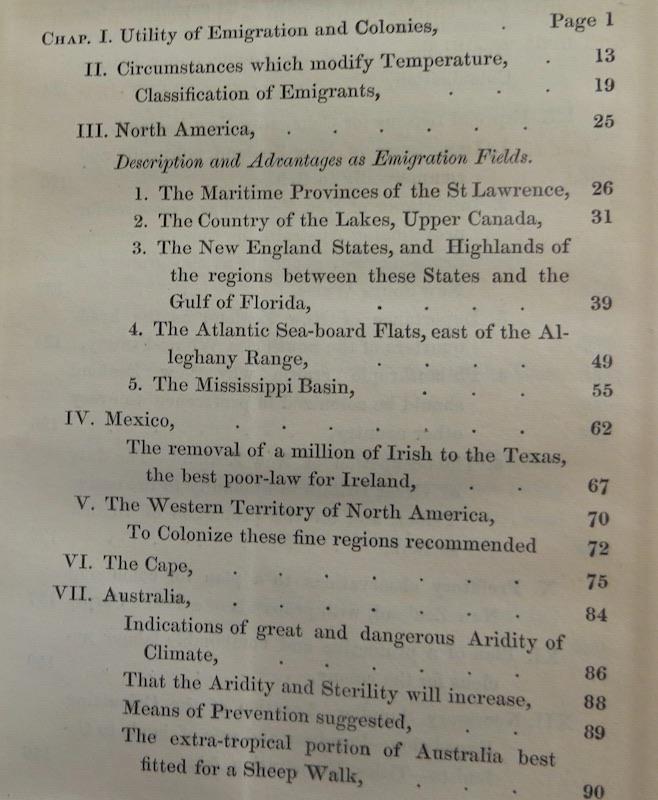
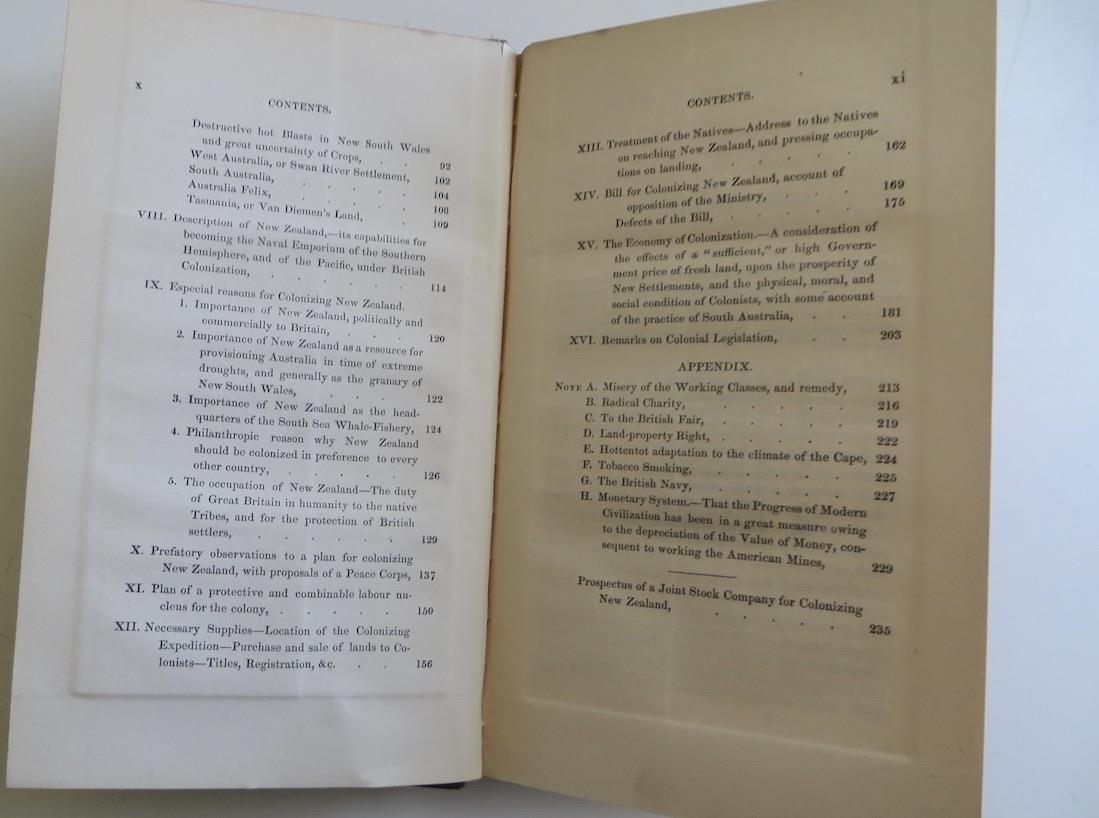
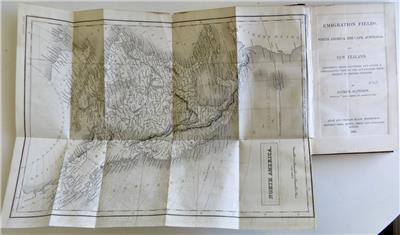
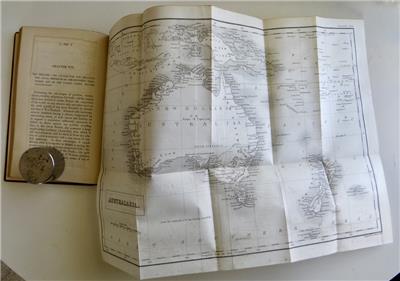
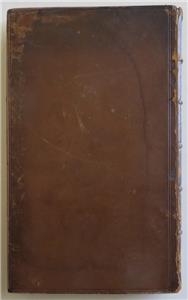
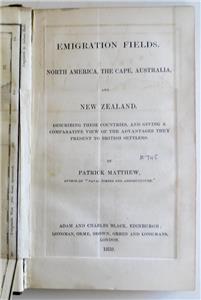
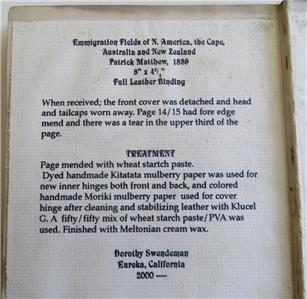
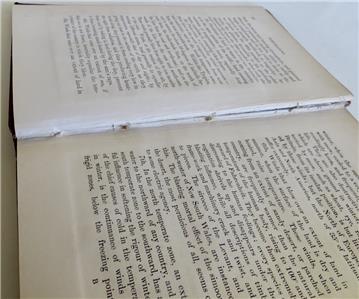
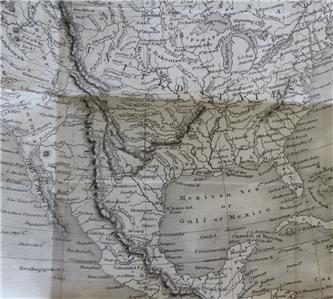
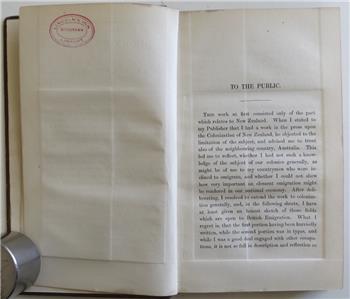
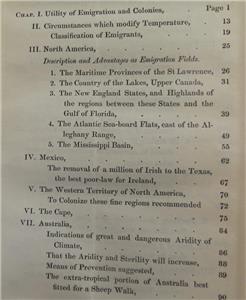
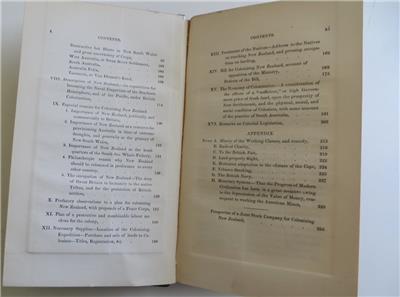
Rare Emigration Fields, North American, the Cape, Australia and New Zealand, by Patrick Matthew. Published , Edinburgh by Black, 1839. 297 pages. 2 Folding Maps, One of North America and another of Australasia. In Good condition with wear to polished leather binding. In the rear of the book is a 2000 printed note stating the then repair and restoration. I noticed one loose but intact signature but generally found the book tight and intact. Some chipping to spine labels and general wear to extremities. Signs of waterstaining to covers but not effecting text. The author of this emigration guide has a place in the history of the theory of Evolution/Natural Selection. Patrick Mathews theories were presented in the addenda of the book, Native Timber and Aboriculture published in 1831. In this addenda were theories of evolution very similar to Darwin'. Upon being brought to Charles Darwins attention he readily agreed. Mathews' detractors point out that his work is rather short while Darwin spent 20 years "connecting all the dots".
Please write with any questions.
I ENCOURAGE VIEWERS TO CORRESPOND
BEFORE BIDDING OR BUYING MY ITEMS.
Rare Emigration Fields, North American, the Cape, Australia and New Zealand, by Patrick Matthew. Published , Edinburgh by Black, 1839. 297 pages. 2 Folding Maps, One of North America and another of Australasia. In Good condition with wear to polished leather binding. In the rear of the book is a 2000 printed note stating the then repair and restoration. I noticed one loose but intact signature but generally found the book tight and intact. Some chipping to spine labels and general wear to extremities. Signs of waterstaining to covers but not effecting text. The author of this emigration guide has a place in the history of the theory of Evolution/Natural Selection. Patrick Mathews theories were presented in the addenda of the book, Native Timber and Aboriculture published in 1831. In this addenda were theories of evolution very similar to Darwin'. Upon being brought to Charles Darwins attention he readily agreed. Mathews' detractors point out that his work is rather short while Darwin spent 20 years "connecting all the dots".