
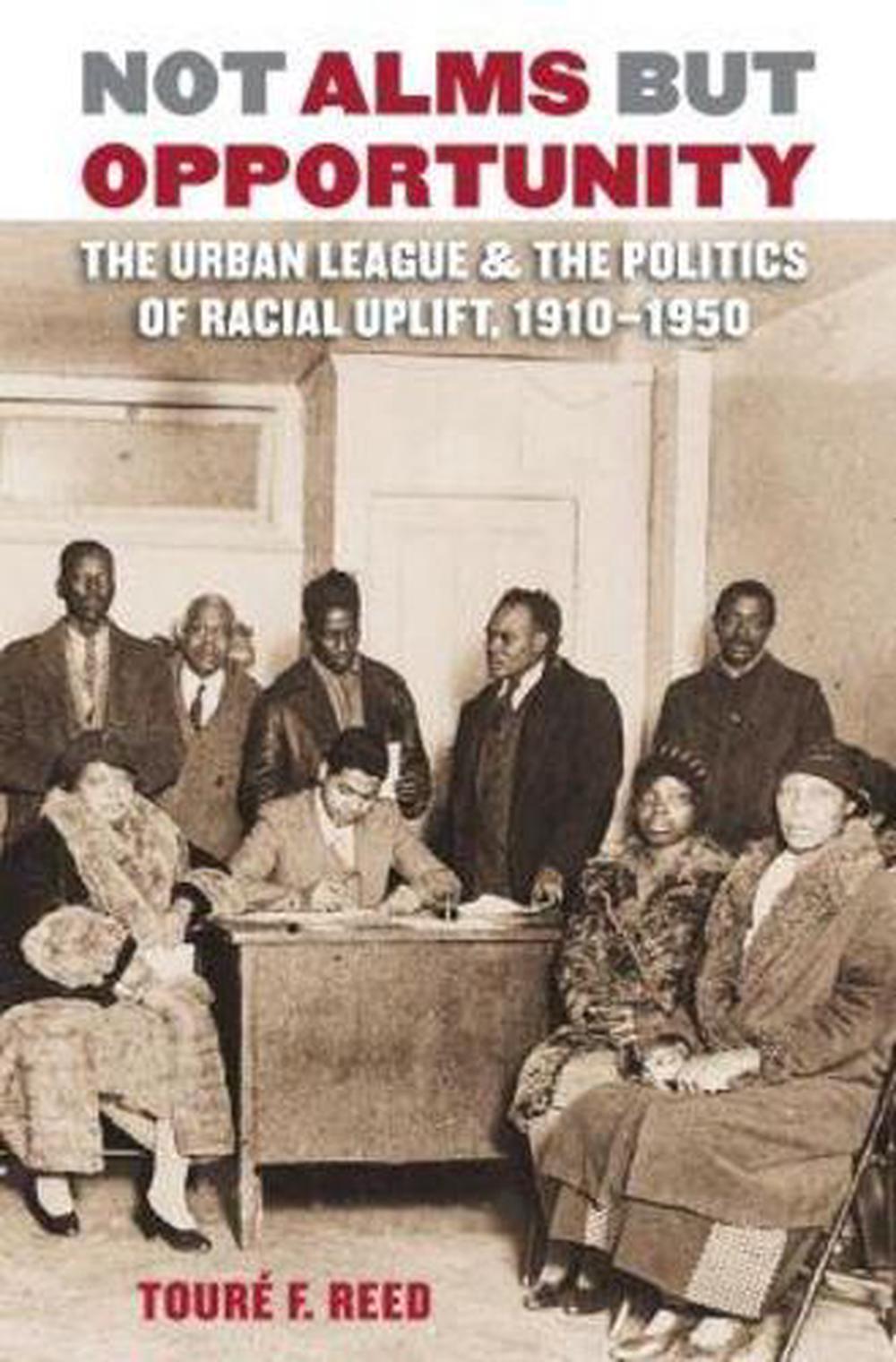
Not Alms but Opportunity
by Touré F. Reed
Illuminating the class issues that shaped the racial uplift movement, this book explores the ideology and policies of the Urban League's activities in New York and Chicago during the first half of the twentieth century.
Paperback
English
Brand New
Publisher Description
Illuminating the class issues that shaped the racial uplift movement, Toure Reed explores the ideology and policies of the Urban League's activities in New York and Chicago during the first half of the twentieth century. Reed argues that racial uplift in the Urban League reflected many of the class biases pervading contemporaneous social reform movements, resulting in an emphasis on behavioral, rather than structural, remedies to the disadvantages faced by African traces the Urban League's ideology to the famed Chicago School of Sociology. The Chicago School offered Leaguers powerful scientific tools with which to foil the thrust of eugenics. However, Reed argues, concepts such as ethnic cycle and social disorganization and reorganization led the League to embrace behavioral models of uplift that reflected a deep circumspection about poor African Americans and fostered a preoccupation with the needs of middle-class blacks. According to Reed, the League's reform endeavors from the migration era through World War II oscillated between projects to ""adjust"" or even ""contain"" unacculturated African Americans and projects intended to enhance the status of the African American middle class. Reed's analysis complicates the mainstream account of how particular class concerns and ideological influences shaped the League's vision of group advancement, as well as the consequences of its endeavors.
Table of Contents
ContentsPreface Acknowledgments Abbreviations Introduction Chapter 1. The Ideological Origins of the Urban League Chapter 2. Community Development and Housing, 1910-1932 Chapter 3. Vocational Training, Employment, and Job Placements, 1910-1932 Chapter 4. Labor Unions, Social Reorganization, and the Acculturation of Black Workers, 1910-1932 Chapter 5. Vocational Guidance and Organized Labor, 1933-1940 Chapter 6. Employment from the March on Washington Movement to the Pilot Placement Project, 1940-1950 Chapter 7. Housing and Neighborhood Work in the Age of the Welfare State, 1933-1950 Conclusion Notes Bibliography Index
Review
"A first-rate treatment of its subject." -- Journal of American History
"Reed succeeds in making sense of the ideological and class perspectives that shaped the initiatives of the Urban League. . . . He also makes a compelling argument for a more holistic approach to any project designed to 'uplift the race.'" -- Journal of American Ethnic History
Review Quote
Reed succeeds in making sense of the ideological and class perspectives that shaped the initiatives of the Urban League. . . . He also makes a compelling argument for a more holistic approach to any project designed to 'uplift the race.'-- Journal of American Ethnic History
Promotional "Headline"
"[An] excellent study of the National Urban League. . . . What distinguishes Reed's study from previous scholarship is not his critique of the economic and cultural biases of racial uplift but, rather, his detailed analysis of their effects."-- U.S.
Details
