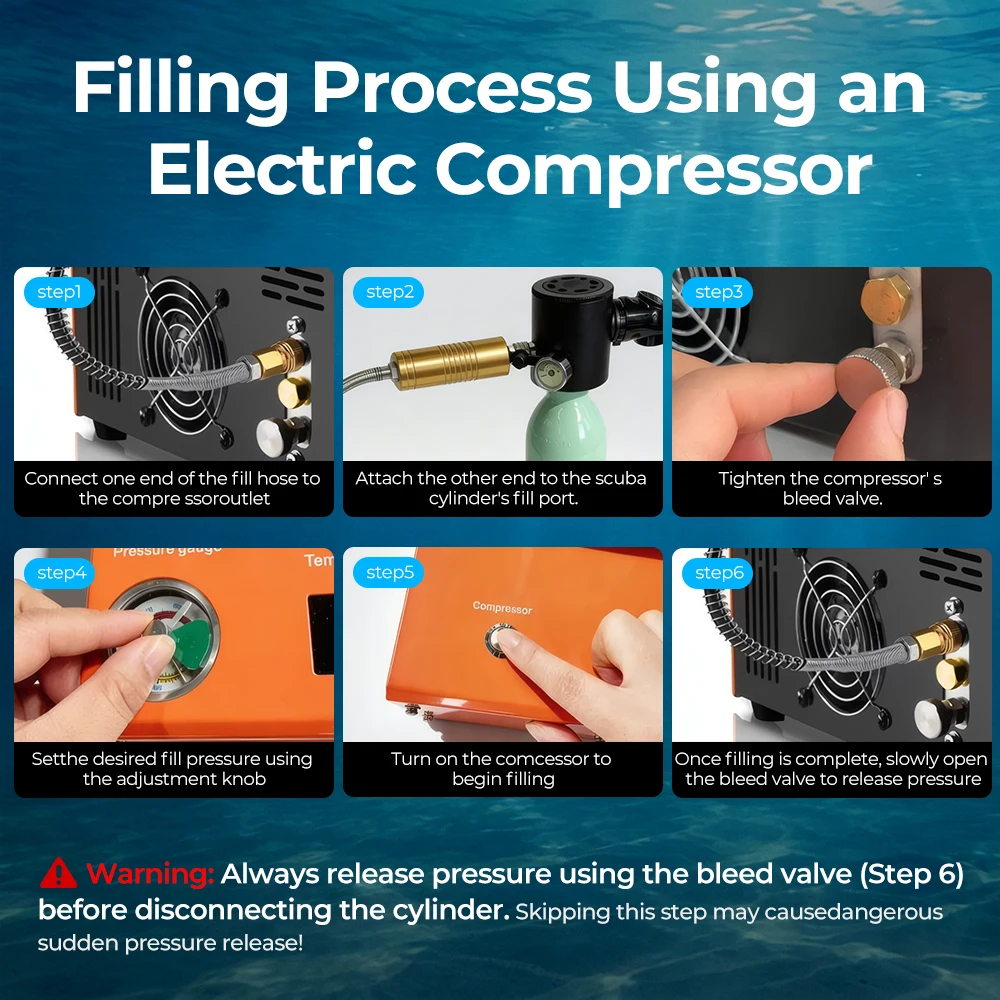
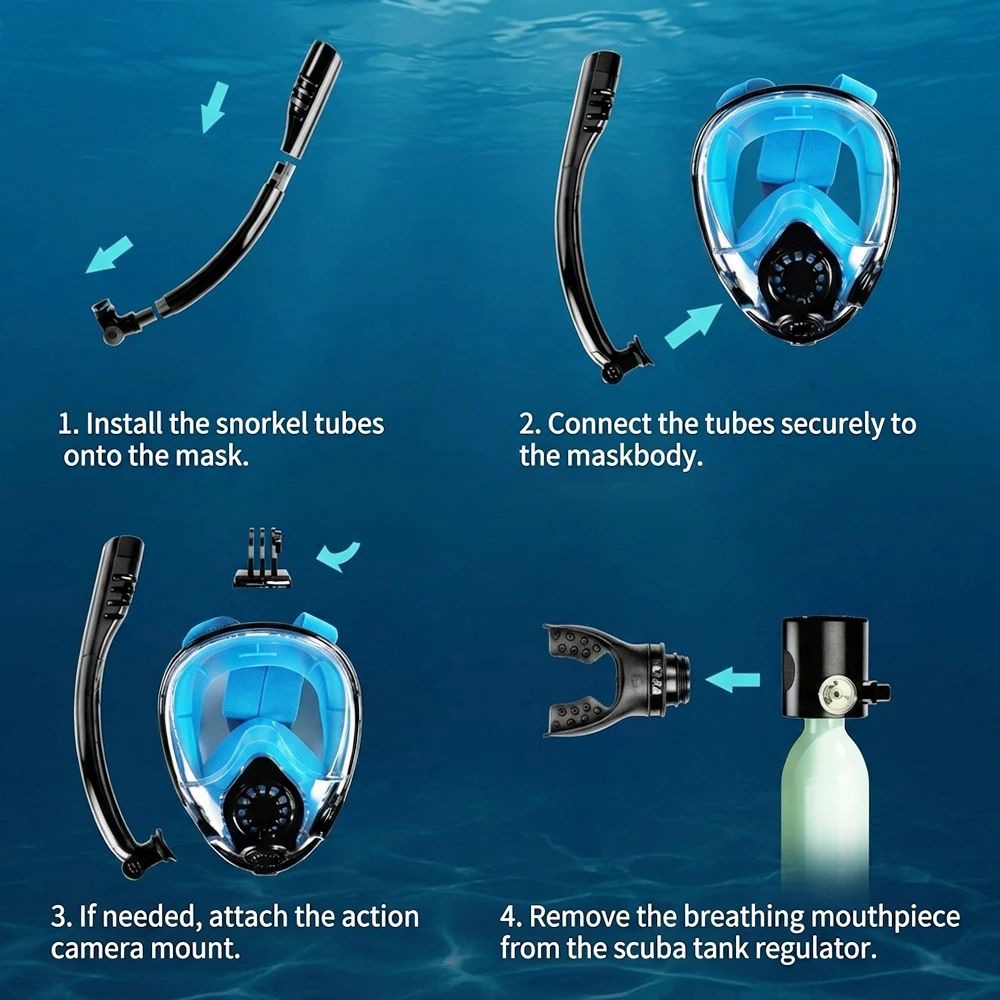
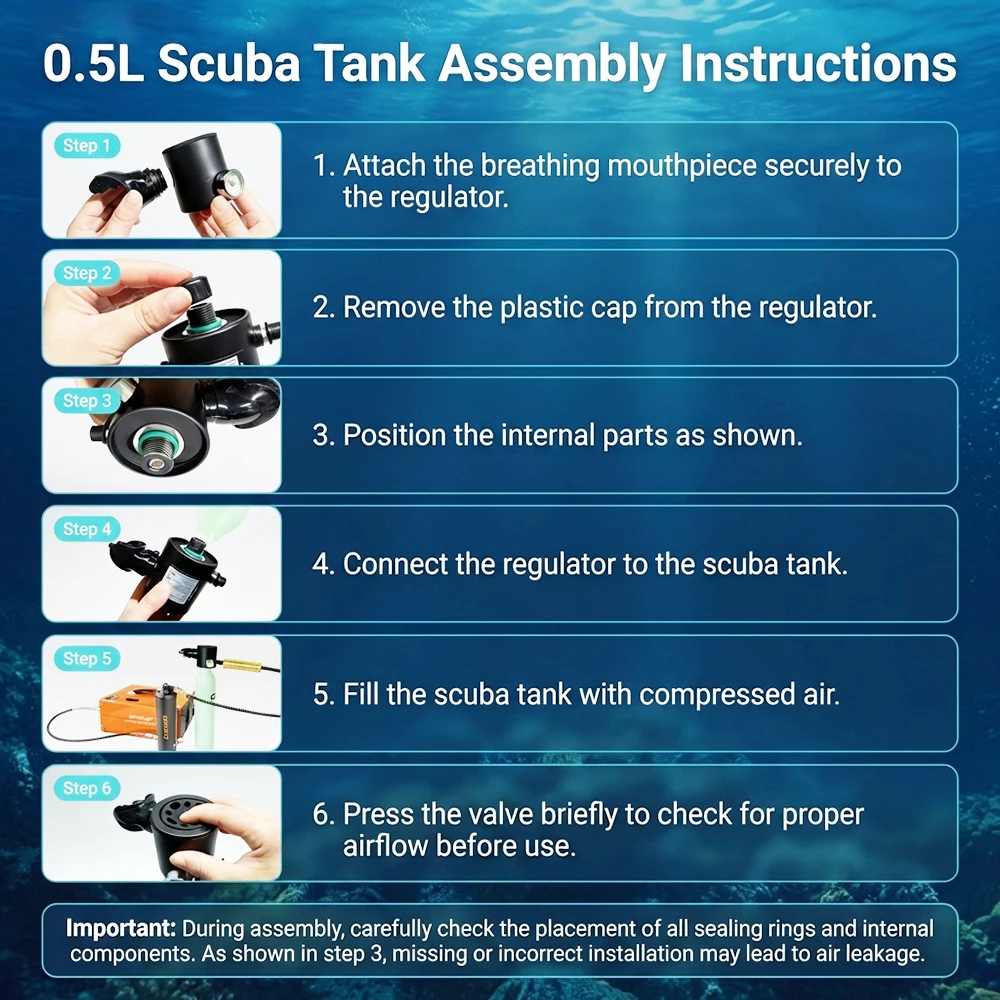
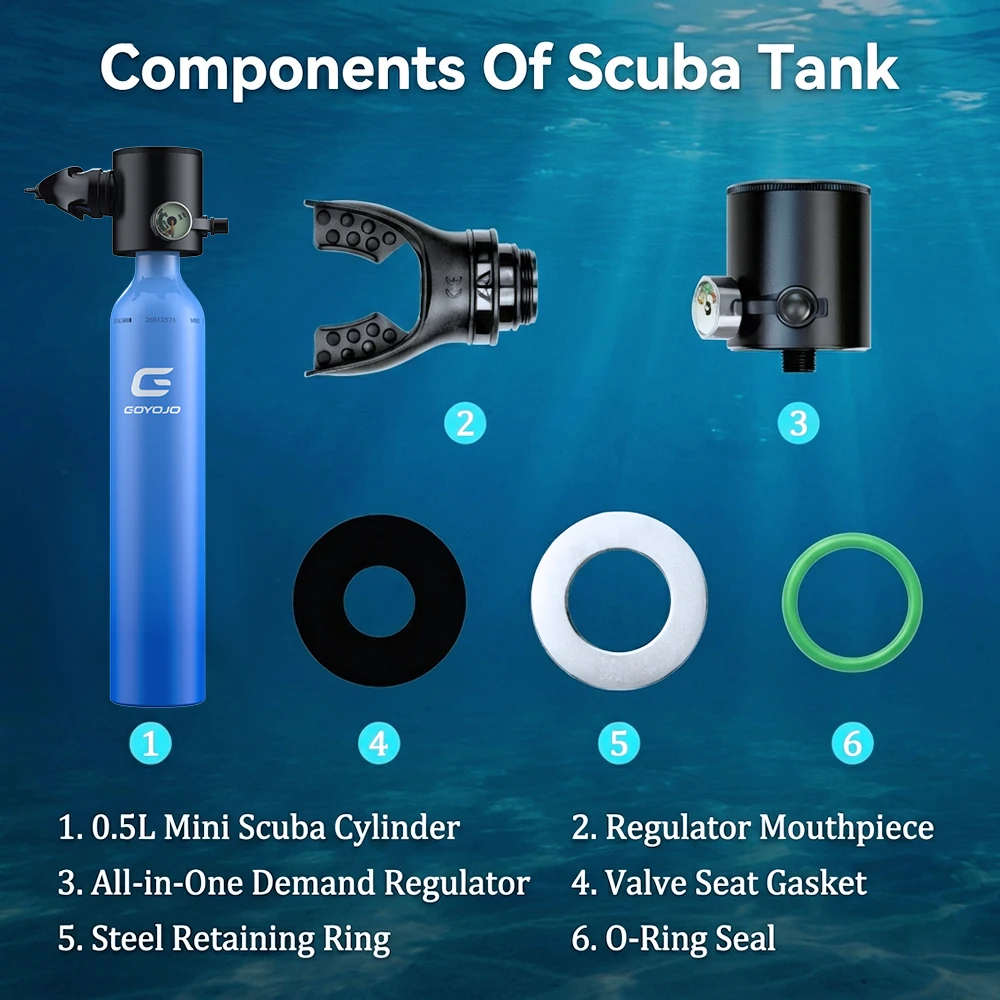
Users must possess a valid diving certification (e.g., PADI Open Water Diver Certification) or have completed equivalent professional dive training. You must have both the practical skills and theoretical knowledge necessary for underwater emergency response and comply with all applicable national and regional diving safety regulations.
2. Pre-Dive Equipment Inspection
Before each dive, review the product manual thoroughly and conduct a complete equipment check. Verify that the scuba regulator is functioning properly, the cylinder is intact with sufficient gas, and the secondary regulator is operating correctly. Do not use any equipment that appears faulty or compromised.
3. Complementary Equipment Requirement
The scuba breathing apparatus is only one component of a complete dive system. It must be used in conjunction with essential gear such as a dive knife, dive computer or watch, spare cylinder, and dive suit. Please consult a certified diving instructor to tailor your equipment configuration to your specific diving needs.
4. Environmental Condition Assessment
5. User Eligibility & Physical Condition
This product is intended for individuals 18 years of age and older. Do not dive if you are underage or if you have consumed alcohol, smoked, are excessively fatigued, suffering from a cold, or engaging in breath-holding dives. It is essential that you are in optimal physical and mental condition before every dive.
6. Post-Dive Maintenance
Immediately after diving, rinse the equipment thoroughly with fresh water at least five times. Prevent seawater from entering the intake ports and valve assemblies. Residual seawater can lead to the formation of corrosive salt and alkaline deposits, which may damage the valves and obstruct the pipelines.
7. Buddy System Requirement
Regardless of the type of dive or the environment, always adhere to the buddy system. Solo diving is strictly prohibited to ensure immediate assistance in case of an emergency.
Always follow these procedures diligently to ensure your safety and the safety of your dive partners.