
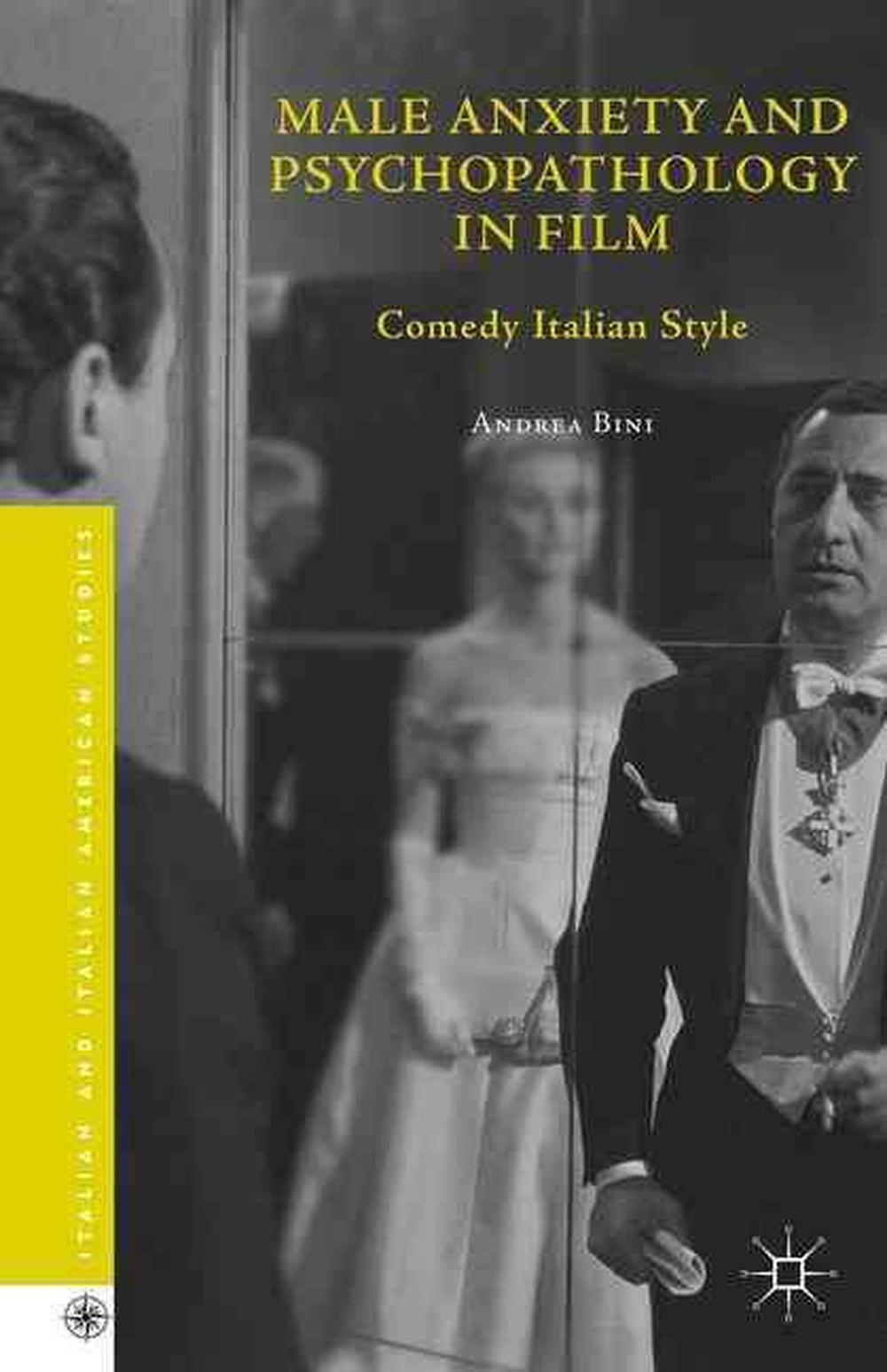
Male Anxiety and Psychopathology in Film
by Andrea Bini
The most popular film genre during the golden years of Italian cinema, the Comedy Italian Style emerged after the fall of the Facist regime, narrating the identity crisis of many Italian men. Exploring the birth, growth, and decline of this genre, Bini shows this notable style was the search for a new role in the shattered postwar middle class.
Hardcover
English
Brand New
Publisher Description
The most popular film genre during the golden years of Italian cinema, the Comedy Italian Style emerged after the fall of the Facist regime, narrating the identity crisis of many Italian men. Exploring the birth, growth, and decline of this genre, Bini shows this notable style was the search for a new role in the shattered postwar middle class.
Table of Contents
Introduction 1. The Narrative Pattern of Italian Film Comedy 2. Postwar Comedy: Neorealist Comedy and Pink Neorealism 3. The Birth of Comedy Italian Style: Narrating the Myth of the Economic Miracle 4. Humor Italian Style: The Masks Of Conformity 5. The Characters Of Comedy Italian Style: A Psychopathology Of the Society Of Enjoyment 6. The Comedy Is Over: The Dissolution of a Psychotic Society Bibliography
Review
"The author advances her argument through insightful close readings of a large number of films. She limns the relevant theory as it arises without grinding the analysis to a halt. Summing Up: Recommended. Upper-division undergraduates through faculty." (M. Yacowar, Choice, Vol. 53 (10), June, 2016)"Bini's innovative approach to one of the most popular types of Italian cinema, commedia all'italiana, is a much-needed addition to the field. The author's thorough and insightful close analyses of works from the 1950s and 1960s expose readers to a wide variety of Italian comedies, many of which are not well known in the English-speaking world. His thesis that cinema anticipated the boom that arose from a crisis regarding national identity, exposed by the failures of fascism, is particularly compelling." - Mary Ann McDonald Carolan, AssociateProfessor of Modern Languages & Literature, Fairfield University, USA
Long Description
Male Anxiety and Psychopathology in Film: Comedy Italian Style explores the birth, growth, and decline of the most popular film genre during the golden years of Italian cinema. Emerging after the successive fall of the Fascist regime, the end of monarchy, and the struggles of a fragile, new democracy, commedia all'italiana, or comedy Italian style, appeared as a post-oedipal genre that narrated the identity crisis of Italian men and their desperate search for a new role in the postwar middle class. Andrea Bini argues that these men reacted to these traumatic historical experiences by embracing the myth of consumerist culture during the Italian economic boom of the late 1950s and early 60s. Grounded in Lacanian theory, this study demonstrates how commedia all'italiana represents Italy as a social space lacking strong symbolic agency in which the male actors fall prey to a series of incurable psychopathologies.
Review Quote
"The author advances her argument through insightful close readings of a large number of films. She limns the relevant theory as it arises without grinding the analysis to a halt. Summing Up: Recommended. Upper-division undergraduates through faculty." (M. Yacowar, Choice, Vol. 53 (10), June, 2016) "Bini's innovative approach to one of the most popular types of Italian cinema, commedia all'italiana, is a much-needed addition to the field. The author's thorough and insightful close analyses of works from the 1950s and 1960s expose readers to a wide variety of Italian comedies, many of which are not well known in the English-speaking world. His thesis that cinema anticipated the boom that arose from a crisis regarding national identity, exposed by the failures of fascism, is particularly compelling." - Mary Ann McDonald Carolan, Associate Professor of Modern Languages & Literature, Fairfield University, USA
Details
