
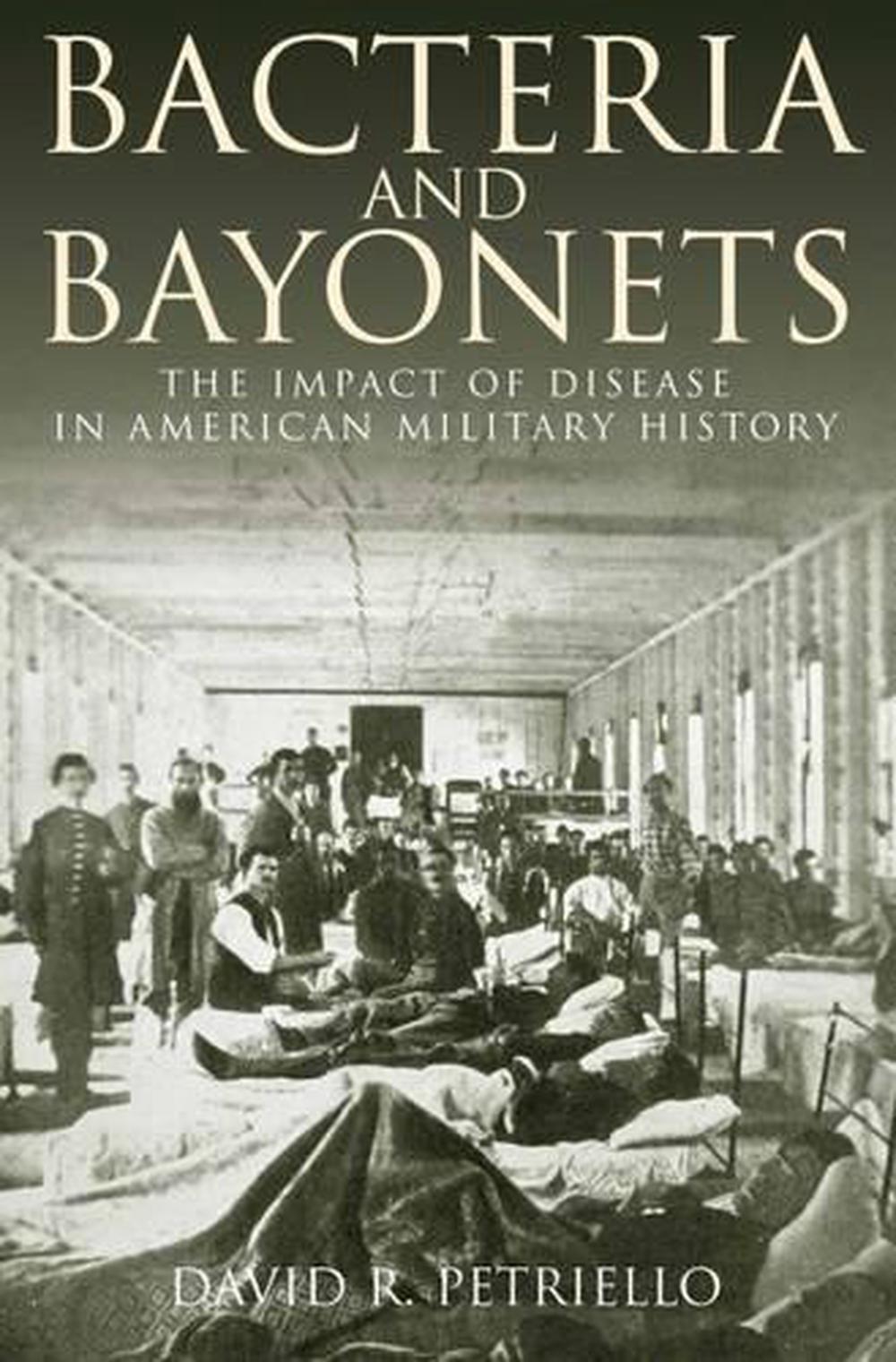
Bacteria and Bayonets
by David R. Petriello
For hundreds of years men have fought and died to expand and protect the United States relying on martial skill and patriotism. Various powerful enemies, from the British to the Nazis, and legendary individuals including Tecumseh and Robert E. Lee have all fallen before the arms of the American soldier.
Hardcover
English
Brand New
Publisher Description
For hundreds of years men have fought and died to expand and protect the United States relying on martial skill and patriotism. Various powerful enemies, from the British to the Nazis, and legendary individuals including Tecumseh and Robert E. Lee have all fallen before the arms of the American soldier. Yet the deadliest enemy faced by the nation, one which killed more soldiers than all of its foes combined, has been both unrecognised and unseen. The war waged by the United States against disease, and by disease against the United States, has impacted the country more than any other conflict and continues to present a terrible threat to this day. Illness has been more than just a historical cause of casualties for the American military, in numerous wars it has helped to decide battles, drive campaigns, and determine strategy. In fact the Patriots owed pestilence as much for their victory in the Revolution as they did their own force of arms. Likewise disease helped to prevent the conquest of Canada in 1812, drove strategy in the Mexican War, handicapped Lee's 1862 advance, and helped lead to World War II. Disease also provided an edge in the wars against Native Americans, yet just as soon turned on the US when unacclimated US troops were dispatched to the southern Pacific. This book not only traces the path of disease in American military history but also recounts numerous small episodes and interesting anecdotes related to the history of illness. Overall it presents a compelling story, one that has been overlooked and underappreciated. Yellow fever, malaria, tuberculosis, glandular fever, bubonic plague, smallpox, and numerous other bacteria and viruses all conspired to defeat America, and are enemies that need to be recognised viruses all conspired to defeat America, and are enemies that need to be recognised. 16 pages of photographs
Table of Contents
PREFACE INTRODUCTION One - Columbus Day or Contagion Day: Disease "Arrives" in America Two - "Deus Flavit Nasus et Dissipati Sunt": The Protestant Wind and the Catholic Flu Three - Pocahontas and the Plague: The English and Disease in the Conquest of the Colonies Four - "the Paths to Glory Lead but to the Grave": Disease in the Early French and Indian Wars Five - "Pestilence Gave them a Common Death": Disease and the English Conquest of North America Six - typhus and taxation: Disease and the American Revolution Seven - A Nation Forged in Gout and expanded by Venereal Disease: A Medical Look at the Early Republic Eight - Montezuma's Revenge: Disease and Manifest Destiny Nine - Johnny Dysentery and Billy typhus: Disease and the Civil War Ten - Remember the maine, to Hell with Yellow Fever: Imperialism and Illness Eleven - Love in the Age of Cholera, Warfare in the Age of typhoid: Progressivism and Pestilence Twelve - Bullets, Bayonets, and Botulism: Biological Warfare in the Twentieth Century Thirteen - Al-Qaeda, Anthrax, and America: Terrorism and Disease in Post-Cold War America CONCLUSION ENDNOTES BIBLIOGRAPHY INDEX
Review
Although the topic of disease and its influence on history has been dealt with before, this is a very good, entertaining, and thoughtful work. * Navy News *
...this is a very good, entertaining and thoughtful work. * NYMAS *
Review Quote
"The impact of disease on military operations has long been recognized, but David Petriello has charted hitherto unexplored waters with his linkage of disease to American military history... Petriello has incorporated the fruits of prodigious research, and displayed commendable scholarship with this seminal and innovativestudy. The book is illustrated, endnoted, and contains a valuable bibliography. This volume should be in the library of any serious student of American military history."
Details
