
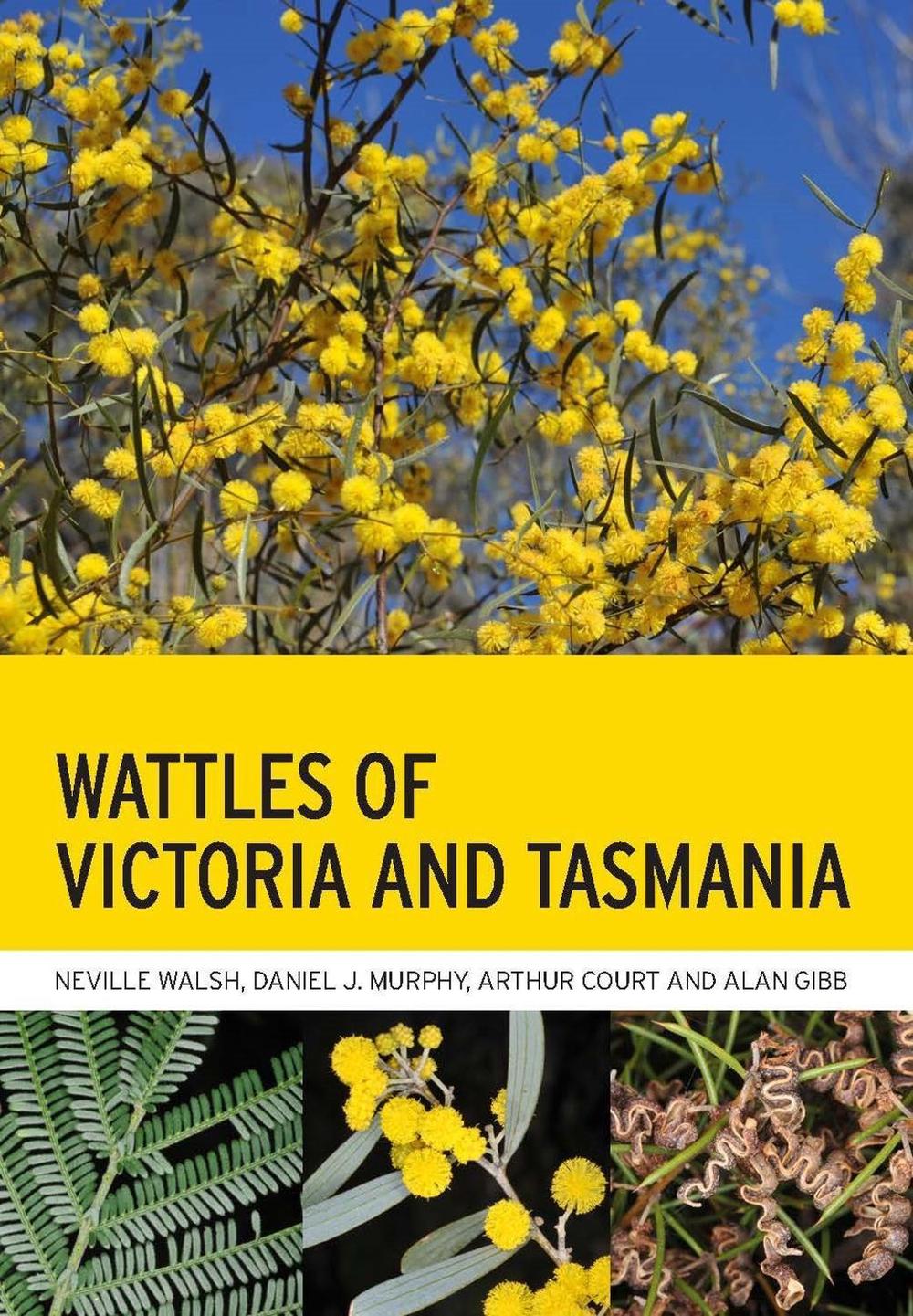
Wattles of Victoria and Tasmania
by Neville Walsh, Daniel J. Murphy, Arthur Court, Alan Gibb
A guide to the 121 species and subspecies of wattles found in Victoria and Tasmania.
Paperback
Brand New
Publisher Description
Wattles (Acacia) are among the most vibrant plants in the southern Australian bush, with their iconic yellow blooms particularly visible in late winter and spring. As the largest genus of flowering plant in Australia, they are one of the most resilient, recognisable and culturally significant native plants. However, they can be difficult to identify at a species level.This comprehensive guide to all 121 species and subspecies of wattles found in Victoria and Tasmania includes notes on the habitat, distribution and special properties of each species. Identification keys, high-quality field photos and distribution maps enable easy identification, and fascinating detail on the etymology of species names, their use as food and the taxonomic history of the group is also included. This guide will inform and inspire botanists, conservationists and wattle enthusiasts.
Table of Contents
Preface
About the authors
Acknowledgements
Introduction
Acacia: What's in a name?
About wattles
Some uses of wattles
The descriptive pages
Keys to species
Key to Acacia in Victoria
Key to Acacia in Tasmania
Species accounts
Group A: Species with phyllodes; flower heads globular, on unbranched stalks in leaf axils
Group B: Species with phyllodes; flower heads globular, in racemes
Group C: Species with phyllodes; flowers in cylindrical spikes
Group D: Species with bipinnate leaves; flower heads globular, in simple or branched racemes
Incipiently or sparingly naturalised wattles in Victoria and Tasmania
Glossary of botanical terms
Further reading
Index to species
Review
"Double page spreads per species of very helpful photos of flowers, foliage, pods and habit, and paragraphs on all the descriptive features that one would expect, plus etymology, conservation status and similar species. There is a very comprehensive key for each state at the start of the book, which represents a lot of work by the authors." -- Ian Fraser * Ian Fraser's Natural History Reviews *
"The collective experience of the four talented authors shines through, bringing you the flavour of the plant: where it lives, who it hangs out with, and quirky features or stories associated with it. Also present is the trademark of a really useful guidebook: descriptions of similar species and the key features to look for when distinguishing them." -- Fiona Murdoch * Growing Australian No. 271 *
Details
