
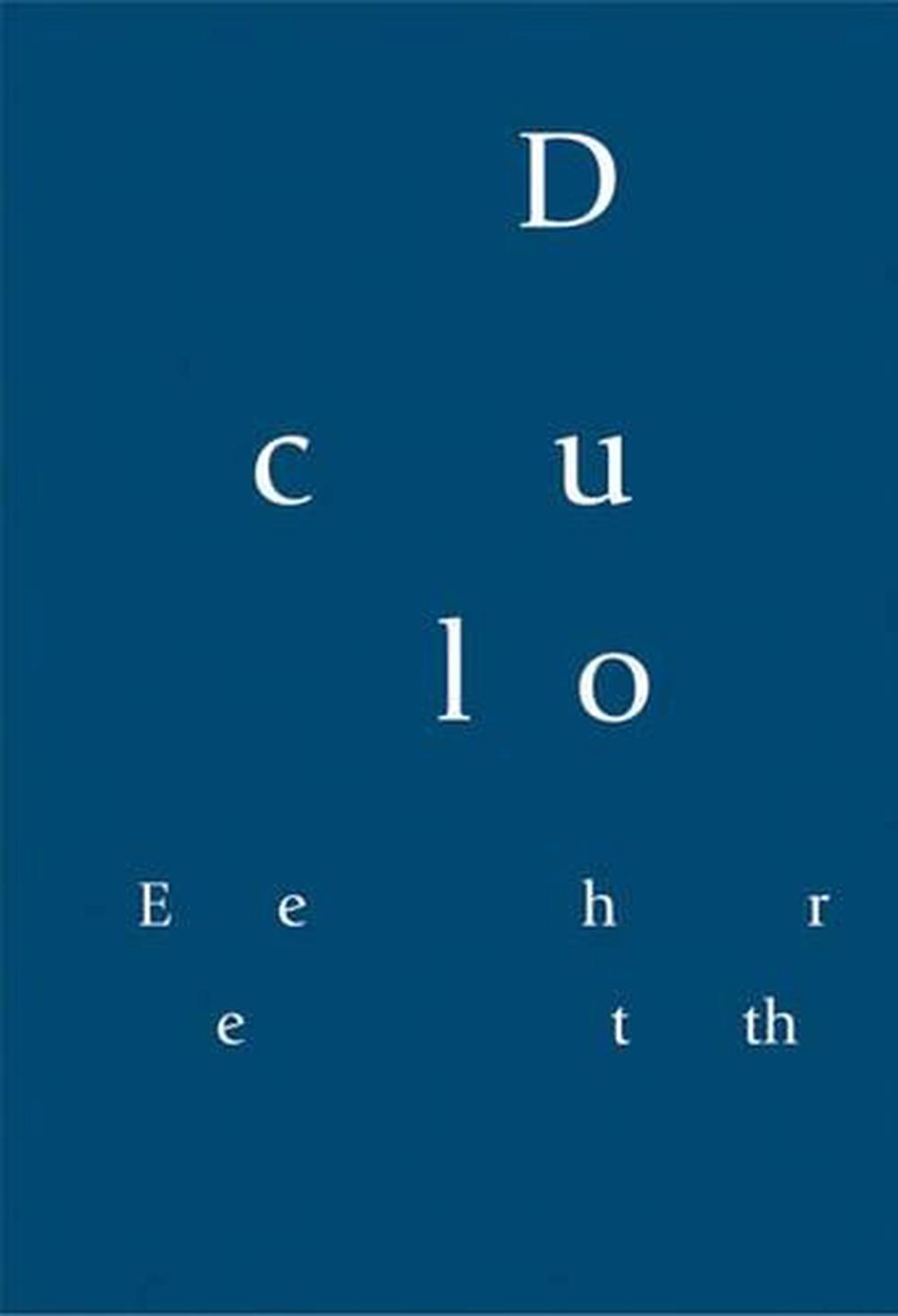
Helen Mirra: Cloud, the, 3
by Lyn Hejinian, Helen Mirra, Christoph Keller
Appropriating the index of John Dewey's publication "Reconstruction in Philosophy" (1920), Helen Mirra has built a text that is neither poetry nor prose. The page numbers become abstract points instead of references, while the entries refer to the larger world, instead of back to the source text. This work is part of a series of artists' projects.
Hardcover
English
Brand New
Publisher Description
Appropriating the index of John Dewey's publication "Reconstruction in Philosophy" (1920), Helen Mirra has built a text that is neither poetry nor prose. The page numbers become abstract points instead of references, while the entries refer to the larger world, instead of back to the source text. Born in 1970 and based in Chicago, Mirra works in various media. Besides her exhibitions, she has also designed numerous books and worked on recordings including Viktor Shklovsky's "Third Factory" (Dalkey Archive, 2002), and the periodical "Parakeet". The publication is part of a series of artists' projects edited by Christoph Keller.
Long Description
Helen Mirra, born in 1970 in Rochester, New York, creates work from simple materials--including worn clothing and wood recovered from transportation palettes--at the intersection of influences including Arte Povera and Fluxus. She also writes, and for the past few years her writing has come in the form of indexes. Dislocated from a source text, the entries, lettered on long strips of cloth tape that resemble typewriter ribbons, unspool into the world at large. Like clash, 247 , her index to a volume of William James essays, this volume tracks words and ideas through John Dewey's Reconstruction in Philosophy (1920). If the original text, in this case, is largely about the conceptualization of ideas, Mirra's index is a materialization of conceptualization, under the auspices of a spare poetics. Mirra, who had a solo show at the Whitney Museum of American Art in 2002 and participated in the 2003 Venice Biennale, also teaches at Harvard University.
Details
