
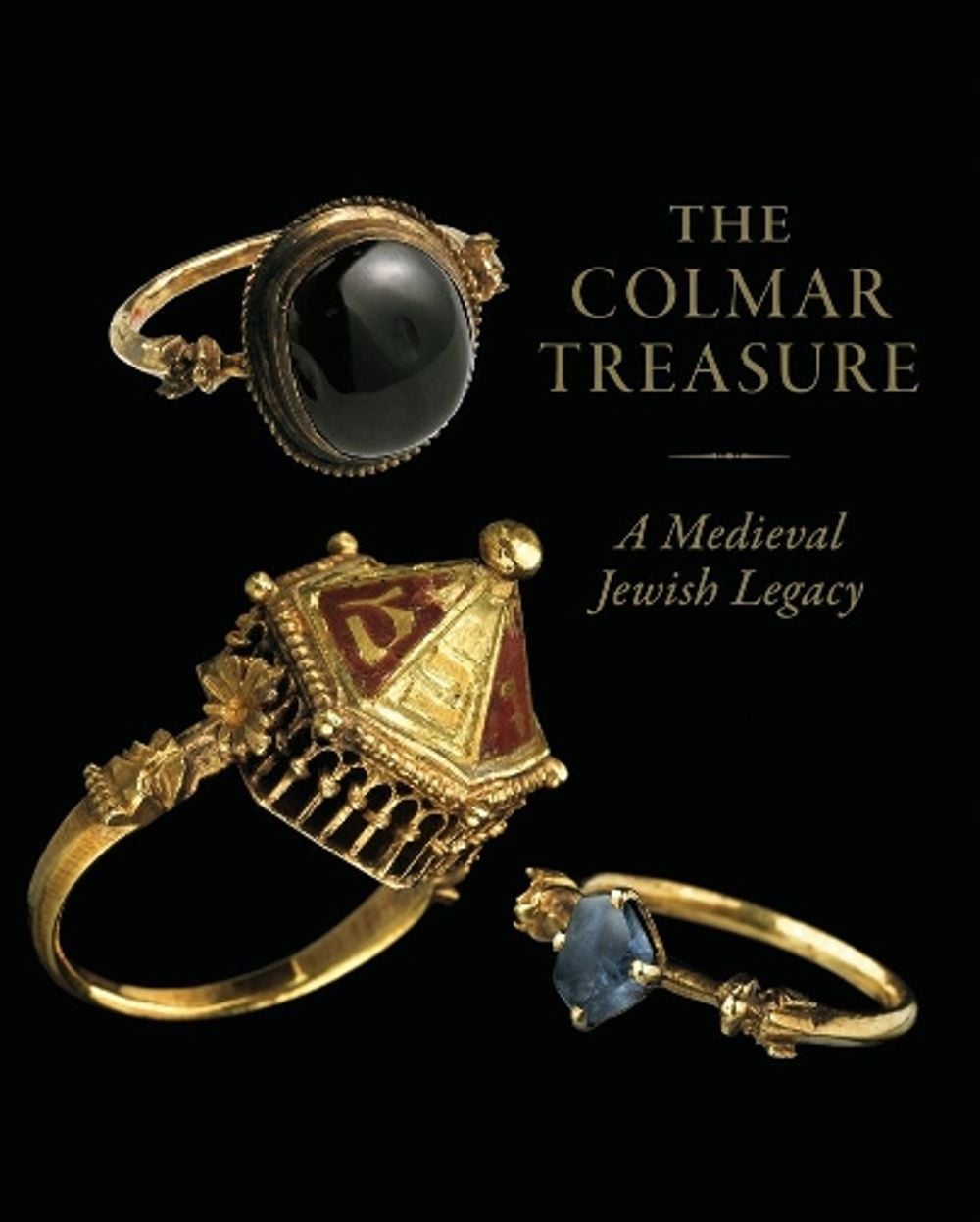
The Colmar Treasure
by Barbara Drake Boehm
Accompanying an exhibition at The Met Cloisters, this book explores the unknown story of a Jewish community living in Medieval Colmar, France; recounted through the enchanting discovery of the Colmar Treasure.
Paperback
English
Brand New
Publisher Description
During a 19th century renovation of a confectioner's shop in the town of Colmar, France, workers chanced upon a precious hoard of medieval jewellery and coins hidden in a wall. The cache - known as the Colmar Treasure - is thought to have been concealed by a Jewish family prior to the outbreak of the Plague in 1348, when Jews across the region were tragically scapegoated and put to violent death. This exquisite volume, published to accompany an exhibition at The Met Cloisters, examines their legacy through the lens of the Colmar treasure, shedding light on what it reveals about the work, homes, worship and values of its owners.
Accompanies an exhibition at The Met Cloisters from 22 July 2019 to 12 January 2020.
Contents:
Director's Foreword
Acknowledgments
Finding Treasure in Colmar
Finding the Lost Jews of Colmar
Unlocking a Medieval Jewel Box
Catalogue
Notes
Bibliography
Index
Table of Contents
Director's ForewordAcknowledgmentsFinding Treasure in ColmarFinding the Lost Jews of ColmarUnlocking a Medieval Jewel BoxCatalogueNotesBibliographyIndex
Review
'In May 1863, builders carrying out works in a confectioner's shop in Colmar broke through a wall where they discovered a hoard of medieval objects, mostly coins and jewellery... This book of essays that accompanies the exhibition at the Metropolitan Museum of Art's Cloisters branch in New York (until 12 January 2020) explores the historical context of this mixed bag.'-The Art Newspaper 2019
Promotional
Accompanies an exhibition at The Met Cloisters from 22 July 2019 to 12 January 2020.
Long Description
* Offers new scholarship examining the mysteries of the treasure and attempts to answer the many questions left behind* Provides new insight into Jewish life in the Middle Ages* The majority of the objects are on loan from the Mus
Review Quote
In the 1940s an examination of the hoard, now known as the Colmar Treasure--384 coins, 14 finger rings, an elaborately jewelled brooch, various women's dress fastenings and other smaller items--established that it dated from the 14th century and was of Jewish origin (from several inscriptions in Hebrew and the absence of any Christian symbolism). A gold wedding ring (shown here) is inscribed "mazel tov" (congratulations) in Hebrew. This book of essays that accompanies the exhibition at the Metropolitan Museum of Art's Cloisters branch in New York (until 12 January 2020) explores the historical context of this mixed bag.
Details
