
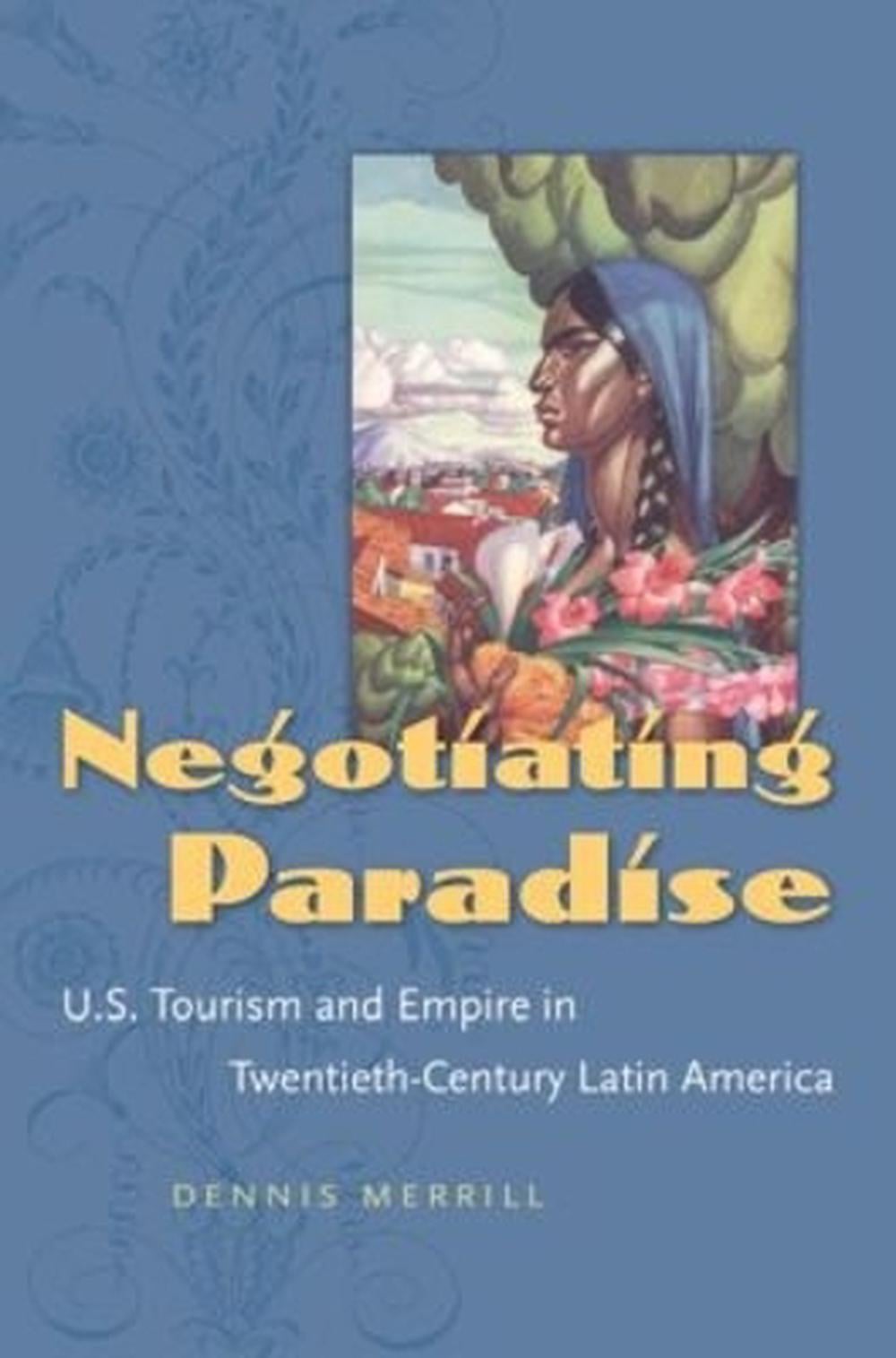
Negotiating Paradise
by Dennis Merrill
Presents the comparative history of US tourism in Latin America in the twentieth century which demonstrates that empire is a more textured, variable, and interactive system of inequality and resistance than commonly assumed.
Paperback
English
Brand New
Publisher Description
How tourism transformed the context of foreign policy. Accounts of U.S. empire building in Latin America typically portray politically and economically powerful North Americans descending on their southerly neighbors to engage in lopsided negotiations. Dennis Merrill's comparative history of U.S. tourism in Latin America in the twentieth century demonstrates that empire is a more textured, variable, and interactive system of inequality and resistance than commonly assumed. In his examination of interwar Mexico, early Cold War Cuba, and Puerto Rico during the Alliance for Progress, Merrill demonstrates how tourists and the international travel industry facilitated the expansion of U.S. consumer and cultural power in Latin America. He also shows the many ways in which local service workers, labor unions, business interests, and host governments vied to manage the Yankee invasion. While national leaders negotiated treaties and military occupations, visitors and hosts navigated interracial encounters in bars and brothels, confronted clashing notions of gender and sexuality at beachside resorts, and negotiated national identities. Highlighting the everyday realities of U.S. empire in ways often overlooked, Merrill's analysis provides historical context for understanding the contemporary debate over the costs and benefits of globalization.
Flap
In his examination of interwar Mexico, early Cold War Cuba, and Puerto Rico during the Alliance for Progress, Merrill demonstrates how tourists and the international travel industry facilitated the expansion of U.S. consumer and cultural power in Latin America. He also shows the many ways in which local service workers, labor unions, business interests, and host governments vied to manage the Yankee invasion. Highlighting the everyday realities of U.S. empire in ways often overlooked, Merrill's analysis provides historical context for understanding the contemporary debate over the costs and benefits of globalization.
Review
"[A] beautifully researched book. . . . Negotiating Paradise will undoubtedly provoke fruitful debate." -- Journal of American History
"An excellent example of how interesting 'diplomatic history' can be when one looks beyond the diplomats. . . . Fascinating. . . . This absorbing, entertaining and revealing story is a widely applicable model for future upbeat case studies of tourism in other parts of the world." -- American Historical Review
"Not only refreshing but illuminating. . . . Equally informative and engaging. . . . The quality of the scholarship is high, the co-organisation of the cultural and political material is always thoughtful and insightful, and the structural and 'agency' perspectives and insights offered are convincing and powerful." -- Journal of Latin American Studies
"Offers the reader a nuanced understanding of how tourism, U.S. expansionism, and nationalist projects intertwine." -- NACLA Report on the Americas
"Sophisticated and nuanced. . . . Required reading for those interested in the development of tourism in Latin America, cultural enthusiasts . . . and students of Latin American history. Through a masterful blend of theoretical interpretation, the thoughtful use of accounts gleaned from archives, and a thorough understanding of U.S.-Latin American relations, Merrill has created a standard that will remain relevant for years to come in the fields of foreign relations and tourism development." -- Florida Historical Quarterly
"This comparative history of US tourism in Latin America in the 20th century shows that empire is a more textured, variable and interactive system of inequality and resistance than commonly assumed." -- Abstracts of Public Administration, Development, and Environment
Review Quote
This comparative history of US tourism in Latin America in the 20th century shows that empire is a more textured, variable and interactive system of inequality and resistance than commonly assumed.-- Abstracts of Public Administration, Development, and Environment
Promotional "Headline"
"Merrill has written an important and persuasive book. Looking behind the beachfront resorts and casinos, he reveals how Latin Americans and Yankees engaged in a high-stakes contest over empire, profits, and national identity. Merrill offers cutting-edge ideas on international history and globalization with colorful material and superb storytelling."--Christopher Endy, author of Cold War Holidays: American Tourism in France
Details
