
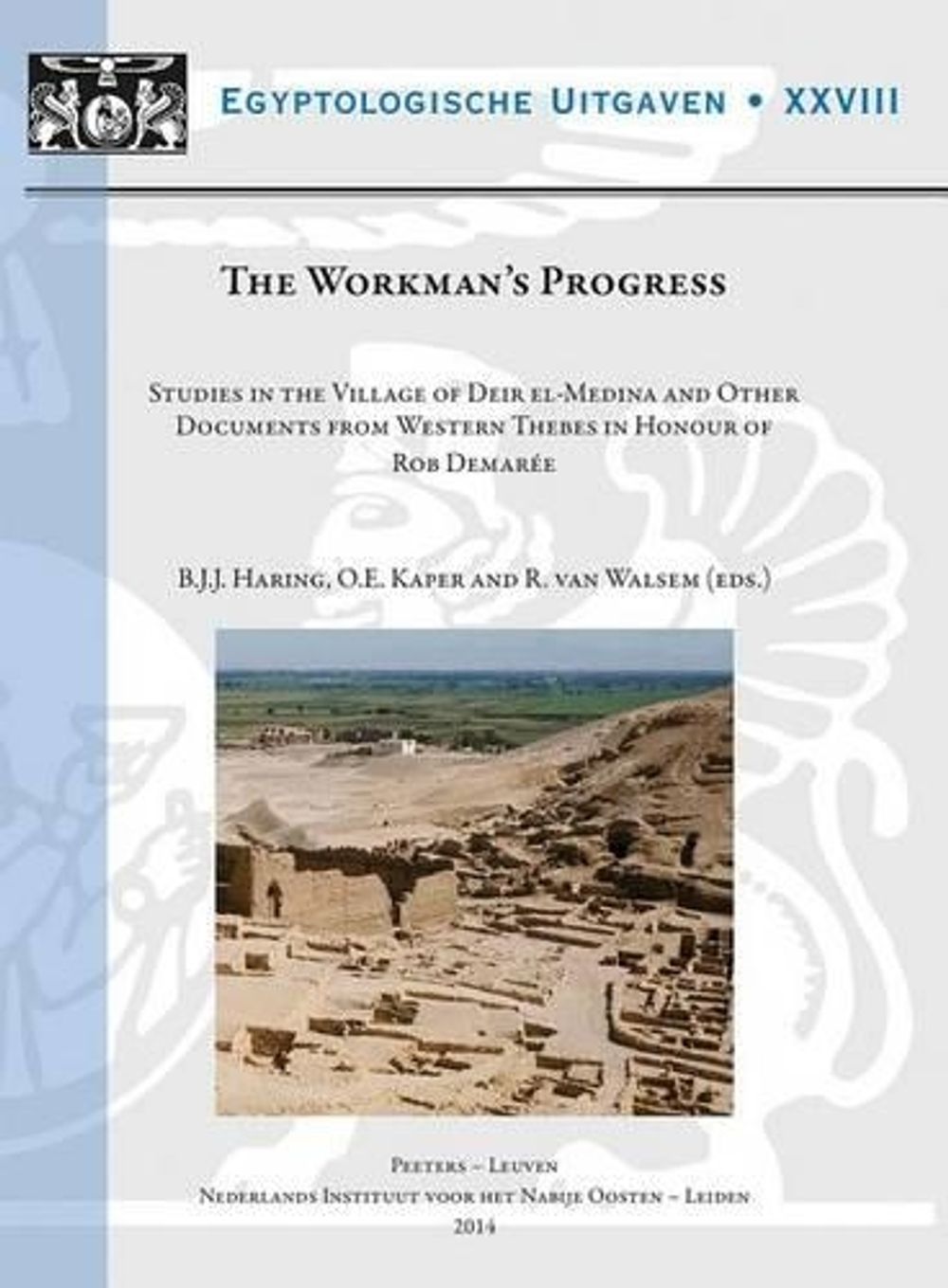
The Workman's Progress
by O.E. Kaper, B.J.J. Haring, R. van Walsem
This book contains twenty-two papers collected in honor of Robert J. Demaree by his friends and colleagues. Because of his expertise in the area of Western Thebes and ostraca of the village of Deir el-Medina in particular, the contributors have sought to address those topics in particular. Central theme of the Festschrift is the comm
Paperback
English
Brand New
Publisher Description
This book contains twenty-two papers collected in honour of Robert ée by his friends and colleagues. Because of his expertise in thearea of Western Thebes and ostraca of the village of Deir el-Medina inparticular, the contributors have sought to address these topics inparticular. Central theme of the Festschrift is the community of workmenof Deir el-Medina, which is investigated from many different angles. Thepapers discuss the documentary texts from the village, either written ingraffiti, on papyri or on ostraca, but also aspects of the work in theValley of the Kings, the workmen's use of oil, birthing beds, coffins,stelae as well as their religious beliefs and behaviour. The volume thussheds new light on the workmen's community, as well as on the area ofWestern Thebes in more general terms.
This volume is a token ofgratitude from the Leiden University department of Egyptology for Rob'smuch appreciated contribution to its teaching programme, as well as atribute by colleagues worldwide who have worked with him, also infieldwork projects in Egypt.
Long Description
This book contains twenty-two papers collected in honour of Robert J. Demaree by his friends and colleagues. Because of his expertise in the area of Western Thebes and ostraca of the village of Deir el-Medina in particular, the contributors have sought to address those topics in particular. Central theme of the Festschrift is the community of workmen of Deir el-Medina, which is investigated from many different angles. The papers discuss the documentary texts from the village, either written in graffiti, on papyri or on ostraca, but also aspects of the work in the Valley of the Kings, the workmen's use of oil, birthing beds, coffins, stelae as well as their religious beliefs and behaviour. The volume thus sheds new light on the workmen's community, as well as on the area of Western Thebes in more general terms. The volume is a token of gratitude from the Leiden University department of Egyptology for Rob's much appreciated contribution to its teaching programme, as well as a tribute by colleagues worldwide who have worked with him, also in fieldwork projects in Egypt.
Details
