
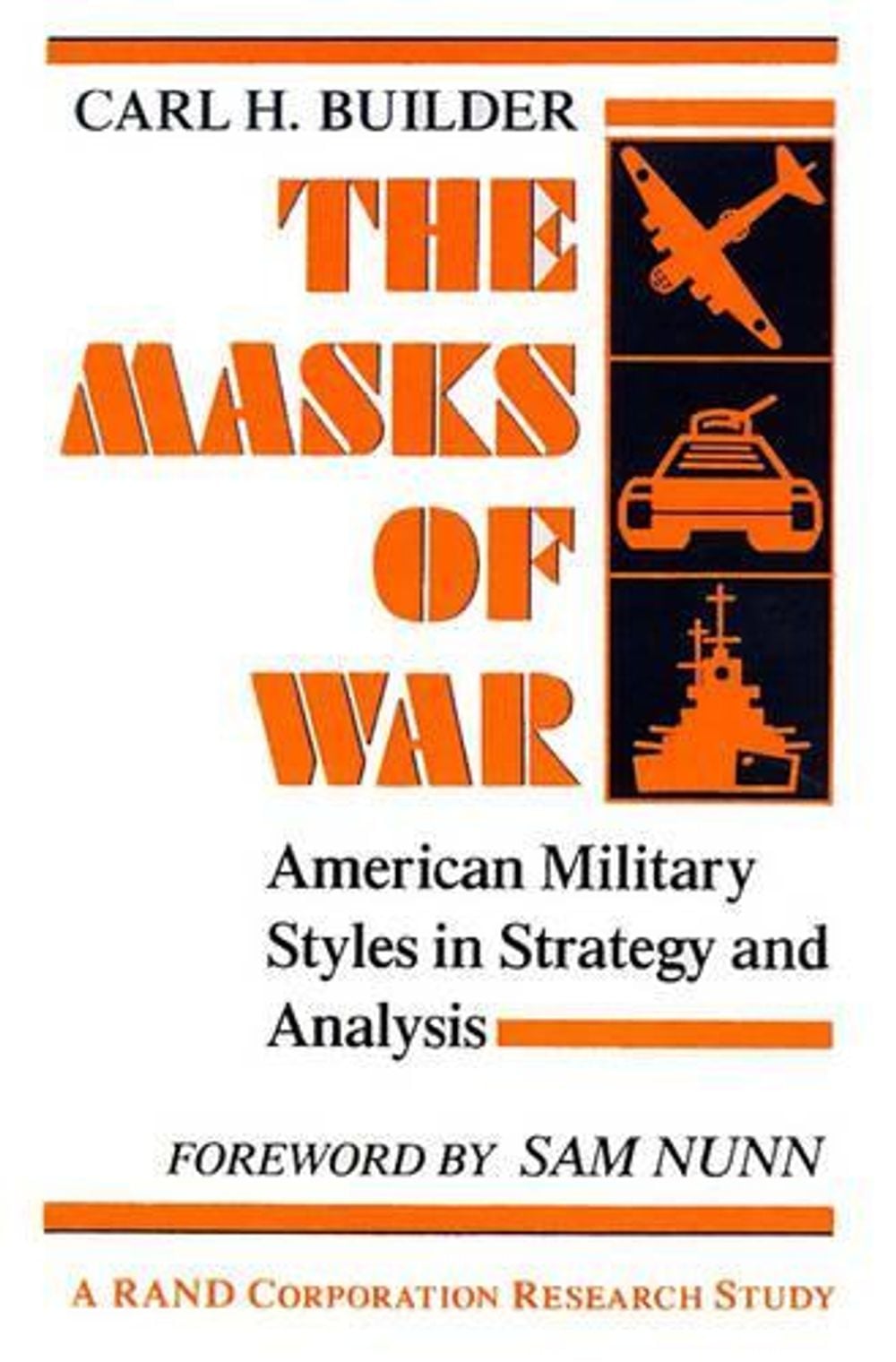
The Masks of War
by Carl Builder
Today's nuclear world can't afford such lessons.
Paperback
English
Brand New
Publisher Description
Why was the Navy ready to clear the skies over the Persian Gulf, yet surprised by the mines laid under it? Why is it that the Army is always prepared for war in Europe, but was caught off guard in Korea and Vietname? And why is the Air Force indifferent to "Star Wars"?In The Masks of War Carl H. Builder asks what motives lie behind the puzzling and often contradictory behavior of America's militay forces. The answer, he finds, has little to do with what party controls the White House or who writes the budget. Far more powerful-and glacially resistant to change-are the entrenched institutions and distinct "personalities" of the three armed services Masks of War explains why things sometimes go wrong for the American military. It also explains why things will always go wrong for the military reformers. Changes in the military's strategic thinking have come only in the wake of full-blown disaster-Pearl Harbor, for instance. Today's nuclear world can't afford such lessons.
Table of Contents
Foreword
Preface
Part I: Personalities
Chapter 1. The Masks of War
Chapter 2. Five Faces of the Service Personalities
Chapter 3. The Service Identities and Behavior
Part II: Strategies
Chapter 4. What is Strategy?
Chapter 5. Service Strategies
Chapter 6. The Air Strategy
Chapter 7. The Navy and Strategy
Chapter 8. The Army and Strategy
Part III: Analysis
Chapter 9. What is Analysis?
Chapter 10. Service Styles Toward Analysis
Chapter 11. Images of Conflict
Part IV: Implications
Chapter 12. The Service Concepts of War
Chapter 13. Military Commitments to Combat
Chapter 14. Implications for Military Planning
Chapter 15. Implications for Regional Security
Part V: Prospects
Chapter 16. The Army's Identity Crisis
Chapter 17. Implications For the Future
Notes
Bibliography
Index
Review
Builder's provocative book is institutional profile at its best, probing far beyond the flip phrases that usually describe the essence of each service, e.g., that the Air Force likes things it can fly. Foreign AffairsA RAND Corporation Research Study
Long Description
Why was the Navy ready to clear the skies over the Persian Gulf, yet surprised by the mines laid under it? Why is it that the Army is always prepared for war in Europe, but was caught off guard in Korea and Vietname? And why is the Air Force indifferent to ""Star Wars""? In The Masks of War Carl H. Builder asks what motives lie behind the puzzling and often contradictory behavior of America's militay forces. The answer, he finds, has little to do with what party controls the White House or who writes the budget. Far more powerful-and glacially resistant to change-are the entrenched institutions and distinct ""personalities"" of the three armed services themselves. The Masks of War explains why things sometimes go wrong for the American military. It also explains why things will always go wrong for the military reformers. Changes in the military's strategic thinking have come only in the wake of full-blown disaster-Pearl Harbor, for instance. Today's nuclear world can't afford such lessons.
Review Text
""Builder's provocative book is institutional profile at its best, probing far beyond the flip phrases that usually describe the essence of each service, e.g., that the Air Force likes things it can fly.""
Review Quote
"Builder's provocative book is institutional profile at its best, probing far beyond the flip phrases that usually describe the essence of each service, e.g., that the Air Force likes things it can fly."-- Foreign AffairsA RAND Corporation Research Study
Details
