
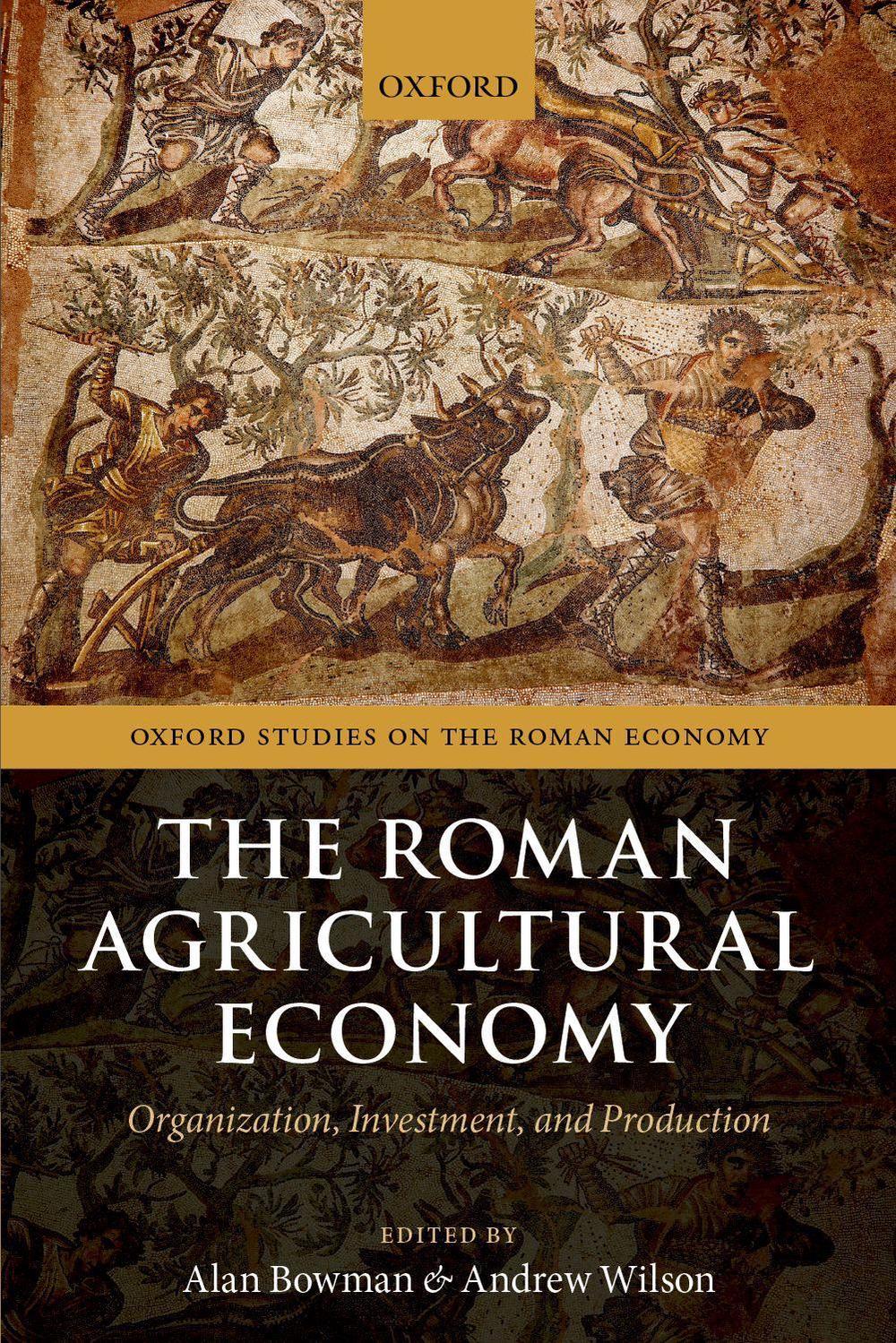
The Roman Agricultural Economy
by Alan Bowman, Andrew Wilson
This collection presents new analyses for the nature and scale of Roman agriculture. It outlines the fundamental features of agricultural production through studying the documentary and archaeological evidence for the modes of land exploitation and the organisation, development of, and investment in this sector.
Paperback
English
Brand New
Publisher Description
This volume is a collection of studies which presents new analyses of the nature and scale of Roman agriculture in the Mediterranean world from c. 100 BC to AD 350. It provides a clear understanding of the fundamental features of Roman agricultural production through studying the documentary and archaeological evidence for the modes of land exploitation and the organisation, development of, and investment in this sector of the Roman substantially beyond the simple assumption that agriculture was the dominant sector of the ancient economy, the volume explores what was special and distinctive about it, especially with a view ofits development and integration during a period of expansion and prosperity across the empire. The papers exemplify a range of possible approaches to studying and, within limits, quantifying aspects of Roman agricultural production, marshalling a large quantity of evidence, chiefly archaeological and papyrological, to address important questions of the organisation and performance of this sector in the Roman world.
Table of Contents
List of ContributorsList of FiguresList of Tables1: Alan Bowman and Andrew Wilson: Introduction: Quantifying Roman Agriculture2: Dennis Kehoe: The State and Production in the Roman Agrarian Economy3: Helen Goodchild: GIS Models of Roman Agricultural Production4: Annalisa Marzano: Agricultural Production in the Hinterland of Rome: Wine and Olive Oil5: Annalisa Marzano: Capital Investment and Agriculture: Multi-Press Facilities from Gaul, the Iberian Peninsula, and the Black Sea region6: Mariette de Vos: The Rural Landscape of Thugga: Farms, Presses, Mills and Transport7: Alan Bowman: Agricultural Production in Egypt8: Katherine Blouin: The Agricultural Economy of the Mendesian Nome under Roman Rule9: Myrto Malouta and Andrew Wilson: Mechanical Irrigation: Water-Lifting Devices in the Archaeological Evidence and in the Egyptian Papyri10: Hannah Friedman: Agriculture in the Faynan: Food Supply for the Mining IndustryIndex
Review
`'The Roman Agricultural Economy contains wide-ranging and high-quality scholarship that, on the one hand, reflects the focus of current investigations and, on the other, provides fruitful material for future research. This balance renders it a welcome addition to scholarship on the Roman economy, and a worthy successor in the OXREP series.''Taco Terpstra, The Classical Journal
Promotional
New analyses for the nature and scale of Roman agriculture
Long Description
This volume is a collection of studies which presents new analyses of the nature and scale of Roman agriculture in the Mediterranean world from c. 100 BC to AD 350. It provides a clear understanding of the fundamental features of Roman agricultural production through studying the documentary and archaeological evidence for the modes of land exploitation and the organisation, development of, and investment in this sector of the Roman economy. Moving substantially beyond the simple assumption that agriculture was the dominant sector of the ancient economy, the volume explores what was special and distinctive about it, especially with a view of its development and integration during a period of expansion and prosperity across the empire. The papers exemplify a range of possible approaches to studying and, within limits, quantifying aspects of Roman agricultural production, marshalling a large quantity of evidence, chieflyarchaeological and papyrological, to address important questions of the organisation and performance of this sector in the Roman world.
Review Text
''The Roman Agricultural Economy contains wide-ranging and high-quality scholarship that, on the one hand, reflects the focus of current investigations and, on the other, provides fruitful material for future research. This balance renders it a welcome addition to scholarship on the Roman economy, and a worthy successor in the OXREP series.''Taco Terpstra, The Classical Journal
Review Quote
"The Roman Agricultural Economy contains wide-ranging and high-quality scholarship that, on the one hand, reflects the focus of current investigations and, on the other, provides fruitful material for future research. This balance renders it a welcome addition to scholarship on the Roman economy, and a worthy successor in the OXREP series."--Taco Terpstra, Classical Journal
Feature
Offers a clear presentation and analysis of new data for ancient economic historyWide geographical range of comparative regional studies of the ancient MediterraneanFocuses on methods of combining documentary and archaeological evidenceIllustrated throughout with photographs, maps, and graphs
Details
