Tension force: Finely adjustable functional strength:
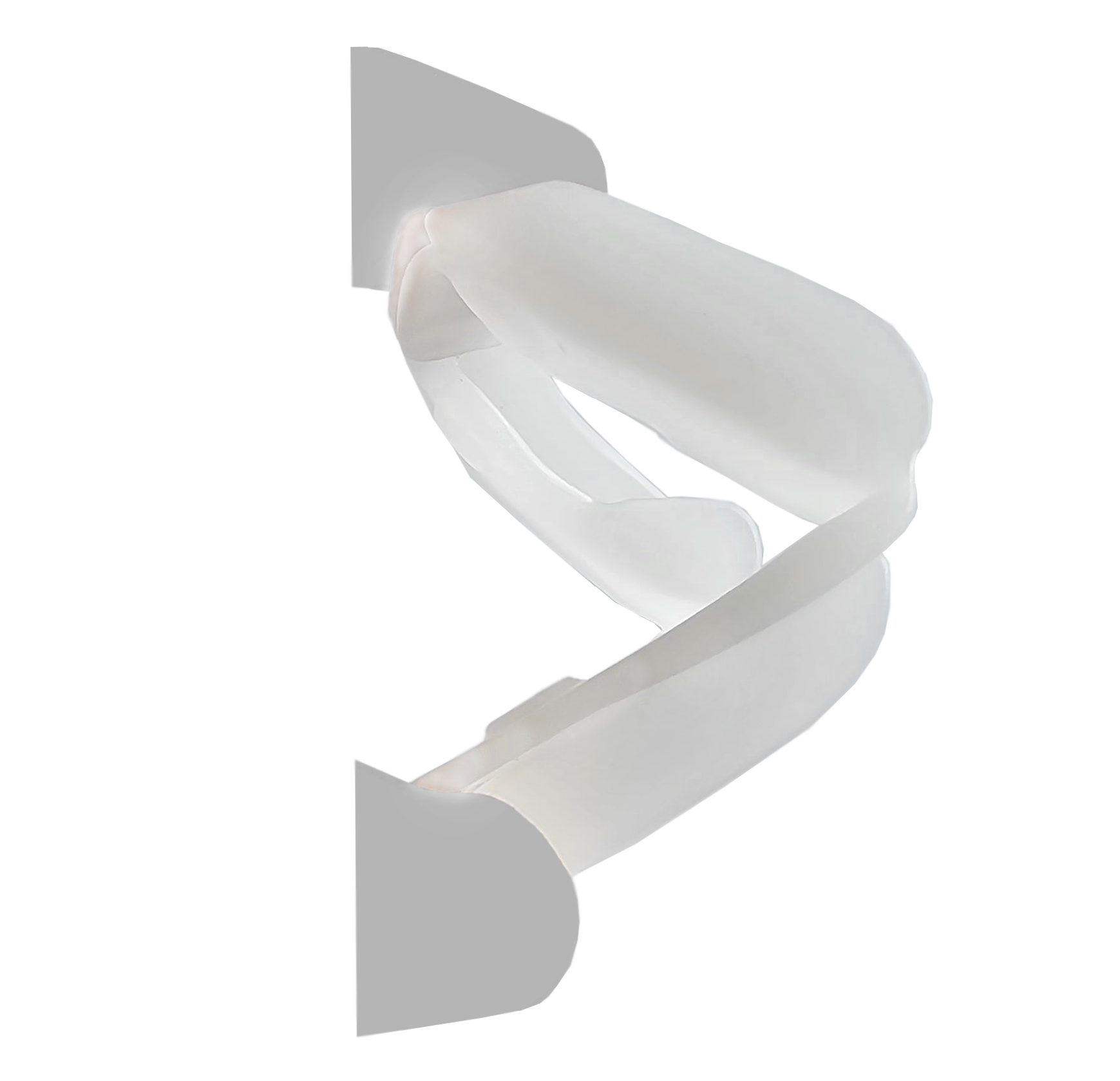
Tension force: open
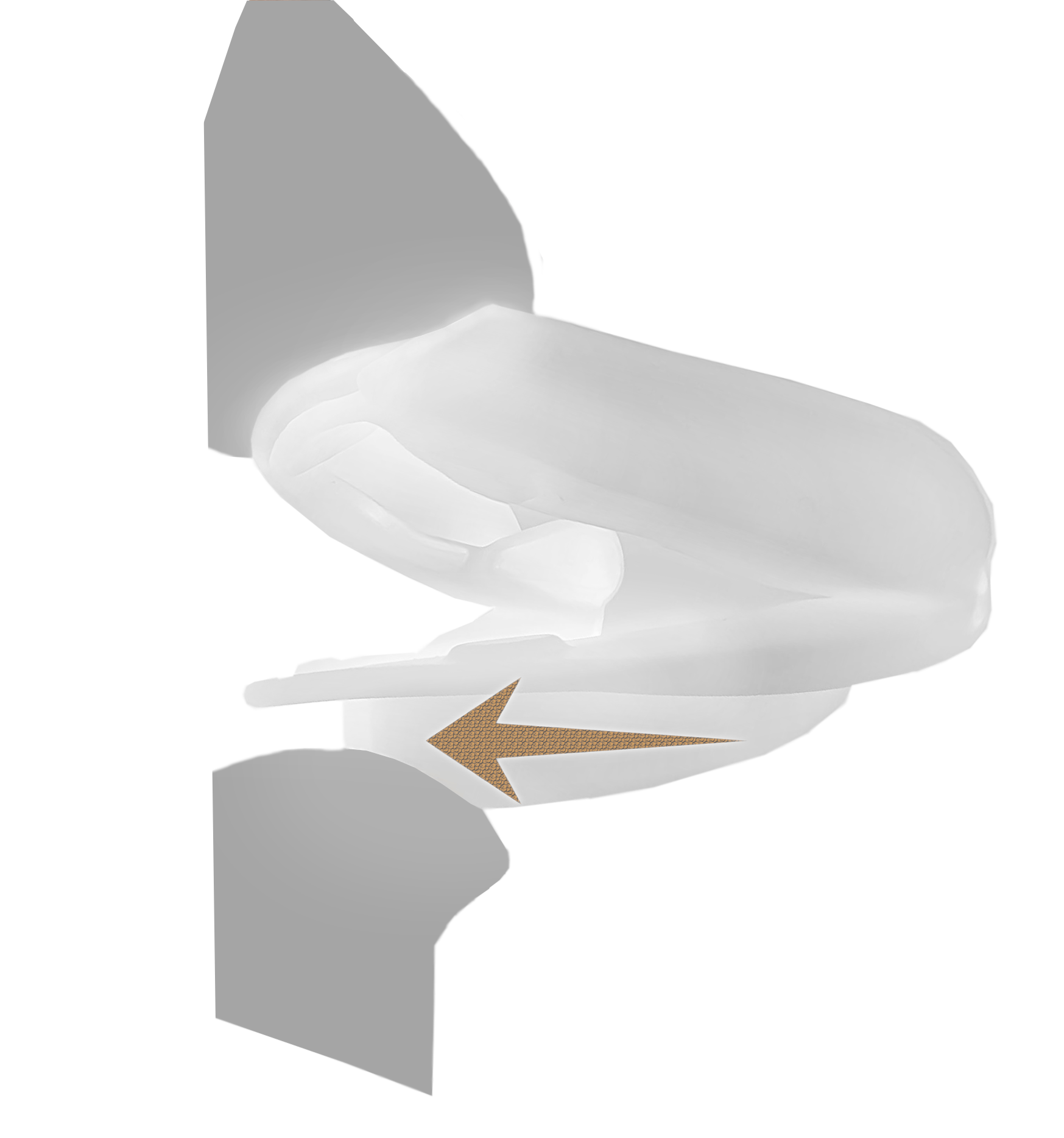
Clamping force closed -> Clamping force becomes mandibular advancement.
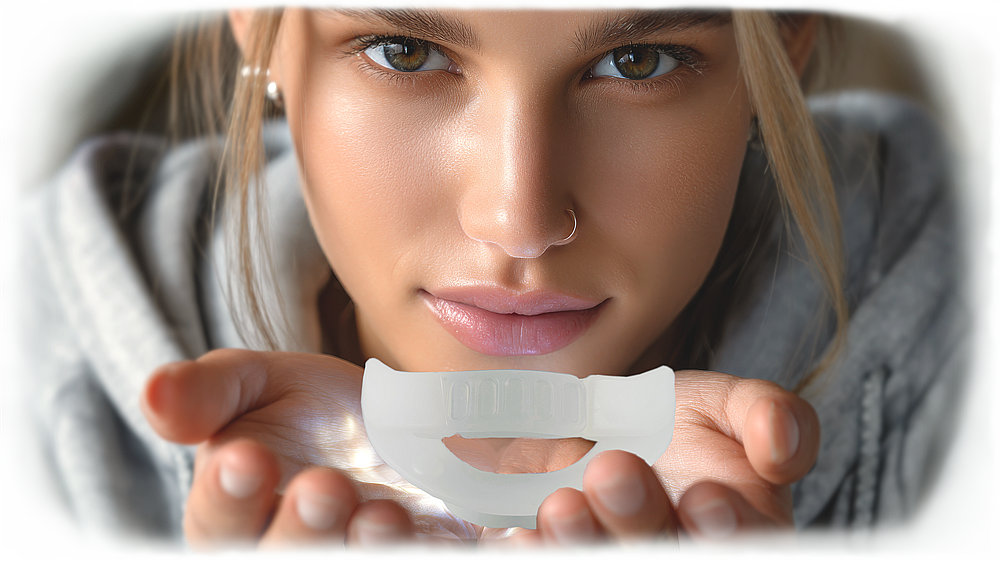
What is even better than in the previous version 5
- Approximately 30% higher clamping force - more information below under "Clamping force"
- new, German-made "medical grade" material
- Adjusting the clamping force is very easy; more information below under "Adjusting the clamping force".
- Width is not only adjustable in 6 increments via adjusters, but also via hot forming.
- particularly resistant and durable
Tension force: open
Clamping force closed -> Clamping force becomes mandibular advancement.
The efficiency adjuster allows for 6 different efficiency settings.
Change the setting as often as you like. Start with a low setting and then increase it as desired until the snoring is under control.
A simple yet ingenious adjustment mechanism means: no small parts that could come loose, no delicate micro-screws, no loose clamps or straps; simply adjust the efficiency to your personal preference with the easily adjustable connector.
Example on the left: 5 pins closed = tighter = more clamping force
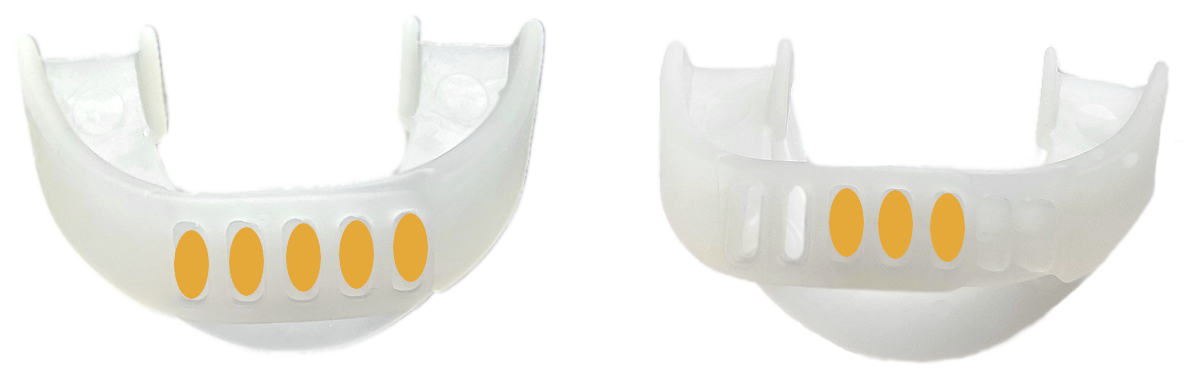
Example on the right: 3 pins closed = further = less clamping force
Adjust the tension further? Yes, that's possible too:
If the clamping force is generally too high:
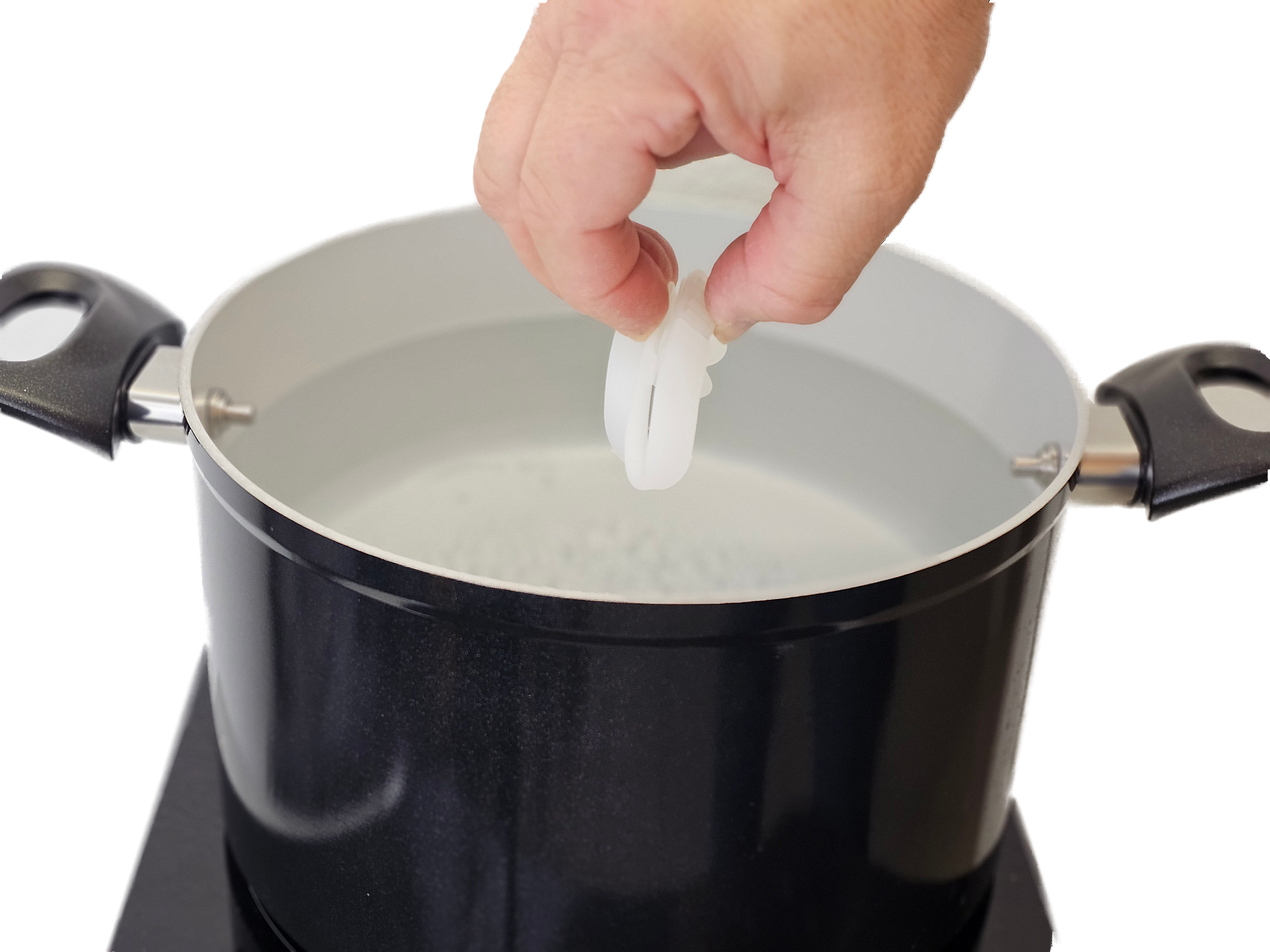
Immerse the joints of the closed Snoremender in boiling water for approximately 30 seconds:
Then, in this state, rinse the Snoremender in cold water:
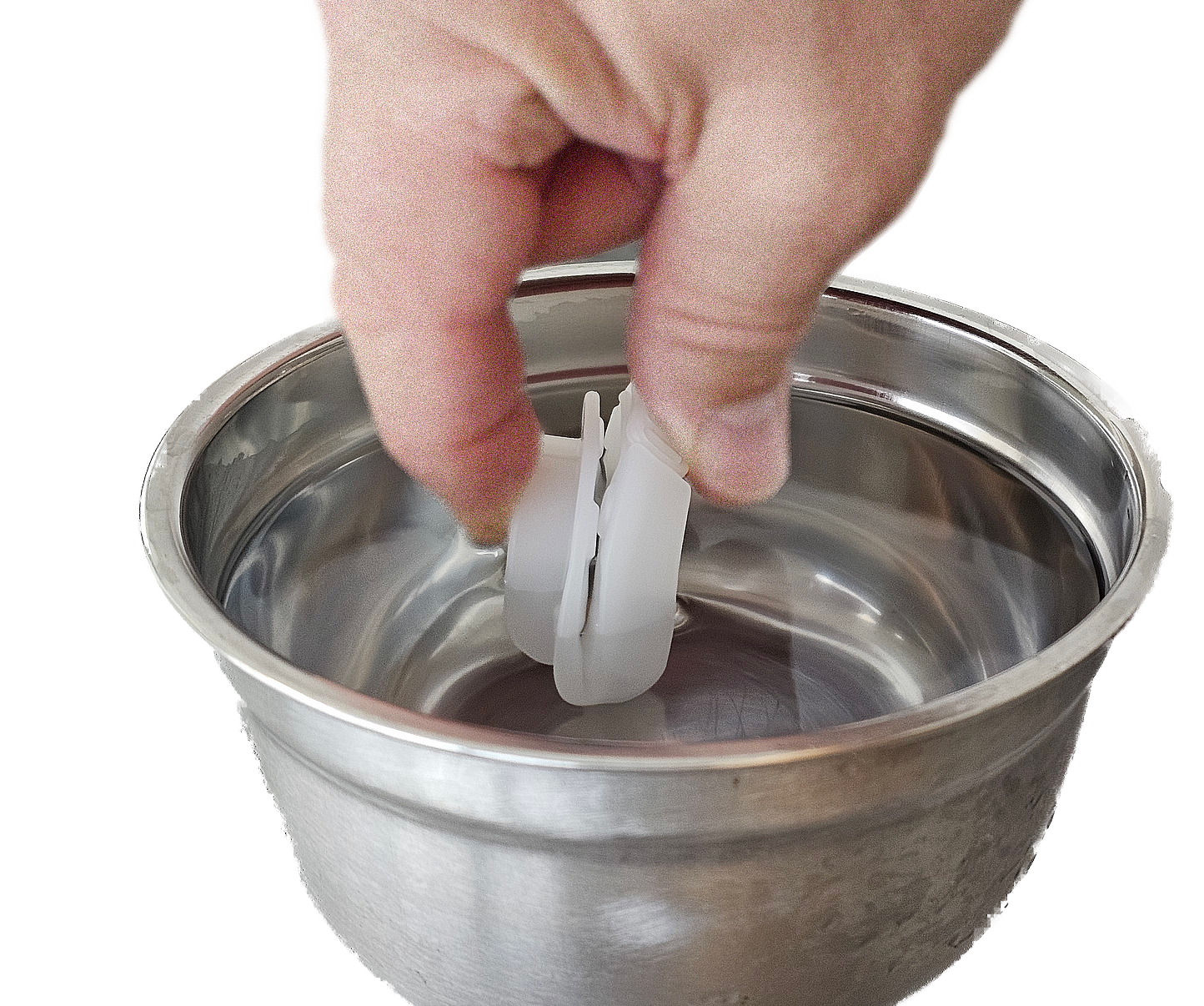
The tension has now been permanently and significantly reduced - you can also perform this step in a finely tuned/ gradual manner to preset the optimal tension for you .
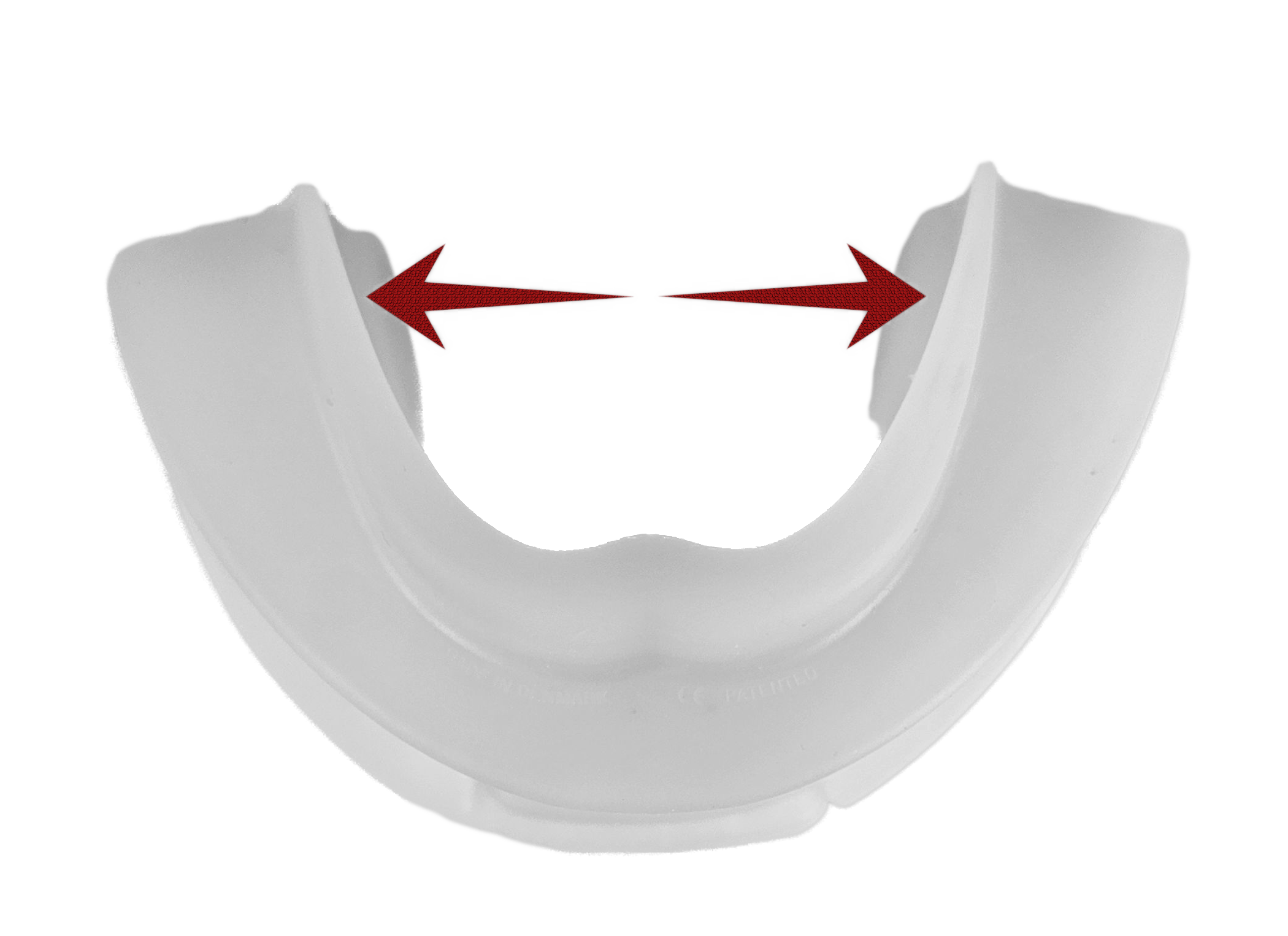
You can also change the overall width in the same way, except that instead of the hinges, you immerse the arch itself in boiling water and then quench it after bending it further apart or compressing it more tightly. Caution: We're talking about a difference of just a few millimeters.
Pressure Distribution Technology: This unique, patent-pending technology ensures improved comfort by better distributing pressure across the teeth. This results in exceptionally high and long-lasting wearing comfort.
No fitting required: SnoreMender can usually be used directly from the container without complicated prior shaping or fitting.
Adjustable: With the new Snoremender, you can adjust the degree of mandibular protrusion strength – i.e., how much your lower jaw should be held forward – to adapt the wearing comfort to your needs.
The patented hinge design allows for natural jaw movement – unlike other mouthguards, the SnoreMender does not block the lower jaw, but allows the mouth to open and close, swallow, and breathe normally through the mouth. This ensures lasting comfort and prevents jaw pain.
Flexible frame: The flexible frame material of the Snoremender reduces pressure on the temporomandibular joint.
Compact and flexible design – The SnoreMender is compact and flexible, therefore more comfortable and easier to use than bulky devices made of hard plastic.
A safe material – The SnoreMender is made of a specially formulated dental thermoplastic that contains no latex, silicone, phthalates, or BPA. Thanks to this safe material, the SnoreMender lasts longer than cheap mouthguards and is completely safe from a material perspective.
Quick and practical – because the SnoreMender is molded from a single piece of soft plastic, there's no need to clean complicated parts or soak them in expensive solutions. Hand washing with soap is sufficient for normal use.
According to the manufacturer, nearly one million SnoreMenders have been sold worldwide to date .
For your relationship: You'll both get the sleep you deserve! You'll often barely notice the SnoreMender after a few days, but your partner will be amazed by the results!
The pressure distribution technology of the Snoremender:
SnoreMender shifts the pressure away from the small lower front teeth to the larger and stronger teeth, making it comfortable to wear and effective.
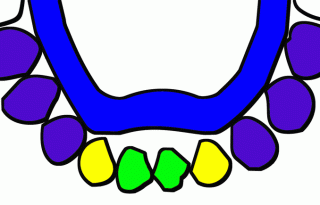
The points where the SnoreMender touches the teeth have been specially angled to direct pressure away from the tips of the teeth and closer to the lower part of the crown. This results in increased comfort and improved stability.
Brief description:
The Snoremender MDA is a simple, effective first measure against increased breathing noises at night.
Especially good for beginners:
Since the Snoremender usually does not need to be adjusted first, but can be used as is (any necessary adjustments can be made later), it is particularly suitable for dental splint novices and beginners.
Quick and affordable testing:
The Snoremender mouthguard allows you to quickly and cost-effectively
test whether mouthguards are generally suitable for you and to see if
they can positively influence your individual nighttime noise patterns.
In many cases, the Snoremender mouthguard alone is enough to achieve a
satisfactory result.
The
SnoreMender dental appliance counteracts the cause of certain types of
breathing noises. This mandibular advancement device is worn in front of
the soft palate during the night, gently pushing the lower jaw forward.
This opens the airways and can reduce loud breathing noises.
With the SnoreMender appliance, you can still open and close your
mouth; breathing is not restricted. The appliance's mandibular
advancement prevents the lower jaw from falling back and narrowing the
throat during sleep.
Simply place the SnoreMender in your mouth before going to sleep to
prevent airway constriction throughout the night. Noises caused by
narrowed airways can thus be reduced or even completely eliminated.
The pre-shaped, simultaneous upper and lower splint of the SnoreMender
usually fits without any further adjustments. The curve between the
upper and lower parts of the SnoreMender allows full vertical freedom of
movement for the jaw and also prevents the lower jaw from falling back,
even when lying on your back.
After a few days of getting used to this new sleep companion, the
SnoreMender dental splint often becomes an indispensable aid against
certain breathing noises at night. Many people wouldn't want to be
without it!
The noise-reducing effect can be noticeable even during the first few
uses, and you can experience your first quiet nights in a long time. The
user themselves can also quickly recognize the benefits: those who
sleep without airway constriction often recover better and are fitter
and more alert during the day.
However, the important rule for users also applies to this product:
"Wash me, but don't get me wet" – that's not possible. Initially, you
have to accept having a new foreign object in your mouth.
Information according to the Product Safety Ordinance:
Product
name: Snoremender 5 Premium Edition
Item numbers and EAN: 151D76, EAN 0089336771969
Brand: Snoremender®
Color: milky white
Scope of delivery: 1 x Snoremender 5 Premium Edition, 1 x casing, 1 x instruction manual
Manufacturer:
Ingemarsson
SE 28909489
Vilvordevej 61
2920 Charlottenlund
DK
Phone +45 3617 7050
E-mail nim@noiselezz.com
Made in: Denmark
Product safety information:
When should I only use dental splints after consulting a doctor?
If
sleep apnea is suspected, meaning frequent pauses in breathing during
the night lasting more than 10 seconds, a doctor (somnologist,
pulmonologist, ENT specialist) should be consulted in any case, and
self-treatment should not be attempted.
The use of dental appliances requires a complete set of teeth. Dental
appliances are plastic trays that "hold onto" the teeth when worn.
Therefore, the user must have enough healthy teeth for the appliance to
stay in place. There is no set number of teeth required.
If in doubt, or if you have any dental problems, we advise consulting your dentist or orthodontist.
When should you not use dental aligners:
If
you have an extremely receding lower jaw (overbite of 5mm or more) or a
protruding lower jaw, a dental splint may not be suitable for you.
A dental splint is also not suitable if you suffer from any of the following conditions:
serious gum disease,
jaw pain, temporomandibular joint disorder (TMD), trismus (lockjaw), or loose teeth. It is also not suitable
if you have dentures, implants, braces, bridges, or any other problems with your upper or lower front teeth.
You must be over 18 years of age.
The dental splint should be replaced with a new one every 12-15 months.