
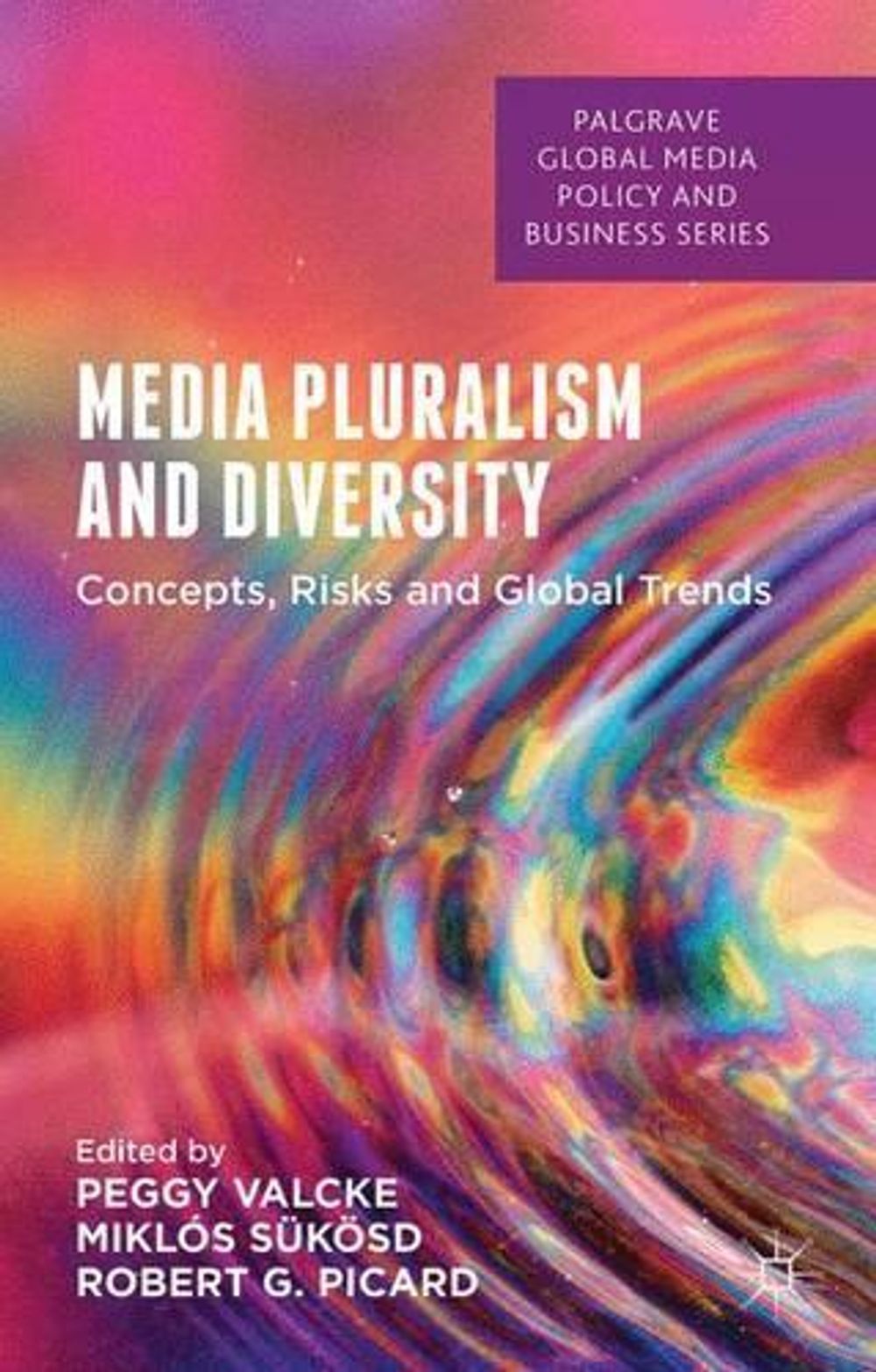
Media Pluralism and Diversity
by Miklos Sukosd, Peggy Valcke, Robert Picard
Adopting a truly global, theoretical and multidisciplinary perspective, Media Pluralism and Diversity intends to advance our understanding of media pluralism across the globe. It compares metrics that have been developed in different parts of the world to assess levels of, or threats to, media pluralism.
Hardcover
English
Brand New
Publisher Description
Adopting a truly global, theoretical and multidisciplinary perspective, Media Pluralism and Diversity intends to advance our understanding of media pluralism across the globe. It compares metrics that have been developed in different parts of the world to assess levels of, or threats to, media pluralism.
Table of Contents
"Editors'' Introduction: A Global Perspective On Media Pluralism And Diversity
PART I: MEDIA PLURALISM IN EUROPE: CONCEPTUALISATION AND DIMENSIONS IN THE EUROPEAN MEDIA PLURALISM MONITOR
1. New Media Ecology: Reconceptualising Media Pluralism; Karol Jakubowicz
2. The Dimension Of Ownership And Control Of Media; Robert Picard And Cinzia Dal Zotto
3. Pluralism Of Media Types And Media Genres; Mihály Gálik And Artemon Vogl
4. Cultural And Geographical Dimensions Of Media Pluralism; Beata Klimkiewicz
5. Political Pluralism In The Media A Product Of Dominant Power Relations In A Society; Sandra Hrvatin and Brankica Petkovic
6. Indicators For Media Pluralism; Peggy Valcke, Robert Picard, Cinzia Dal Zotto, Miklos Sükösd, Aleksandra Kuczerawy and Robin Kerremans
PART II: MEDIA PLURALISM ACROSS THE GLOBE: COMPARATIVE PERSPECTIVES ON THE EUROPEAN MEDIA PLURALISM MONITOR
7. Assessing Media Diversity In The U.S.: A Comparative Analysis Of The FCC''s Diversity IndexAnd The EU''s Media Pluralism Monitor; Philip Napoli
8. How To Conceptualize Media Pluralisation In China?; Miklos Sükösd
9. Incredible India: Media Pluralism Amidst Unity In Diversity; Kiran Prasad
10. Media Pluralism In Russia: In Need Of Policy Making; Elena Vartanova
11. Latin American Media: The Challenges To Pluralism; Manuel Alejandro Guerrero Martínez
12. Media Diversity In Egypt: Monitoring Newspapers And Talk Shows During The First Post-Revolution Parliamentary Elections; Rasha Abdulla
13. Pluralism With Little Diversity: The South African Experience Of Media Transformation; Jane Duncan
14. Reviewing Media Pluralism In Australia; Lesley Hitchens
15. The Ongoing Media Pluralism Debate In South Korea; Sugmin Youn/Hyunwoo Lee
PART III: MEDIA PLURALISM 2.0: FUTURE CHALLENGES AND CRITICAL PERSPECTIVES
16. The Limits Of Empirical Indicators: Media Pluralism As An Essentially Contested Concept; Kari Karppinen
17. Why Ownership Pluralism StillMatters In A Multi-Platform World; Gillian Doyle
18. Bright-Line Versus Responsive Regulation: Some Thoughts From The United Kingdom; Rachael Craufurd Smith
19. Media Pluralism Policies From The User Perspective; Natali Helberger
20. Search Engines, Pluralism And Diversity: What Is At Stake And How To Move Policy Forward?; Joris Van Hoboken
Review
"In addition to drawing on individual research conducted by the editors and contributors, experts in the field of policy making, regulation and political economy of the electronic communications sector, this valuable addition to the literature draws on findings of an important study for the European Commission on indicators for media pluralism and the development of a media pluralism monitor (MPM). Together, with its ambitious global sweep and consideration of future challenges, it makes an important contribution to our understanding of the implications for media pluralism of the tremendous changes in media technologies and markets." Professor Peter Humphreys, School of Social Sciences, University of Manchester, UK
Long Description
In the western world, a diverse and pluralistic media landscape is deemed essential for democracy. But how universal is media pluralism as a concept underpinning media policies? To what extent do normative approaches, regulatory dimensions and monitoring systems differ throughout the world? Adopting a truly global, theoretical and multidisciplinary perspective, Media Pluralism and Diversity advances our understanding of media pluralism across the globe. It compares metrics developed in different parts of the world to assess levels of, or threats to, media pluralism. It identifies common challenges for media pluralism policies in the light of a fast changing media environment. The book is unique in that it confronts insights from all parts of the world and from a broad range of disciplines including law, economics, media studies, and sociology.
Review Quote
"In addition to drawing on individual research conducted by the editors and contributors, experts in the field of policy making, regulation and political economy of the electronic communications sector, this valuable addition to the literature draws on findings of an important study for the European Commission on indicators for media pluralism and the development of a media pluralism monitor (MPM). Together, with its ambitious global sweep and consideration of future challenges, it makes an important contribution to our understanding of the implications for media pluralism of the tremendous changes in media technologies and markets." -- Professor Peter Humphreys, School of Social Sciences, University of Manchester, UK
Details
