
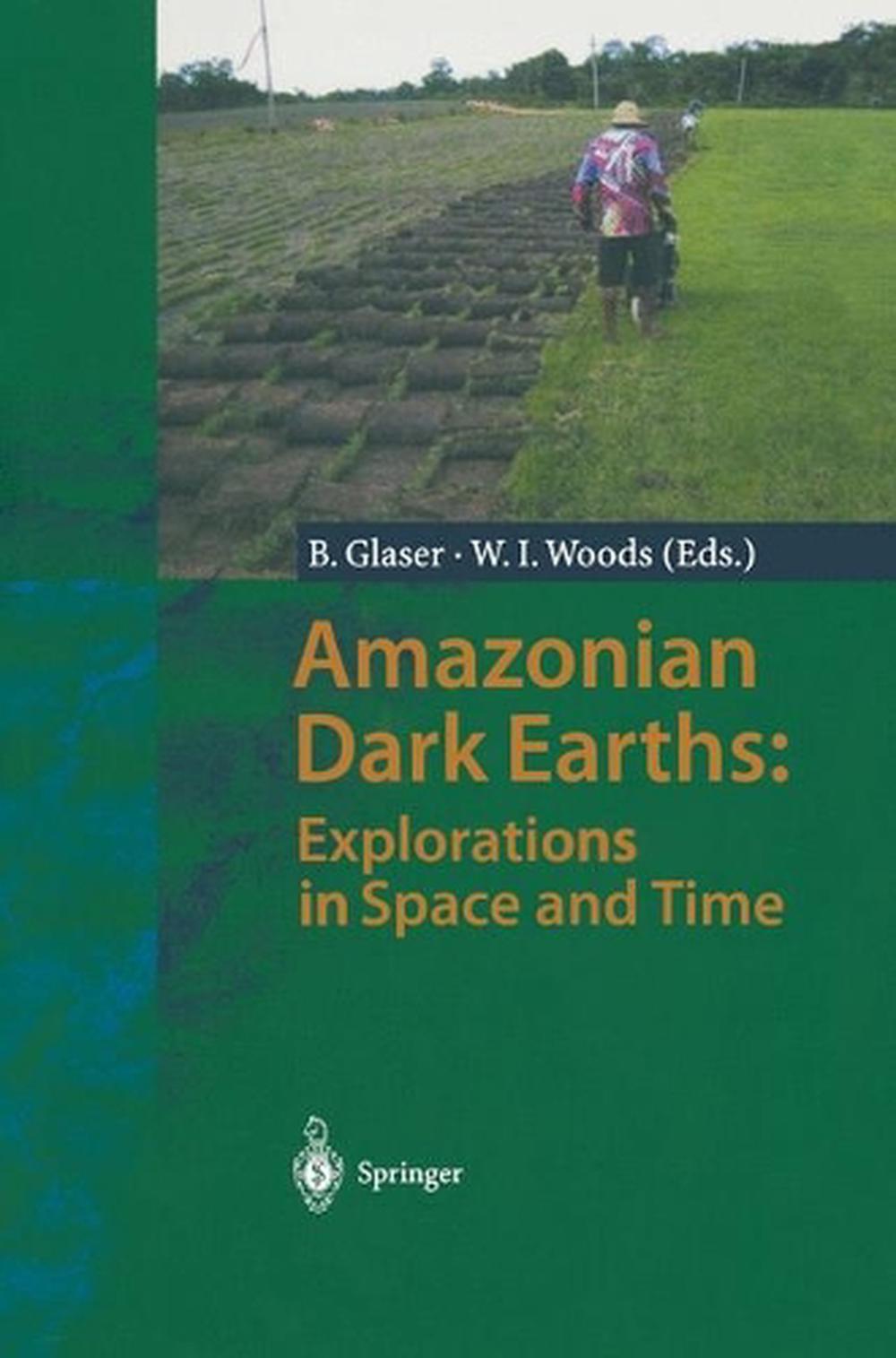
Amazonian Dark Earths: Explorations in Space and Time
by Bruno Glaser, William I. Woods
The regenerative qualities identified in prehistoric, anthropogenic Amazonian dark earths suggest that notoriously infertile tropical soils can be greatly improved. Soil enhancement practices by ancient Amerindians allowed them to intensively cultivate the land, without needing to continually clear new fields from forest. As increasing populations place ever greater pressure on tropical forests, this legacy of rich, "living" soils warrants further study in the search for high-yield, land intensive, yet sustainable forms of management. This volume's international group of contributors provides a variety of stances centering on aspects of the origin, distribution, variability, persistence, and use of Amazonian dark earths.
Paperback
English
Brand New
Notes
First book ever to address specifically the topic of prehistoric Amazonian dark earths
Back Cover
The regenerative qualities identified in prehistoric, anthropogenic Amazonian dark earths suggest that notoriously infertile tropical soils can be greatly improved. Soil enhancement practices by ancient Amerindians allowed them to cultivate the land intensively, without needing to continually clear new fields from forest. As increasing populations place ever greater pressure on tropical forests, this legacy of rich, 'living' soils warrants further study in the search for high-yield, land-intensive, yet sustainable forms of management. The international group of contributors to this volume provides a variety of stances centering on aspects of the origin, distribution, variability, persistence, and use of Amazonian dark earths.
Table of Contents
1 Towards an Understanding of Amazonian Dark Earths.- 2 History, Current Knowledge and Future Perspectives of Geoecological Research Concerning the Origin of Amazonian Anthropogenic Dark Earths (Terra Preta).- 3 Evolution of the Scientific Knowledge Regarding Archaeological Black Earths of Amazonia.- 4 A Geographical Method for Anthrosol Characterization in Amazonia: Contributions to Method and Human Ecological Theory.- 5 Paleoriverine Features of the Amazon Lowlands: Human Use of the 'Arena Negra' Soils of Lake Charo, Northeastern Peru.- 6 Dark Earth in the Upper Amazon.- 7 Organic Matter in Archaeological Black Earths and Yellow Latosol in the Caxiuanã, Amazonia, Brazil.- 8 Sequential P Fractionation of Relict Anthropogenic Dark Earths of Amazonia.- 9 The Timing of Terra Preta Formation in the Central Amazon: Archaeological Data from the Three Sites.- 10 Semi-Intensive Pre-European Cultivation and the Origins of Anthropogenic Dark Earths in Amazonia.- 11 Identifying the Pre-Columbian Anthropogenic Input on Present Soil Properties of Amazonian Dark Earths (Terra Preta).- 12 Use of Space and Formation of Terra Preta: The Asurini do Xingu Case Study.- 13 Research on Anthropogenic Dark Earth Soils. Could It Be a Solution for Sustainable Agricultural Development in the Amazon?.- 14 Slash and Char: An Alternative to Slash and Burn Practiced in the Amazon Basin.- 15 Microbial Response to Charcoal Amendments of Highly Weathered Soils and Amazonian Dark Earths in Central Amazonia - Preliminary Results.
Review
From the reviews:"Concern for the environmental health of Amazonia is at the forefront of current international environmental issues. … Even more uncommonly discussed is the existence of 'dark earths,' the subject of this book. … Coverage ranges from a review of the literature to discussion of appropriate methodology. … the book is well written and an excellent resource on this topic. … it will be valuable for all academic libraries and useful to a wide range of readers in natural resources and even in anthropology. Summing Up: Recommended." (M.G. Messina, CHOICE, Vol. 42 (5), January, 2005)
Promotional
Springer Book Archives
Long Description
The idea for the volume first came about through a conversation the editors had at the Sustainable Management of Soil Organic Matter Conference in Edinburgh in September 1999. It developed with two symposia on Amazonian dark earths that were held in 2001 in conjunction with the Conference ofLatin Americanist Geographers in Benicassim, Spain, and the Congress of the Brazi
Review Quote
From the reviews:"Concern for the environmental health of Amazonia is at the forefront of current international environmental issues. Even more uncommonly discussed is the existence of dark earths, " the subject of this book. Coverage ranges from a review of the literature to discussion of appropriate methodology. the book is well written and an excellent resource on this topic. it will be valuable for all academic libraries and useful to a wide range of readers in natural resources and even in anthropology. Summing Up: Recommended." (M.G. Messina, CHOICE, Vol. 42 (5), January, 2005)
Feature
First book ever to address specifically the topic of prehistoric Amazonian dark earths
Details
