

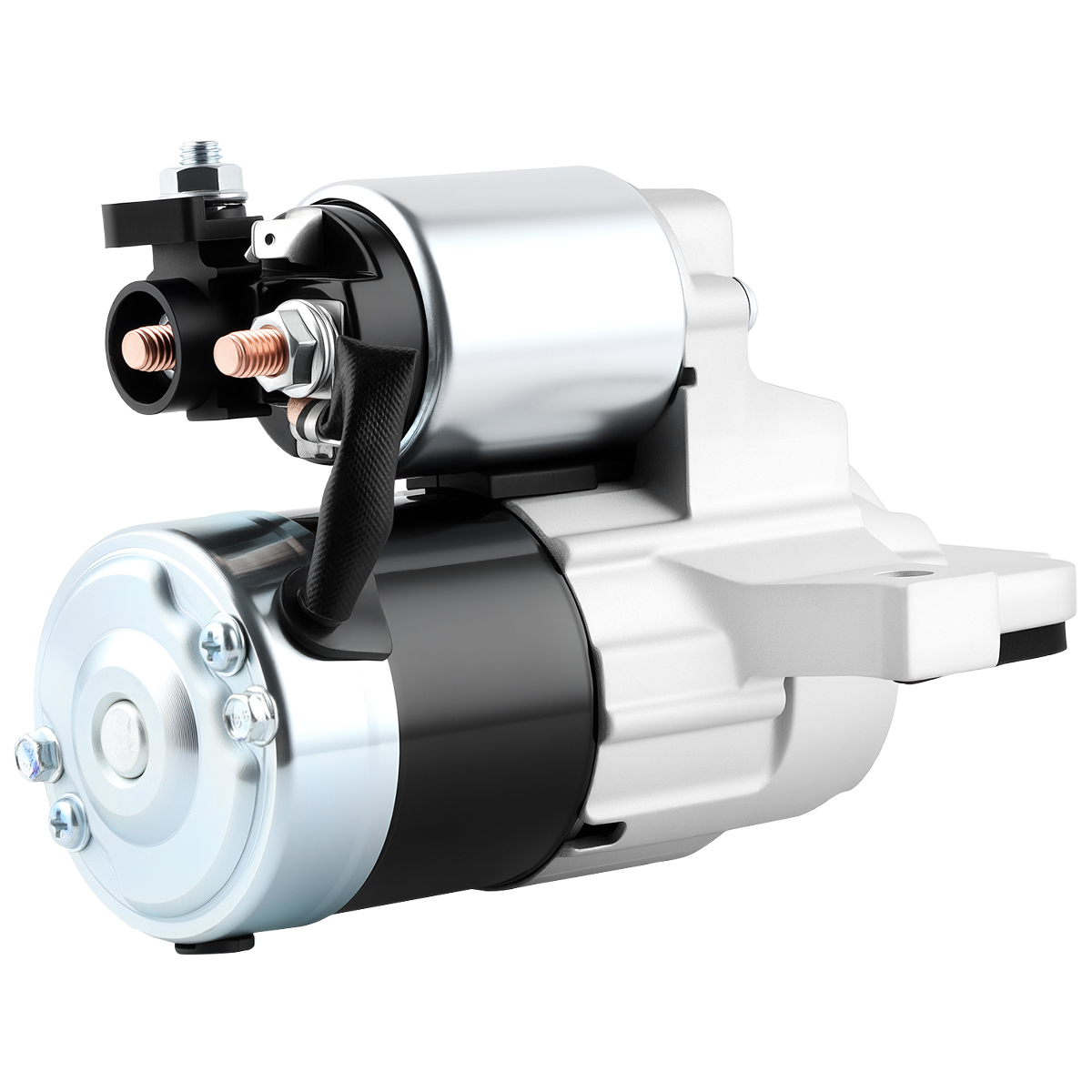
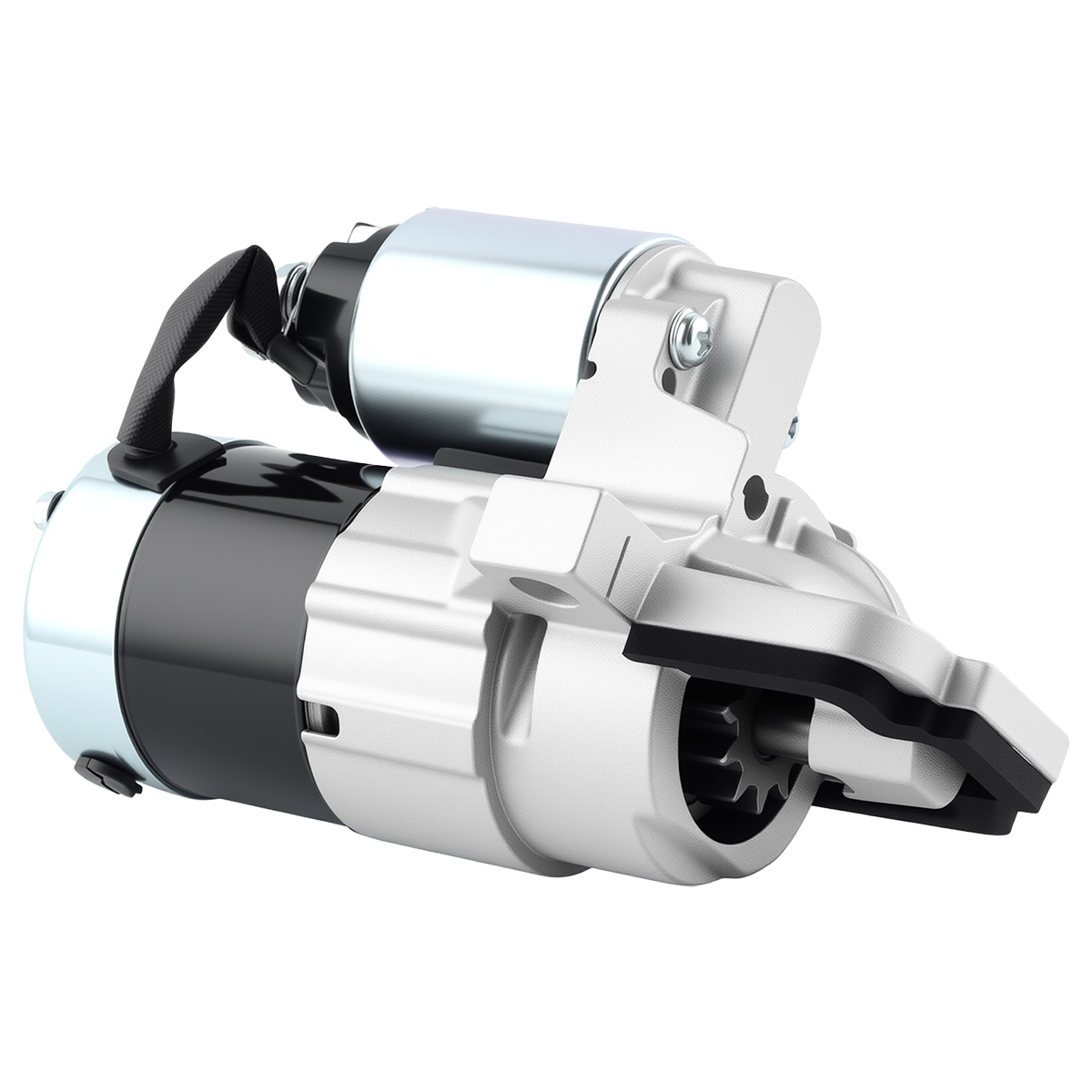
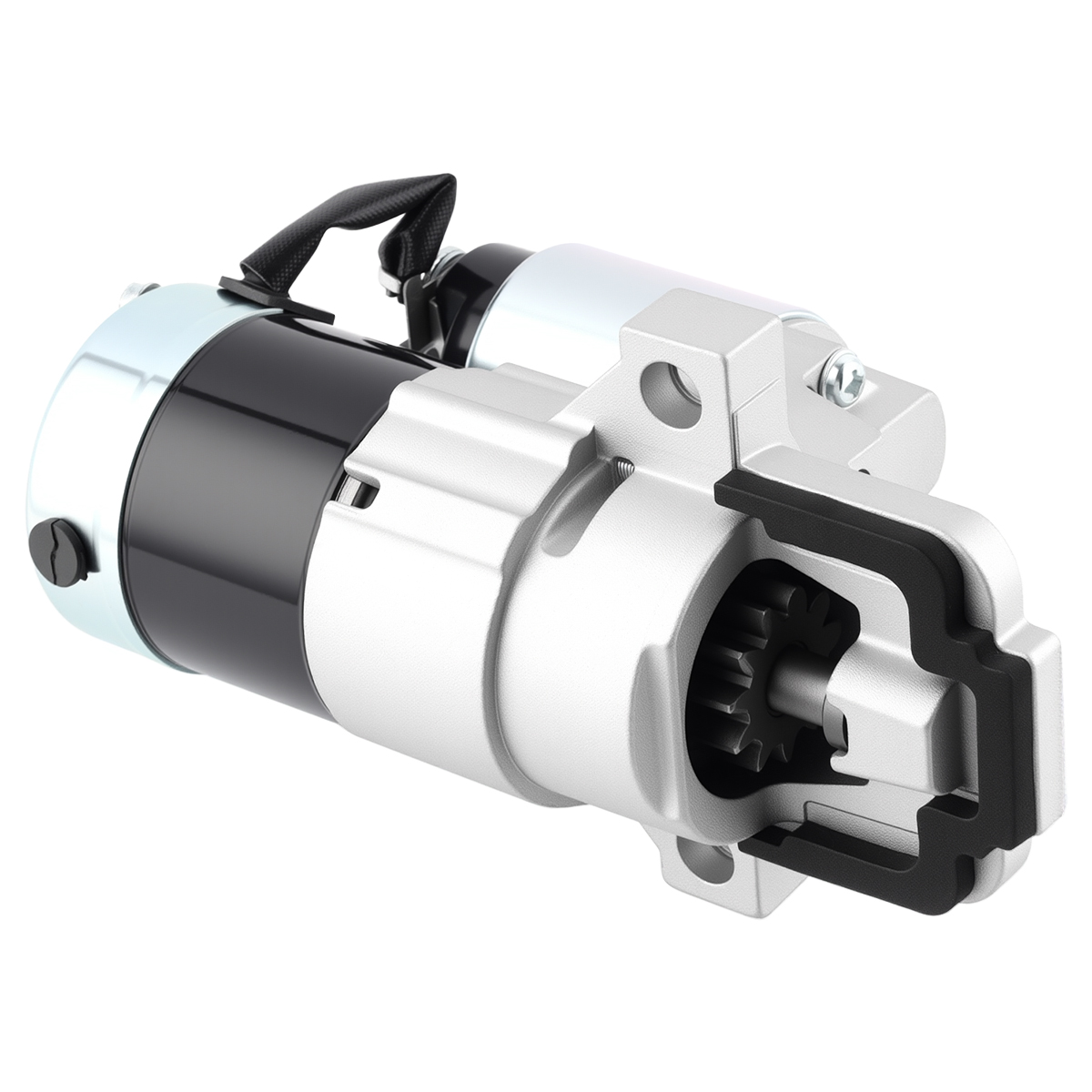
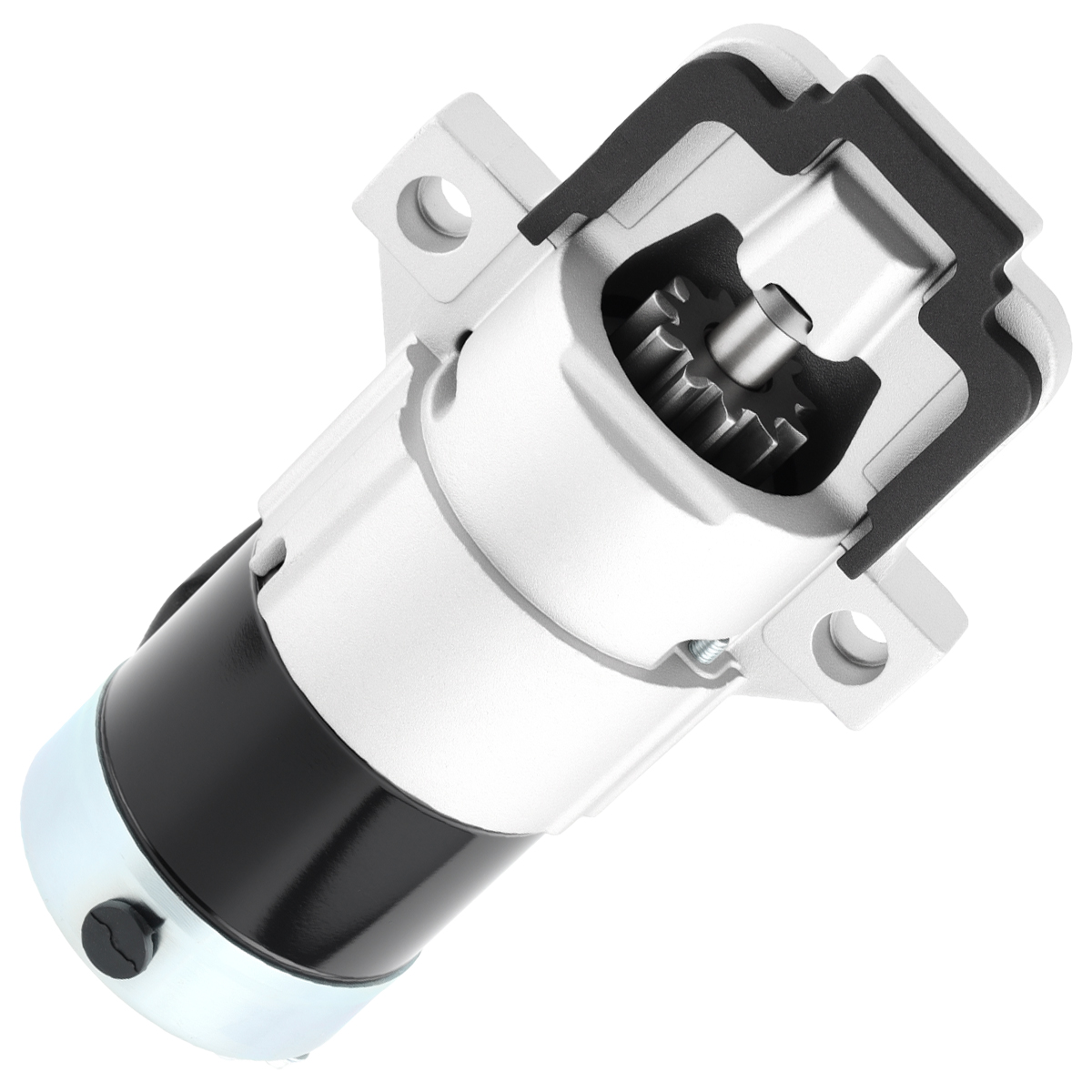
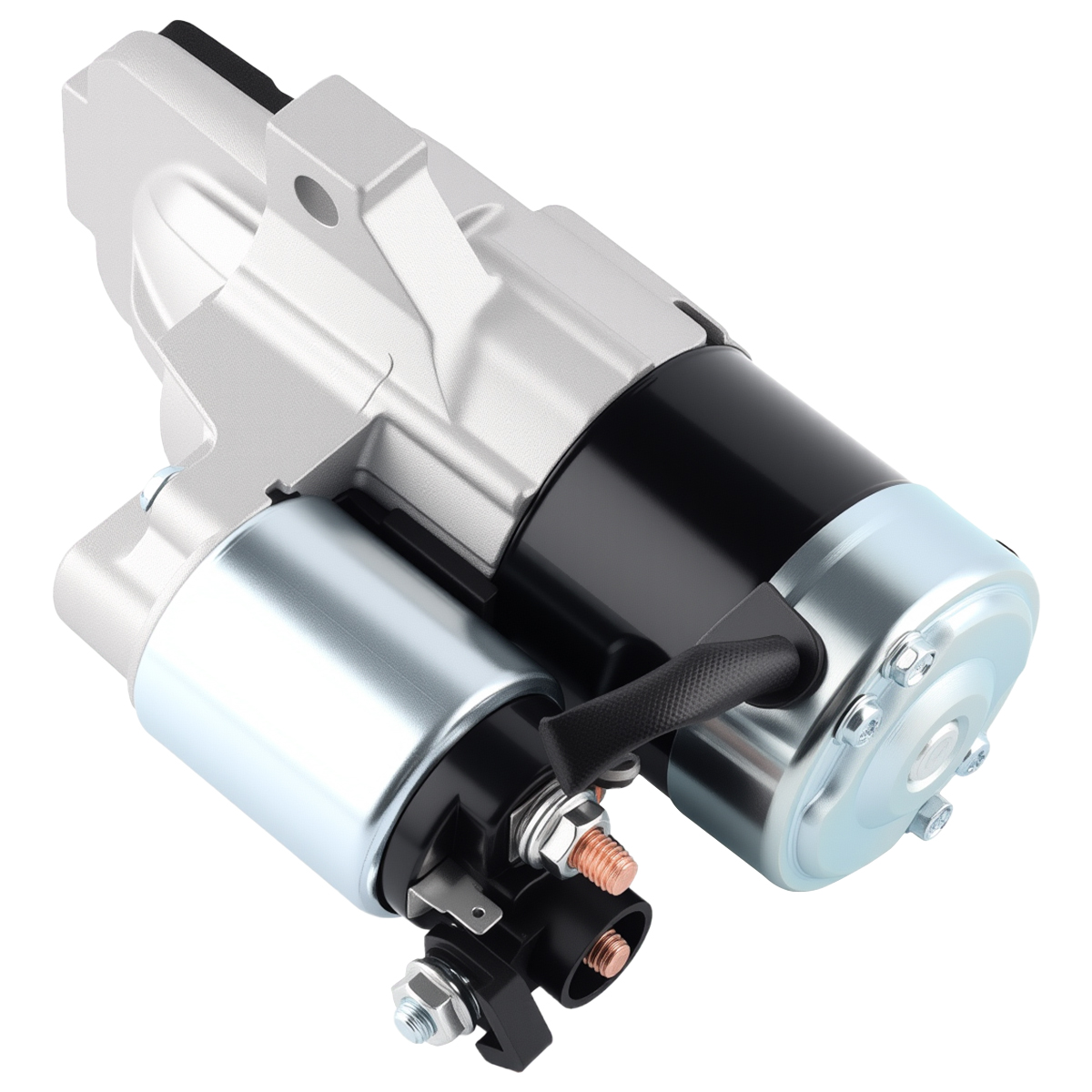
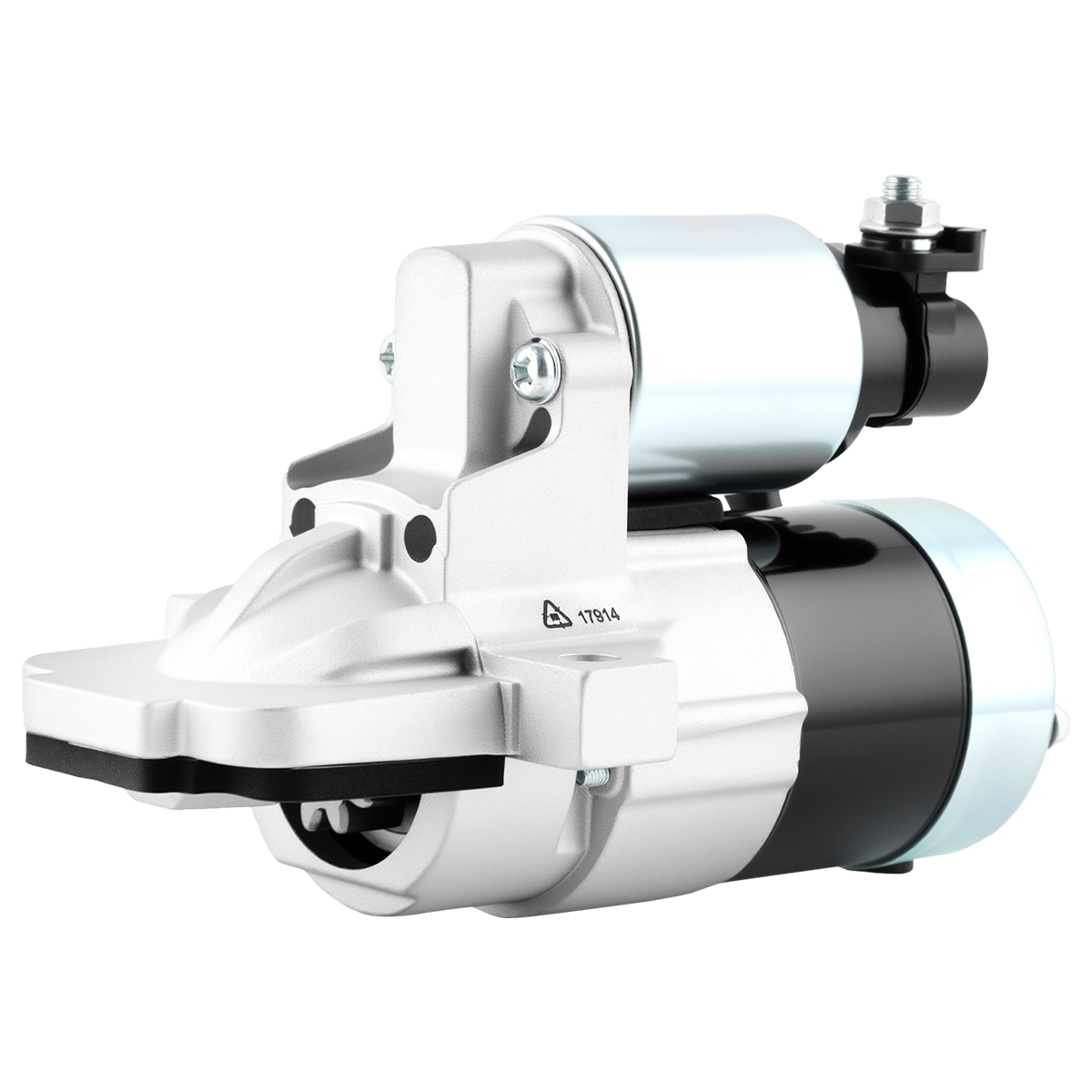
Features:
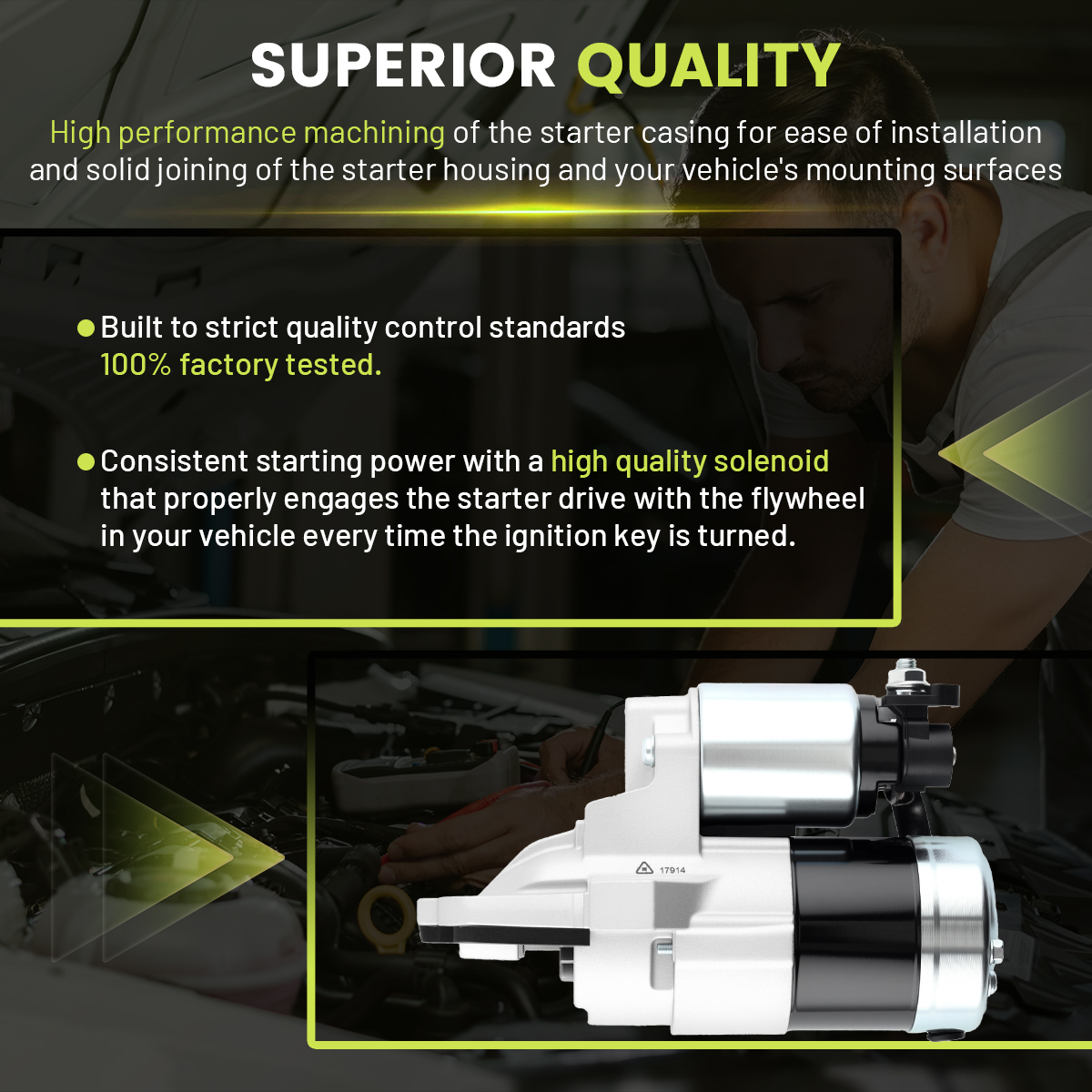
Built to strict quality control standards 100% factory tested.
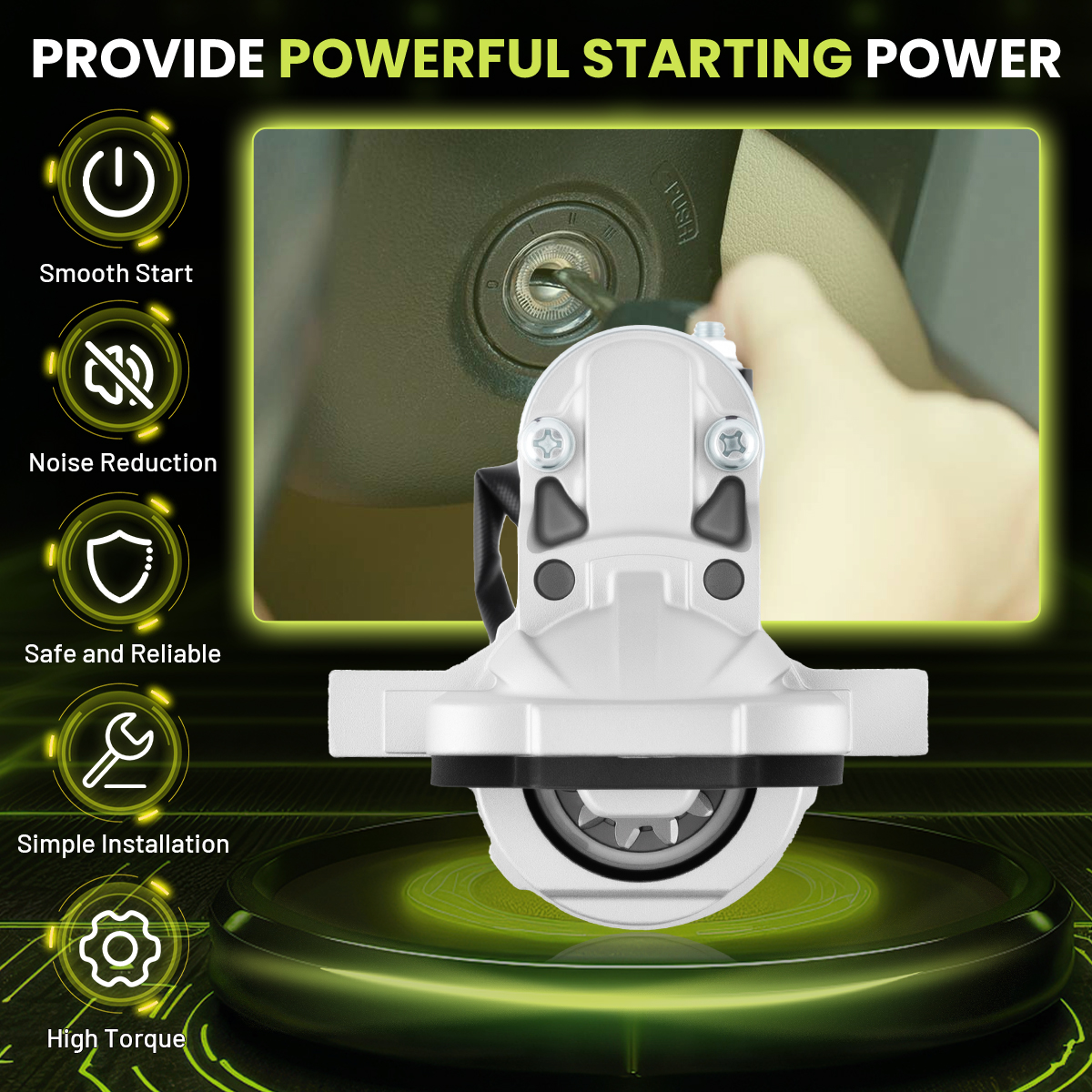
Consistent starting power with a high quality solenoid that properly engages the starter drive with the flywheel in your vehicle every time the ignition key is turned.
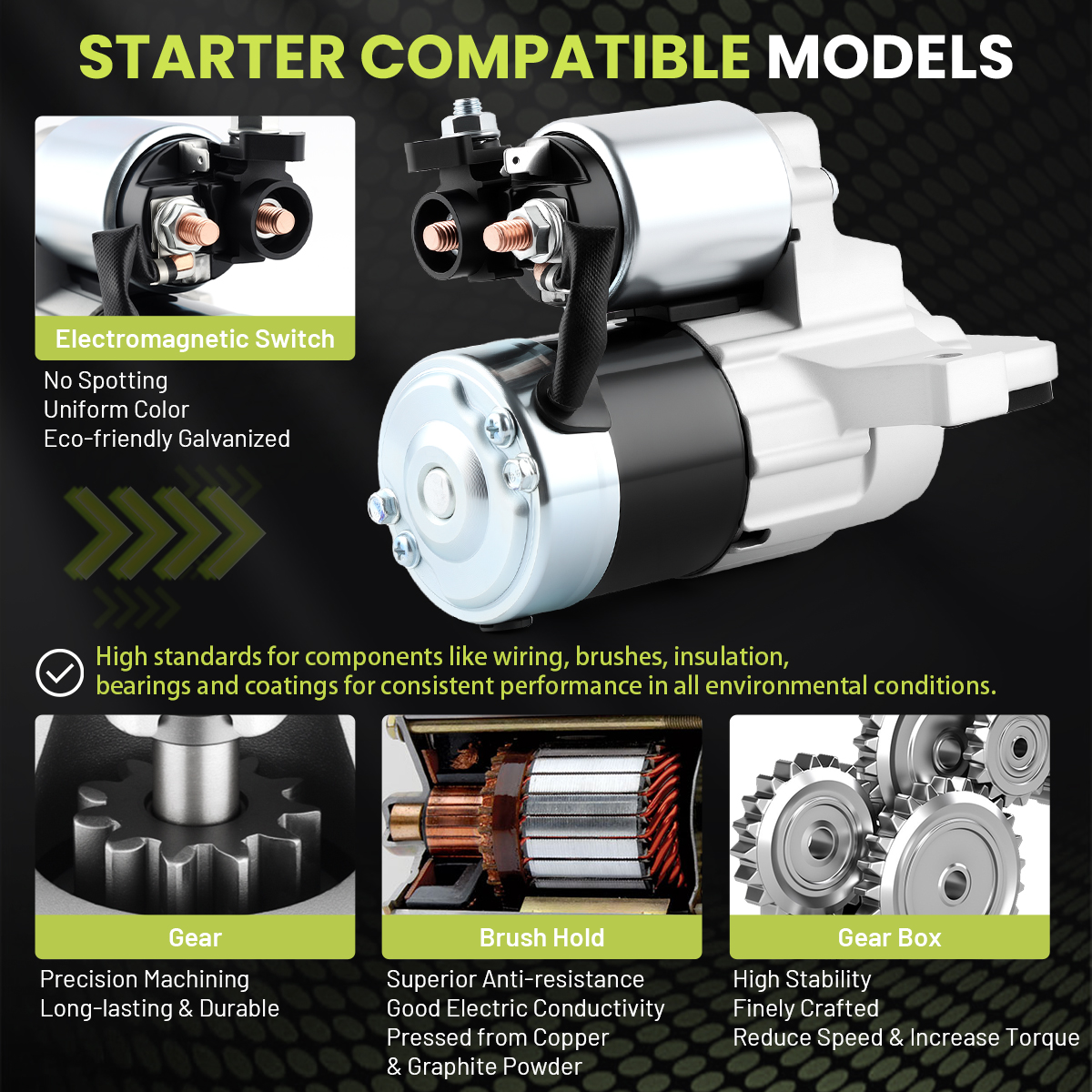
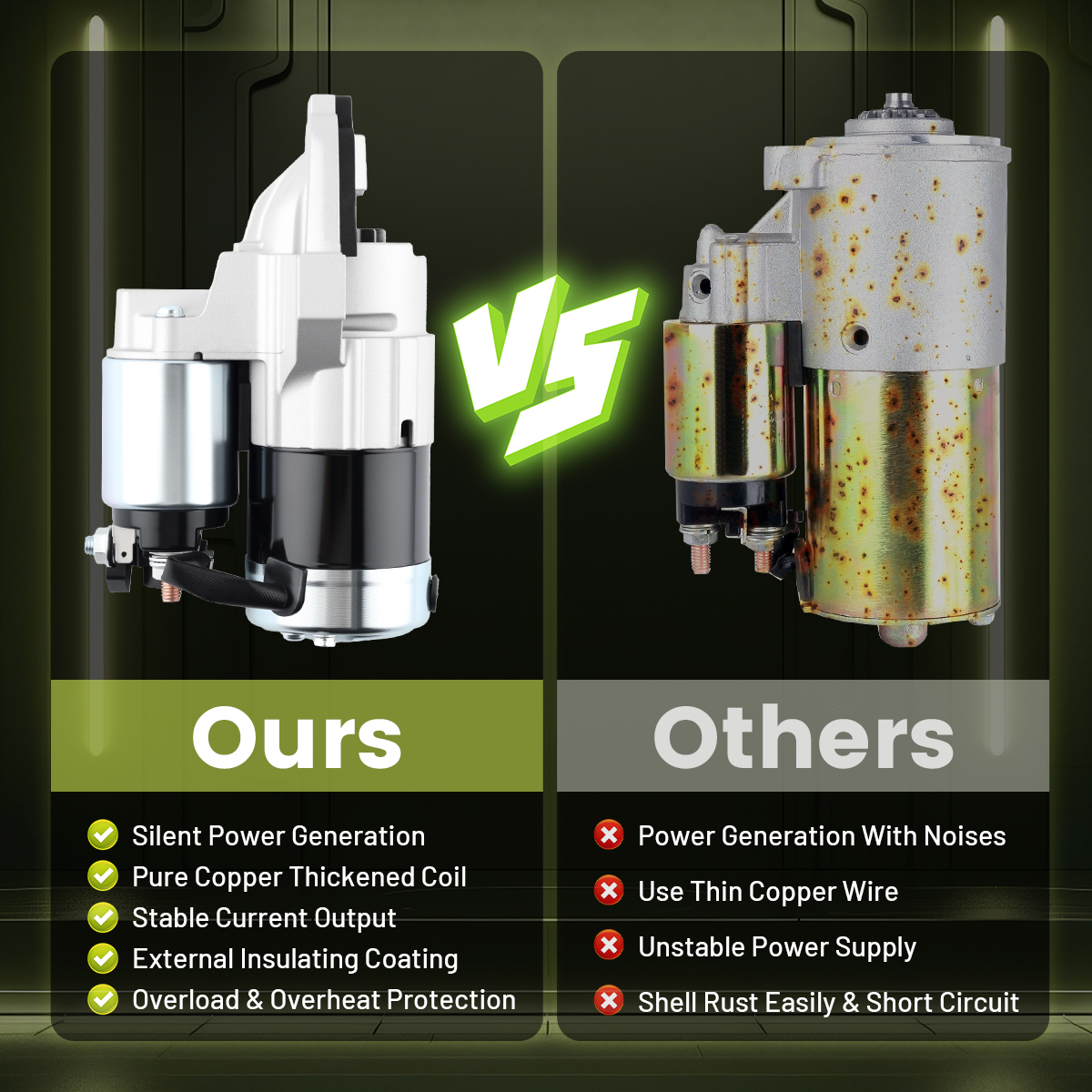
High standards for components like wiring, brushes, insulation, bearings and coatings for consistent performance in all environmental conditions.
High performance machining of the starter casing for ease of installation and solid joining of the starter housing and your vehicle's mounting surfaces
Specifications:
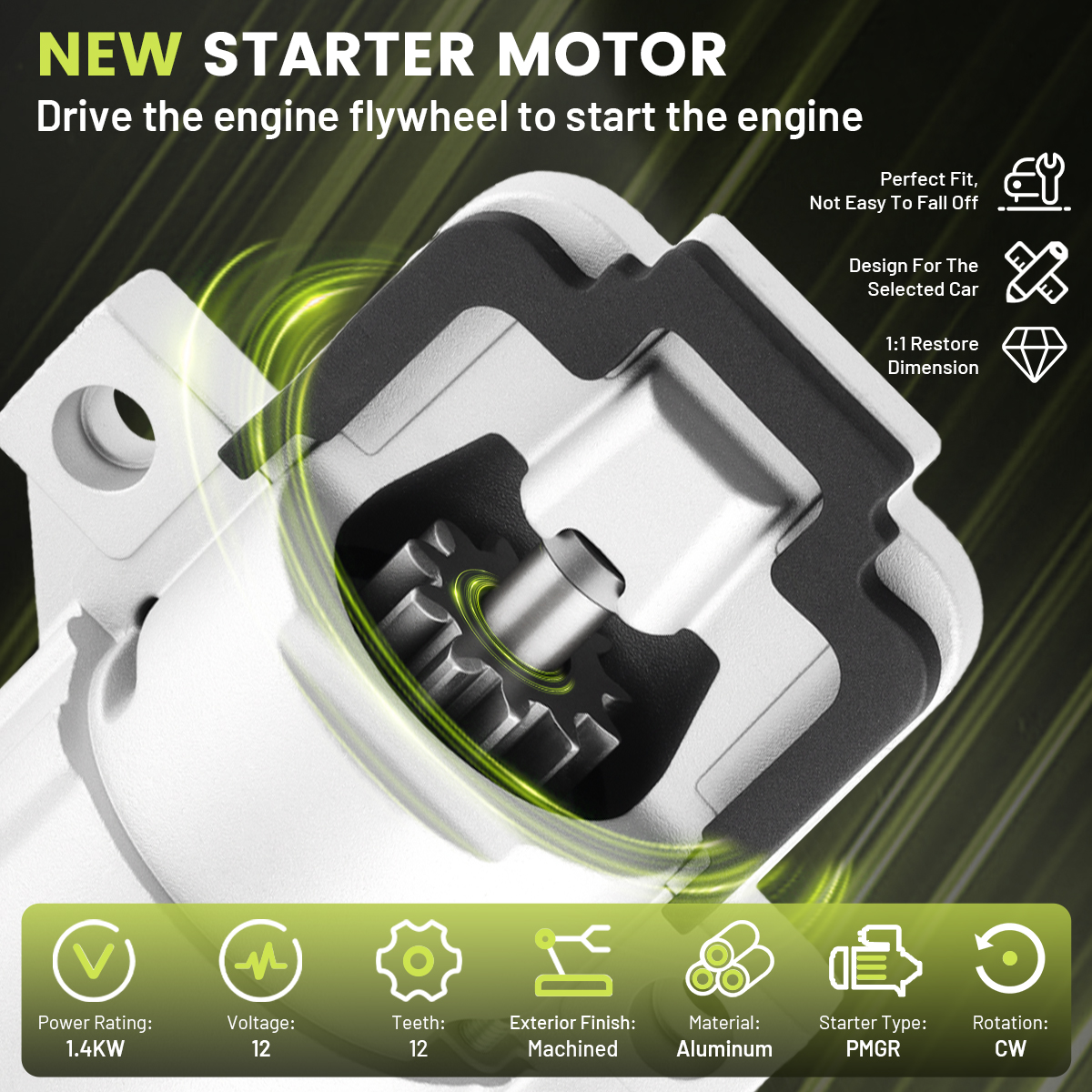
Material:Aluminum
Color:Silver
Placement on Vehicle:Front
Voltage:12
Rotation:CW
Teeth:11
Power Rating:1.4 KW
Starter Type:PMGR
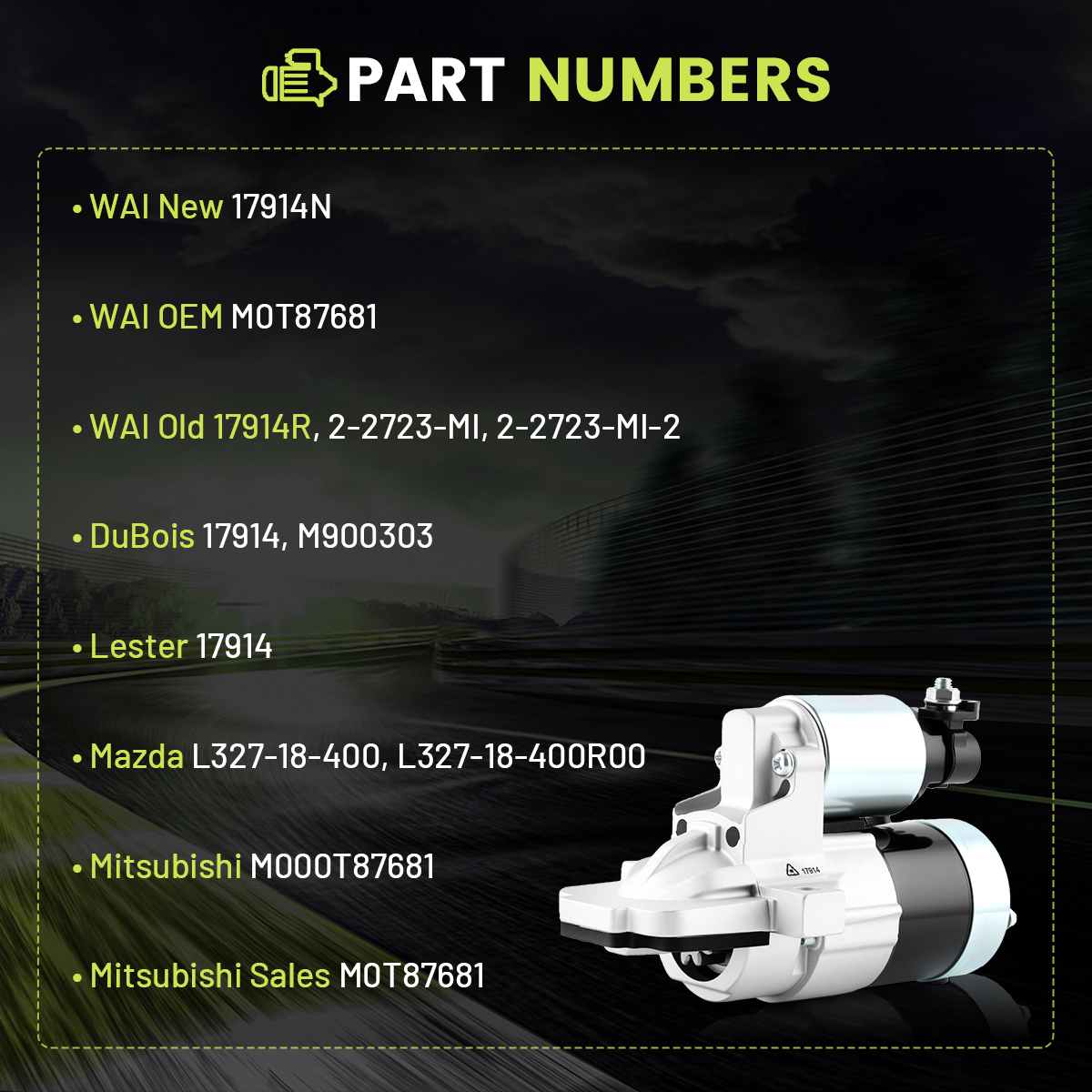
Part Numbers:
WAI New 17914N
WAI OEM M0T87681
WAI Old 17914R, 2-2723-MI, 2-2723-MI-2
DuBois 17914, M900303
Lester 17914
Mazda L327-18-400, L327-18-400R00
Mitsubishi M000T87681
Mitsubishi Sales M0T87681
Fitment:
MAZDA 3 2004-2009 L4 2.3L
MAZDA 5 2006-2010 L4 2.3L
MAZDA 6 2006-2007 L4 2.3L
MAZDA CX-7 2007-2009 L4 2.3L
Package include:
1 x Starter
Attention:
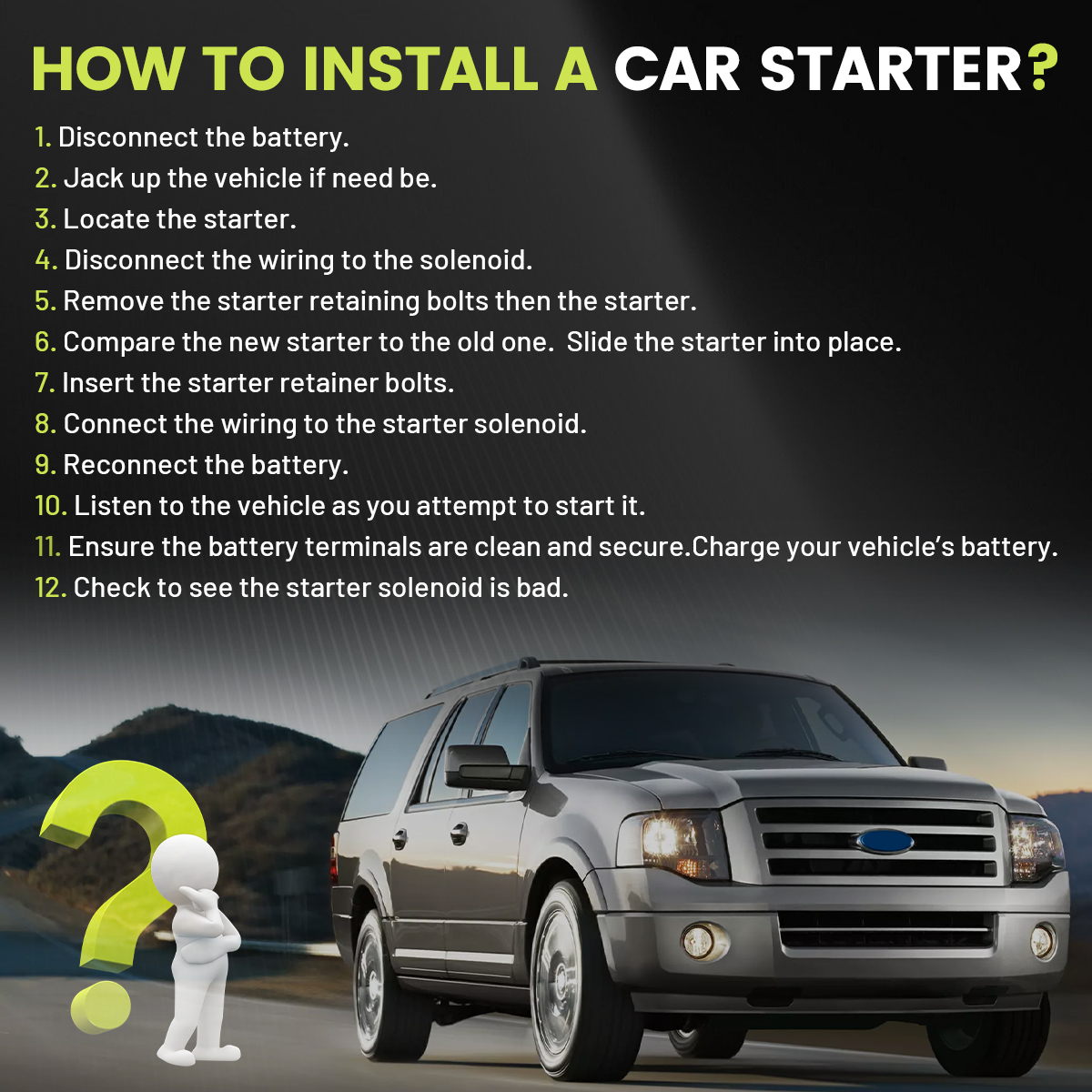
How to Install a Car Starter?
1. Disconnect the battery.
2. Jack up the vehicle if need be.
3. Locate the starter.
4. Disconnect the wiring to the solenoid.
5. Remove the starter retaining bolts then the starter.
6. Compare the new starter to the old one. Slide the starter into place.
7. Insert the starter retainer bolts.
8. Connect the wiring to the starter solenoid.
9. Reconnect the battery.
10. Listen to the vehicle as you attempt to start it.
11. Ensure the battery terminals are clean and secure.Charge your vehicle’s battery.
12. Check to see the starter solenoid is bad.
Note:
Starter Fault Check:
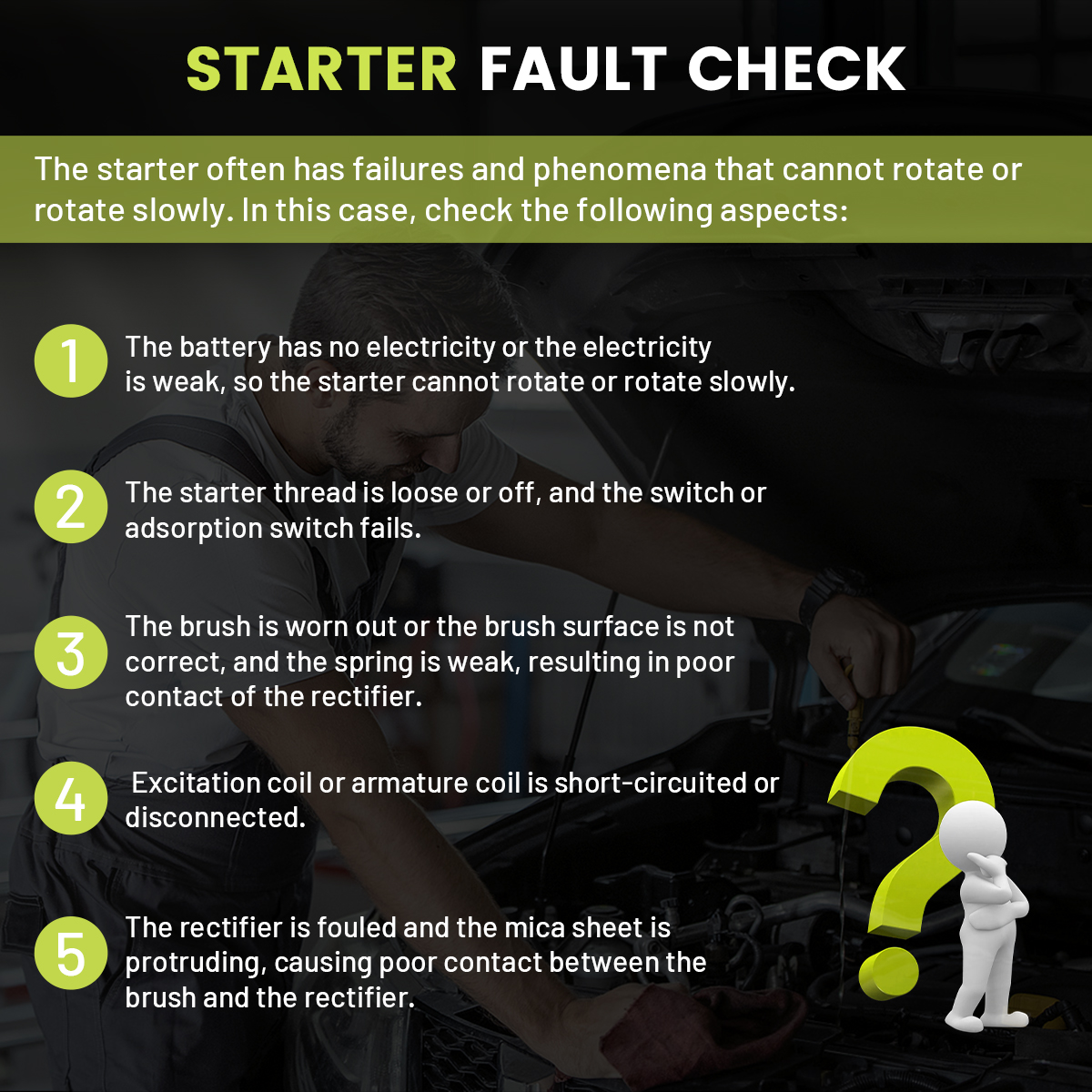
The starter often has failures and phenomena that cannot rotate or rotate slowly. In this case, check the following aspects:
1. The battery has no electricity or the electricity is weak, so the starter cannot rotate or rotate slowly.
2. The starter thread is loose or off, and the switch or adsorption switch fails.
3. The brush is worn out or the brush surface is not correct, and the spring is weak, resulting in poor contact of the rectifier.
4. Excitation coil or armature coil is short-circuited or disconnected.
5. The rectifier is fouled and the mica sheet is protruding, causing poor contact between the brush and the rectifier.
